This past week I spent a whole bunch of time weeding. In some ways, I rather enjoy this task. I can put on some music or a good podcast or I can just listen to the birdsong. Weeding can also be a bit meditative under the right circumstances. It’s a nice time to let my mind wander, and I often come up with solutions to various problems while doing it.
I used to weed a lot more than I do nowadays. I generally prefer nicely mowed fields with crops growing in neat and tidy tows, so for much of my time farming, the presence of weeds anywhere drove me crazy. I once paid Simon five cents for every dandelion he could dig up in the asparagus patch. Unfortunately, I really underestimated how many were in that field. By the time he finished, I had to fork over $60. You do the math! Yesterday, the kids helped me harvest asparagus and Simon commented, “It doesn’t look like I ever weeded any dandelions at all. You should probably just accept that they are here to stay.”
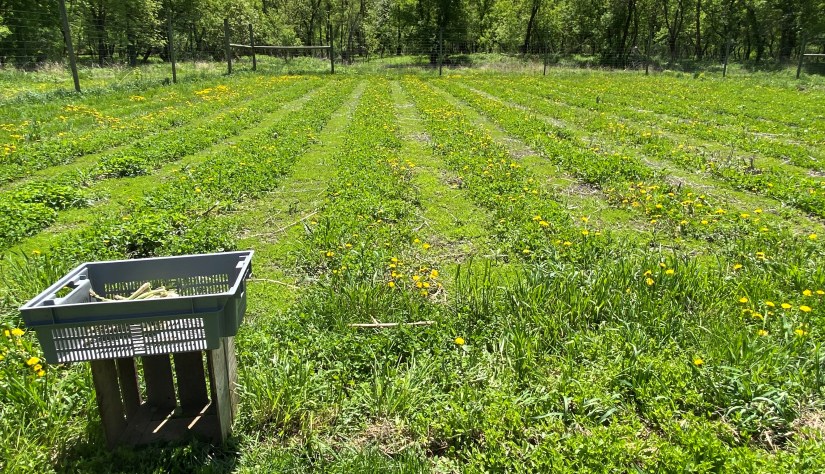
I think that I am starting to agree with Simon. Don’t get me wrong. I am not about to let weeds grow in the veggie plots, but if they are elsewhere in the field, for the most part, I’m okay with it. I’ve started to ask myself, “What is the ecological purpose of these weeds?” and it turns out there are many, a good deal of which help to keep the farm healthy and resilient (which equals delicious, healthy food).
For one thing, weeds assist in maintaining biodiversity on a farm. Different plants perform different functions which, as a whole, keep things in balance. (You never seen a monocrop in nature.) Different plants also attract various types of beneficial organisms and pollinators, and I need their help to grow healthy plants.
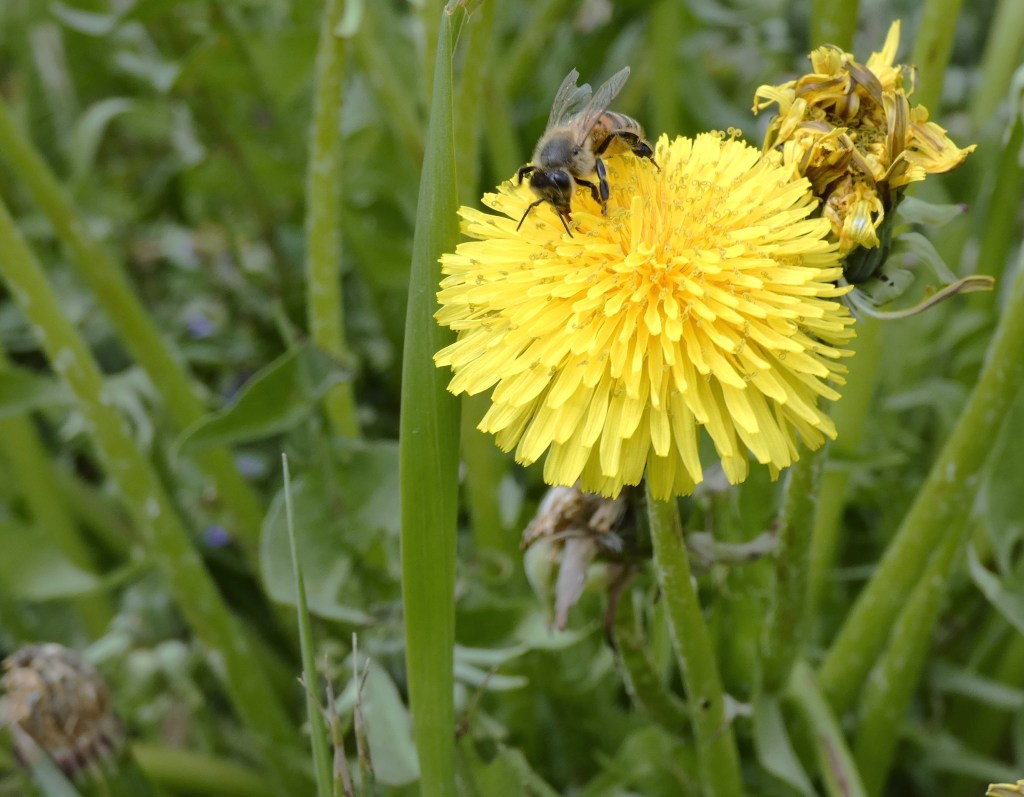
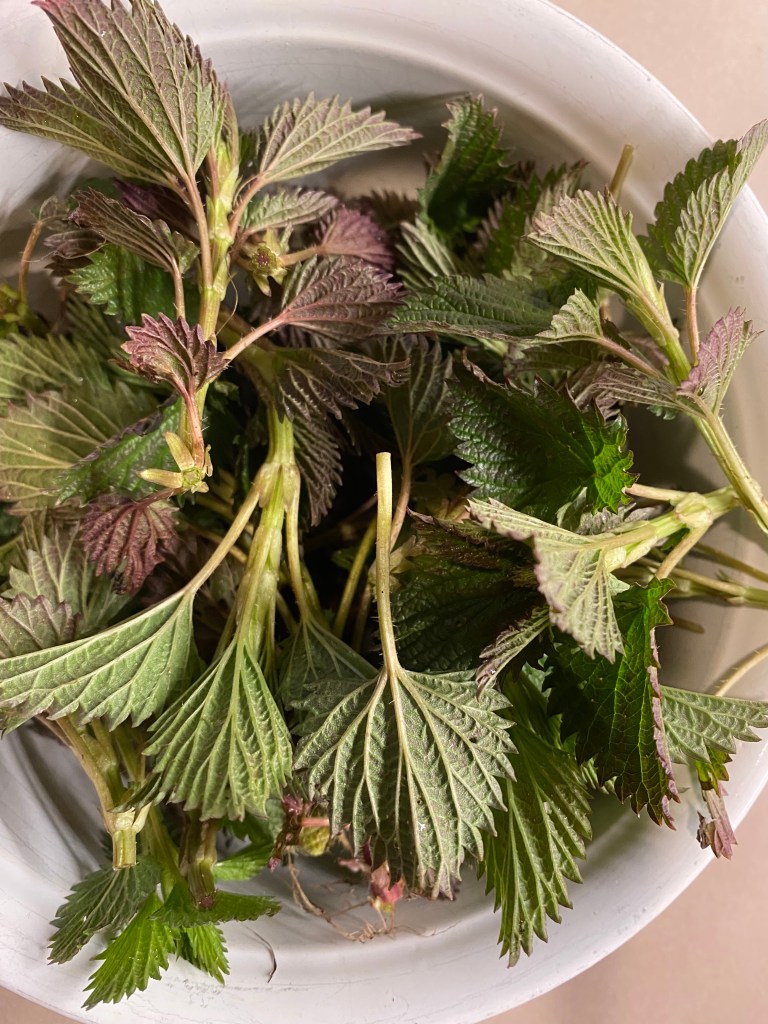
Even those pesky dandelions have a purpose. Dandelions have long tap roots that hold soil in place and they bring up nutrients to the surface for veggies to more easily access. They also loosen hard-packed soil, so that more water and air can get in. We definitely inherited some compacted soil on this farm, and it turns out that, together with good farm management practices, the dandelions can do a pretty good job at helping to return this land to health. Finally, some weeds like purslane, Lamb’s quarter, and stinging nettle (shown here) are very nutritious and good to eat.
Despite my new-found appreciation of weeds, most of our veggie crops have been bred in such a way that they don’t compete too well with other plants. Thus, top of the agenda this week is to weed the newly planted strawberries and the garlic and veggie seedlings that have sprouted. I am also seeding cantaloupe and beans, planting potatoes, and transplanting cabbage, broccoli, kohlrabi, and cauliflower. I will start to harden off some artichokes and tomatoes, gradually increasing the time they spend outside to get them used to varying temperatures and moisture changes before they are planted out in the field for good.
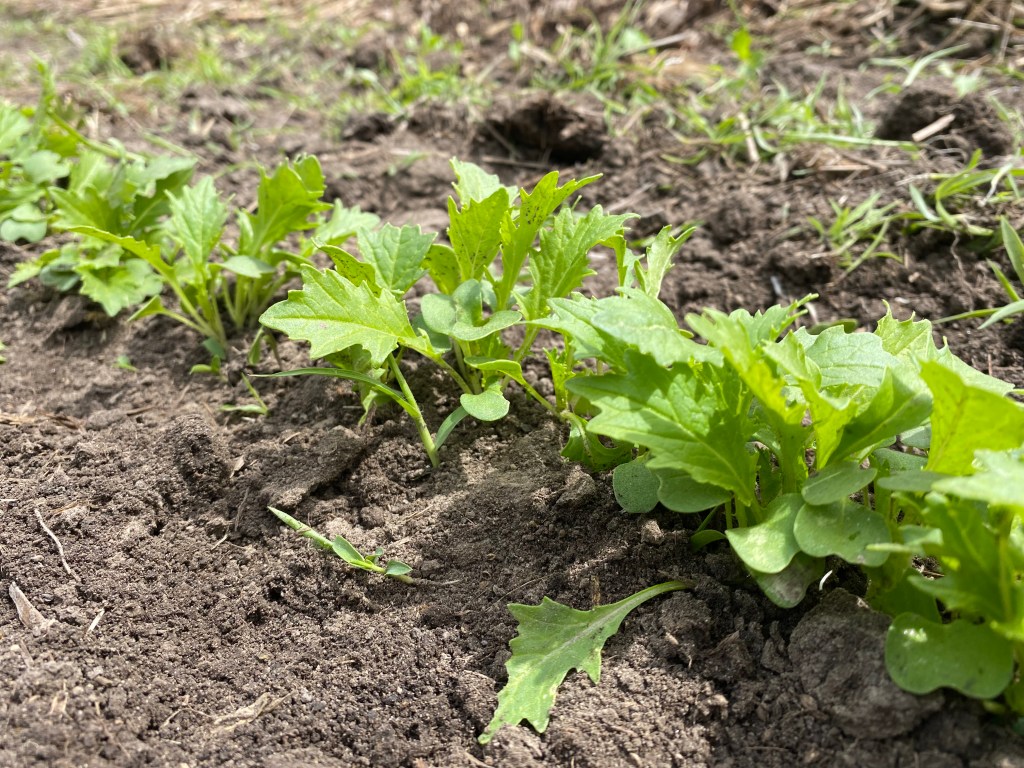

(I am not very good at making straight rows!!)
Next week will be exciting! It will mark our first official week of CSA! We will start off with just asparagus for Week 1 as the other crops aren’t quite ready yet, but I am hoping that we’ll be able to increase the number of items for Week 2. This most recent cold snap has probably set things back yet again, but we will see.
 Middle Fork Farm