
Ah… mid-June. It’s the time when everything is happening all at once. There are still seeds to be planted; there is harvesting to be done; the weeds are flourishing and need to be pulled; and the insect pests have started to find the crops. This is the time on the farm that really keeps a person hopping. It’s also the time when you start to see the fruits of your labor from the past couple of months, and it’s very satisfying to see the plants filling out and the berries ripening. I can now look out my window and actually make out that there are plants growing down in field where just two weeks ago they were so little you could barely make them out. And, of course, it’s most satisfying to go down and harvest what you’d like to eat and to enjoy the super fresh produce.
This week you’ll see a few repeats in your box. It’s the last week for asparagus and rhubarb, and you’ll be getting a bunch of different leafy veggies. Although the temperatures are going to be much warmer this week, according to the University of Minnesota’s weekly vegetable report, soil temperatures are still cooler than average which means that some crops like cukes are still taking a while to find their groove. That should change soon, but in the meantime the crops that like lower temps are thriving and so these are the ones that you’ll see this week.
What’s in My Box this Week?
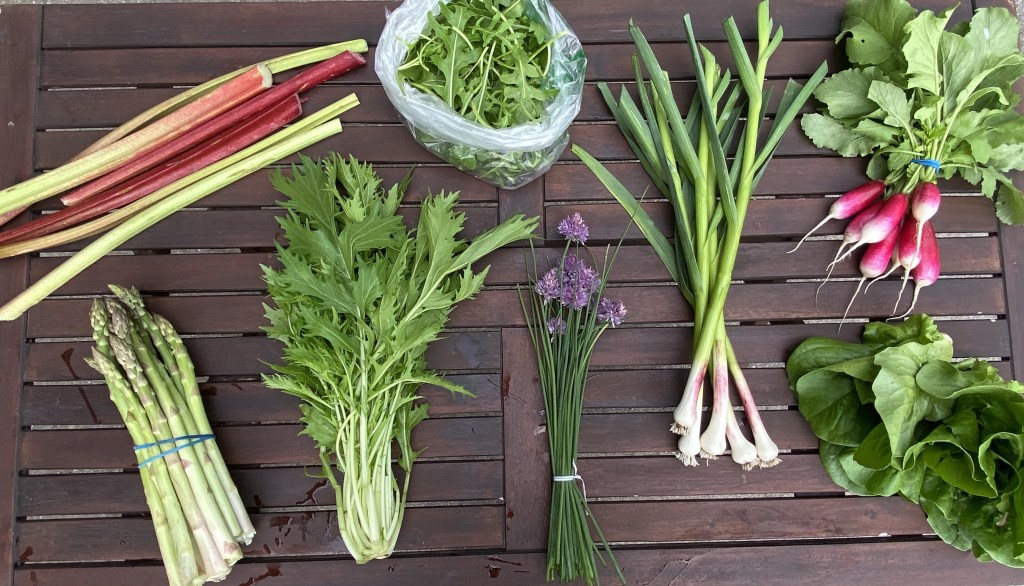
ARUGULA – Arugula has a peppery, spicy, and slightly bitter taste, so a little bit can go a long way. The arugula was very slow to get going this year and hasn’t quite sized up to where I would like it to be. Still, it needs to be harvested as the hot temperatures to come will make it super spicy, so I’m going to include it for you even though the amounts might be on the smaller side. Arugula doesn’t last much longer than a couple of days, so try and use it right away. Store it in the fridge in a plastic bag. Arugula is most often paired with other greens, like in a salad, and I like to throw some leaves on a tomato-sauce based pizza.
ASPARAGUS – The best way to store asparagus is standing up in a glass or jar with all of the ends submerged in an inch or two of water. Loosely cover the asparagus with a plastic bag and keep in the fridge for up to a week.
CHIVES WITH BLOSSOMS – Chives are in the allium (onion) family and grow very well in cool weather. So well, in fact, that they’re already starting to flower, and these blooms are actually edible. They taste like chives and can be added to salads, dressings, or potato dishes. I also like to just gather them together into a small bouquet and place them in a small vase to enjoy on the windowsill in my kitchen. (Makes doing the dishes more pleasant!)
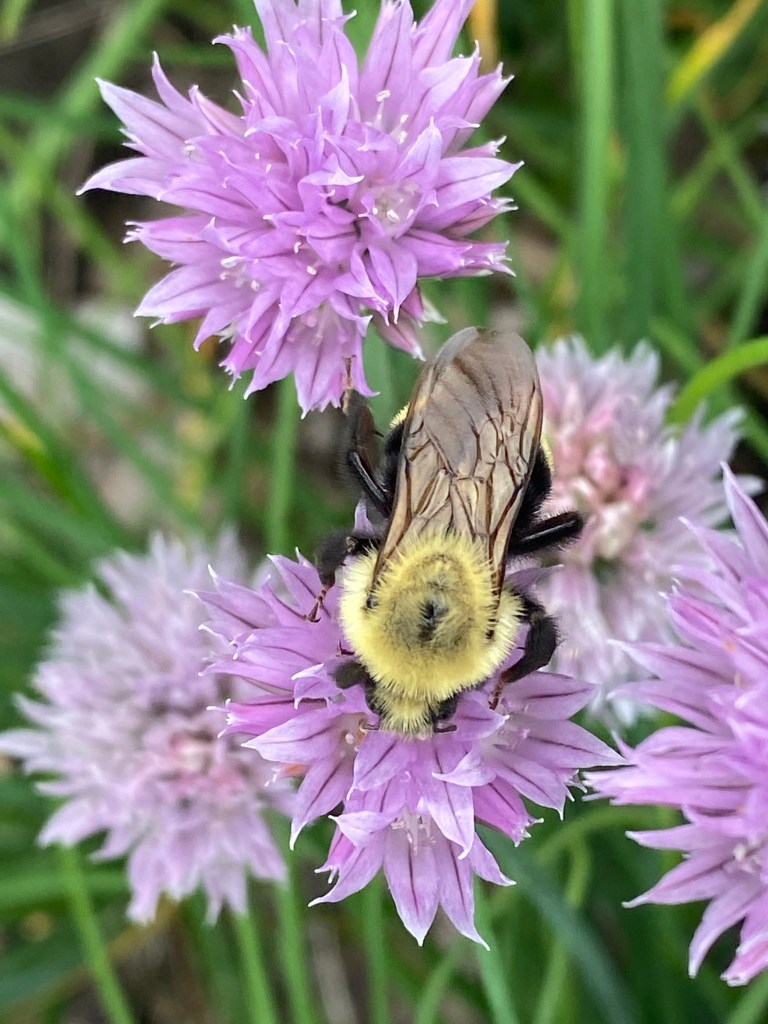
Some of the chives you receive this week will have a blossom. For these, pull them out of the bunch, remove the blossom, place in a bag or container in the fridge, and compost the woody stem. The blossoms are best used within 3-5 days. The rest of the chives are best stored in a small jar with about an inch of water. Make sure to put the stem side in the water, not the tender leaf tops. You can also keep them in the fridge in a plastic bag.
FRENCH BREAKFAST RADISHES – Members will receive radishes again this week. Store for up to two weeks in a plastic bag in the fridge. Store greens separately, ideally gently wrapped in a damp paper towel. Use the greens as quickly as possible.
GREEN GARLIC – Store in the crisper of your fridge and use within five to seven days. For best storage, wrap bulbs (the white part) in a damp paper towel. Just trim the ends and the dark green portion (as you would do with a leek), and use like regular garlic.
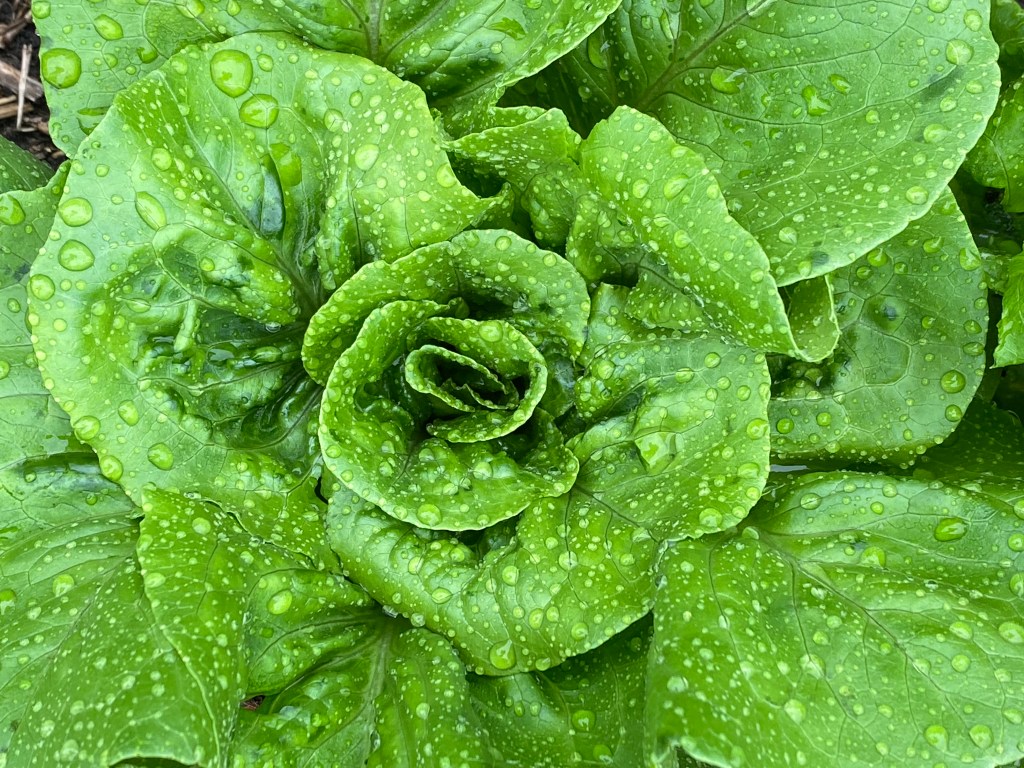
LETTUCE – Store unwashed lettuce in a plastic bag in the refrigerator for up to 2 weeks. If you do find any spoiling leaves while you’re waiting to use it, simply pull those out to increase storage time.
MIZUNA – This elegant Japanese green has a delicious spicy flavor and texture similar to arugula, but with a milder taste. You can use it raw in salads or, if it’s a little too on the spicy side for you (we didn’t think it was particularly spicy when we tried it yesterday on some BLTs, but I suggest you take a small bite and see what you think), you can saute it in some garlic and olive oil or add it to a stir-fry or soups. Cooking it will help tamp down any spiciness there might be. To store, keep dry, unwashed greens in a plastic bag in the fridge for up to a week. Wash right before using.
RHUBARB – To store rhubarb, wrap rhubarb loosely in damp paper towel and place it in a plastic bag in the fridge. When you’re ready to use it, remove about an inch from the bottom of the stalk. It is best used within a week. You can also chop and flash freeze rhubarb in freezer bags for future use.
Notes from the Field
I was just about to send this newsletter out yesterday when my son yelled at me to come and look at the farm field. We had been watching amazed at the amount of rain that was falling that morning (more than three inches in about 90 minutes) and it had thwarted my plans to do some field work, but it never occurred to us that it might flood out there. Unfortunately, that is just what happened. The seasonal creek which runs adjacent to our farm field and is normally dry this time of year quickly filled up with water rushing off of upstream fields. Most of the farm fields around us have only recently planted and their corn and soybean crops are barely growing. When you look at these fields you see a little bit of green and a lot of brown, meaning that most of the ground is still bare. When that much rain falls on land that isn’t covered with living plants, it barely soaks in and instead just runs off. Yesterday all of that water ran off into our stream bed and then overflowed its banks into the asparagus and strawberry fields. (Look how it bent the asparagus in the picture below!)

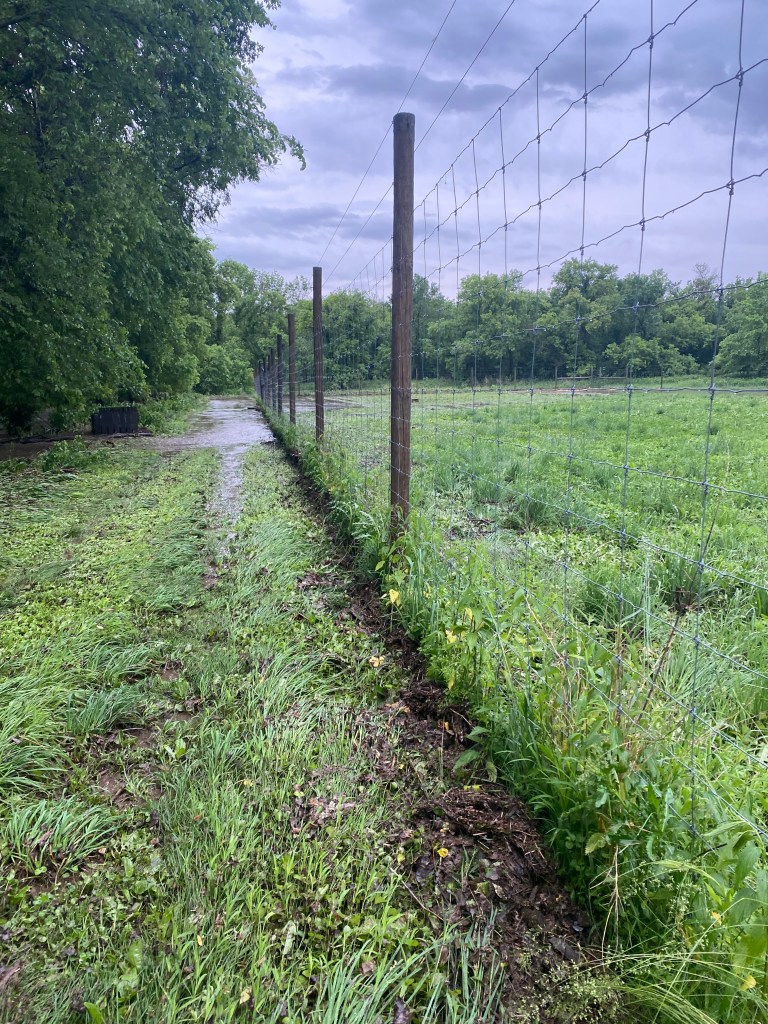



As you can imagine, this was incredibly stressful to see. We worried that the waters might creep up into the vegetable field, but luckily they quickly receded, leaving a very soggy field behind. This was the one area we had actually tilled this year, in order to plant winter squash, and so the soil was newly bare and not yet protected with a cover crop like in the rest of the field. Some of the soil here definitely washed away into another part of the field, and I had to go and tuck some seedlings back into the mud as they had uprooted in the flood. Thank goodness we have cover crops planted everywhere else. They did a good job of allowing some of that extra water to just soak in and kept our soil in place.
This week I had planned to seed black beans, Daikon radishes, carrots, turnips, Romanesco, Napa cabbage, and parsley, but after a less-than-ideal downpour like this, it may be days before the soil dries out enough to dig into it again especially as more rain is forecasted for tomorrow. If I rush it and the soil is too wet when I seed, I risk compacting the soil and making it harder for air and water to get to the plants’ roots later on.
I also increase the chances that the soil will crust over on top and act more like a paved driveway than a sponge, meaning water and soil could run off of my field as well. It’s hard to wait sometimes when there is a schedule to keep, but in the long run, it makes things better all around.
Thus, I am in a bit of a holding pattern this week. I’ll be covering up some of the crops that prefer cooler temperatures with shade cloth to protect them from the heat wave that is coming next week and maybe weeding some more garlic. At least this much rain will make weeds come out that much more easily! I will wrap up the asparagus harvest and keep an eye out for the first ripe strawberry. The berries are growing fat and plump down there. It’s only a matter of time before you’ll have some in your box.
Recipes
I’m going to guess that you weren’t able to use all of the recipes for the veggies you received last week, so I will let you scroll down to last week’s newsletter to revisit recipes for asparagus, radishes, rhubarb, and spinach. Here are some things you can do with the veggies that are new to your box this week:
Arugula Pesto // Uses Arugula // Vegetarian
Blueberry Arugula Salad // Uses Arugula // Vegetarian (although Shared Legacy Farm, where this recipe originates, suggests adding grilled chicken for a complete meal).
Chive Blossom Vinegar // Uses Chive Blossoms, Chives // Vegetarian
Garlicky Roasted Potatoes with Wilted Greens and Bacon Gremolata // Uses Mizuna (Can also substitute Spinach or Arugula or maybe even try a bit of all three?)
Lemon and Parmesan Arugula Salad // Uses Arugula // Vegetarian
Simple Mizuna Salad with Radishes // Uses Mizuna and Radishes // Vegetarian
Spring Salad with Lemon Cream, Chives, and Green Garlic // Uses Green Garlic, Chives, Lettuce // Vegetarian
Spring Vegetable Pizza from Raleigh’s Hilltop Farm // Uses Asparagus, Chives, Chive Blossoms, Green Garlic, Radishes // Vegetarian
8-ounce Pillsbury Crescent dough sheet
8-ounce package cream cheese
1/4 cup Greek yogurt
3 tablespoons minced chives
1 green garlic stalks, minced
1/4 teaspoon garlic powder
1/2 bunch asparagus, shaved
1 bunch radishes, halved and thinly sliced
5-10 chive blossoms, separated
Flaky sea salt
- Preheat oven to 375 degrees F.
- Roll out crescent dough onto small baking sheet (9×13”). Bake for 10-15 minutes until golden brown. Remove from oven and let cool for 30 minutes.
- In a small bowl, combine cream cheese, yogurt, chives, green garlic and garlic powder. Season with salt and pepper.
- Once crescent dough crust is cooled, spread cream cheese mixture over crust.
- Add all veggies and sprinkle with salt. Cut into slices or squares, and serve immediately.
 Middle Fork Farm