Happy Summer, everyone! It’s hard to believe, but tomorrow marks the longest day of the year and the official start of summer. Time is flying by on the farm. Nearly all of the crops that need to be seeded have been and now it’s more or less a waiting game until the real harvesting begins. We are a little in between the spring crops that are starting to fade away due to the heat of summer and the summer crops which are just starting to flower in preparation for fruit setting. Thus, this week you’ll have a little less in your box than you did over the last two weeks, but I’ll make up for it later, I promise.
What’s in My Box this Week?
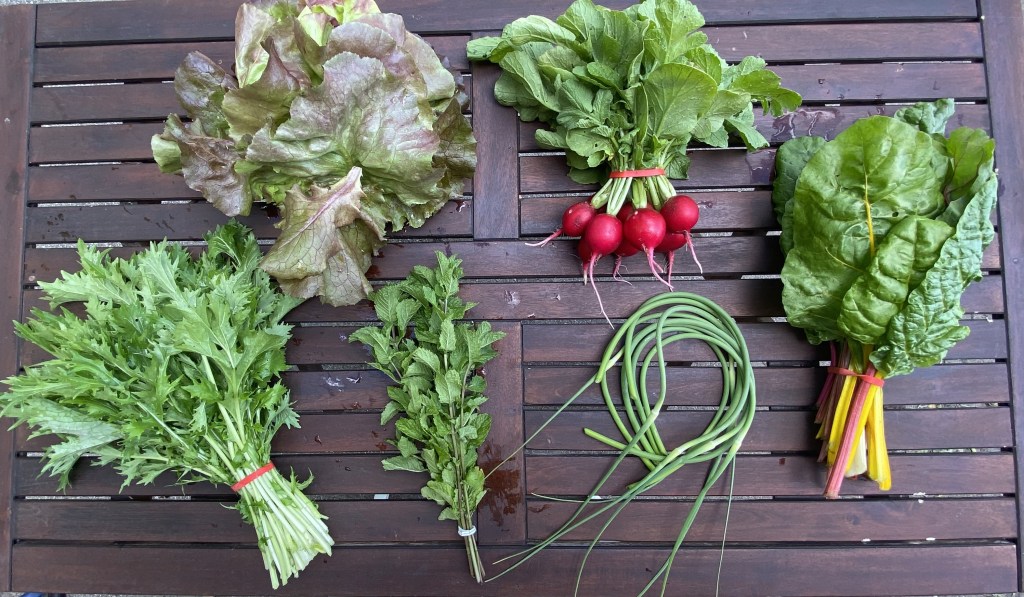
CHERRY BELLE RADISHES – Members will receive radishes again this week, but for most they will be of a different variety. These little red beauties are an heirloom variety from Holland with a mild flavor and crisp texture. Store for up to two weeks in a plastic bag in the fridge. For longer storage of roots, cut off the greens before placing the roots in the fridge and store the greens separately, ideally gently wrapped in a damp paper towel. Use the greens as quickly as possible.
GARLIC SCAPES – Garlic scapes are the flower stalks of hard-neck varieties of garlic plants. We have to cut these off before they flower so that the garlic puts energy into growing a big, fat bulb instead. These shoots are edible and delicious. They are mild and sweet with just a hint of garlic. You can chop them and use them in place of garlic cloves, make a salad dressing, or throw them on the grill like you would scallions.
LETTUCE – Store unwashed lettuce in a plastic bag in the refrigerator for up to 2 weeks. If you do find any spoiling leaves while you’re waiting to use it, simply pull those out to increase storage time.

MINT – Given the heat wave this week, I thought some cool, refreshing mint might be just the ticket. For best storage, place in a small glass or jar (stem side down) in about an inch of water.
MIZUNA – I tried some in the field this morning and it tastes good to me. Hopefully, it will withstand the heat over the next two days and not turn bitter. If it’s still yummy when I go to harvest Wednesday morning, I’ll include this in your box again. To store, keep dry, unwashed greens in a plastic bag in the fridge for up to a week. Wash right before using.
RAINBOW CHARD – I grew up never eating greens as a child, so things like kale and chard were a novelty to me when I started farming. Rainbow chard is beautiful plant with some leaves having red stems, some yellow, and some pink. I like it because it’s tender and you can add it to just about anything you’d like – eggs, pizza, pasta, salads. The stems should be removed before you cut up the leaves, but you can eat them stems, too.
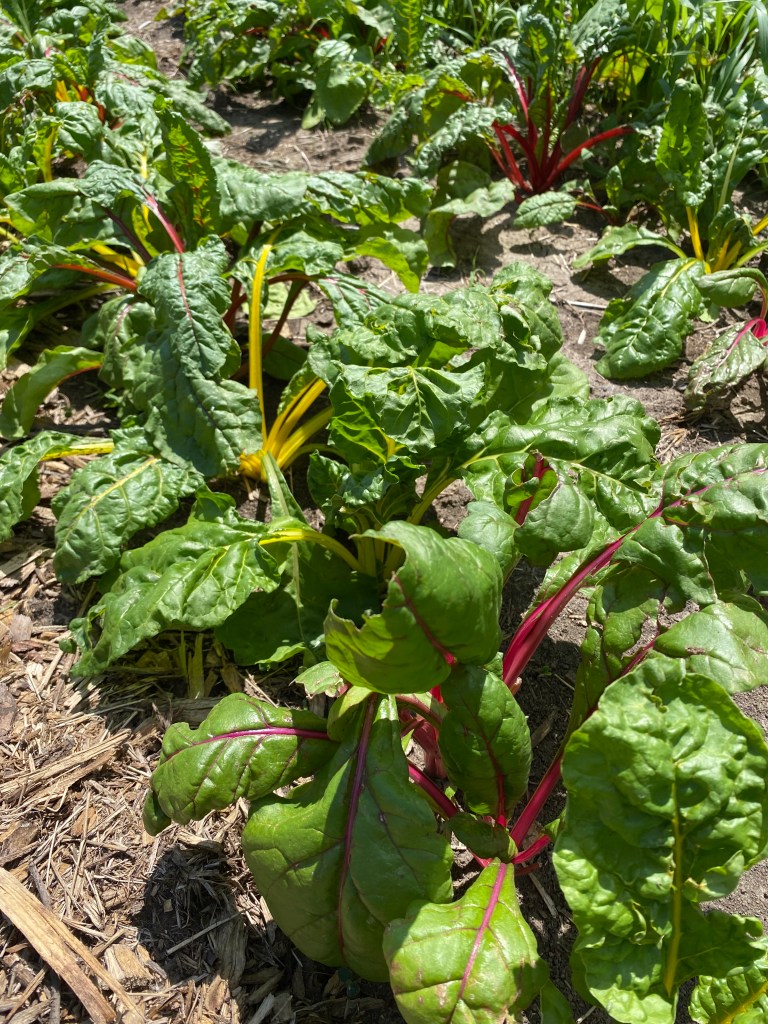
If you are going to saute the entire plant, just remember that the stems take a little longer to cook than the leaves and plan accordingly. Wash the chard only right before using. To store, place in a plastic bag with most of the air removed and put in the fridge. It is best used within a few days. You can also freeze chard and use in dishes later on.
Notes from the Field
At the risk of stating the obvious, it’s hot out there! We just returned from the kids’ swim lessons and I would have absolutely jumped into the pool with them if I’d had the chance. I’ve been trying to beat the heat by getting out into the field as early as possible the last few days and then retiring inside for the afternoons. Early morning is actually my favorite time of day to work on the farm. The air smells fresh and the sunlight rising above the field is warm and welcoming. It’s a good way to start the day.
Last year, when we had the heat wave at the beginning of June, all of our tiny little broccoli seedlings decided to bolt (flower), so none of them ever formed those nice, big, round heads that we look forward to. It’s not so much air temperature as it is soil temperature that makes this happen. The ideal soil temperature for broccoli is between 65 and 75 degrees. Any warmer than that and the plant is signaled to hurry up and reproduce. Of course, hot air and sun beating down can warm soil up pretty quickly, especially on a day like today. I measured the soil temperature yesterday in the broccoli bed and it was up to 82 degrees. Uh oh!
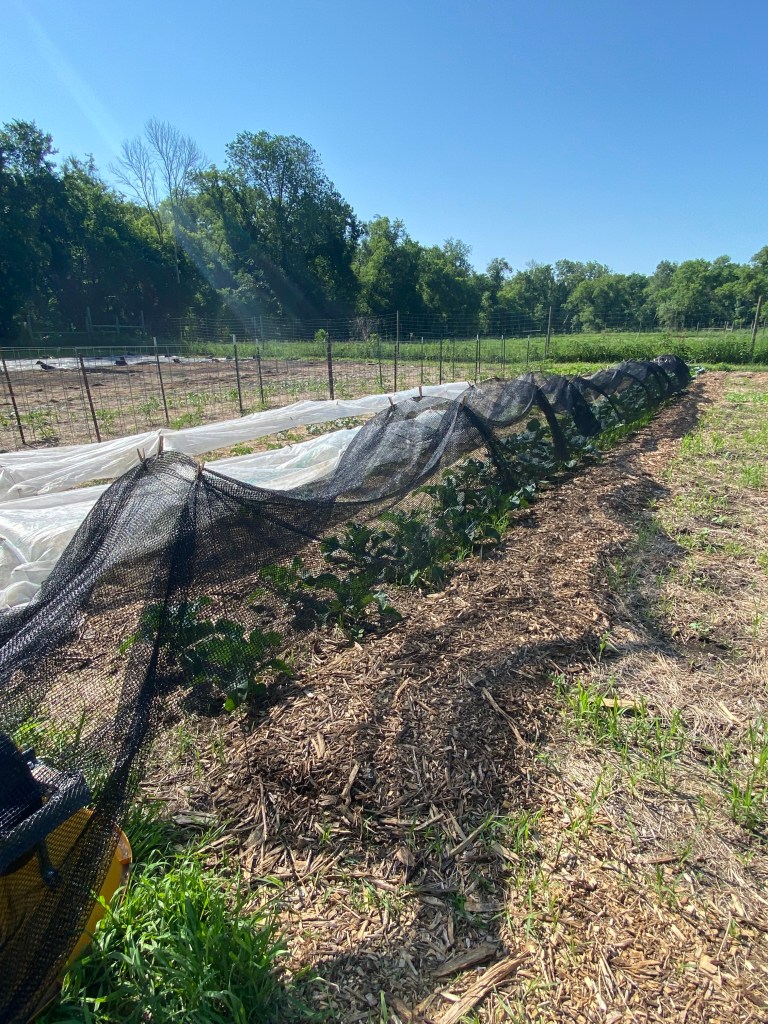
To help save the broccoli, Erik and I created some shade by placing shade cloth and reflective row cover over the broccoli as well as on some others that prefer it on the cooler side (Kailan, Bok choi, cauliflower, etc.) I also gave all of the plants a very good drink as wetting the soil not only cools it down right away, it also increases plant evapotranspiration, creating a microclimate by drawing heat up and out of the ground. This is the first time I’ve used shade cloth. I figured I ought to have a tool like this in the toolbox for when the weather gets too hot too early in the season. I hope it works!
Another tool I’ve had to pull out this past week is kaolin clay. An organic pest control, the powdery clay coats the plants and only eventually washes off in the rain after a couple of weeks. The clay repels and irritates a wide range of insects and also reduces fungal disease like powdery mildew. I’ve been having a lot of trouble with flea beetles and Colorado potato beetles going to town on the eggplant, so I applied the clay to the plants to deter them. I’ve been scouting for potato beetle eggs, too, and have found a lot. The sneaky bugs lay their eggs on the undersides of the leaves making them hard to find. The eggs are a beautiful orange color, but I take only pleasure in squishing them!
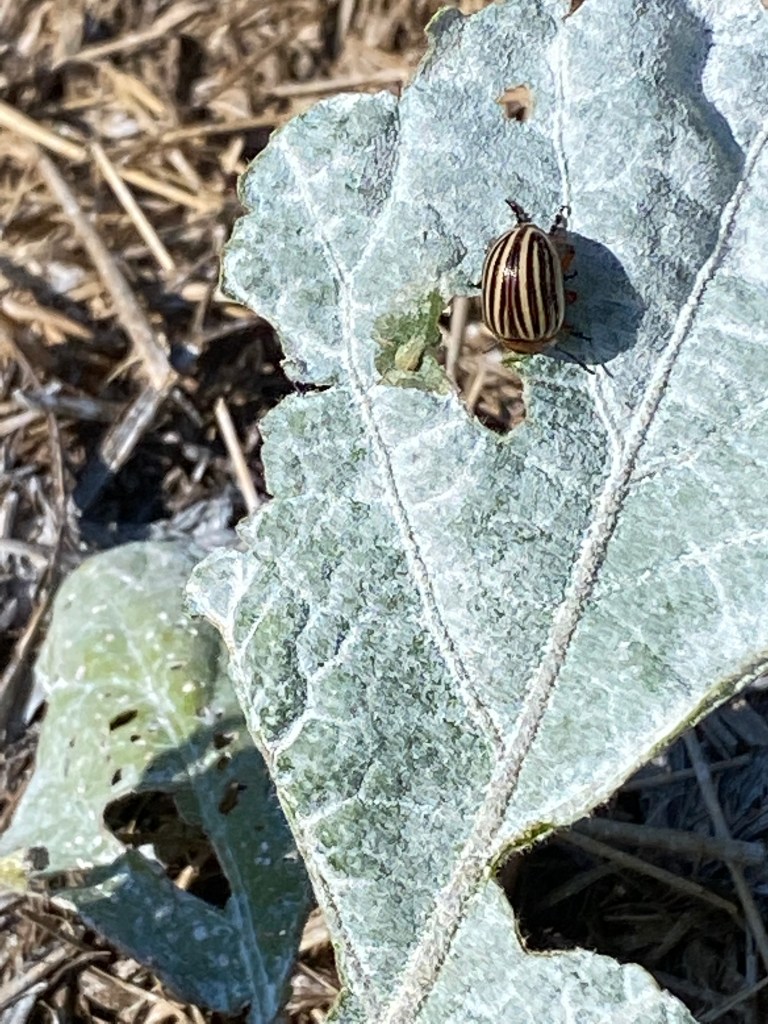
leaf coated with kaolin clay
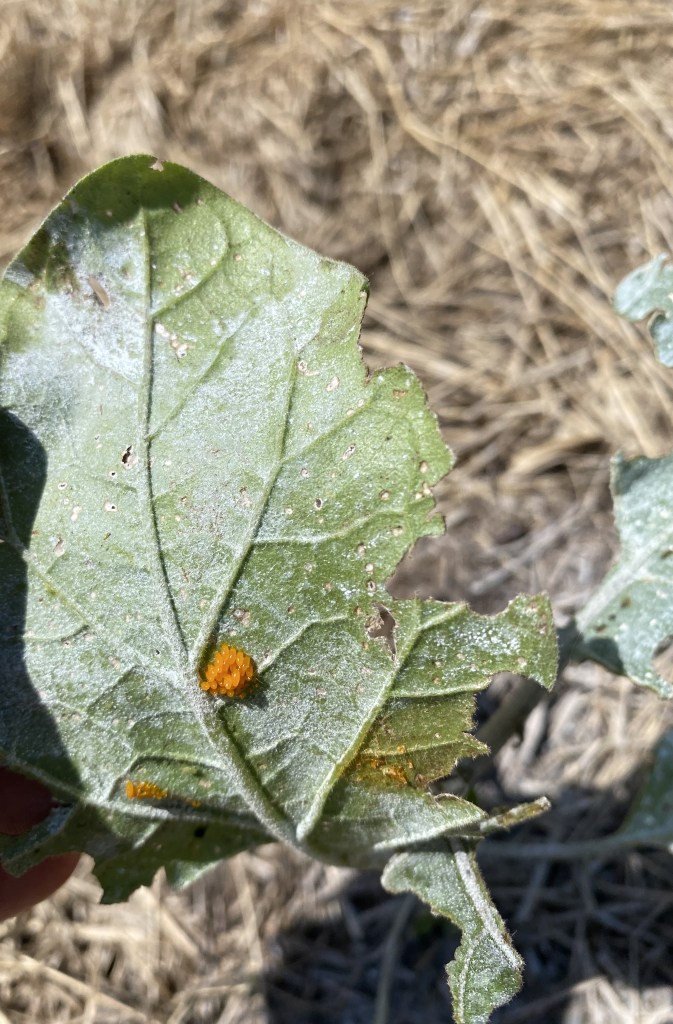
underside of eggplant leaf
On another note, we seem to have more or less recovered in good shape from the flood. The one sad piece of flood-related news is that you won’t be seeing any strawberries in your box this month as I had intended. Since the flood waters touched many of the ripening berries, there is a food safety risk to eating them, and we want to keep you safe. The good news is that I planted two types of strawberries this year, one of which (ever-bearing) is supposed produces berries in the fall, so if all goes well, you’ll get some of those. I’ve read they might be smaller than the other type (June-bearing), but I feel like having strawberries in the fall is pretty special and worth the reduction in berry size.
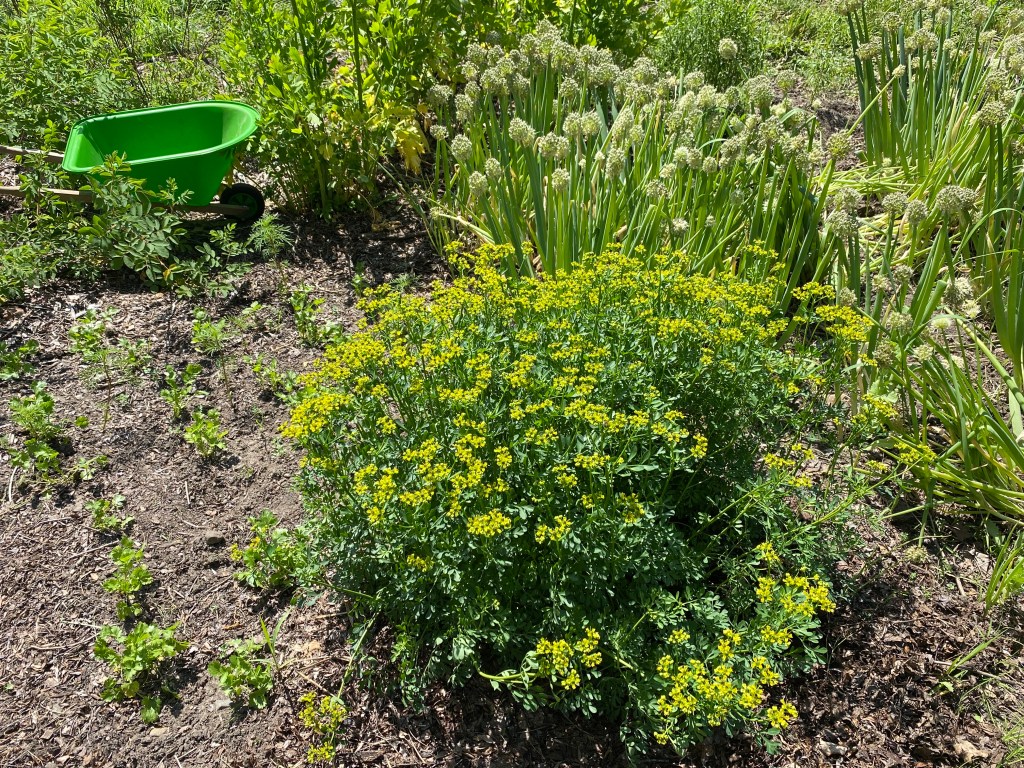
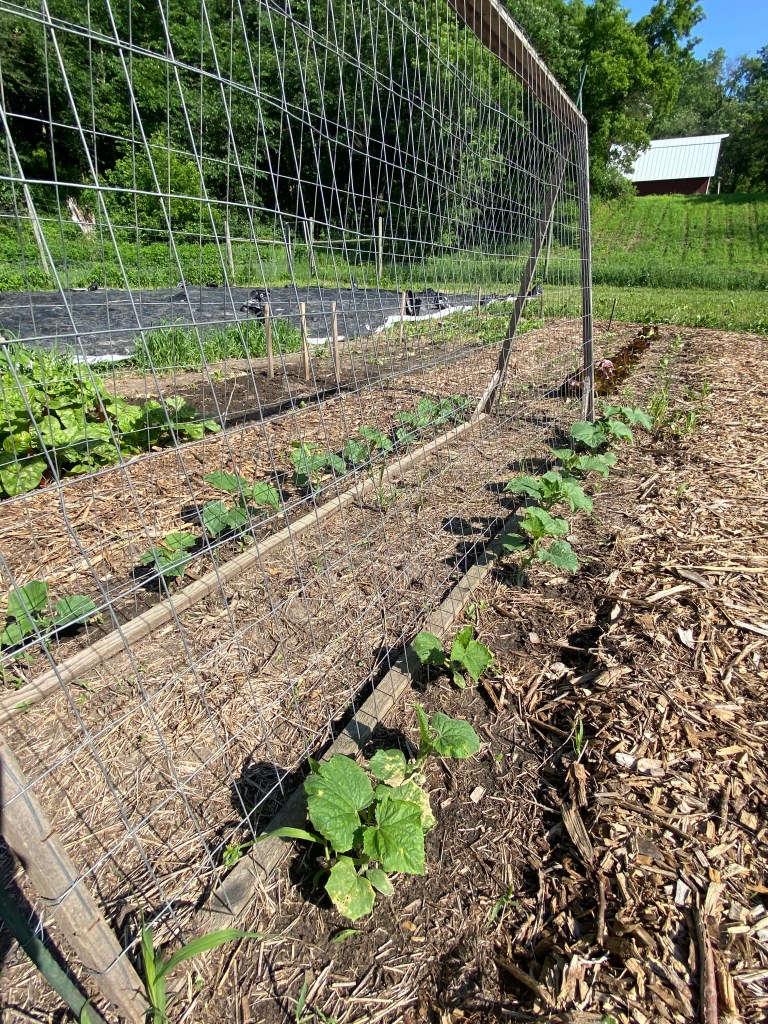
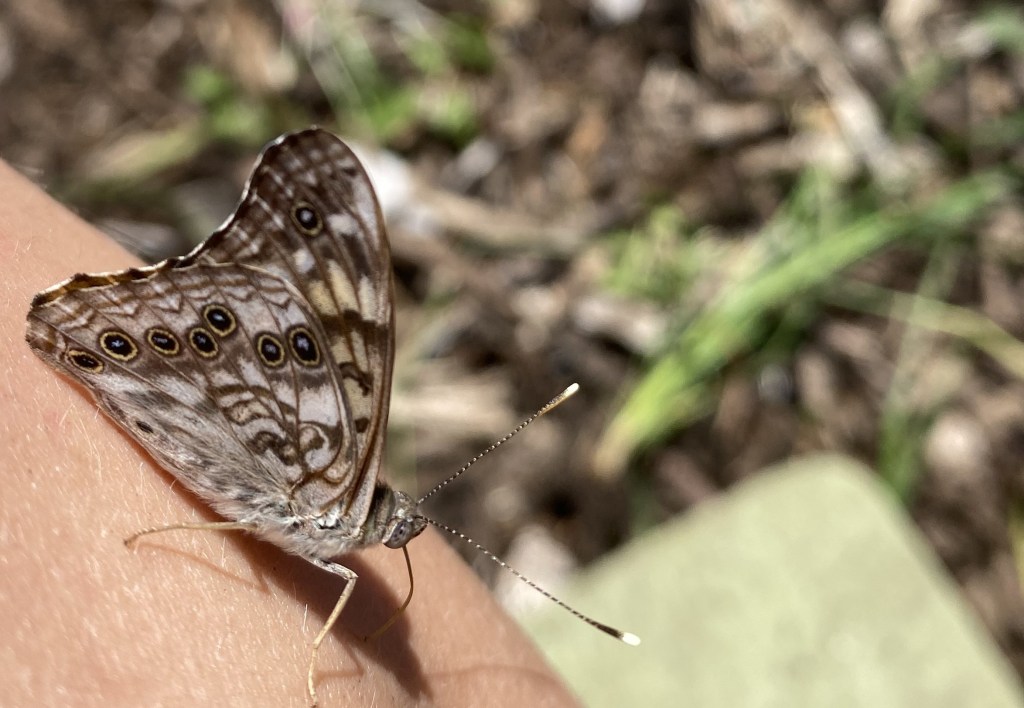
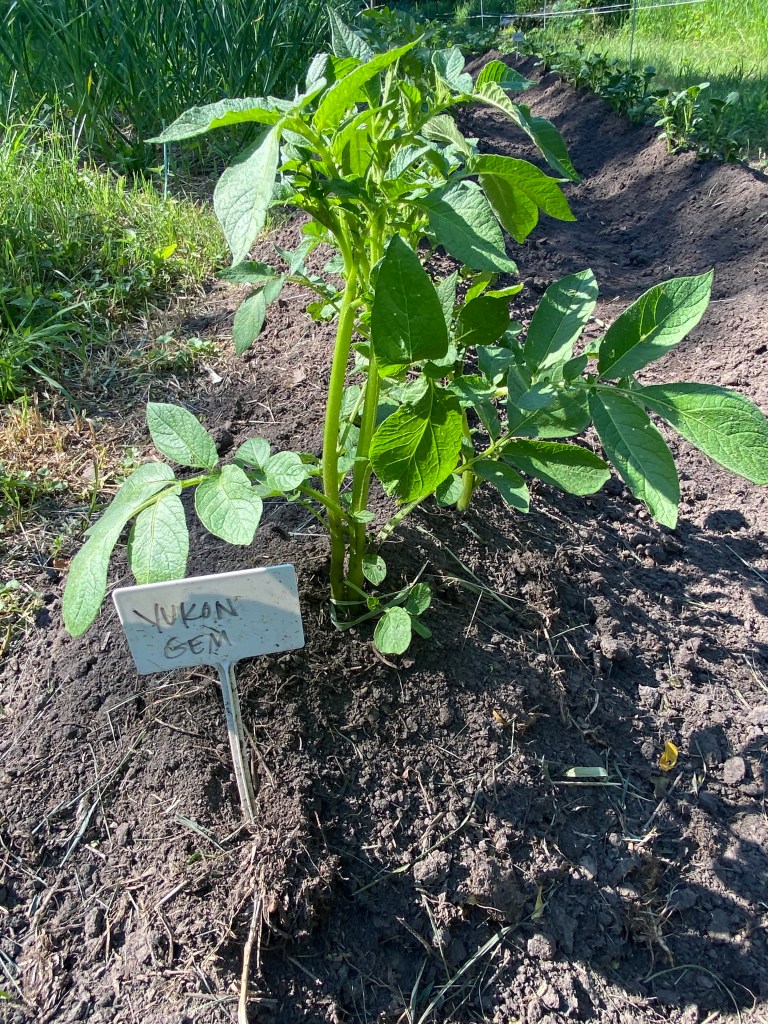
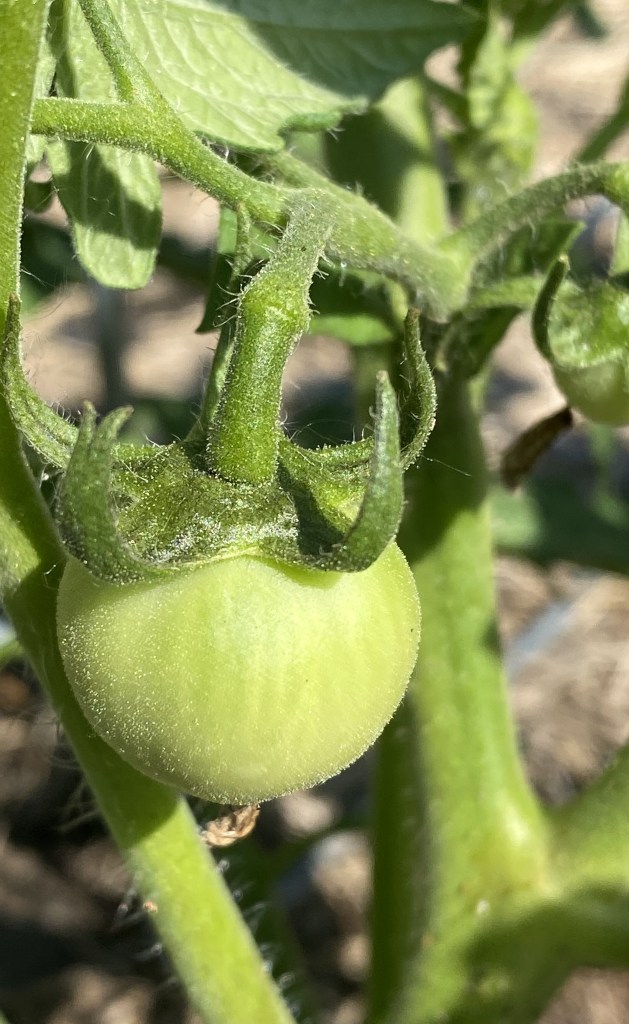
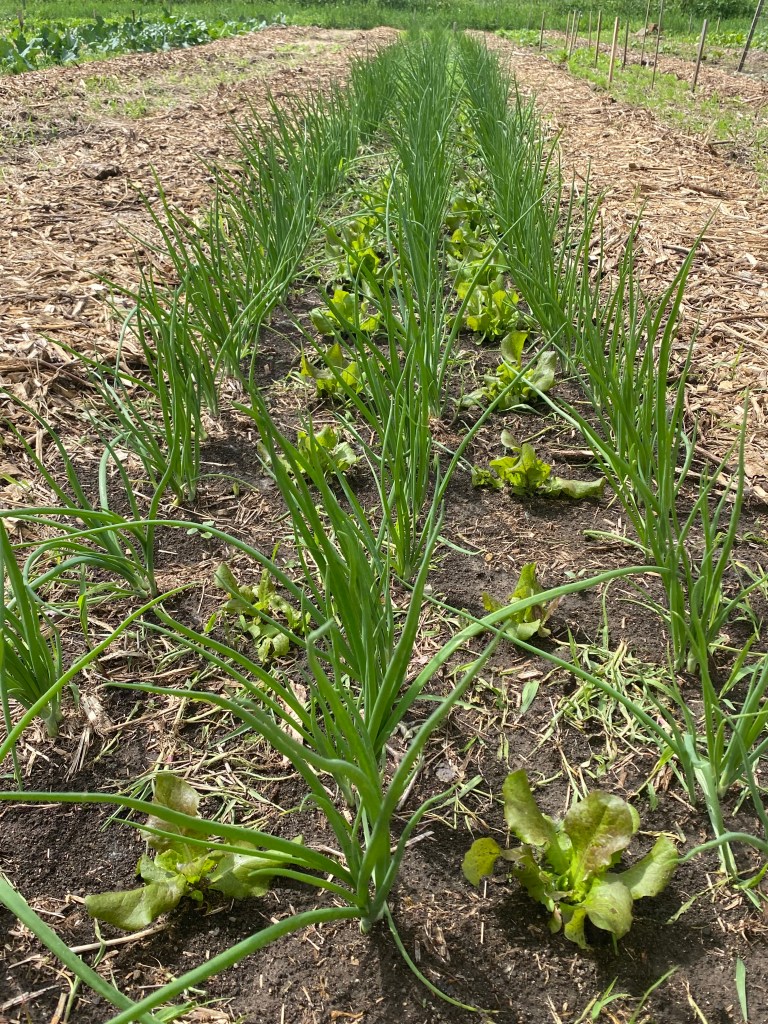
This week I will finish weeding and seeding the rest of the herbs and flowers in the herb garden, prune and tie up the tomatoes, and move some of the winter squash seedlings that were in the flooded area into a space that will be better for them going forward. Here are some photos from around the farm this past week. Notice the very first tomato!
Recipes
I’m giving you a bunch of pasta recipes this week because, let’s face it, it’s hard to be in the kitchen for too long when it’s this hot out! These are fairly quick and easy recipes that are sure to please.
Caramelized Corn with Mint by Julia Moskin // Uses Mint // Vegetarian
(Takes 30 minutes; makes 10 to 12 servings)
4 to 5 cups fresh corn kernels, white or yellow (from about 12 cobs) or two 16-ounce bags frozen corn
1 stick (4 ounces) unsalted butter
1/2 cup chopped fresh mint
salt to taste
If using frozen corn, drain between layers of paper towels until thawed, about 30 minutes. In a wide skillet, melt half the butter over high heat. Add half the corn and cook, stirring often, until golden and browned (kernels may begin to pop), about 10 minutes. Stir in half the mint and sprinkle with salt. Transfer to a serving bowl. Repeat with remaining corn, butter, mint and salt.
Garlic Scape Alfredo, Two Ways by Lauren Rudersdorf // Uses Garlic Scapes // Vegetarian
(Takes 20 minutes; makes 2 cups of sauce)
2 tablespoons butter
1/4 cup minced garlic scapes, flowers and tough ends removed (if you’ve got more, use them!
1/2 teaspoon Kosher salt
1/4 teaspoon freshly ground black pepper
1/4 teaspoon red pepper flakes
2 tablespoons flour
2 cups whole milk
1 cup finely shredded finely shredded Parmesan
Melt butter in a large saucepan over medium low heat. Add garlic scapes, salt, pepper and red pepper flakes. Saute for 5 minutes until garlic scapes are slightly softened and very fragrant. Add flour and reduce heat to low. Stir until well until incorporated and just slightly golden brown. Add whole milk and cook until thick (about 5 minutes). Add Parmesan cheese and stir until melted. Remove from heat.
Mint Lemonade // Uses Mint // Vegetarian
Rainbow Chard and Carrot Hash // Uses Rainbow Chard (could also substitute Garlic Scapes for garlic cloves)
Sausage, Greens, and Beans Pasta // Uses Rainbow Chard
Snap Pea and Rainbow Chard Linguine with Garlic Scape Alfredo by Lauren Rudersdorf // Uses Rainbow Card, Garlic Scapes // Vegetarian
(Takes 20 minutes (plus time to make sauce); makes 4 servings)
8 ounces dry linguine pasta
1 cup Garlic Scape Alfredo
3 rainbow chard leaves, stems removed
1 cup sliced snap peas
1/4 cup finely shredded Parmesan cheese
1/2 teaspoon Kosher salt
Bring a large pot of salted water to a boil over high heat. Once boiling, add pasta and cook for 8-9 minutes until just al dente. Heat alfredo sauce over medium low heat in a large skillet. Once pasta is cooked, remove pasta with tongs and place
in alfredo pan, reserving the cooking liquid. Add chard, snap peas and 1/4 cup of the pasta water. Stir to combine and cook until chard is wilted and peas are bright green, about 5 minutes. Add additional pasta water to loosen sauce if necessary.
Finish with Parmesan cheese and salt. Serve hot.
For more ideas of how to use garlic scapes, check out Bon Appetit’s 10 Things to Do with Garlic Scapes
Likewise here is their 19 Swiss Chard Recipes That Will Make You Wonder “Spinach, Who?”
 Middle Fork Farm