
Before I started farming, I worked at the Bloomberg School of Public Health (Johns Hopkins) doing public outreach with faith communities, schools, and other organizations in the greater Baltimore area about food security and sustainable agriculture. One of my favorite things about that job was teaching people about our food system and the ways in which they could do their own little part at making it more sustainable and fair for all involved – consumers, farmworkers, processors, food service workers, and farmers alike. (A CSA membership is a good way to help!)
I was therefore thrilled when Practical Farmers of Iowa got in touch with me this past spring and asked about the farm and the work we are doing to restore and build pollinator habitat. The result of our conversation was this article and a field day that we’re hosting on July 16th when we will gather together with farmers and others who want to learn about our efforts and from each other. If you are free and fancy a nice walkabout and lunch, I hope that you will join us.
What’s in My Box this Week?
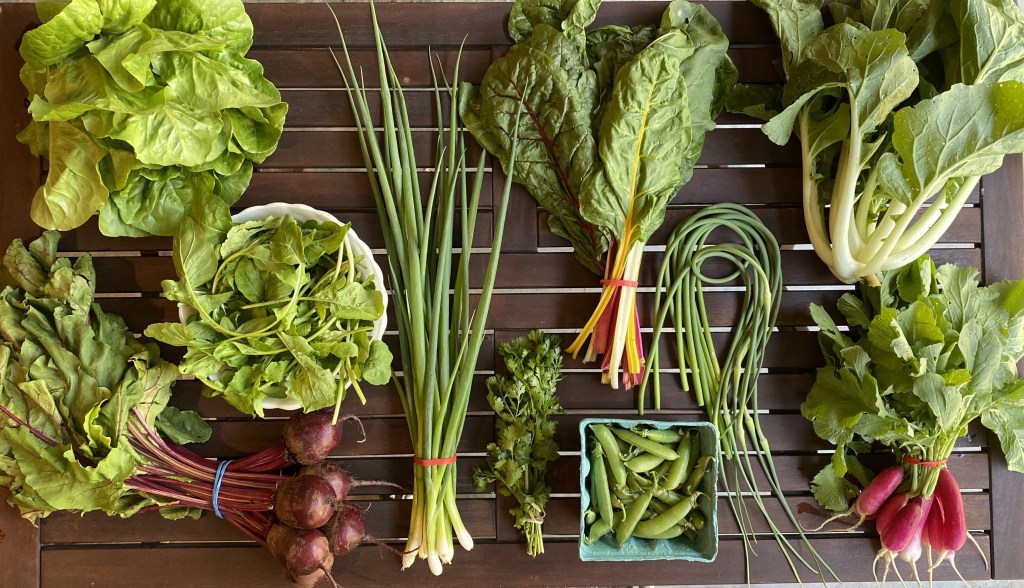
ARUGULA – I planted a second succession of arugula about a month ago, not sure if it would be too hot for it to grow well, but it did, and so you’ll get a little more of this green in your box this week. Arugula doesn’t last much longer than a couple of days, so try and use it right away. Store it in the fridge in a plastic bag.
BOK CHOY – This is the first time I’ve grown this, and I’m excited to see what you think. Store unwashed in the crisper drawer of your fridge. Use within a couple days for best texture. Greens will wilt relatively quickly. Stems will retain firmness a while longer.
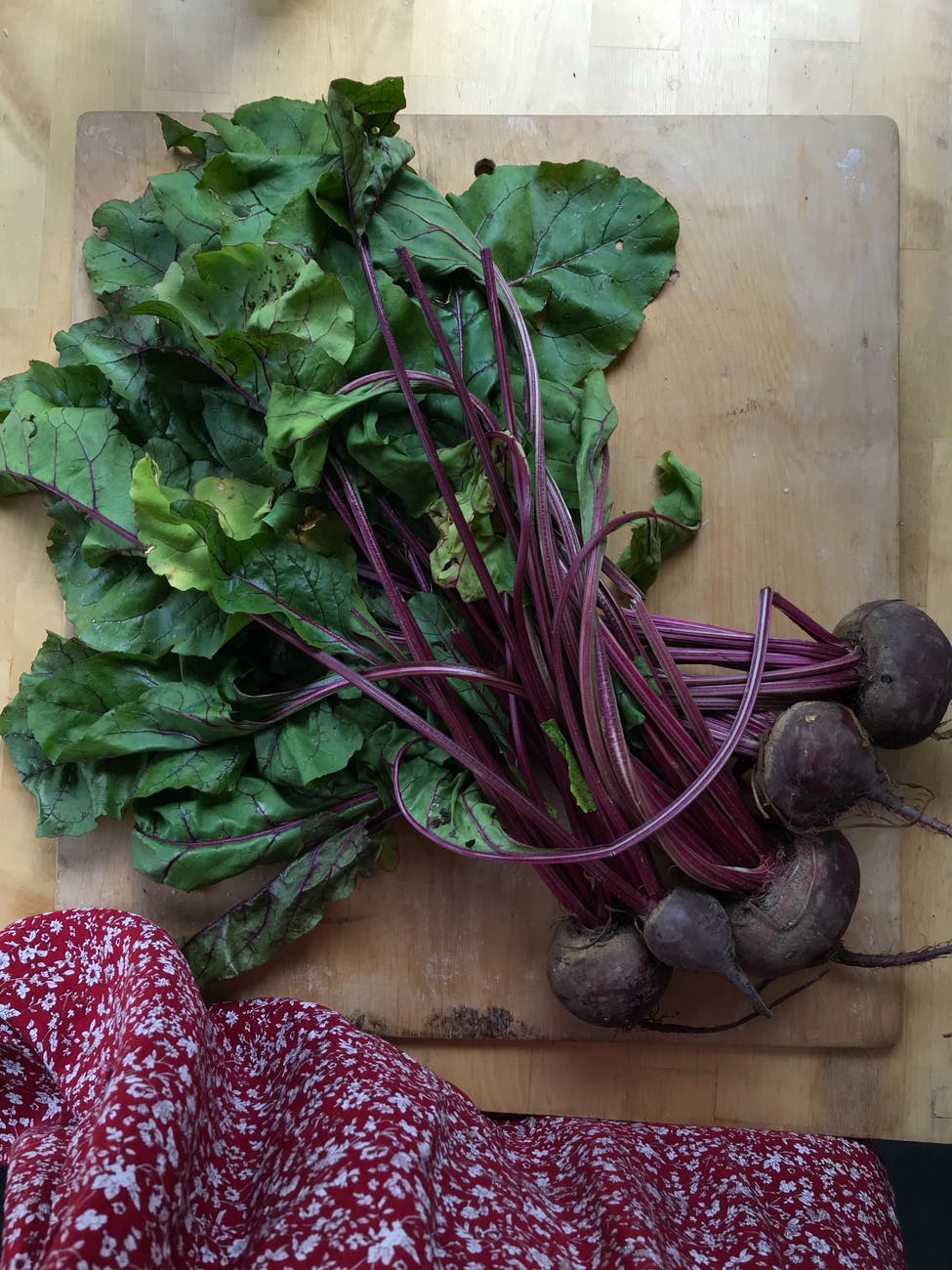
BEETS – You can use both the roots and the leaves of beets. If your beets still have greens attached, cut them off, leaving an inch of stem. Store the beet roots unwashed in a plastic bag in the crisper bin of your refrigerator. They will keep for several weeks. For the greens, keep them dry and unwashed until ready to use in a sealed plastic bag in the fridge for up to a week.
CILANTRO – Stand upright in a container with an inch of water. Then cover the herbs loosely with a plastic bag and refrigerate for up to 2 weeks.
FRENCH BREAKFAST RADISHES – This will be our last week for radishes. Store for up to two weeks in a plastic bag in the fridge. Store greens separately, ideally gently wrapped in a damp paper towel. Use the greens as quickly as possible.
GARLIC SCAPES – Garlic scapes will last up to three weeks loosely wrapped in plastic in your fridge. If you can’t get to them, they can also be chopped and frozen for later use. I like to take a handful out of the freezer bag and add them to pasta dishes in the winter for a subtle, fresh garlic taste.
HEAD LETTUCE (Romaine-Like) – Store loosely in a plastic bag in the crisper drawer of your fridge. Keep unused leaves on the head. Ideally use within a week, but it will probably store for up to two weeks if needed.
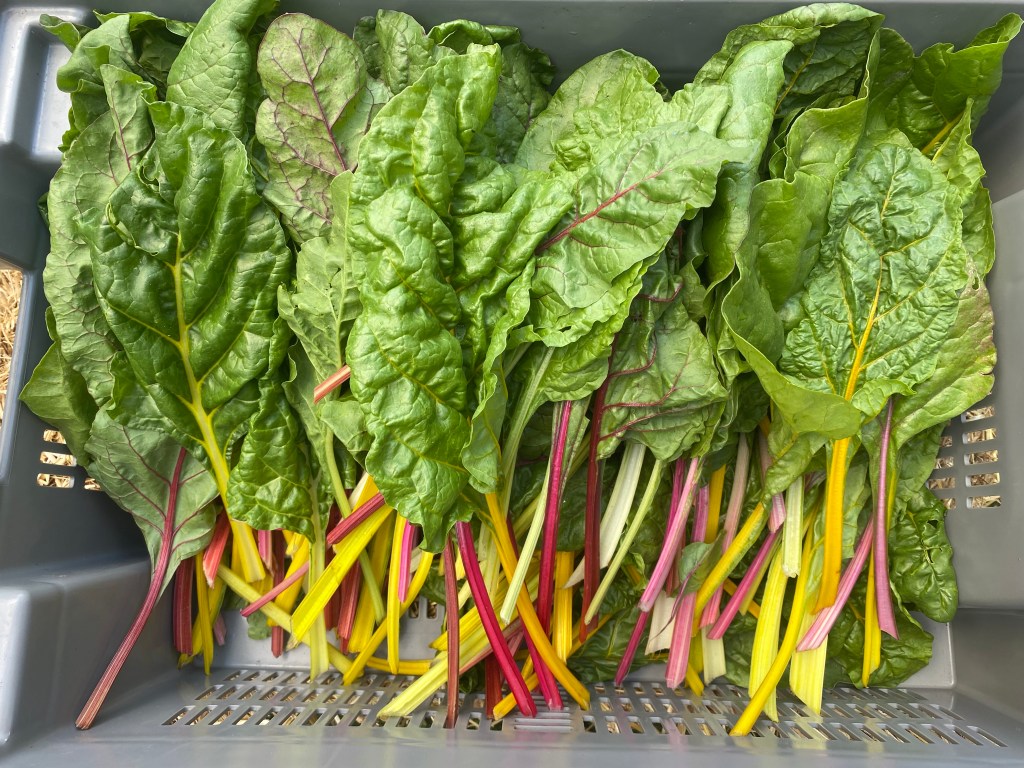
RAINBOW CHARD – Wash the chard only right before using. To store, place in a plastic bag with most of the air removed and put in the fridge. It is best used within a few days.
SCALLIONS (Large Shares Only) – Store in the crisper in your refrigerator. If you use after a week, just peel off the dry or “slimy” outer layer of the scallion, wash, and use the rest.
SUGAR SNAP PEAS – I have tried for many a year to grow peas and I’ve never had much success, so this year I decided to save myself the embarrassment of yet another sad pea crop and just buy some in for you. This week and next, your peas will be coming from Easy Yoke Farm, an organic farm which sells produce at the Rochester Farmers’ Market and People’s Food Co-Op. Their produce is always beautiful and delicious, and you’ll really enjoy these peas.
Peas are very perishable, and snap peas are best eaten fresh. Keep them in the fridge and eat within two to three days.
Notes from the Field
It’s a little crazy to admit this in the middle of the growing season, but I didn’t spend very much time with the vegetables last week. They are now off and mostly doing their own thing which is to grow, grow, grow. As soon as they have a fair number of leaves, they can photosynthesize more, and the more they photosynthesize, the more they grow, and so on and so on. Plants that had just a few leaves a couple of weeks ago are now nearly fully grown and blossoming. As long as I keep them weeded, well-nourished, and free of pests going forward, I can pretty much let nature take its course.
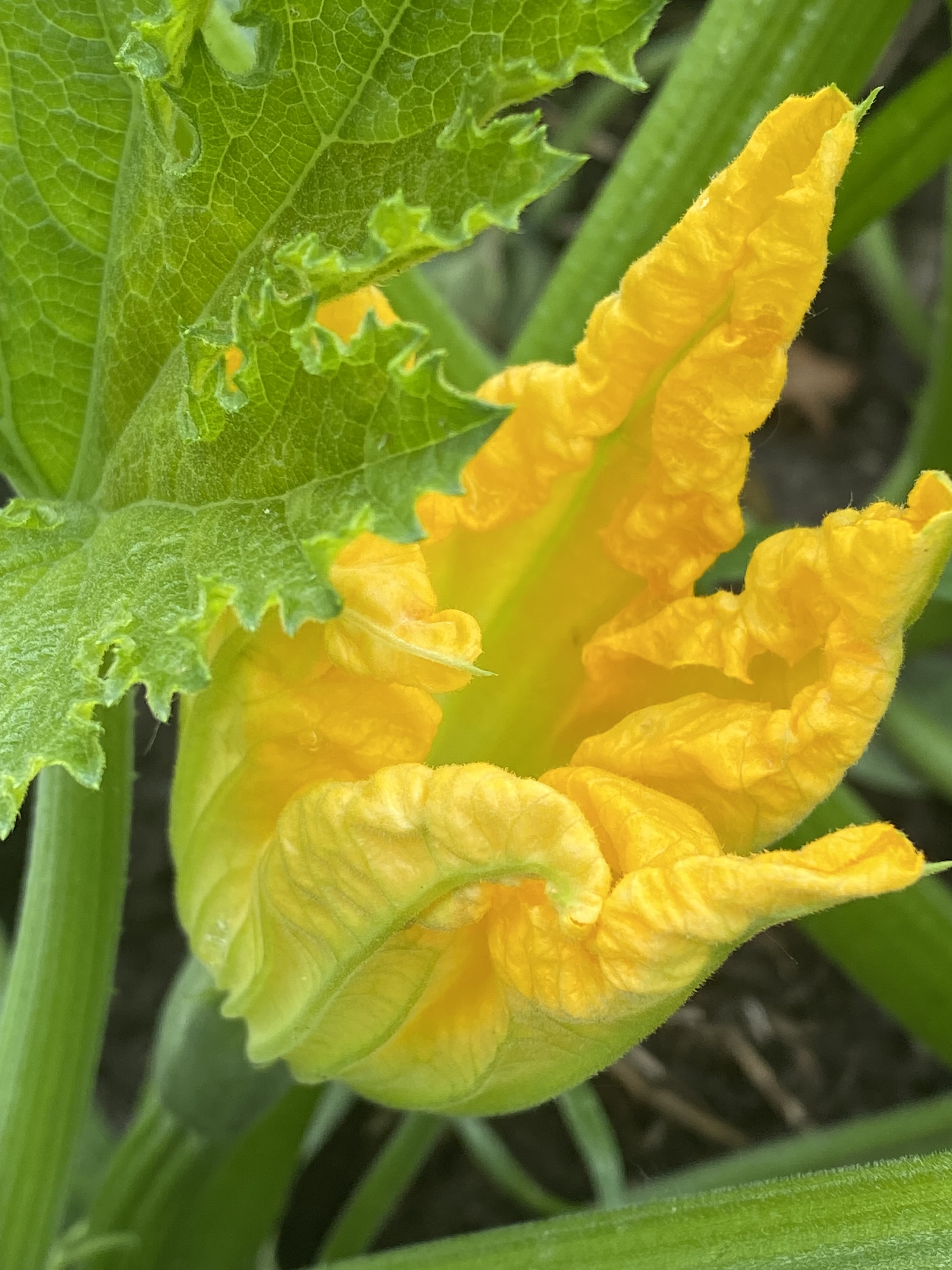
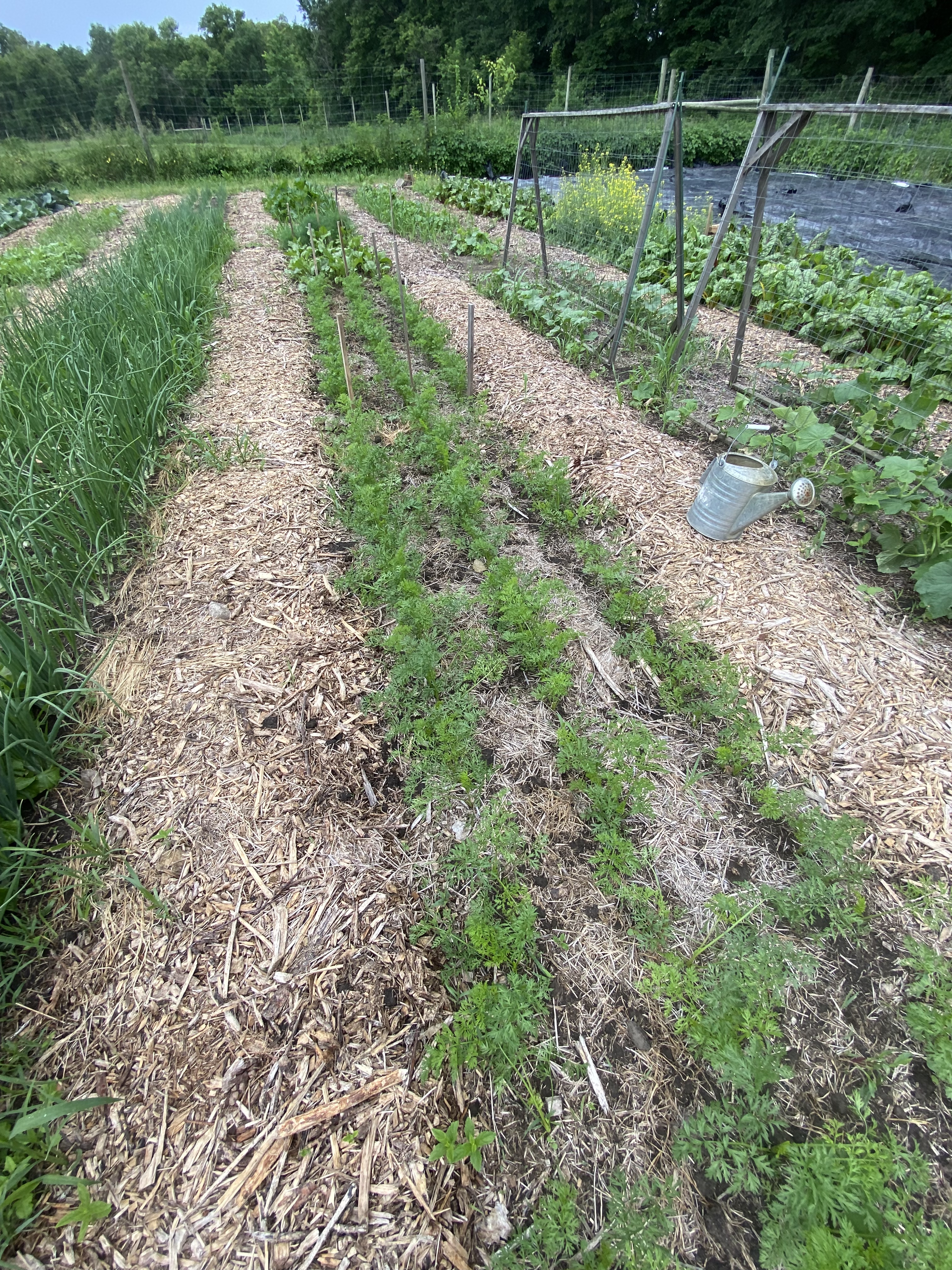
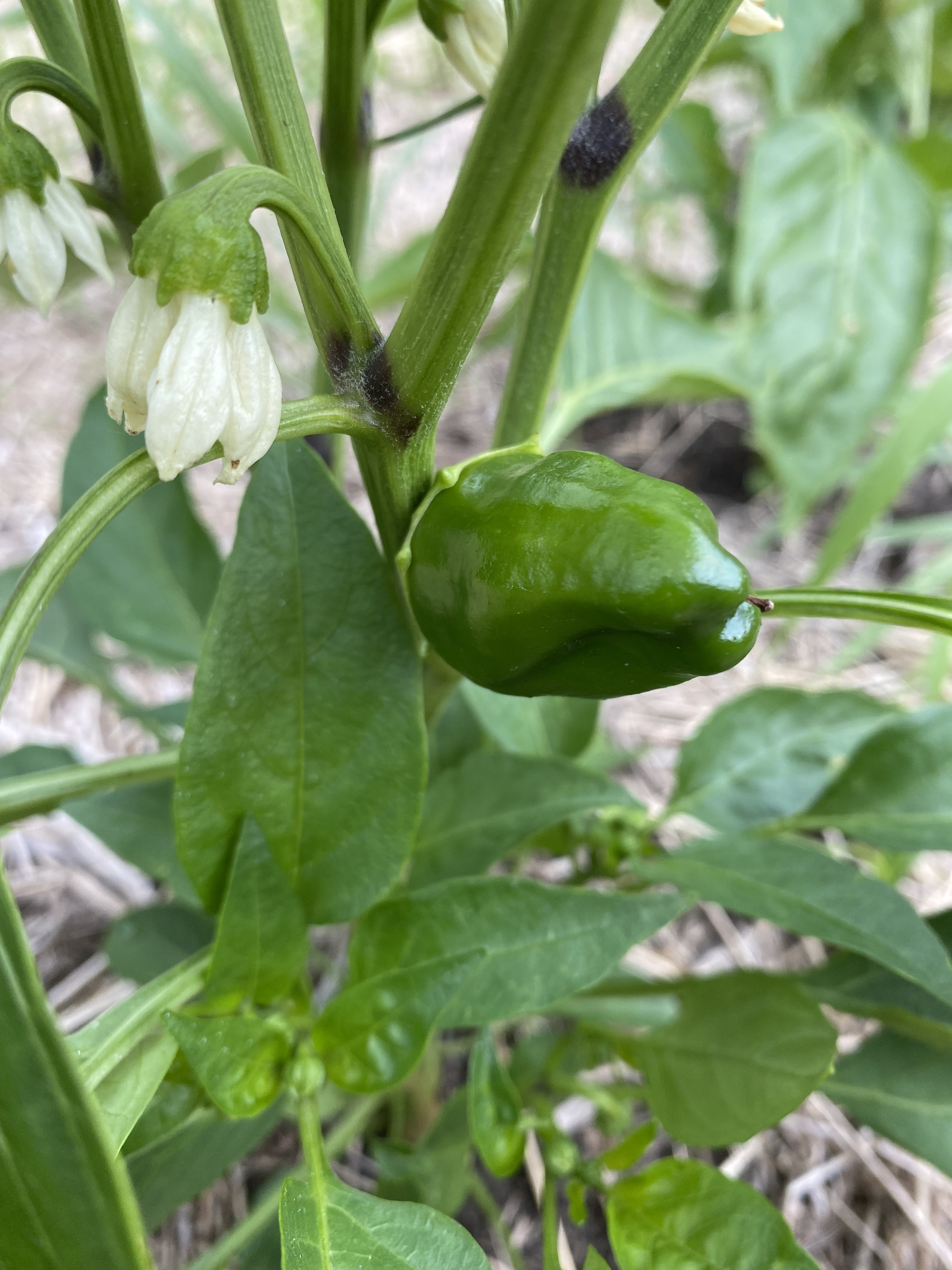
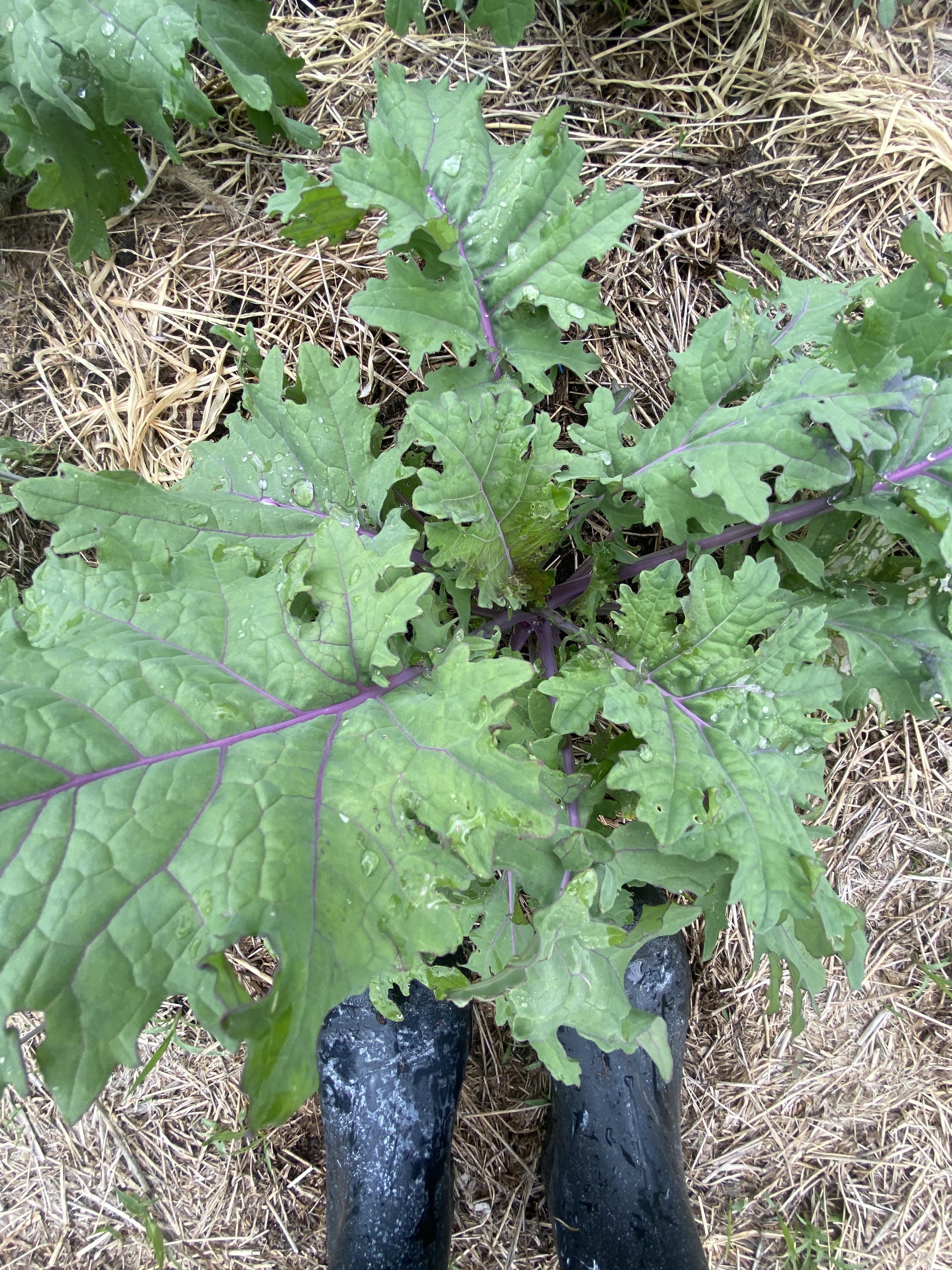
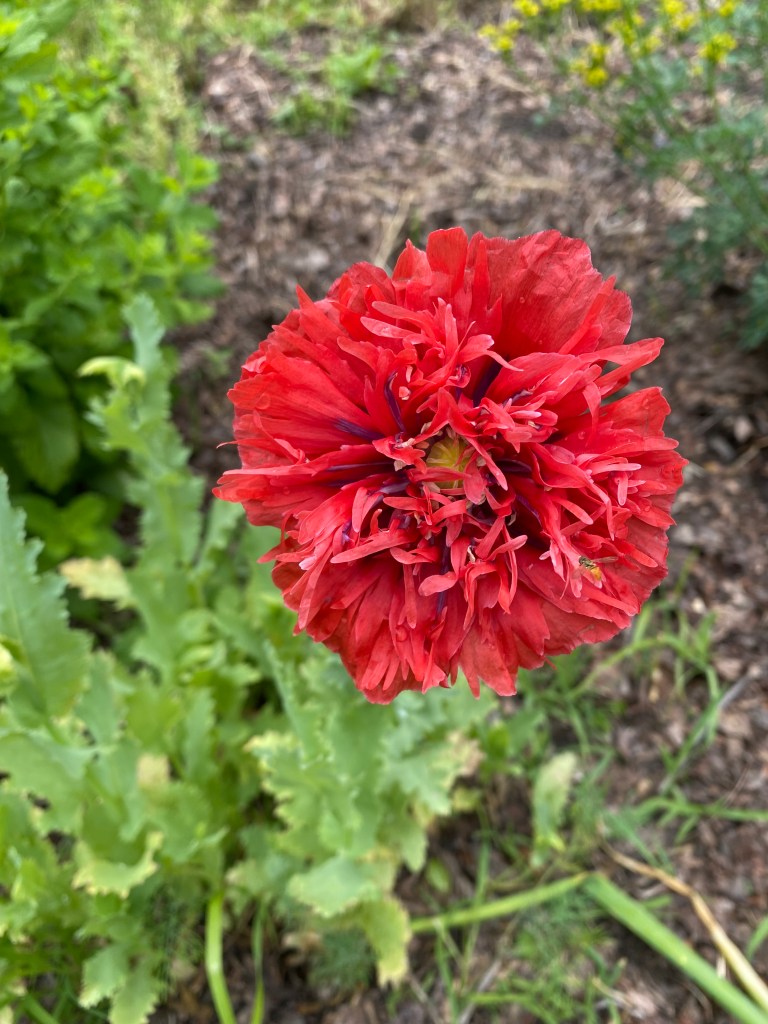
Thus, this past week, I turned my attention away from the vegetables to the areas surrounding the production field in order to nurture the whole farm system that helps me do what I do. The kids and I walked through the asparagus field and randomly seeded around 200 sunflowers throughout the rows. We hope that these 12-foot tall flowers will attract beneficial insects, like lacewings and predatory wasps that will prey upon the asparagus beetle larva as they munch their way through the asparagus ferns now that we’ve stopped harvesting. If it works, we should have fewer beetles next year which means less spear damage and more spears that we can sell and share. I also spent a bunch of time seeding flowers in the herb garden. Some of these are edible, but I mostly grow these for my own enjoyment and for the native bees and pollinators that show up when they bloom.
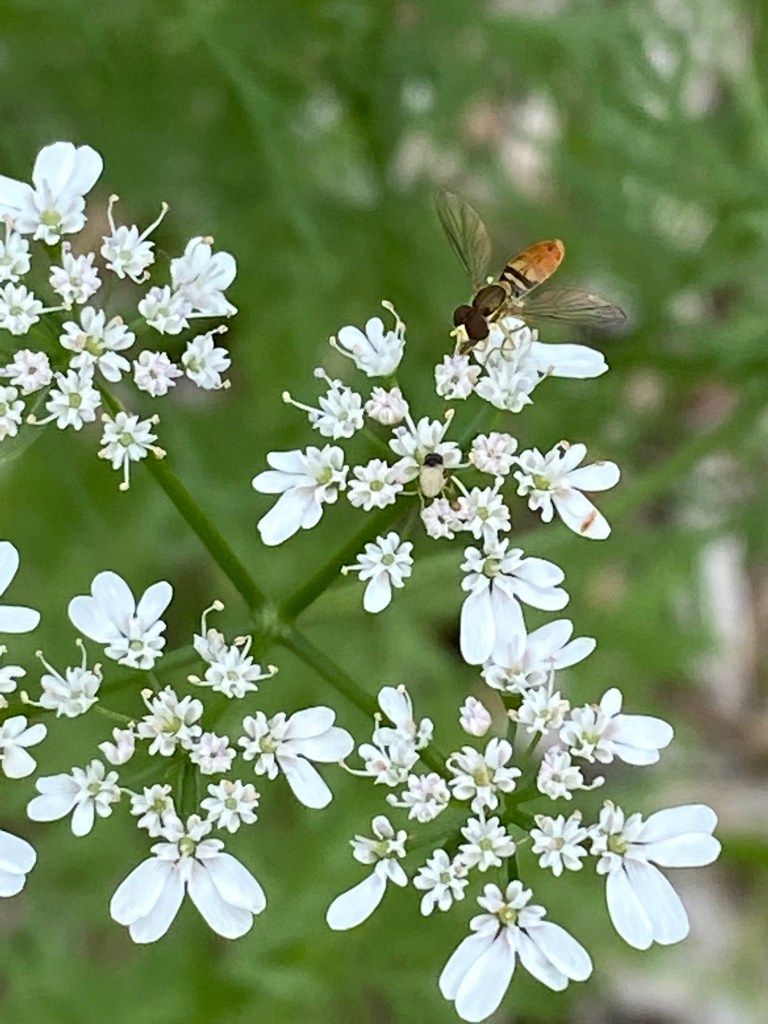
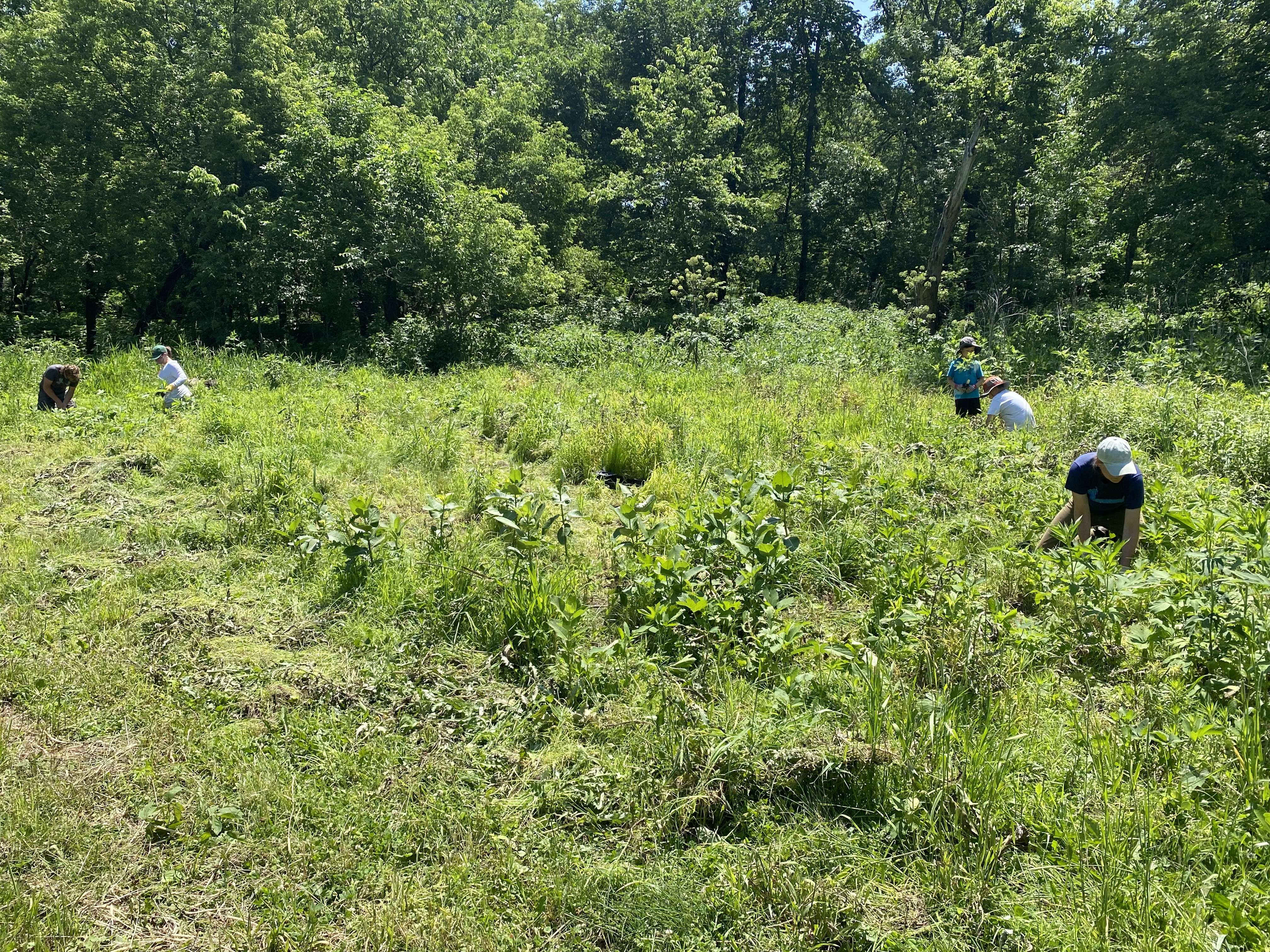
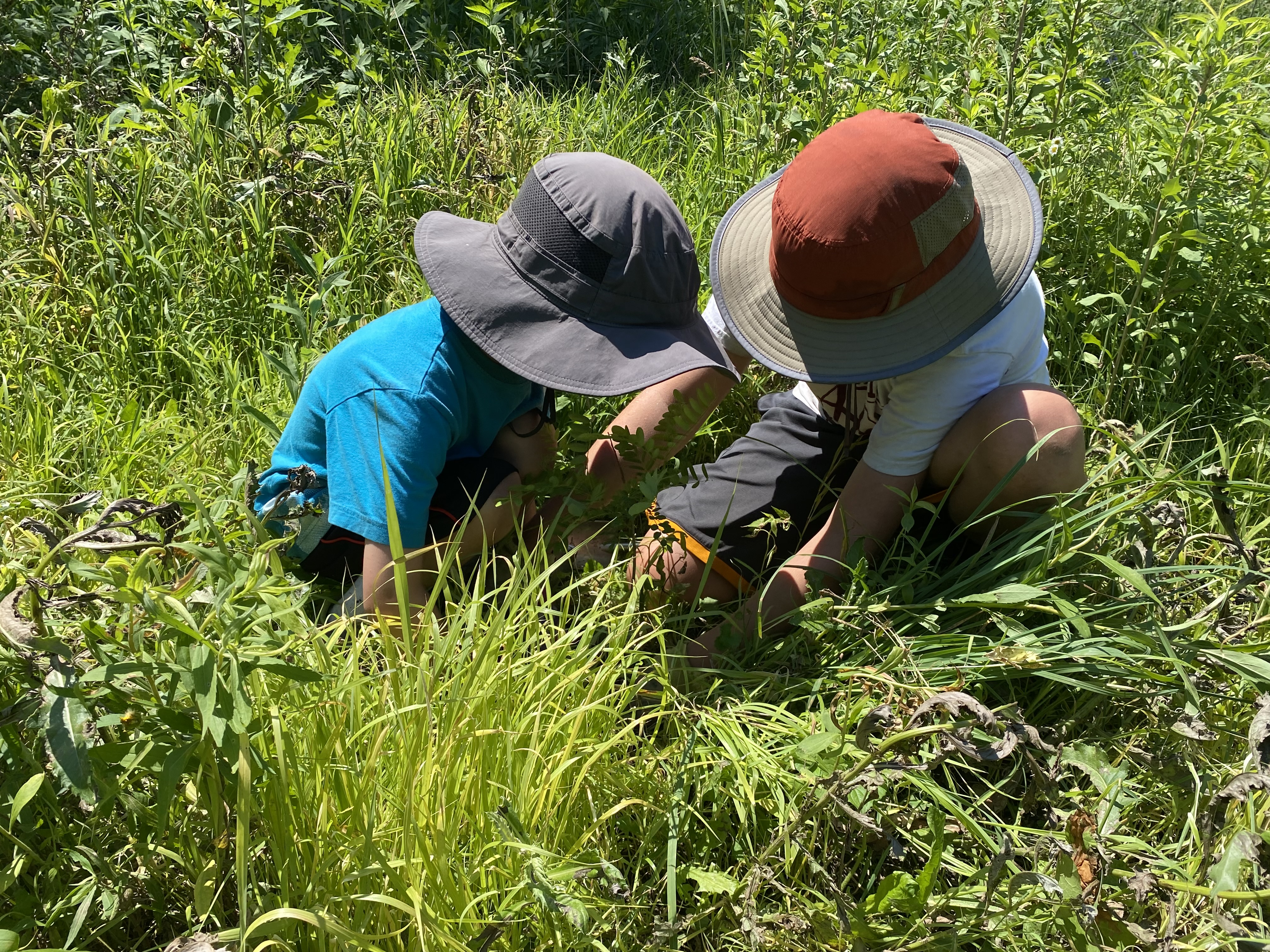
Yesterday, we had a crew of folks come out and spend an entire day helping plant around 600 plugs of native plants into an area just south of the production field. This planting was supported with a grant from the Wildlife Conservation Society and administered by Xerces Society which works to create pollinator habitat and conserve invertebrate insects. The grant also paid for us to seed 110 species of native plants on the north side of the field this past year. Once these plants grow, they will attract loads of native bees, butterflies, and other pollinators and insects that will move back and forth between their new habitats and our farm field, pollinating our crops and keeping insect pests in check. Plus, it will be stunning to look at, a benefit for us humans which is hard to quantify.

Recipes
Chicken Caesar Salad // Uses Romaine Lettuce, Garlic Scapes (can be substituted for garlic cloves)
Beet and Berry Smoothie // Uses Beets // Vegetarian
Chickpea Lettuce Wraps // Uses Lettuce (says Bibb, but you can use other types), Green Onions (tops of scallions), Cilantro // Vegetarian (but you could cook some chicken and add that in, too)
Fudgy Vegan Beet Cupcakes // Uses Beets // Vegan
Green Beans with Cilantro Pesto // Uses Snap Peas, Cilantro // Vegetarian
Recipe from Raleigh’s Hilltop Farm
Takes 15 minutes
Makes enough for 4 as a side (or 1-2 as a meal, as it is for me often)
4 cups green or yellow beans, ends trimmed
1 cup snap peas, ends trimmed, optional
Cilantro Pesto (makes approximately 2/3 of a cup):
3 cloves garlic, minced
1/4 cup toasted almonds
1/4 cup parmesan
1 cup cilantro (stems and leaves are fine; it was just about 1 bunch for me)
1 tablespoon lemon juice, fresh if you’ve got it
1 teaspoon Kosher salt
1/4 teaspoon red pepper flakes
Freshly ground black pepper
1/4 cup olive oil
- Bring a large pot of water to boil on the stove. Blanche (submerge in boiling water) beans for three minutes. Remove from water and cover with ice cubes or place hot beans in an ice bath to stop the cooking immediately. This will help keep their crispness. Blanche the snap peas for 1 minute, if using. Remove to an ice bath or cover with ice cubes. Strain the beans and peas in a colander and shake a few times to make sure most of the water is removed.
- Prepare the pesto by pulsing garlic and almonds in a food processor until very fine. Add cilantro. Pulse until the mixture resembles a course meal. Add lemon juice, salt, red pepper flakes and pepper. Turn the food processor on and slowly add the olive oil. You may need to scrape down the sides of the food processor occasionally.
- Add 1/4 cup of cilantro pesto to the cooled and dried beans and peas. Save the rest in the fridge for some other use. Add more salt and/or red pepper flakes to taste.
Grilled Carrots with Lime and Cilantro // Uses Cilantro // Vegetarian
Midwest Bok Choy Ramen Salad // Uses Bok Choy, Scallions, Radishes // Vegetarian
Recipe from Raleigh’s Hilltop Farm
Takes 15 minutes
Serves 2-4
1 head bok choy, sliced thinly (stems and greens)
1 bunch radishes, greens removed, cut into matchsticks
1 bunch scallions, thinly sliced
1/2 cup roasted and salted cashews, roughly chopped
1/4 cup white or black sesame seeds (or a mixture)
Noodles from 1 package of beef ramen
Dressing:
5 tablespoons vegetable oil
1 tablespoons toasted sesame oil
2 tablespoons rice wine vinegar
2 tablespoons honey
Flavor packet from 1 package of beef ramen
Pinch Kosher salt
- In a large bowl, combine bok choy, radishes, scallions, cashews, sesame seeds and ramen noodles. Toss to combine.
- In a small bowl, whisk together all dressing ingredients until smooth and uniform. Pour over bok choy mixture and stir well to evenly coat. Let sit 15 minutes before eating.
Roasted Beets with Goat Cheese and Toasted Walnuts // Uses Beets //Vegetarian This is a super easy and super delicious way to make beets. Simply wash one bunch of beets, cut off the top part of each beet where the stems had been, pierce each beet several times with a fork, coat them in olive oil, stick them on a baking sheet, and cover the pan loosely with foil. Bake at around 375 degrees until the beets are soft when pierced with the tip of a sharp knife or skewer. While the beets are baking, toast about 1/4 cup of walnuts in a non-stick frying pan on the stovetop over low heat, until they are warm, being careful not to let them burn. Cool the walnuts and then coarsely chop them. Sprinkle the cooked beets with between 2 and 4 ounces of crumbled goat’s cheese according to your taste, toasted walnuts, and a little salt and pepper. Enjoy!
Slow Cooker Beef and Bok Choy Fried Rice // Uses Bok Choy, Scallions
Snap Pea Salad with Chard and Pistachio Pesto // Uses Chard, Snap Peas // Vegetarian Recipe from Raleigh’s Hilltop Farm
Takes 15 minutes
Serves 2-4 as a side + lots of leftover pesto for your fridge
4 cups snap peas or snow peas, ends trimmed
2 tablespoons Chard & Pistachio Pesto (see below)
1/2 teaspoon Kosher salt
1/2 teaspoon red pepper flakes
1/4 teaspoon freshly ground black pepper
- Bring a large pot of water to a boil over high heat. Blanche peas for two minutes, drain and rinse with cold water.
- Add peas to a small bowl with remaining ingredients and toss to coat evenly. Enjoy warm or cold.
Chard & Pistachio Pesto:
1 bunch rainbow chard (5-6 leaves)
1/2 cup shelled and toasted pistachios
2 garlic cloves
1 teaspoon Kosher salt
1/2 cup olive oil
1-3 teaspoons lemon juice
- Prepare rainbow chard. Remove stems and roughly chop. Set aside. Tear leaves into small pieces.
- In a food processor, chop pistachios until finely ground. Add garlic, salt and chard stems. Process until consistent in size and then add leaves. Continue to puree until leaves are all finely chopped, you may have to scrape down the sides occassionally.
- Turn the food processor on and run it while you drizzle in the olive oil. Process until smooth. Add lemon juice to taste.
Wild Mushroom and Bok Choy Pasta // Uses Bok Choy, Garlic Scapes (these can be substituted for garlic cloves) // Vegetarian
 Middle Fork Farm