There comes a time each summer when the work on a farmstead shifts from planting to harvesting and preserving and that is usually around the end of July. There are still plenty of things to do in the field, but rather than harvesting just once or twice a week, some crops require near daily picking now and some become so plentiful that even the most ardent of veggie lovers can’t possibly eat them all at once. This means turning those crops into things that we can eat later in the year and more time in the kitchen making jams and pickles and freezing breads and veggies that I’ll add to soups and other dishes when the snow is on the ground. If you find yourself with more veggies than you can use or just want to have some saved for winter, too, make sure you refer to the A to Z Storage Guide I shared with you at the beginning of the season.
What’s in My Box this Week?
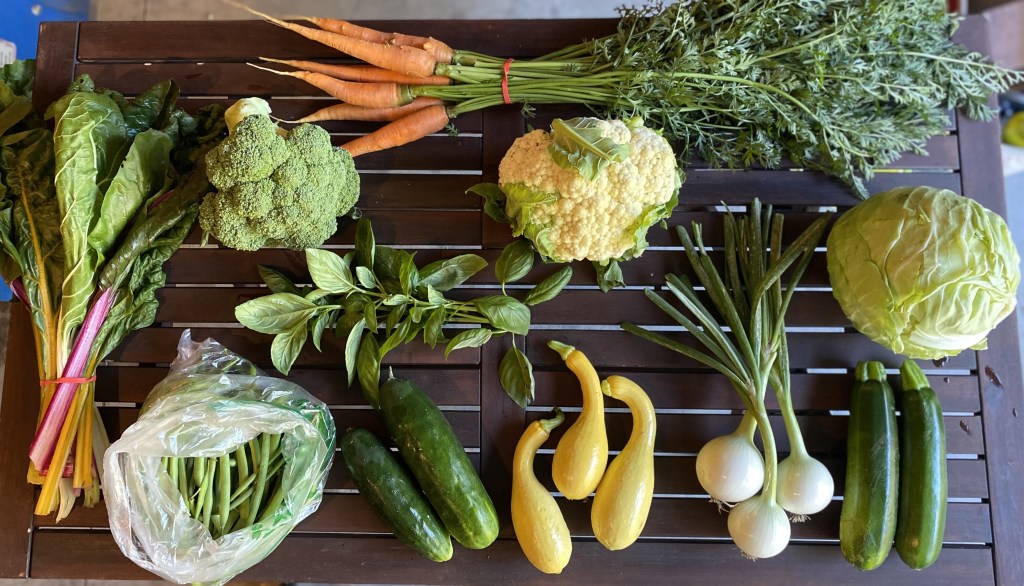
Basil – Store with the stems in a glass of water on your counter out of direct sunlight. Do not store in the fridge as it will blacken immediately and wilt after that.
Broccoli – Wrap broccoli loosely in a plastic bag and keep it in the crisper drawer of your refrigerator. The colder, the better. Store for a week.

Carrots – Remove the green tops as soon as you can, leaving about an inch of stems, and place the roots in a plastic bag in the crisper drawer of your refrigerator. They will last for several weeks. You can also store them in a bin of water to keep them crisp, changing out the water every few days. Save the tops in a plastic bag and use them in salads and other dishes (see recipe section below).
Cauliflower (Large Shares and Some Small Shares – if you don’t get one this week, you’ll get it next) – Wrap dry, unwashed cauliflower loosely in plastic and store it in the refrigerator for up to a week.
Cucumbers – Place cucumbers in a sealed plastic bag in the crisper drawer of the refrigerator for up to a week.
Green Beans – This is a variety of beans called Painted Pony that we first grew last year and found very tasty. This bean can be eaten fresh, like what you’re getting this week or, if left to grow longer, you can harvest and dry the seeds inside, using them to make a delicious bean soup. Refrigerate in a plastic bag and use within a week.
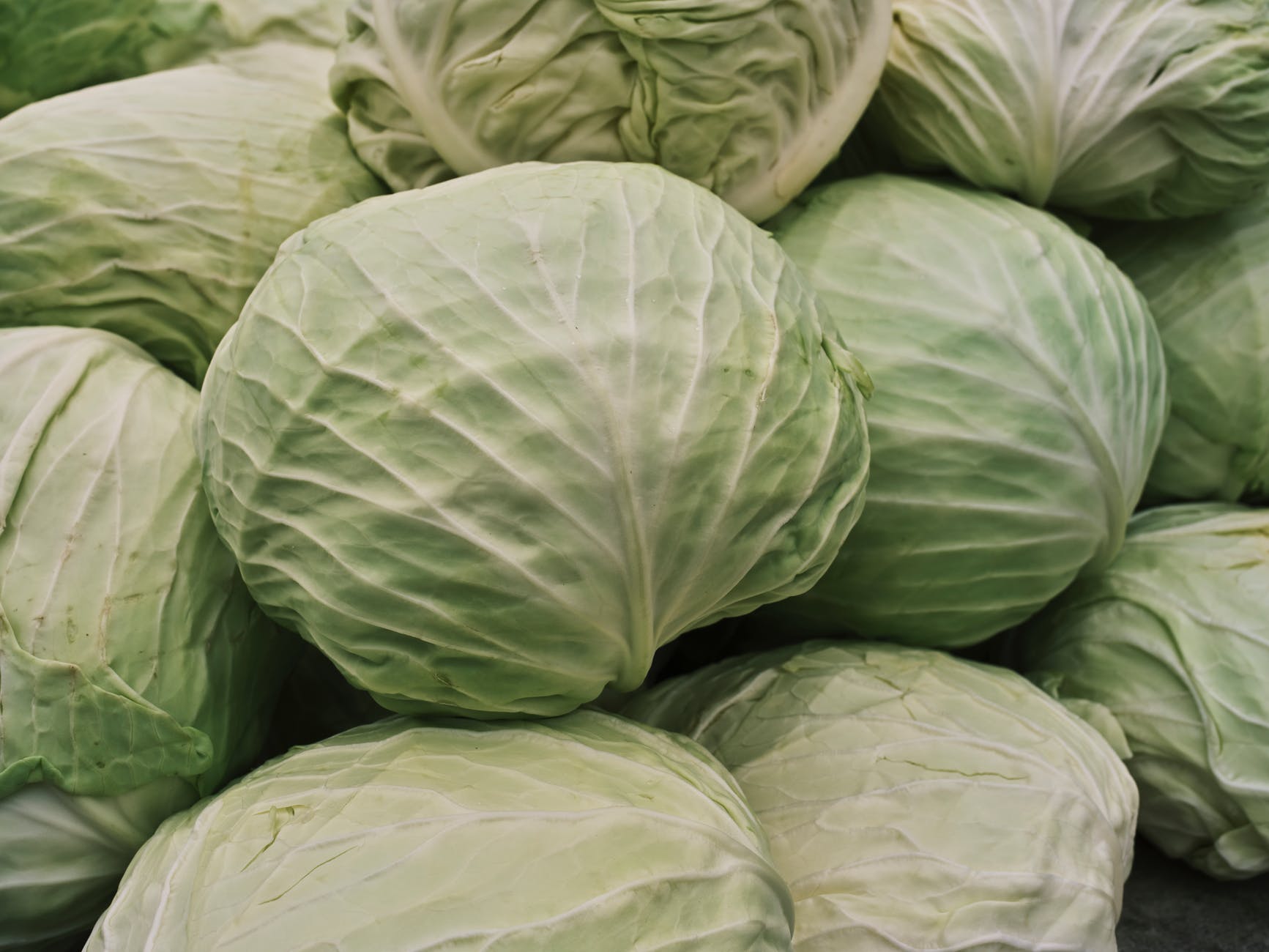
Green Cabbage – Cabbage can store for three weeks to two months and it doesn’t require much special care to have it last this long. Just keep it in the crisper of your fridge and remove the two outer leaves before eating. (These leaves are used to help store the cabbage.)
Rainbow Chard – Wash the chard only right before using. To store, place in a plastic bag with most of the air removed and put in the fridge. It is best used within a few days.
White Onions – Store in a cool dark place. Use any that feel soft first. These onions are freshly harvested and haven’t gone through the curing process that we typically use when preparing onions for longer storage, so they won’t last as long as those you might buy at a store, but they will be good for a week or two.
Yellow Crookneck Squash – Store them in the crisper drawer of your fridge, but try to use within a week as they will quickly get soggy. You can use these interchangeably with zucchini in recipes.
Zucchini – Same storage and instructions as for Yellow Crookneck Squash above.
Notes from the Field
I once had a farmer tell me that farming is like no other profession in that – if you farm your entire adult life – you get about forty tries to learn from your mistakes (one every year since you can’t easily do-over a seeding or other farm task). Add to that the unpredictability of the weather and each year can be about as different from the one before as you can get. This situation can make farming both frustrating and rewarding at the same time. It also helps one learn humility as just when you think you have it all figured out, something new happens and throws you a curveball.
This year, that curveball is hot and humid weather for days on end punctuated by severe storms that have dumped hail and large amounts of rain onto the fields in very short periods of time. According to Minnesota Public Radio’s Updraft blog, the thirty days prior to July 20 were the sixth hottest on record. They were also incredibly humid. As someone who has worked primarily out of doors over the past eight years, I can tell you without a shadow of a doubt that climate change is real and it is making farming more and more difficult as time goes on.

What does such hot and humid weather mean for crops? Right now it means that we are seeing a number of soil-borne diseases that thrive under these types of conditions. The cucumbers have something called Alternaria leaf blight, the tomatoes have septoria leaf spot, the eggplants have something yet to be determined, and the brassicas have another disease that can destroy entire plants if left unchecked. There are no organic sprays to combat these diseases, so the way I am controlling them is by picking off any leaves that exhibit symptoms and sending them to the dump. Next year, I will heat-treat my seed (the pathogen can come in via seed), choose varieties that are resistant to these diseases (if they exist), and rotate where I plant the crops as some of these diseases can overwinter in the soil for two to three years. For those veggies which survive, they are perfectly safe, delicious, and nutritious to eat. However, these problems will diminish how many vegetables we get. The plants can’t photosynthesize as much with leaves that are dying or dead, so they have less energy to produce veggies. This is certainly happening with the cucumbers and will likely happen with the tomatoes, too.
High heat, especially when it remains hot at night, causes a variety of other problems as well, including flower and pollen deformation, changes to the ratio of male to female flowers in cucurbits (cucumbers and melons), and poor pollination due to decreased pollinator activity. High heat can also stall fruit maturation.
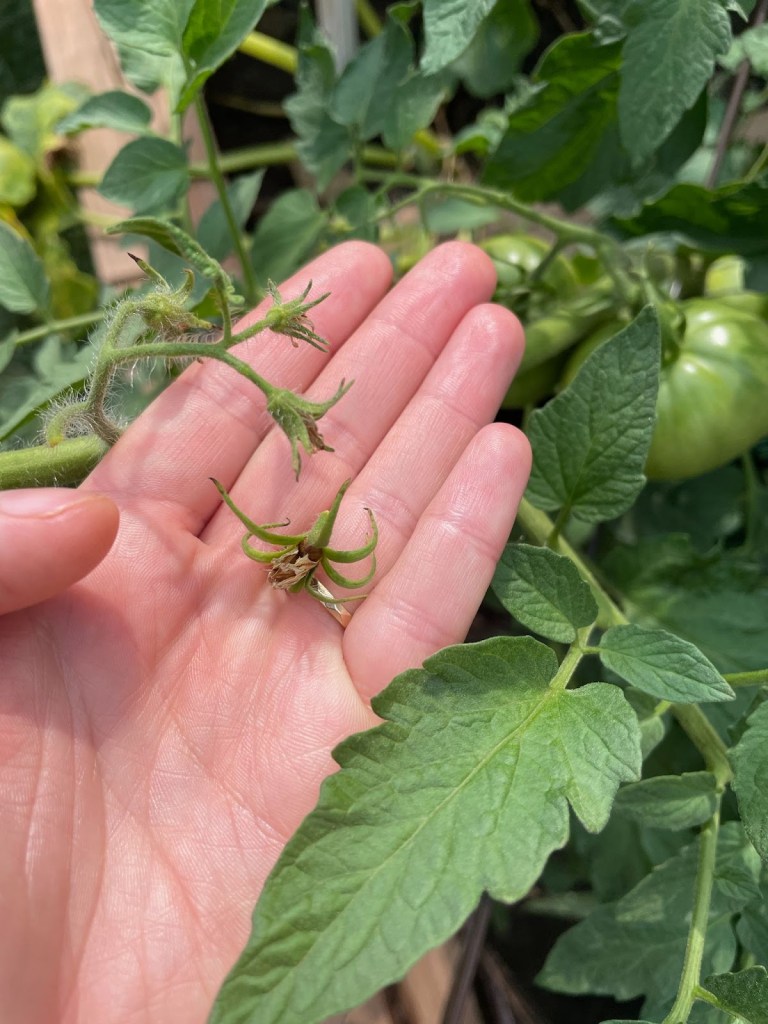
In other words, another reason you haven’t seen more peppers and cucumbers or any tomatoes at all yet is because it’s been too hot for them to do their thing. I am hoping that this week’s more seasonal temperatures will help get these veggies back on track, but the meteorologists are predicting another hotter than normal week at the beginning of August, so we’ll just have to wait and see. (Photo shows aborted flowers. Photo by: Marissa Schuh, University of Minnesota Extension)
Happily, most of the other crops are holding their own and doing well. We’re going to have a bumper crops of onions and tomatillos, and this is the first year that the voles haven’t chomped all of the beets and carrots. (Thank you to the snakes that are living in the field under the tarps. I found a big snake skin in the beet patch on Saturday!) We also do have some baby watermelons and cantaloupes on the vine, and the herbs are all growing beautifully. We started harvesting and using some basil this past week. If there is any scent better than that of fresh basil, I don’t know what it is!


Recipes
Broccoli Melts // Uses Broccoli // Vegetarian
Buffalo Cauliflower // Uses Cauliflower // Vegetarian
Charred Green Beans with Harissa Yogurt // Uses Green Beans // Vegetarian
Cucumber Lemonade // Uses Cucumbers // Vegetarian
Fresh Cabbage and Carrot Slaw // Uses Cabbage, Carrots, Green Onions (if you have some left over from last week) // Vegetarian
Ginger Glazed Carrots // Uses Carrots // Vegetarian
Green Bean Salad with Corn, Basil, and Black Olives // Uses Basil, Green Beans // Vegetarian
Roasted Carrot Soup with Tomatoes and Basil // Uses Carrots, Sub White Onion for Yellow Onion, Sub Fresh Basil for Dried Basil // Vegetarian
Roasted Cauliflower and Lentil Tacos // Uses Cauliflower, Onions // Vegetarian
Roasted Green Beans with Parmesan and Basil // Uses Basil, Green Beans // Vegetarian
Sausage-Stuffed Zucchini Boats // Uses Zucchini (can also use Summer Squash)
Simple Peach, Basil, and Ricotta Flatbread // Uses Basil // Vegetarian
Takeout-Style Sesame Noodles with Cucumbers // Uses Cucumbers // Vegetarian
Yellow Summer Squash Relish // Uses Summer Squash (can also use Zucchini), Onions // Vegetarian
 Middle Fork Farm