
I can’t believe I just typed “August” in the heading up there. This summer is certainly flying by for us. We are already halfway through our CSA season! It seems like just yesterday I was giving you a single bunch of asparagus for your share and now your boxes are so full that we can barely get them closed. Simon always helps me pack your boxes, and he figures out the math, too – how many pounds of each veggie everyone should get based on our off-season planning and what we were actually able to pull out of the field that morning. Last week we were both amazed by the bounty the farm provided. As Jericho Sanchez, a dairy farmer in New Mexico, once said, “It feels good at the end of the day to know that you have created a product that other people are going to enjoy.” (Of course, we humans only did part of that work, but still…)
What’s in My Box this Week?
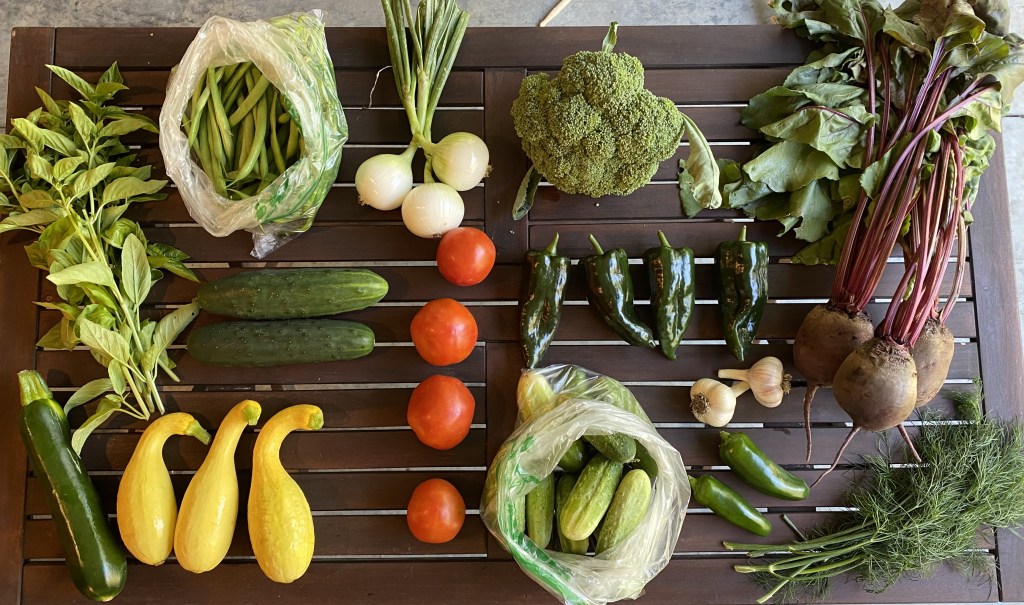
Basil – Store with the stems in a glass of water on your counter out of direct sunlight. Do not store in the fridge as it will blacken immediately and wilt after that.
Beets – I know. I know. I said you wouldn’t get any more beets until the fall, but I seeded the second succession too early and they’re ready now. (Lesson learned.) Just remember that there are several ways you can preserve beets: you can pickle them (see Recipe section below) and freeze them as well. For fresh eating, you can use both the roots and the leaves of beets. If your beets still have greens attached, cut them off, leaving an inch of stem. Store the beet roots unwashed in a plastic bag in the crisper bin of your refrigerator. They will keep for several weeks. For the greens, keep them dry and unwashed until ready to use in a sealed plastic bag in the fridge for up to a week.
Broccoli – Wrap broccoli loosely in a plastic bag and keep it in the crisper drawer of your refrigerator. The colder, the better. Store for a week.
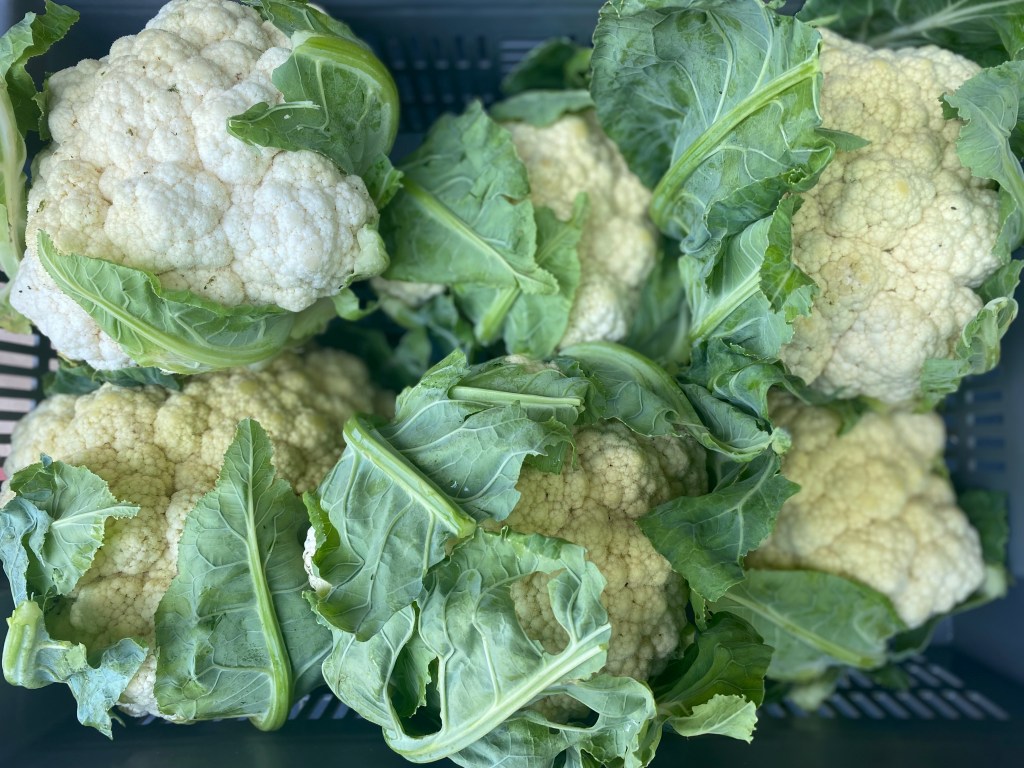
Cauliflower (Small Shares that didn’t get it last week) – Wrap dry, unwashed cauliflower loosely in plastic and store it in the refrigerator for up to a week.
Dill – For short-term storage, stand upright in a container with an inch of water. If you won’t use it within a couple of days, place the dill in a plastic bag and place in the fridge for up to two weeks.
English Cucumbers – These are the long skinny kind used for fresh eating. Place them in a sealed plastic bag in the crisper drawer of the refrigerator for up to a week.
Garlic – We harvested the garlic this past weekend. The bulbs are a bit smaller than I would like them to be, but the cloves on each bulb are of good size which is all that really matters, at least to me when I’m cooking. The garlic that you will get this week is super fresh, so it will be fairly spicy. To store fresh garlic, place it in a plastic bag in the fridge and use within two weeks.
Green Beans – Refrigerate in a plastic bag and use within a week.
Jalapeno Peppers – Hot peppers keep well in the crisper drawer of the fridge. Refrigerate peppers unwashed in a sealed plastic bag in the crisper drawer for one to two weeks. You can also dehydrate peppers for long-term.
Pickling Cucumbers – These cukes are much shorter and plumper than the English versions you’ll receive this week. While you don’t have to use them for pickles (you can just eat them as you would any other cucumber), they make great homemade pickles that will keep in your fridge for months, no canning involved. I included some recipes below for making quick and easy pickles. One pound of pickling cucumbers makes about a quart of pickles. To store, place them in a sealed plastic bag in the crisper drawer of the refrigerator for up to a week.
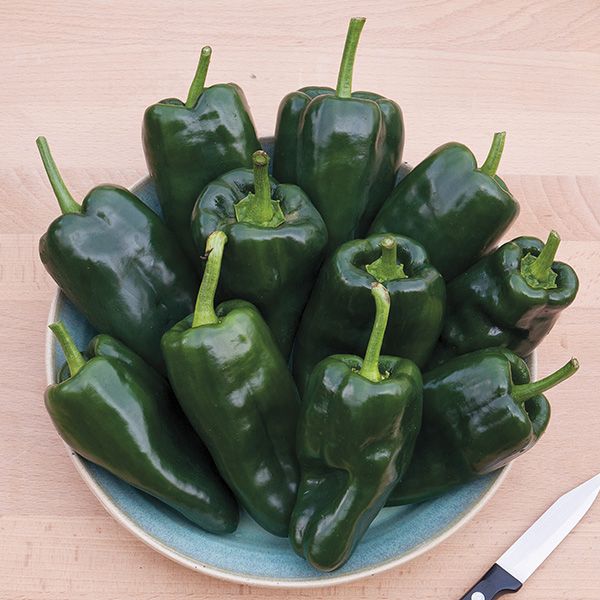
Poblano Peppers (Large Shares Only) – Poblano peppers are a mild variety of chile pepper that are about as large as a bell pepper, but skinnier and with a pointed tip. They originated in the Mexican state of Puebla (thus, their name) and are used in many Mexican dishes, like chile relleno, chiles en nogada, and rajas con crema. (Photo from High Mowing Seeds.)
If poblanos are left on the plant until they ripen to red and are then dried, they are known as ancho chili peppers. They are best when peeled and seeded which is more easily done after cooking them (see Recipe section below). Same storage instructions as for jalapeno peppers.
Tomatoes (Large Shares Only) – Store at room temperature for up to a week. Do not refrigerate.
White Onions – Store in a cool dark place. Use any that feel soft first. These onions are freshly harvested and haven’t gone through the curing process that we typically use when preparing onions for longer storage, so they won’t last as long as those you might buy at a store, but they will be good for a week or two.
Yellow Crookneck Squash – Store them in the crisper drawer of your fridge, but try to use within a week as they will quickly get soggy. You can use these interchangeably with zucchini in recipes.
Zucchini – Same storage and instructions as for Yellow Crookneck Squash above.
Notes from the Field
“Home grown tomatoes, home grown tomatoes
What would life be like without homegrown tomatoes
Only two things that money can’t buy
That’s true love and home grown tomatoes.”
John Denver, ‘Home Grown Tomatoes’ (from a song written by Guy Clark)
Is there any vegetable that people look most forward to each summer more than the tomato? This time of the season, I always start to get excited for I know that, should all go well, tomatoes will be be ready any day now and we will soon be feasting on them on a near-nightly basis. This year, I planted slicing tomatoes, paste tomatoes, cherry tomatoes, and several varieties of heirloom tomatoes (Brandywine, Cherokee Purple, Green Zebra, Kellogg’s Breakfast, and Nebraska Wedding). We harvested the first three ripe ones last week and are waiting to have enough to share with all of you.

In order to ensure that we will have tomatoes given the disease pressures that I mentioned in last week’s newsletter, I spent around twelve hours cutting off all of the diseased leaves and branches on the tomato plants last week to help prevent any further spread of it. I removed all of the branches from the bottom foot of the plants to create more distance between the plant’s leaves and the soil (the pathogen infects the leaves when raindrops hit the soil where it lives and splashes it up onto the plant) and made sure that all of the branches were tied up to keep them well off the ground. I took a look at the plants over the weekend and I didn’t see nearly as much evidence of disease on the remaining foliage, so I’m hoping I got to it early enough to ensure a decent tomato crop; I can’t imagine a summer without lots and lots of tomatoes. In my world, that would come close to tragedy!
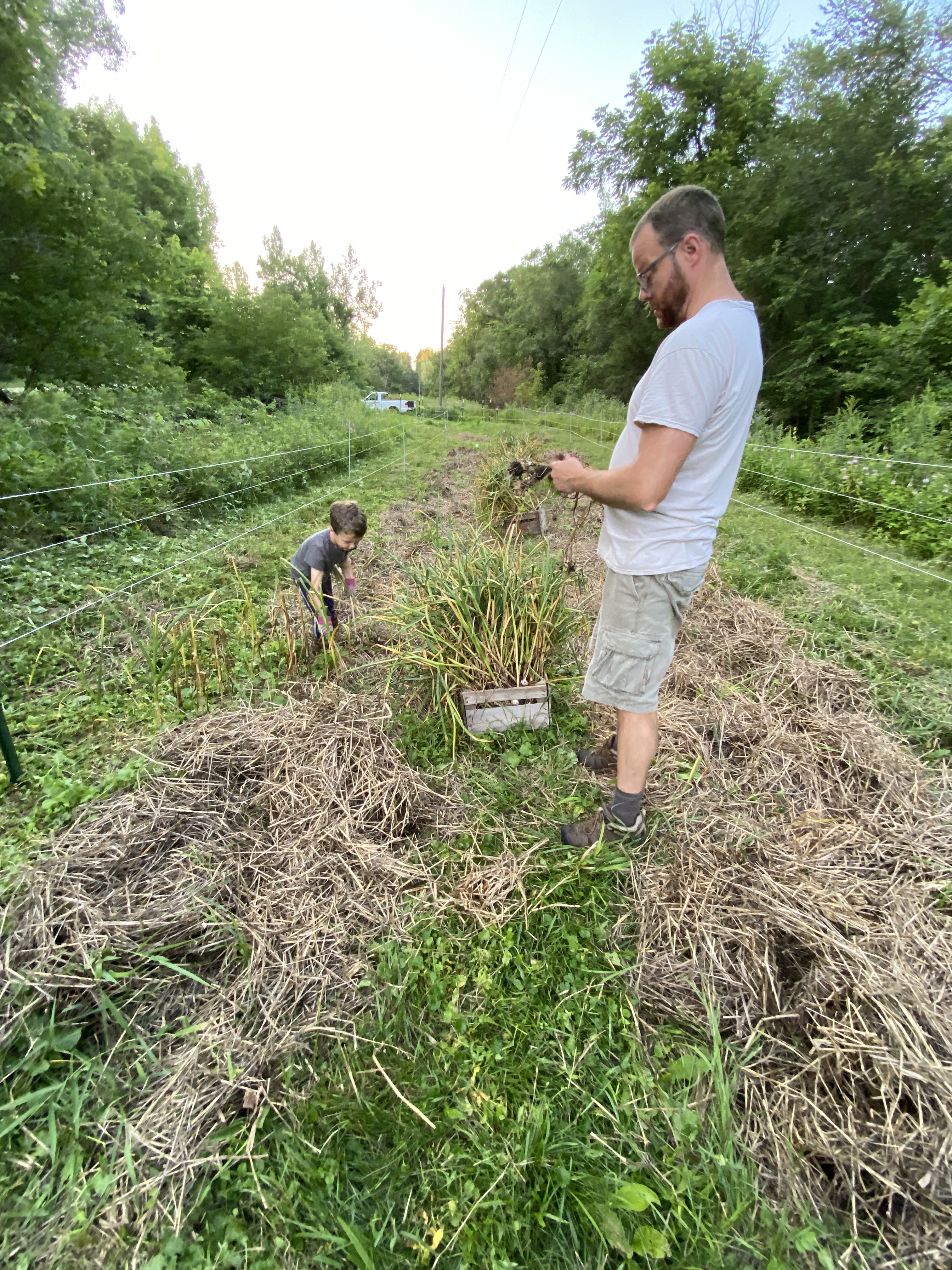
Other than emergency tomato care, the week was pretty quiet in the field. We seeded some more daikon radish and green lettuce for the fall, and Simon thinned out the fall carrot crop. Both kids helped with Japanese beetle scouting and the whole family worked together to bring in the entire garlic harvest.
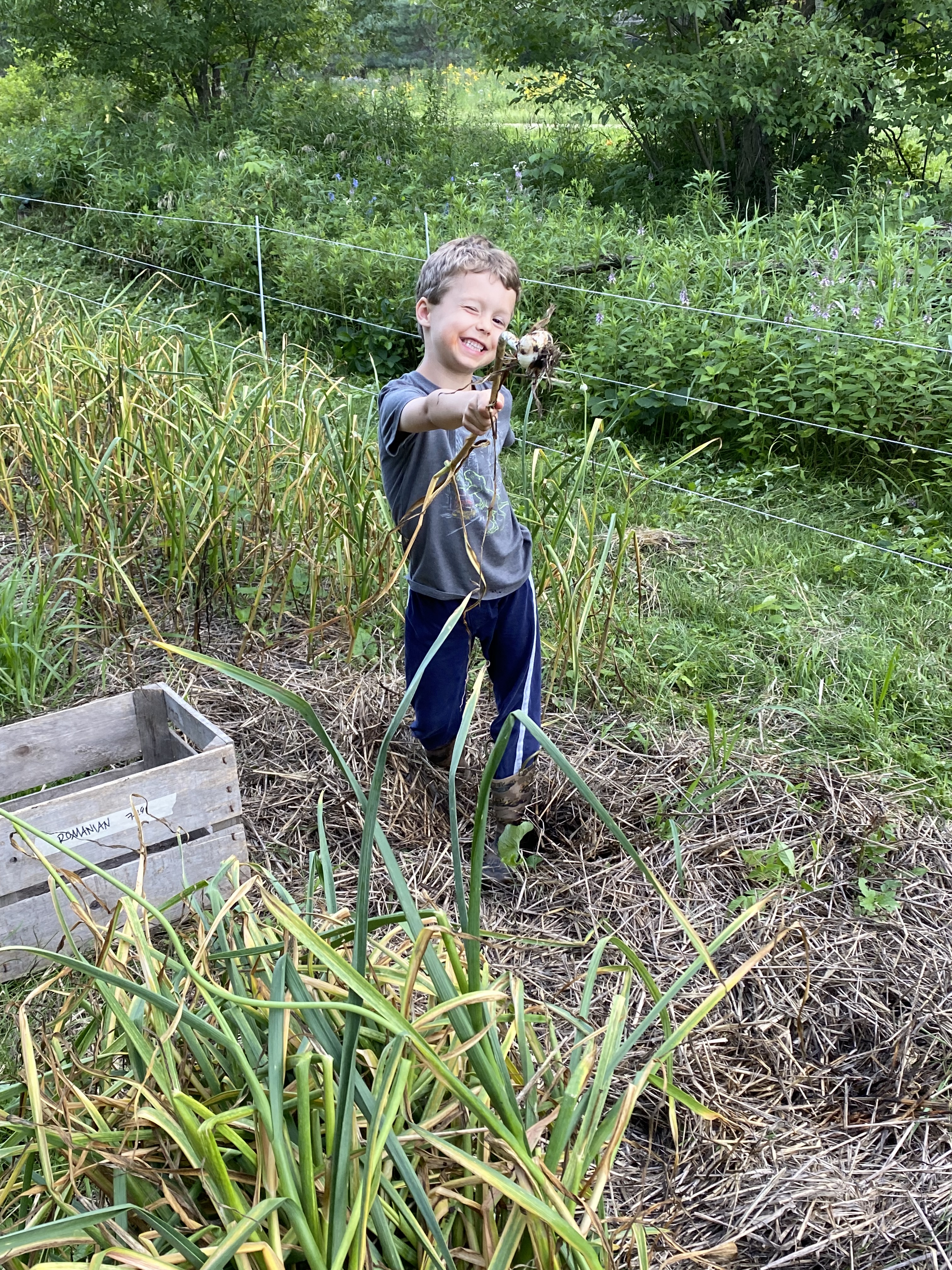
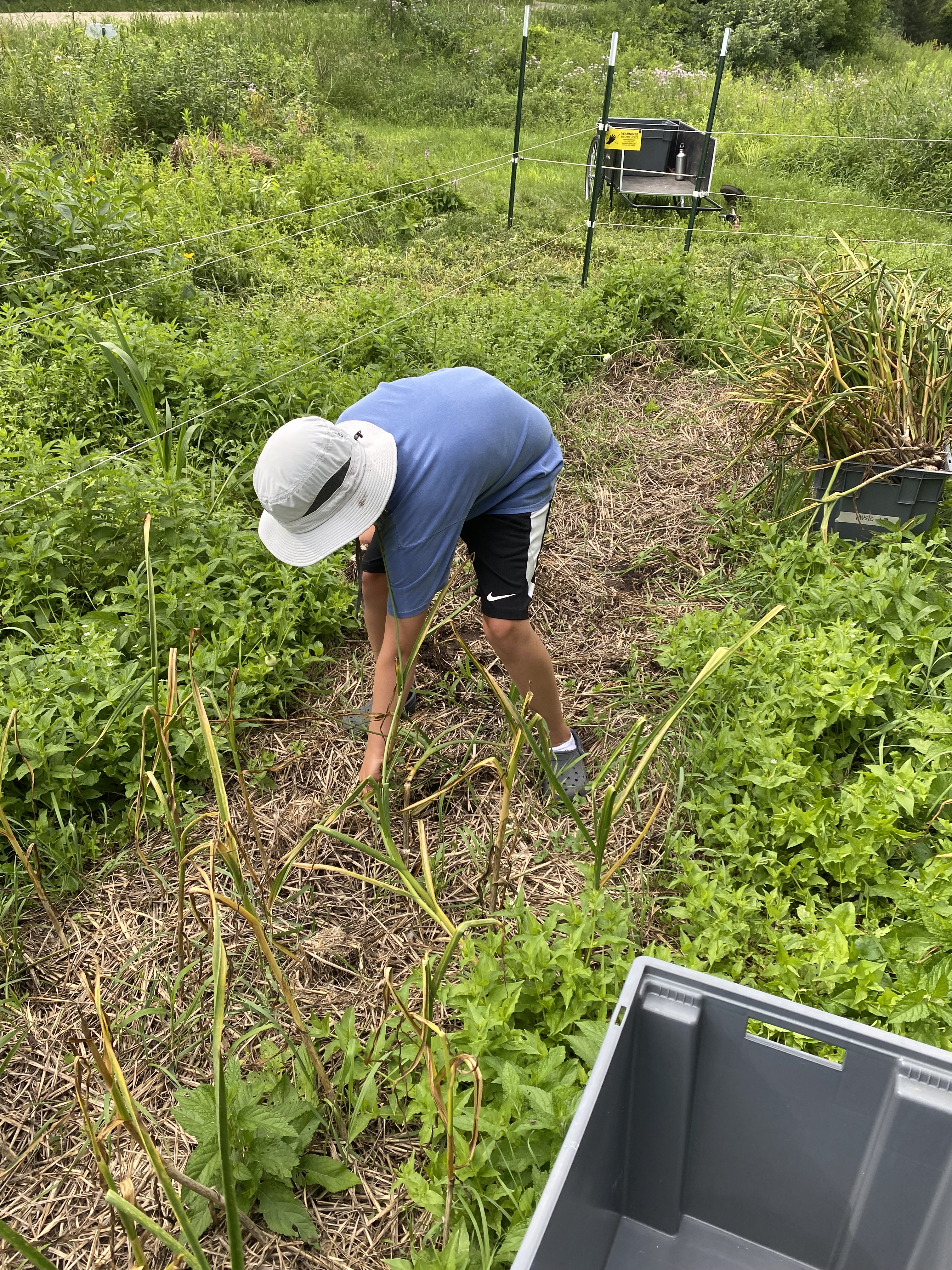
This week, I will renew the strawberries which involves cutting all the plants back to two inches, removing runners that have gone a little too far outside of their designated rows, and feed them with some nitrogen in the form or organic corn gluten. Renewal is done for several reasons: it reduces leaf disease and insect pest pressure and encourages runner and daughter plant production within the rows. It also stimulates new leaf growth; next year’s fruiting buds are formed in the fall and renovating shortly after the last harvest supports bud initiation and increased yield the following year. Even though we didn’t really have a strawberry harvest because of the flood this year, it’s still a good idea to do this work.
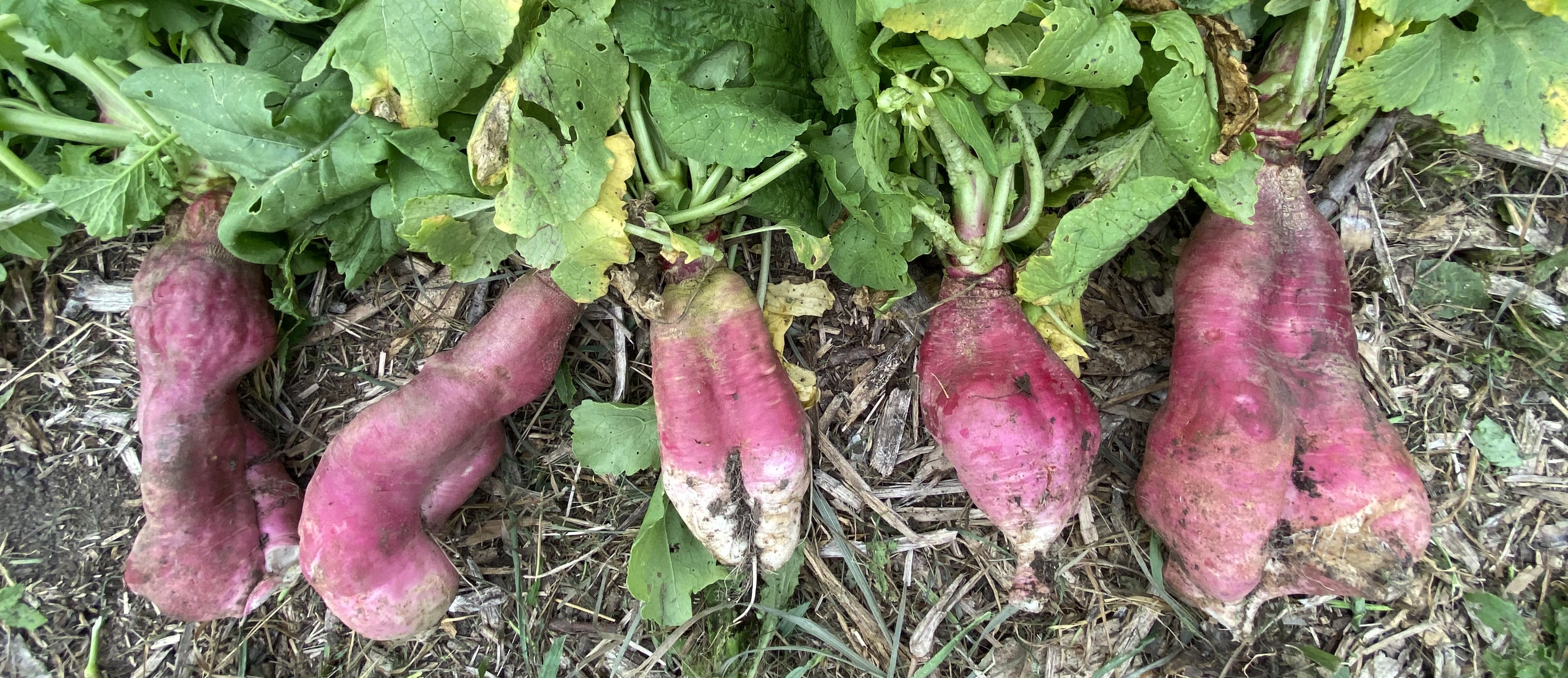
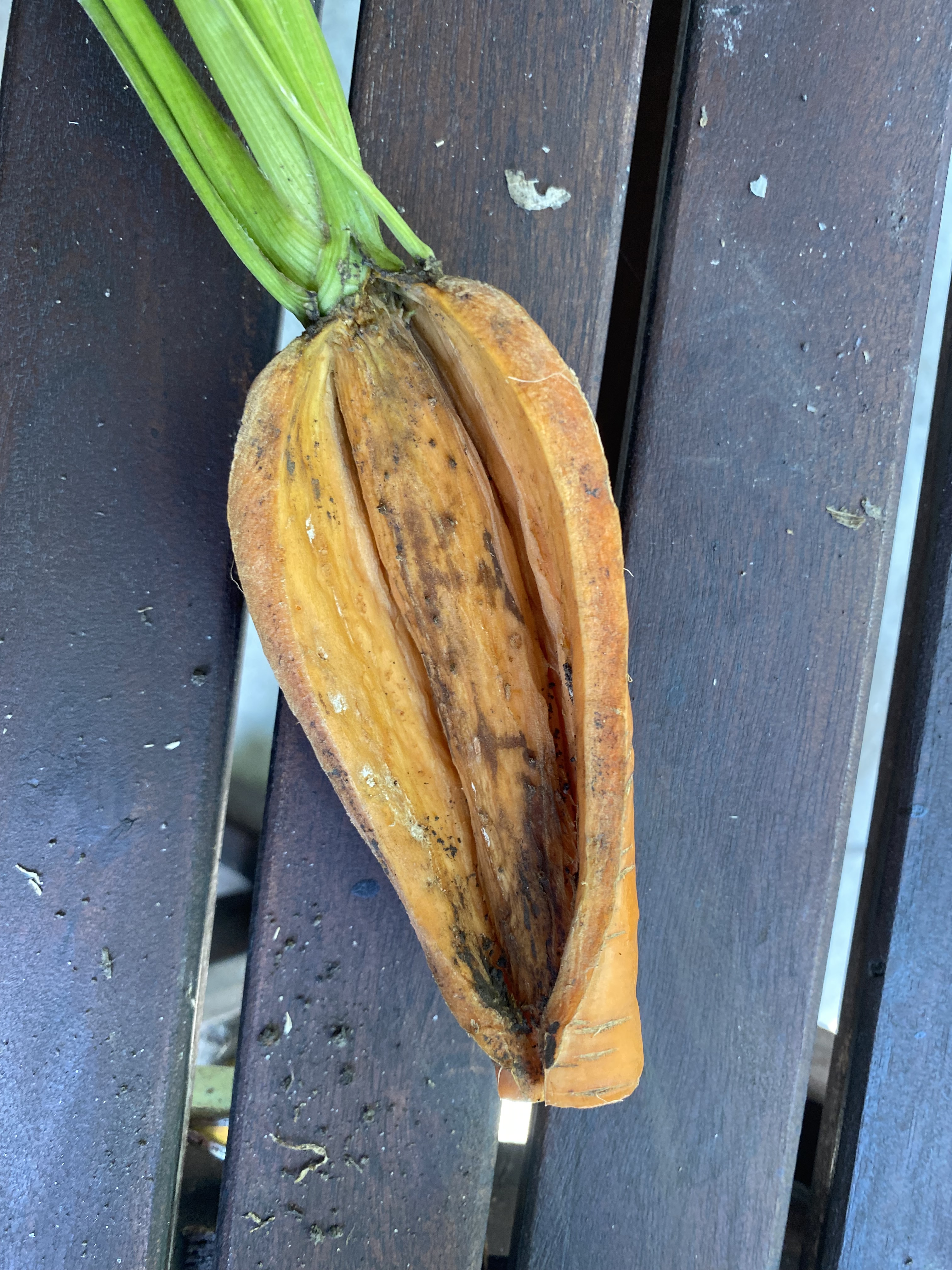
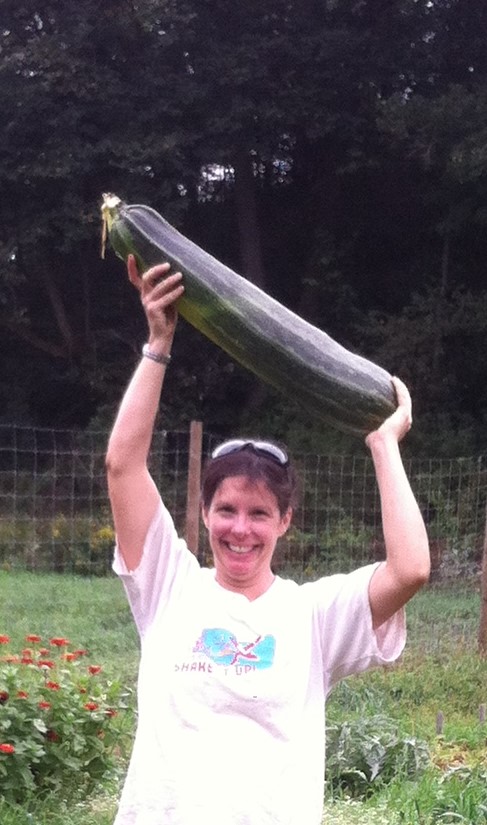
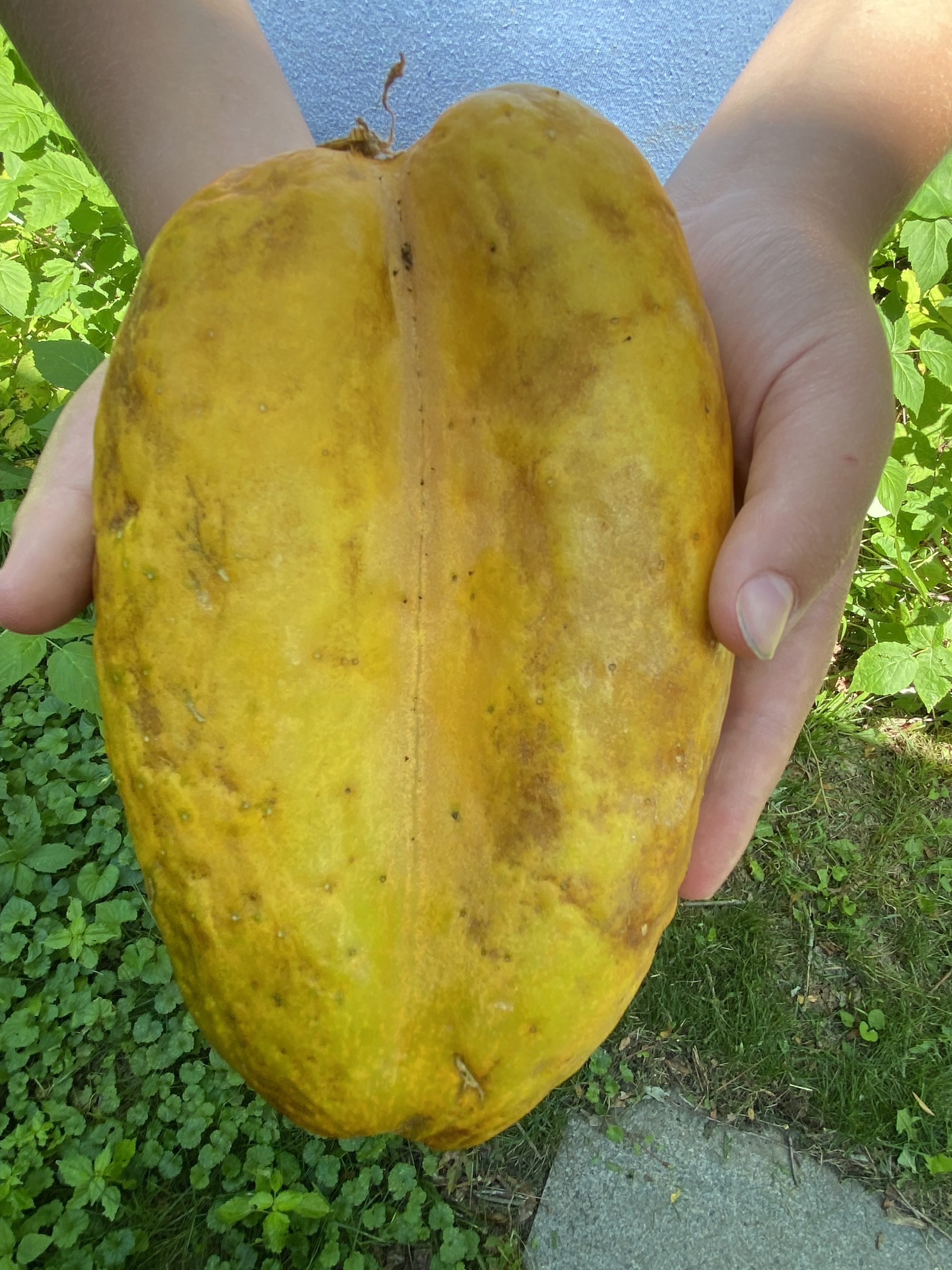
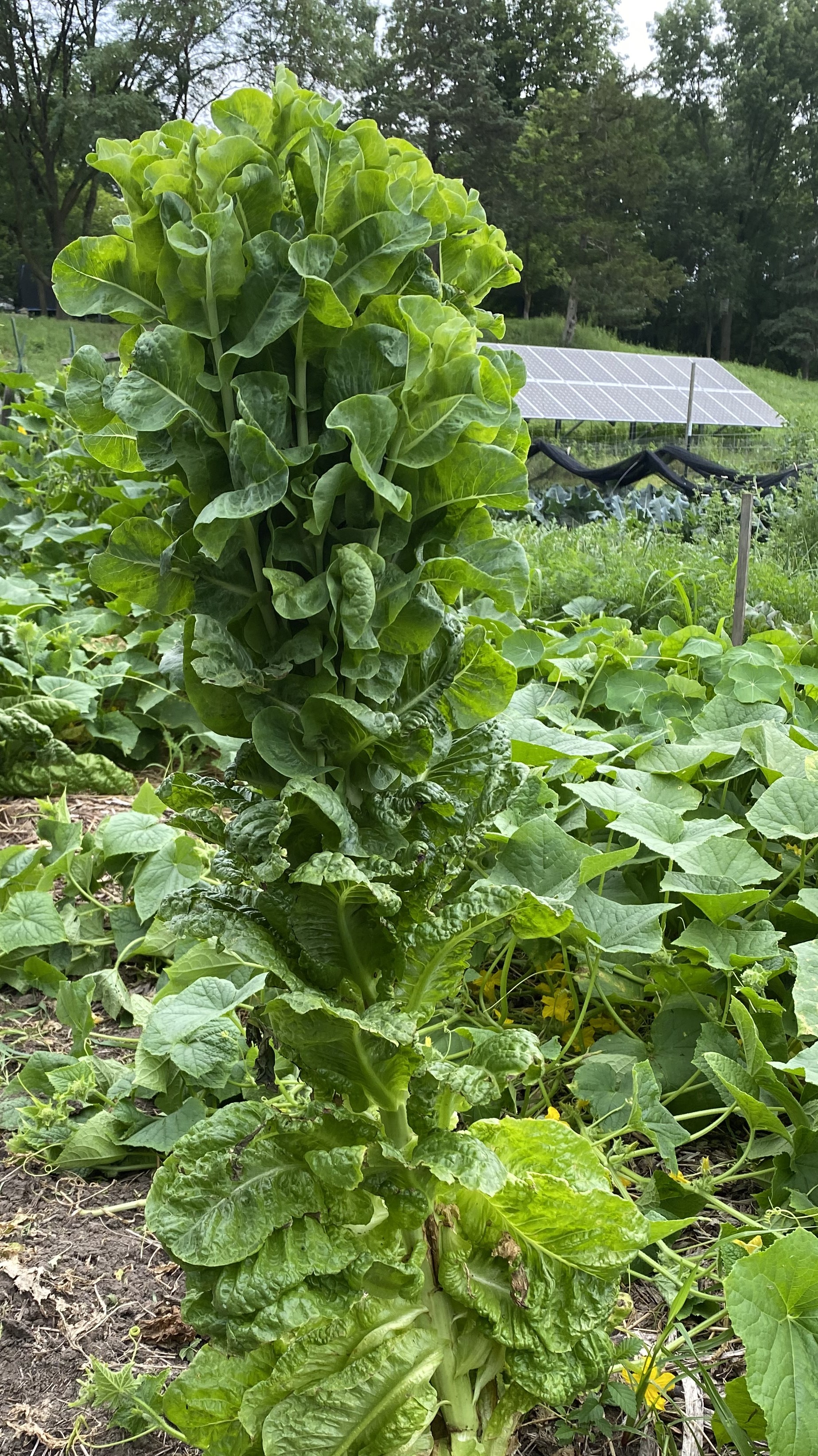
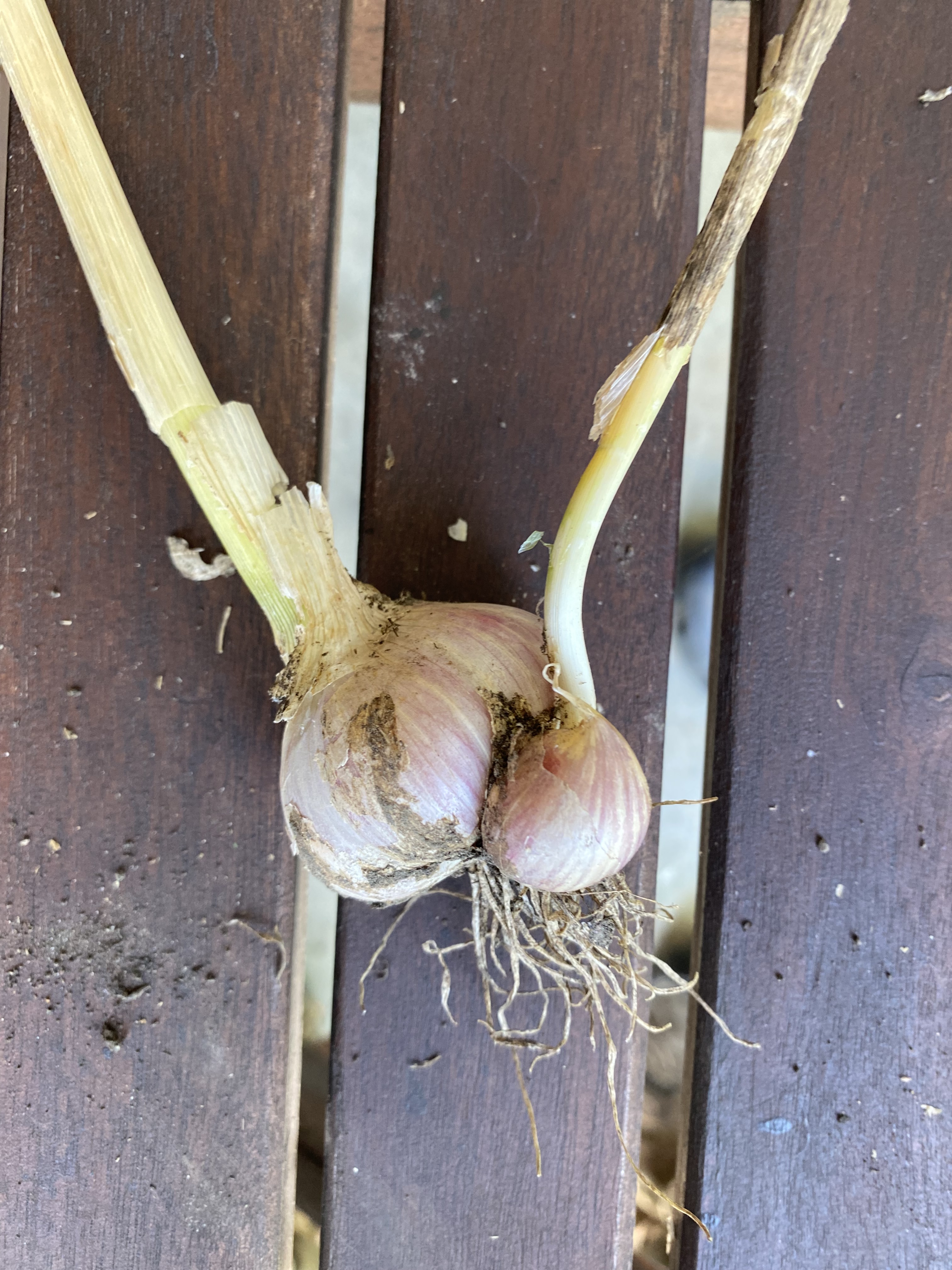
On another note, we have been coming across some veggies that look pretty silly as we harvest or prepare beds for new crops. Usually these look funny because we’ve let them grow for way too long, and sometimes they grow this way as a result of something the plant did. Either way, I thought I’d share some photos of these because they’re pretty weird-looking and/or abnormally huge and it’s fun to find these in the field from time to time. (From the top: overripe French breakfast radishes, one overripe carrot that split open, an enormous zucchini, a super tall lettuce plant, two overripe cucumbers that fused together, garlic with two stalks instead of the usual one.)
Recipes
Bread and Butter Pickles // Uses Pickling Cucumbers // Vegetarian
Easy Homemade Cucumber Pickles // Uses Dill, Pickling Cucumbers // Vegetarian
Here’s another Easiest Fridge Dill Pickles recipe // Uses Dill, Pickling Cucumbers // Vegetarian
Refrigerator Pickled Beets // Uses Beets // Vegetarian
Roasted Poblano and Heirloom Tomato Salsa // Uses Garlic, Poblanos, White Onions // Vegetarian
Roasted Poblano, Sweet Corn, and Potato Soup // Uses Garlic, Poblanos
Several Ways to Roast Poblano Peppers
Smoked Stuffed Poblano Peppers // Uses Poblanos
Spicy Pesto and Cheese Stuffed Zucchini Involtini // Uses Basil, Zucchini (or sub Summer Squash)
Spicy Poblano, Black Bean, and Quinoa Enchiladas // Uses Garlic, Jalapenos, Onions, Poblanos; could also add some shredded zucchini or summer squash into the mix // Vegetarian
Zucchini Grilled Cheese // Uses Zucchini (can also use Summer Squash instead) // Vegetarian
 Middle Fork Farm