
August is a funny time on the farm. It’s the month when my favorite veggies – the ones I’ve been waiting for since winter – are finally ripe and ready to harvest, and it’s also the month where I start to get a little tired of deciding what to do with all of the produce that is coming out of the field. Besides planting enough veggies for you, I plant enough for our family, both to eat fresh and to preserve for later on the year. A lot of work goes into planning and growing all of that food, and so I find myself feeling obligated to use it all up. Thus, the kitchen counters and refrigerators are crowded with pickling crocks, canning jars, and lots of produce needing to be processed. Looking at it all can make me feel a bit overwhelmed from time to time.

CSA members can also feel this way – that they need to use everything that comes in their box each week – and when life intervenes and they can’t, some experience what we CSA farmers call “veggie guilt.” Knowing this, and realizing that this is the time of the season when your boxes are full to the brim, I just wanted to take a minute to let you (and me!) off the hook.
The reality is that sometimes we all just have a busy week that makes it a whole lot easier to go out to dinner or warm up a frozen burrito in the microwave than to cook. Sometimes we’re just not in the mood to be in the kitchen. Sometimes that means that not all of the produce will get used, and that’s okay. That’s life.
I can’t tell you how many times I have discovered an old zucchini or cucumber or herb in the back of the fridge that I just couldn’t get to in time. I throw it in the compost pile and don’t worry about it. I also frequently decide that there is just no way I’m going to be able to cook with everything that I have, so I gather some of it up and give it away to friends, family, and neighbors.
Being part of a CSA can be really challenging in that for most members, it presents an entirely new way of shopping and cooking. Few of us grew up eating seasonally and so the CSA learning curve can be steep, especially during the first year. Thus, I want you all to give yourselves credit for what you have been able to do so far and to give yourselves a break when you can’t do it all. Even if you end up throwing some produce out, you’re still doing a lot of good helping to support local, organic agriculture. A few unused veggies here or there doesn’t change that at all!
What’s in My Box this Week?
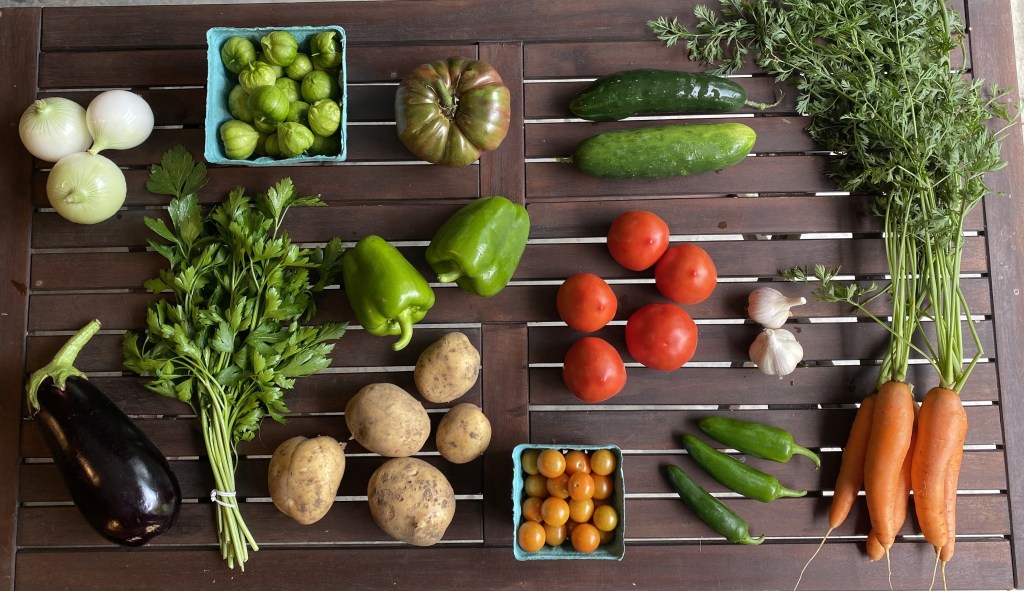
Carrots – Remove the green tops as soon as you can, leaving about an inch of stems, and place the roots in a plastic bag in the crisper drawer of your refrigerator. They will last for several weeks. You can also store them in a bin of water to keep them crisp, changing out the water every few days. Save the tops in a plastic bag and use them in salads and other dishes.
Cherry Tomatoes (Large Shares and Probably Most Standard Shares, too – if you don’t get them this week, you’ll get them next) – This week’s variety of cherry tomato is Sungold. Cherry tomatoes can over-ripen pretty quickly, so it can be a good idea to store them in the fridge if you’re not going to eat them right away.
Eggplant – Everyone will get Italian eggplant (fat and dark purple) this week. Eggplant is very perishable, so use it quickly or at least within the week. To store in the fridge, wrap it unwashed in a paper towel (not plastic) and keep in your crisper. You can also store it unrefrigerated at a cool room temperature.
English Cucumbers – Place in a sealed plastic bag in the crisper drawer of the refrigerator for up to a week.
Garlic – The garlic you’re getting this week is still fresh, so place it in a plastic bag in the fridge and use within two weeks.
Green Peppers – Refrigerate peppers unwashed in a sealed plastic bag in the crisper drawer for one to two weeks. You can also dehydrate peppers for long-term.
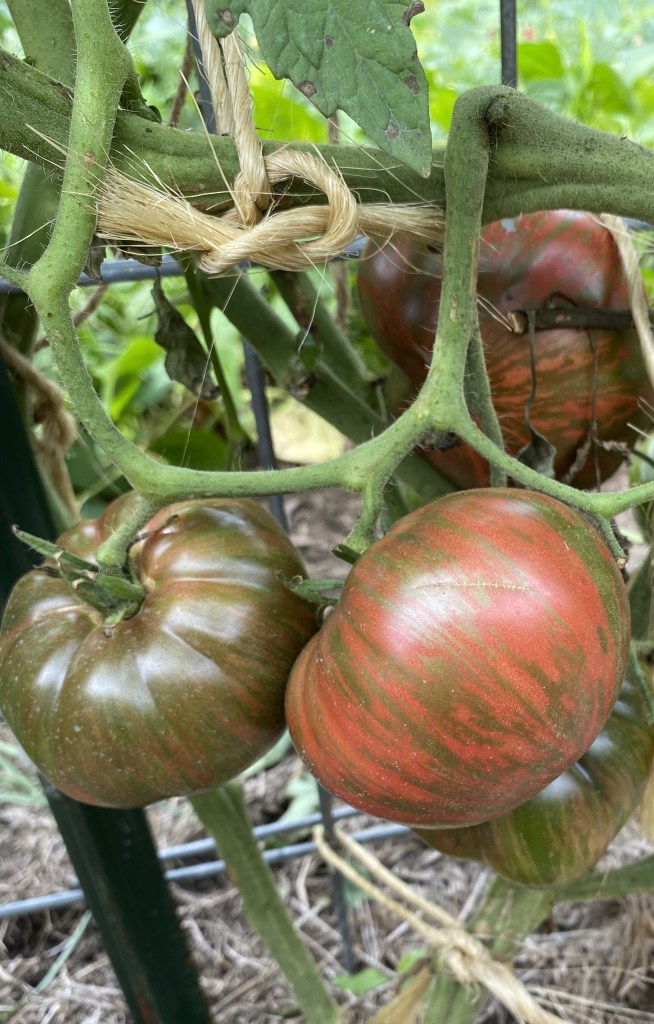
Heirloom Tomatoes – There aren’t many ready yet, so you’ll probably only get one this week, but in my opinion, one good heirloom tomato is worth about a dozen slicing tomatoes any day. Store at room temperature for up to a week. Do not refrigerate and enjoy!
Jalapeno Peppers – Same storage instructions as for Green Peppers.
Parsley (Large Shares Only) – Store in the fridge in a small glass with about an inch of water, stem side down (like flowers in a vase) for best storage.
Potatoes – This variety is Yukon Gold. These yellow potatoes have a dense, buttery texture ideal for baking, boiling, soups and frying. The potatoes you’re getting this week are “new potatoes”, meaning they are freshly harvested and have not been cured. Their skin is really delicate; thus, I’m not going to wash them before giving them to you.
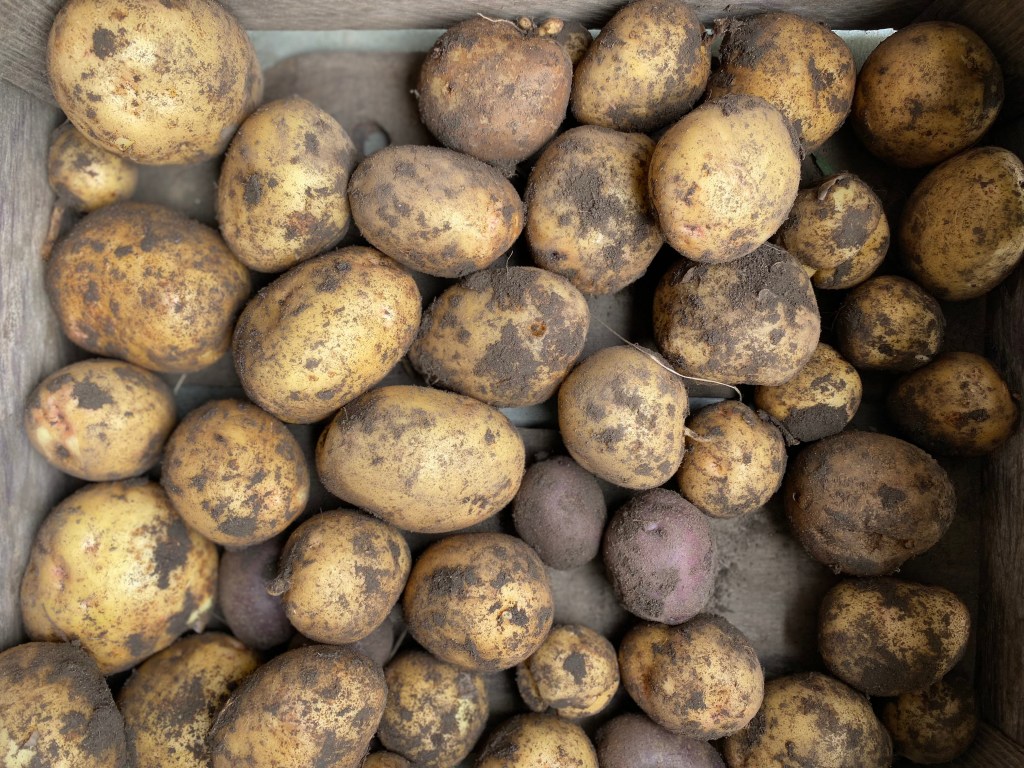
New potatoes also have a bit more water in the them than those which have been cured to be placed into longer term storage. That being said, they can be stored just like regular potatoes, but they will not last as long at room temperature. Try to use within a couple of weeks or keep in the fridge for longer term storage.
Slicing Tomatoes – Store at room temperature for up to a week. Do not refrigerate.
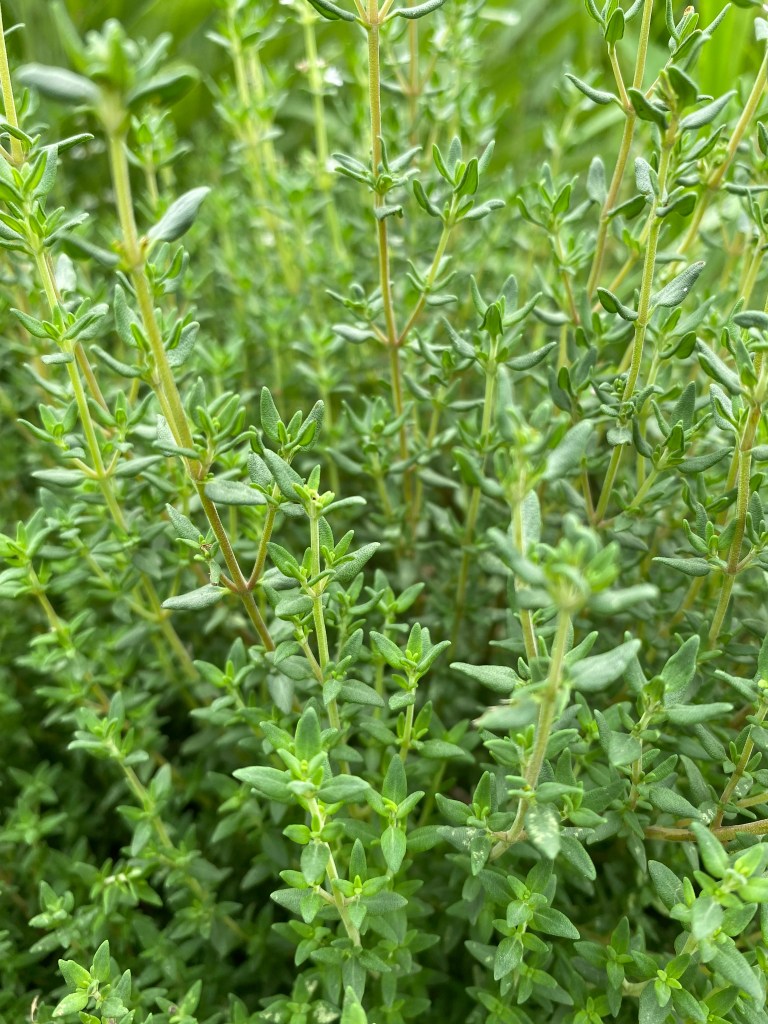
Thyme (Standard Shares Only) – Roll sprigs in a damp paper towel and place them in a resealable plastic bag. Alternatively, you can stand the sprigs up like a bouquet of flowers in a drinking glass or jar with about an inch of water inside.
Tomatillos – Store in the crisper drawer of your fridge. They should last at least a week.
Watermelon (Large Shares Only) – I think I should have a couple of watermelons ready this week, but I am notoriously awful at knowing when watermelons are ready to harvest. They give you little signs to indicate ripeness (yellow spot on the rind where the fruit has sat on the ground, vine tendril closest to the fruit dies back, melon sounds hollow when you thump it), but it’s still more of an art than a science to know when it’s time to be picked. I have considered how many days its been since germination and I harvested one to try a couple of weeks ago (tasted good, but color wasn’t very vibrant), so I think we’re good to go, but I will make a final determination on Wednesday morning.
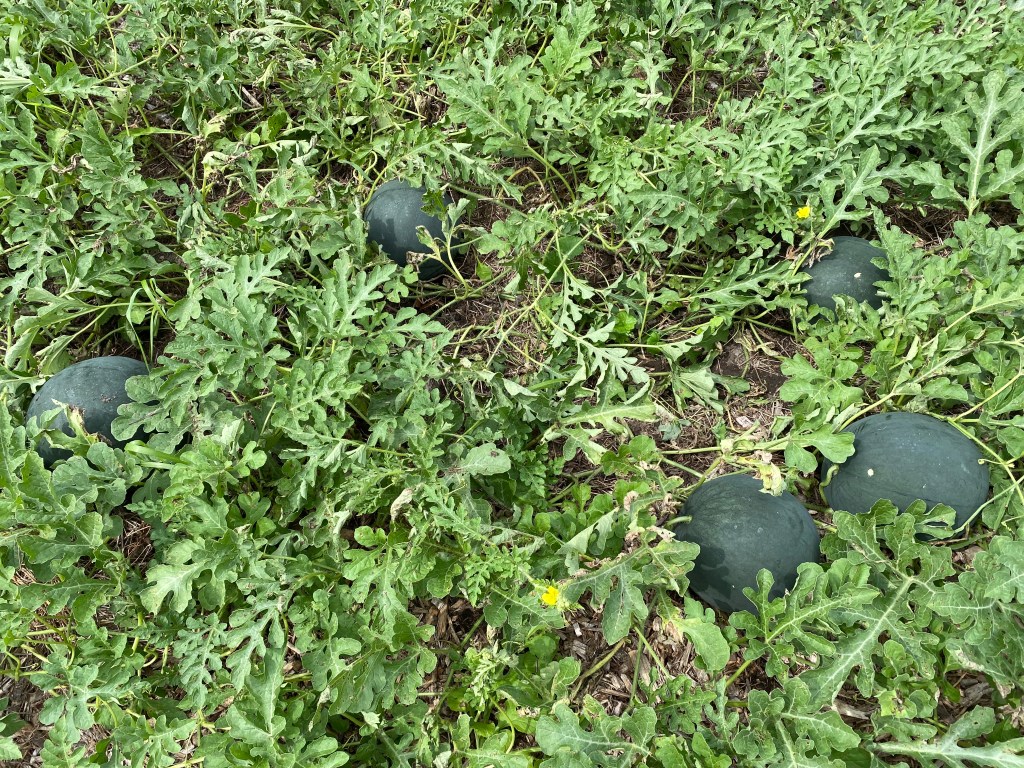
Watermelons don’t ripen all at once, so everyone will get one, but it will probably be over the course of a few weeks.
To store, refrigerate right away as watermelons don’t continue to ripen once picked. Cut melon should be covered in plastic wrap, and chunks or slices should be kept in an airtight container. Eat melons within a week.
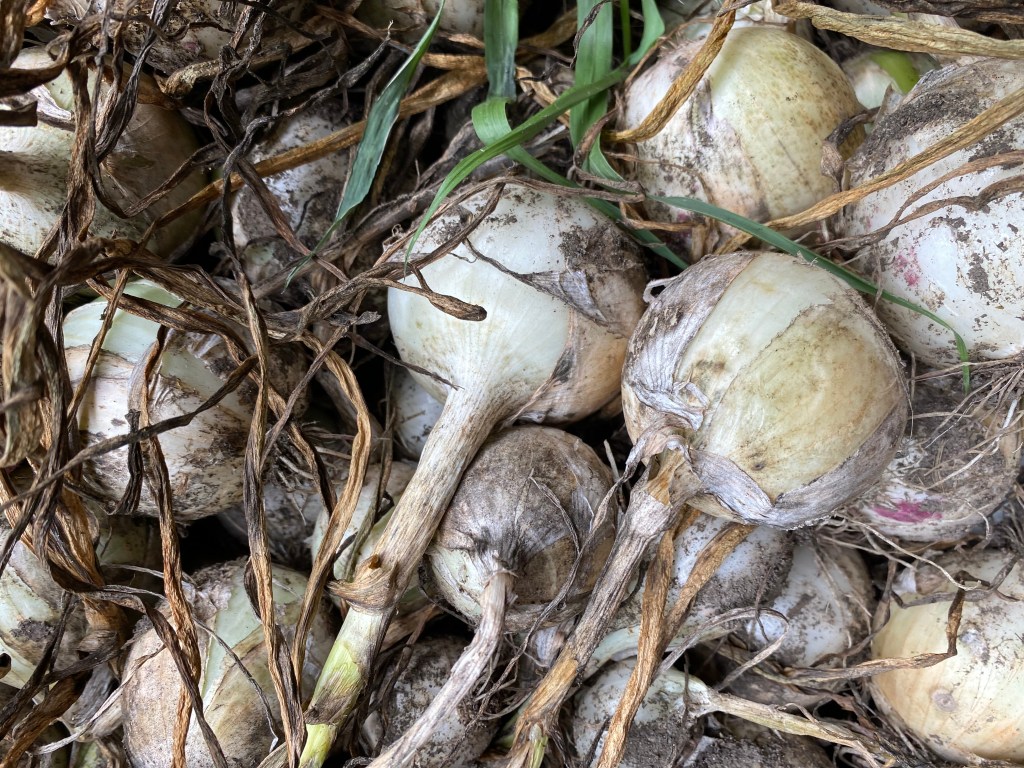
White Onions – Store in a cool dark place. Use any that feel soft first. These onions are freshly harvested and haven’t gone through the curing process that we typically use when preparing onions for longer storage, so they won’t last as long as those you might buy at a store, but they will be good for a week or two.
Notes from the Field
This week marks a turning point on the farm: I seeded the very last crops for the entire year when I planted cilantro, spinach, Tatsoi, and arugula for the fall. I also spent time pulling out plants that have already provided what they can – broccoli, cauliflowers, Bok choy, and others. The goldenrod and asters are starting to bloom along the field edges. School starts in two weeks. There is a distinct feeling in the air that the season is about to turn.
The other clue that things are changing is that we are now harvesting and curing crops that we can share and enjoy well into the winter. Veggies like carrots, onions, and potatoes can keep for months and months if you choose the right varieties and keep them stored under the right conditions. We were actually eating last year’s potatoes as late as this past June. (Don’t worry! Yours will always be fresher than that!)
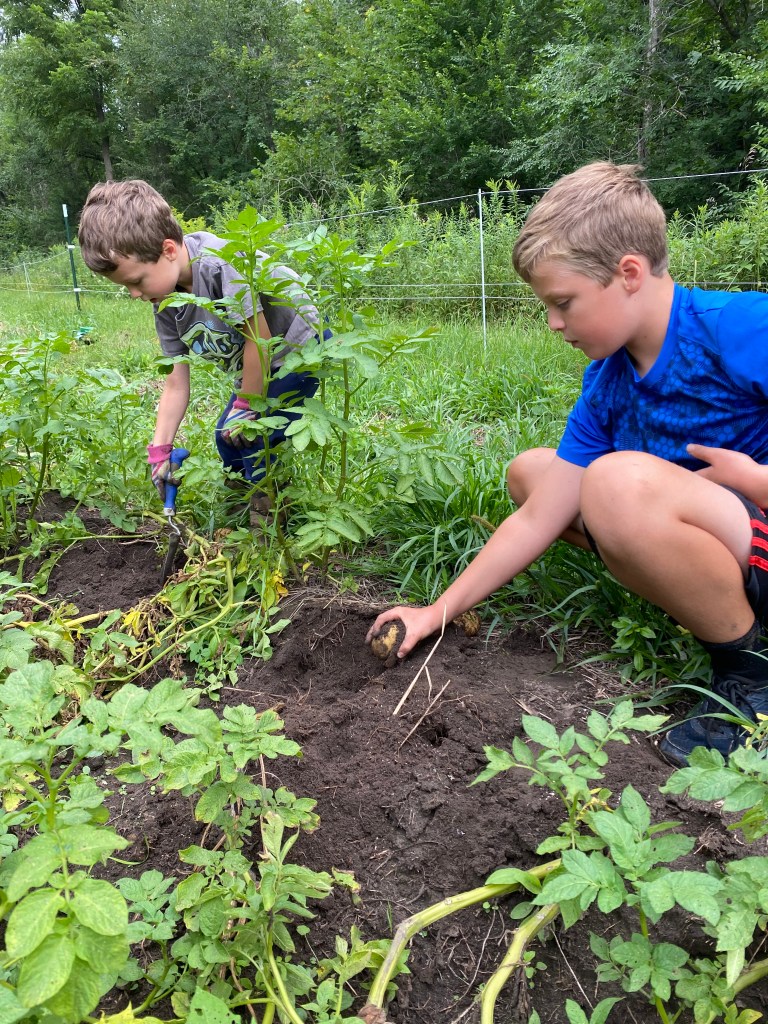
Harvesting potatoes is always one of our family’s favorite farm chores. It’s fun to dig down into the soil and see what you unearth. It’s rather like unwrapping a present, and it’s especially fun when you find the giant ones or the ones with funny shapes.
The other thing I’ve noticed this week is just how busy all of the insects are out in the field. (By now, you know that we’re just a tad bit interested in bugs.) Every time I take a step anywhere, I hear “click! click! click!” as dozens of grasshoppers jump away from me. The pollinators seem to be working harder and faster than ever, collecting nectar and pollen at a record pace. When I harvest cucumbers, the buzzing of bees is so loud, you can hear it from a couple of rows over. Simon managed to capture all sorts of good photos of our pollinators in action this week.


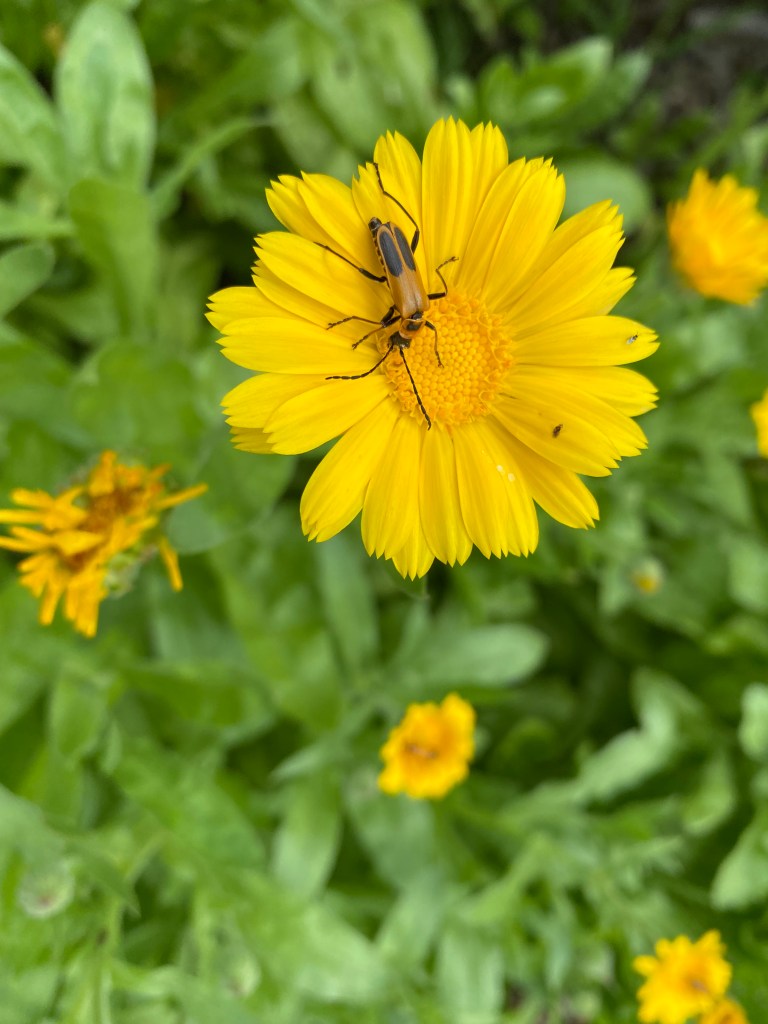
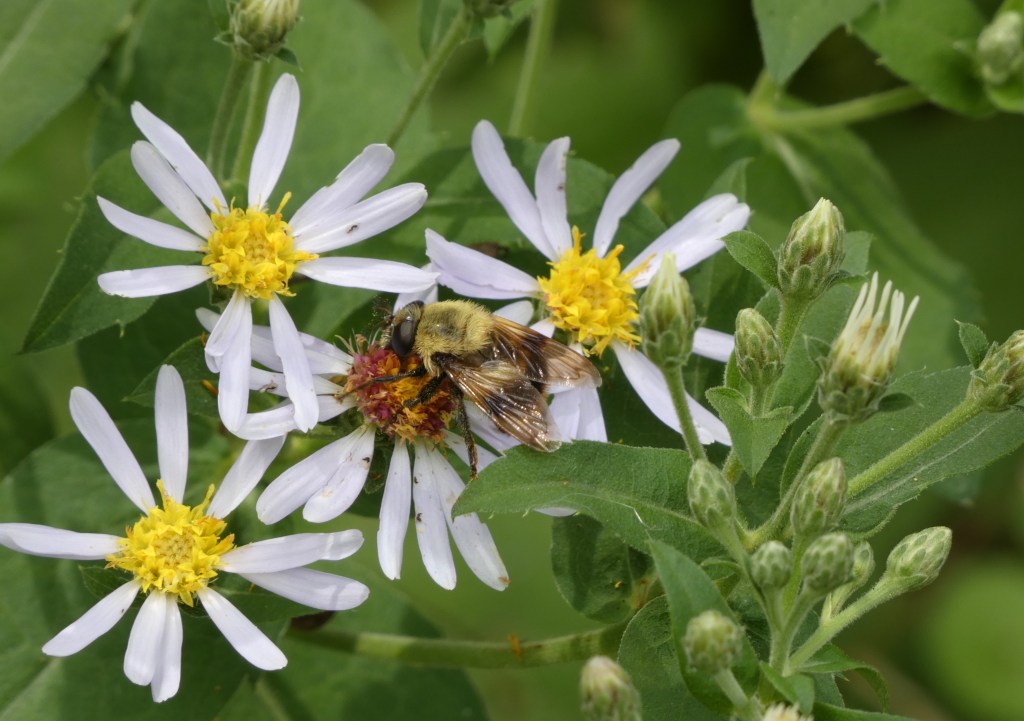
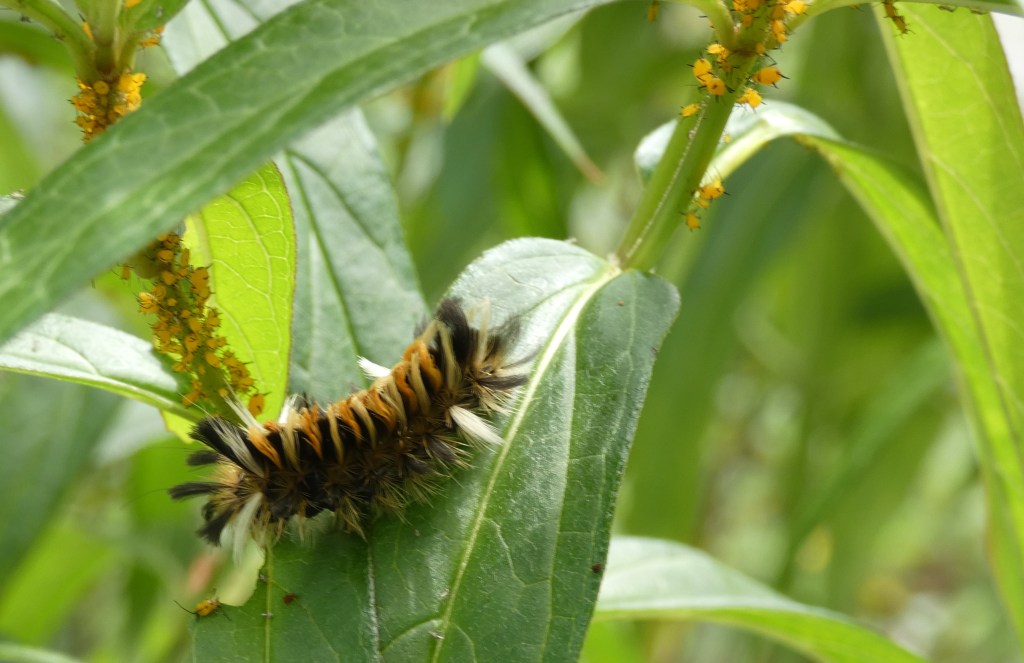
bumblebee on aster; milkweed tussock moth caterpillar and aphids
(Okay. Aphids are actually pests, but they look neat behind this caterpillar.)
Recipes
Crispy Smashed Potatoes with Onions and Parsley // Uses Onions, Parsley, Potatoes // Vegetarian
Roasted Potato Salad with Kale // Uses Kale (if leftover from last week), Parsley, Potatoes, Yellow Onion
Recipe from Raleigh’s Hilltop Farm
2 lbs. unpeeled potatoes, cut into large chunks
2 tablespoons olive oil
Seasonings, as desired
3 stalks kale, stem removed and roughly chopped
3/4 cup mayonnaise
3/4 cup plain yogurt
1/2 teaspoon Dijon mustard
1 teaspoon dried parsley (can also sub fresh)
3 to 4 slices thick-cut bacon, cooked, drained and chopped
1/2 yellow onion, diced
1. Preheat oven 350 degrees. Toss potatoes with olive oil and 1-2 tablespoons seasoning of your choice (my mom uses a mix of season salt, garlic salt and pepper). Roast potatoes for 35 minutes in a preheated oven until edges begin to brown and potatoes are tender.
2. Add kale to pan, toss to coat with oil and seasonings, and roast 10 minutes longer. In a small bowl, combine mayo, yogurt, mustard and parsley. Add bacon and onion.
3. Allow potatoes and kale to cool slightly. Toss with dressing, stir to coat. Adjust seasonings as needed/desired.
Spicy Watermelon Margaritas // Uses Jalapeno, Watermelon // Vegetarian
Thyme-Roasted Chicken with Potatoes // Uses Potatoes, Thyme, Throw in some Carrots, too
Watermelon and Cucumber Salad // Uses Watermelon (and Cukes if you have some left over from last week) // Vegetarian
Watermelon Mint Sorbet // Uses Watermelon // Vegetarian
 Middle Fork Farm