
Have you ever heard of the “Ugly Food Movement?” If you haven’t, it’s basically an attempt by people concerned about environmental sustainability and agricultural economics to recover and use some portion of the approximately 40% of food that is wasted in the United States each year. According to the article I linked to above, about 10 million pounds of that 40% consists of food that has some sort of cosmetic problem, meaning it has minor damage that might impact its appearance, but rarely its taste.
Knowing this and reflecting upon it, I was surprised at how much I balked at giving you the scarred up turnips and daikons the last couple of weeks. I was especially given pause when I went to the Menominee Food Co-Op in Wisconsin this past weekend and found the turnips and daikons they had for sale looking pretty much like the ones we grew. In other words, despite all of my rhetoric about sustainability, I too have a marked preference for perfect produce. The only problem is that perfection is difficult to achieve for all crops at all times, especially in an organic system where one isn’t spraying to kill all of the critters that like a good veggie every now and again, too.

I think what this means for the CSA is that I may – from time to time – send you some produce that needs to be peeled more than normal or that has some insect damage as long as it’s fairly minimal and still wonderful to eat. I’ll ask you what you think about this in our end-of-the-year survey, but I wanted to mention it now. Fall can be a more difficult time to grow produce that hasn’t been damaged by weather or pests, and so I might find more cosmetically-challenged veggies in the field this time of year.
A friend of mine used to say that you could tell a fruit or veggie was delicious and good for you if the bugs found it first. Let’s go with that…
What’s in My Box this Week?
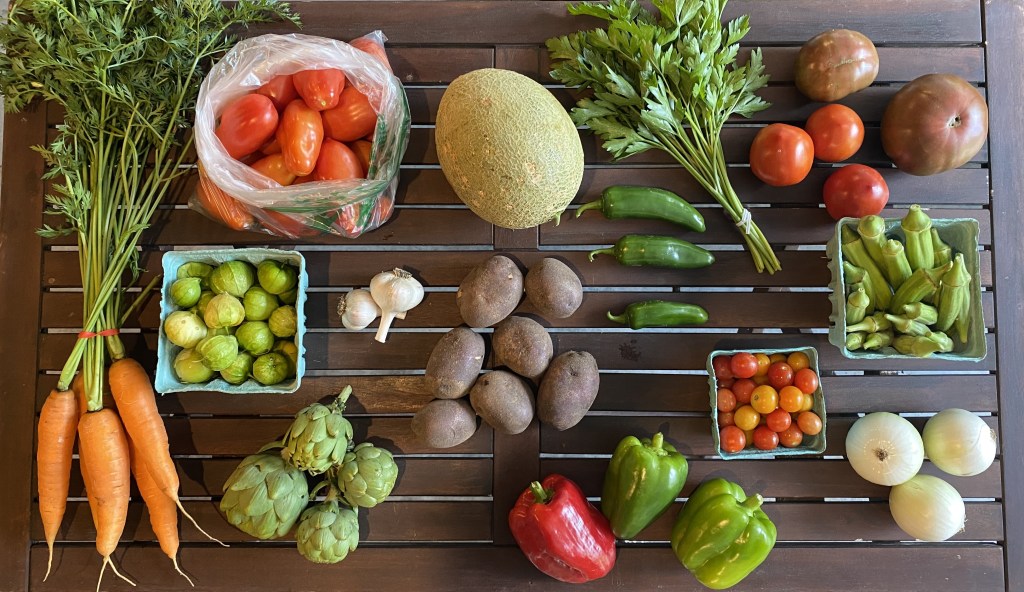
Artichokes (Large Shares that didn’t get them last week) – Most people have only ever eaten marinated artichoke hearts, so I’ve included a link with instructions for how to cook with fresh artichokes in the Recipe section below. When storing, leave the artichokes unwashed. Place the artichokes in a plastic bag and store in the coldest part of your refrigerator for up to one week. When you are ready to cook, gently rinse in cold water in a colander. Remove the stem and part of the top with a serrated-edge knife.
Basil – You’ve already received basil a few times, but I’m going to include a small amount again this week because basil is pretty key to making a yummy tomato sauce which I’m guessing some of you might do with the paste tomatoes in your box.
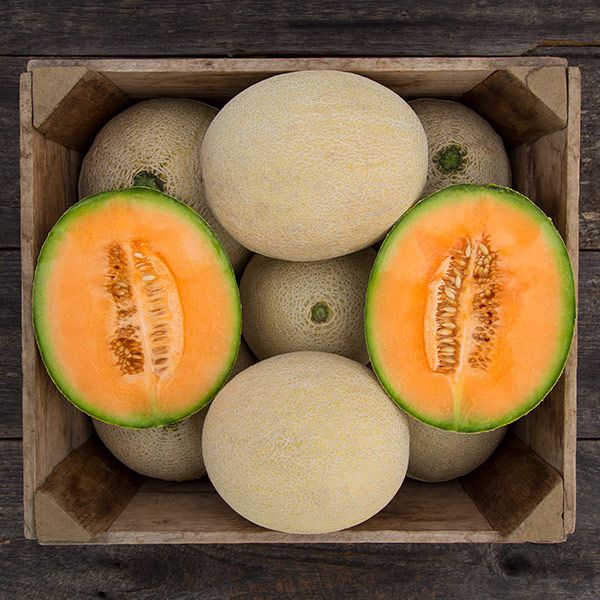
Cantaloupes – This week, I’m harvesting the cantaloupes pretty close to, but not quite at, ripeness. If there is any green on the rind, keep them on the counter until the green turns to a more beige color. Once ripe, place them in the fridge until you’re ready to use them or they may get overripe fairly quickly. Store leftover melon in the fridge wrapped with plastic wrap. The flesh will dry out if left exposed. Use quickly. (Photo: High Mowing Seeds)
Carrots – Remove the green tops as soon as you can, leaving about an inch of stems, and place the roots in a plastic bag in the crisper drawer of your refrigerator. They will last for several weeks. You can also store them in a bin of water to keep them crisp, changing out the water every few days. Save the tops in a plastic bag and use them in salads and other dishes.
Cherry Tomatoes – This week’s cherry tomatoes will be a mix of orange Sungolds and red Peacevines. Cherry tomatoes can over-ripen pretty quickly, so it can be a good idea to store them in the fridge if you’re not going to eat them right away.
Garlic – Keep in a dark, dry, well-ventilated place at a cool room temperature. It can keep for several months if stored appropriately. Warm temperatures will encourage the cured garlic to sprout which will reduce the quality of it.
Heirloom Tomatoes – This week you will get Berkeley Tie Die, Cherokee Purple, and/or Black Krim tomatoes. Store at room temperature for up to a week. Do not refrigerate.
Jalapeno Peppers – Refrigerate peppers unwashed in a sealed plastic bag in the crisper drawer for one to two weeks.
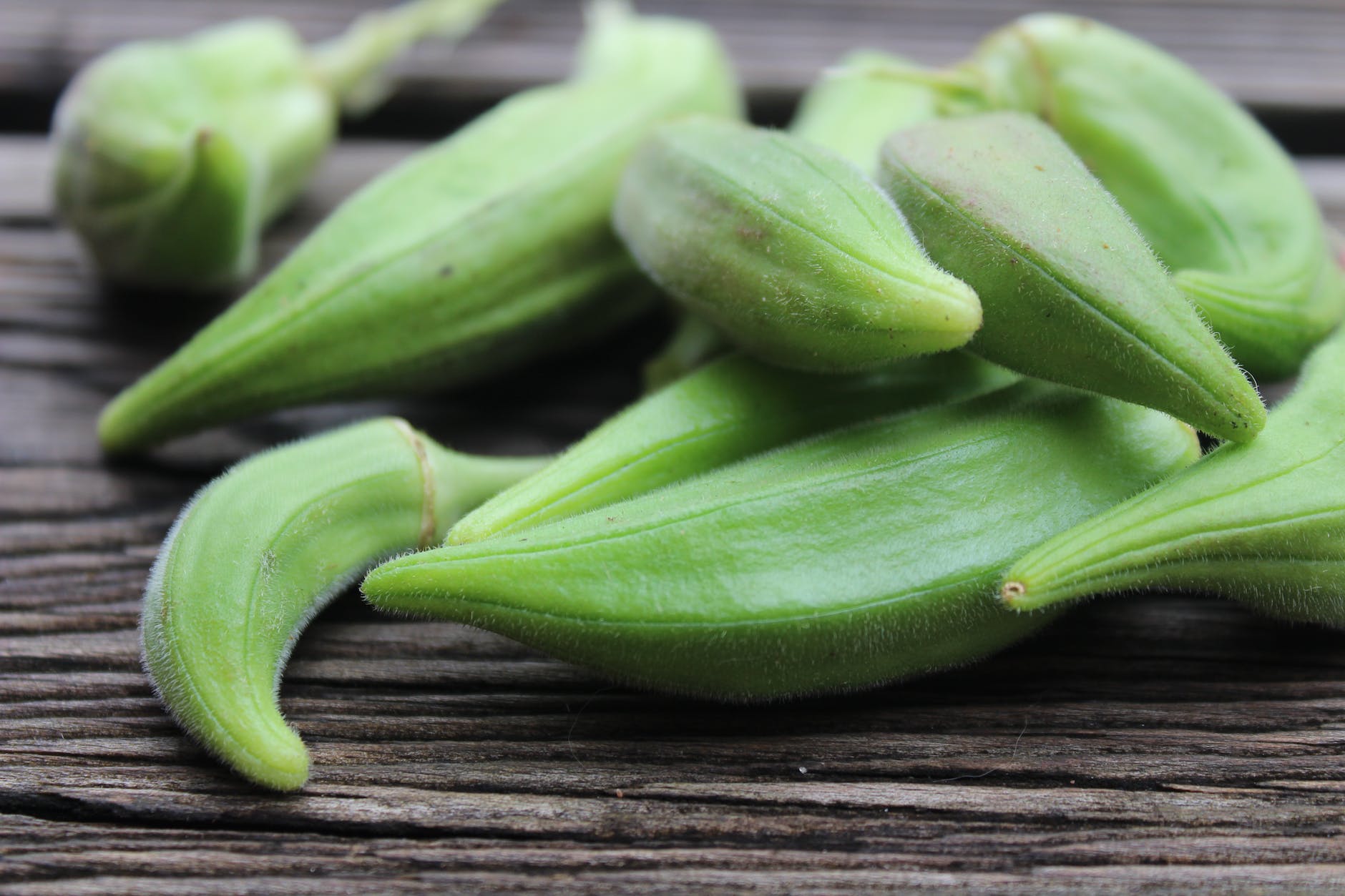
Okra (Large Shares Only) – Wrap in a paper towel and place inside a paper bag, and store in the vegetable drawer. It is best to use it within a day or two. Do not wash fresh okra until you are ready to use it.
Parsley – Store in the fridge in a small glass with about an inch of water, stem side down (like flowers in a vase) for best storage.
Paste Tomatoes – Paste tomatoes are primarily used for making sauces, although you can also slice them and use them fresh as well. This week you’re getting San Marzano paste tomatoes. These originated in southern Italy and are the tomatoes used in making traditional Neapolitan pizza. For those pizza aficionados out there, you may remember that Naples was the birthplace of pizza and so sauce made from San Marzano tomatoes is about as authentic as you can get, at least in terms of pizza-making. They are also delicious cooked down into a pasta sauce. Store at room temperature for up to a week. Do not refrigerate.
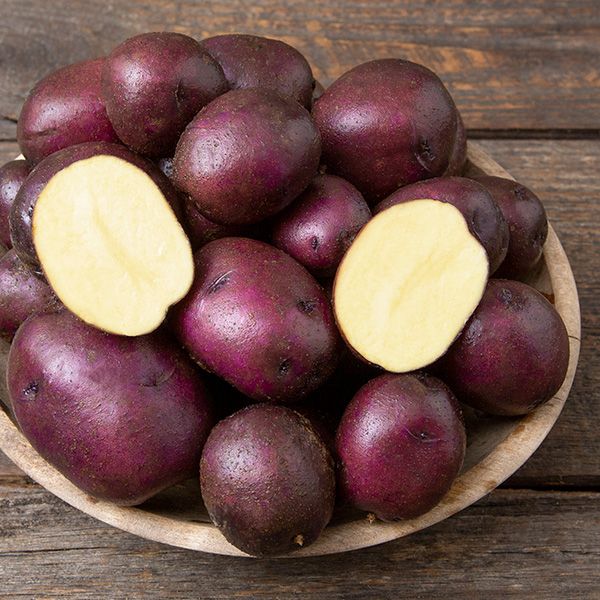
Potatoes – The variety this week is called Peter Wilcox. We were put on to these potatoes by the chef at Forager Brewery who asked us to grow them for him because his name was also Peter Wilcox! We’re glad we did as these have become one of our favorite potato varieties. They are earthy-flavored and delicious roasted, boiled, sliced, or fried. The potatoes you’re getting this week are freshly harvested. Their skin is really delicate; thus, I’m not going to wash them before giving them to you. (Photo: High Mowing Seeds)
Red and Green Sweet Peppers – Refrigerate peppers unwashed in a sealed plastic bag in the crisper drawer for one to two weeks.
Slicer Tomatoes – Store at room temperature for up to a week. Do not refrigerate.
Tomatillos (Small Shares Only) – Store in the crisper drawer of your fridge. They should last at least a week.
White Onions – Keep in a dark, dry, well-ventilated place at a cool room temperature.
Notes from the Field
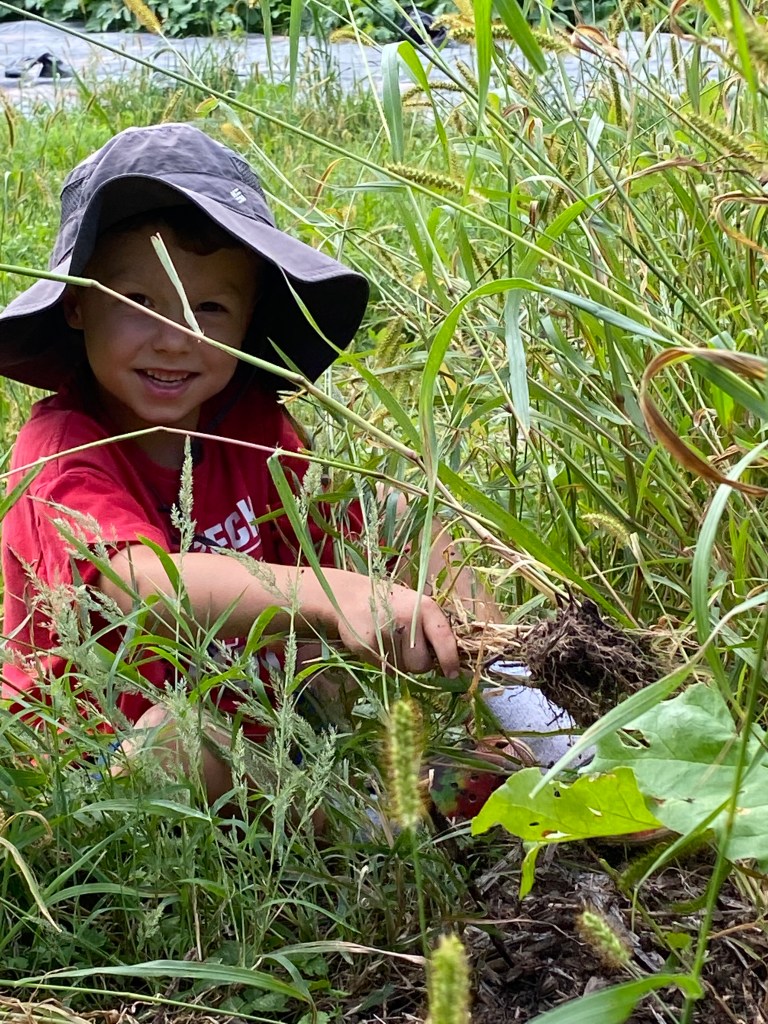
You know how none of your kids are supposed to be more favored than the others? Generally I don’t have a favorite, but I couldn’t help but feel a special affinity for Luka this past weekend when he asked if we could go weed the garden “for fun.” I had planned to take the holiday off, but hey – when you get an offer of help like that, you have to take it! Plus, the weather this past weekend made working in the garden a true pleasure. We tackled the herb garden which is in full bloom and quite beautiful right now. Luka kept brushing against the mint, sage, and thyme, thoroughly enjoying their released scents and insisting repeatedly that I “come over here and smell this, Mom!”

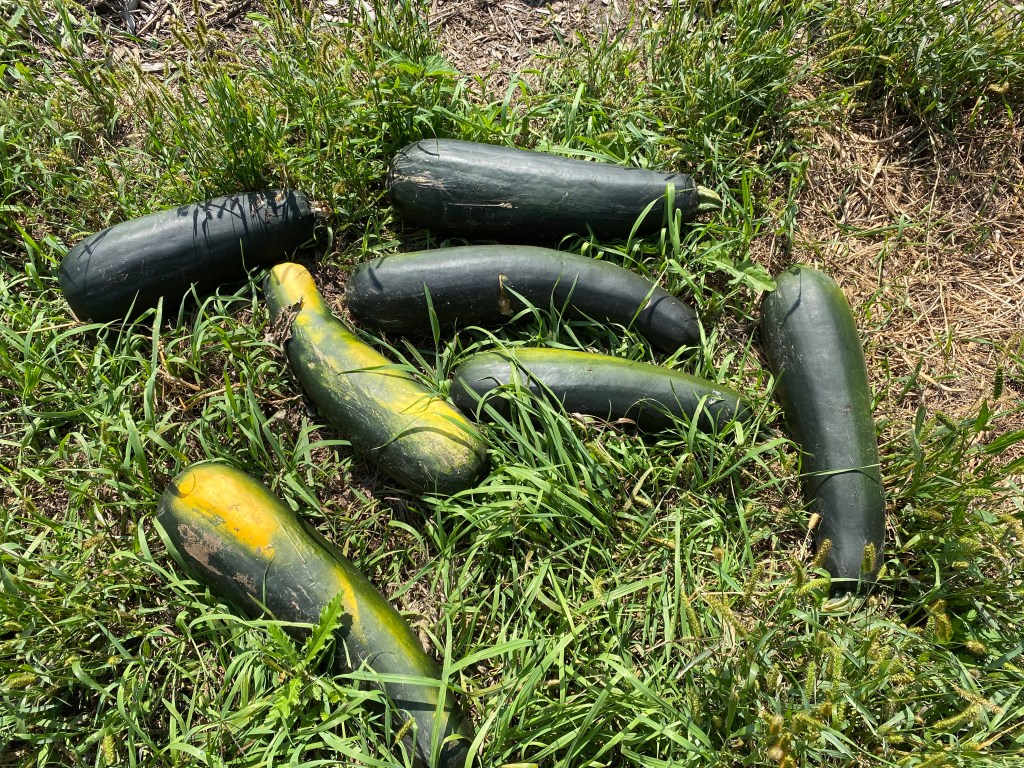
Last week I also finished pulling out some more crops that are finished for the year. I composted all of the summer squash and all but one of the zucchini plants. Simon requested that I leave one to grow so that we can see just how big the zucchinis on it can grow. So far, the answer is very, very big. Almost freakishly big. We will see how big the ones get that are still on the vine, but check out these monsters that I harvested:
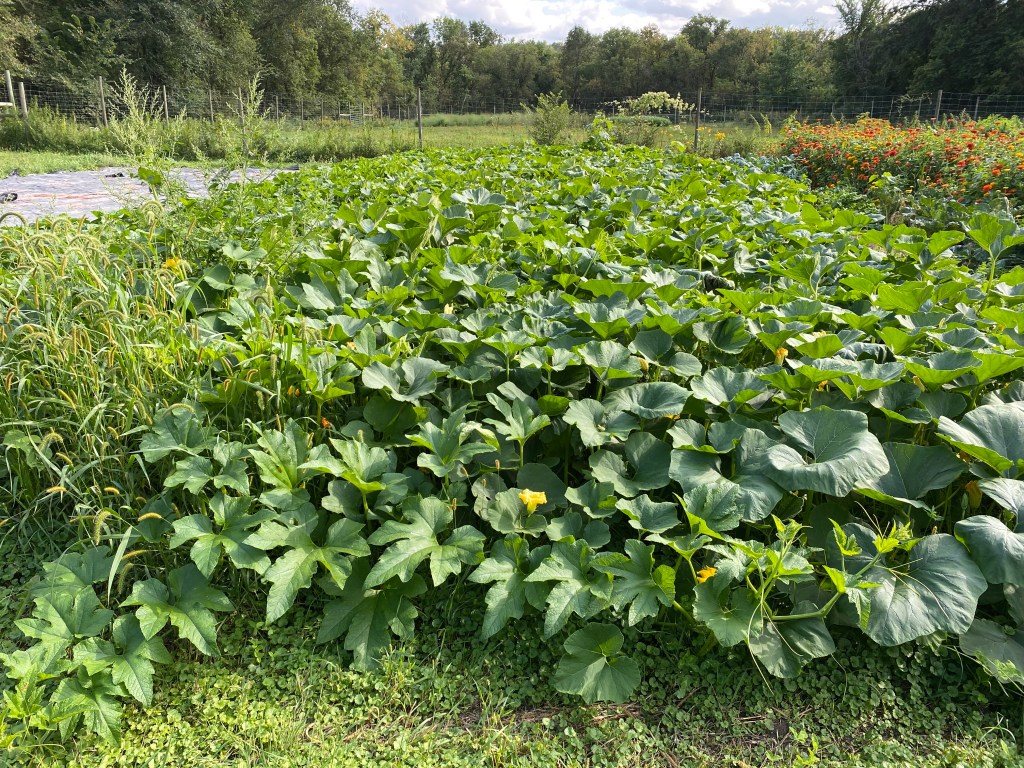
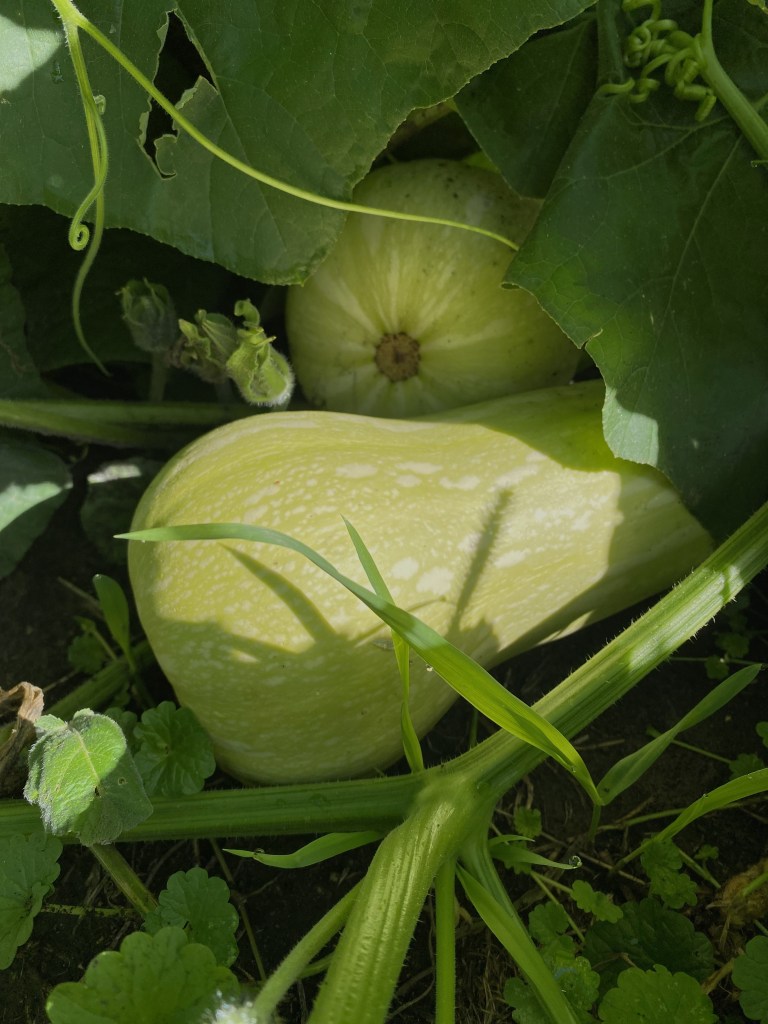
I also learned that it is a good idea to prune back your pumpkin and winter squash vines, something I hadn’t known to do before. Pruning encourages less fruit production, but quicker ripening and better-sized fruits. It also helps maintain walkways in the field. Our pumpkin vines were getting so aggressive that they were overtaking all of the other fall crops, so I took some time to cut them back some. They have never grown so well or so vigorously before or I might have done discovered I should do this before. I have no idea how I’m going to find all of the ripened winter squash in the pumpkin patch! Would you believe that there are only around 24 plants in this entire plot?!
The other thing that I had to deal with last week were the gophers that were tunneling under and eating the roots of my Napa cabbages. Normally I am okay to co-exist with the gophers as ecologically-speaking they can actually be somewhat helpful on a farm. When they dig their tunnels, they bring up nutrient-rich soils from down below and make them available to the more shallowly-rooted annual vegetables. They also aerate the soil, allowing more air and water to reach plant roots. Thus, I don’t mind if I lose a plant here or there to them, but they were on track to decimate all of the cabbages, so I had to take action. (You can see the row of cabbages that they killed on the right side of the photo below. They killed several more after this picture was taken.)
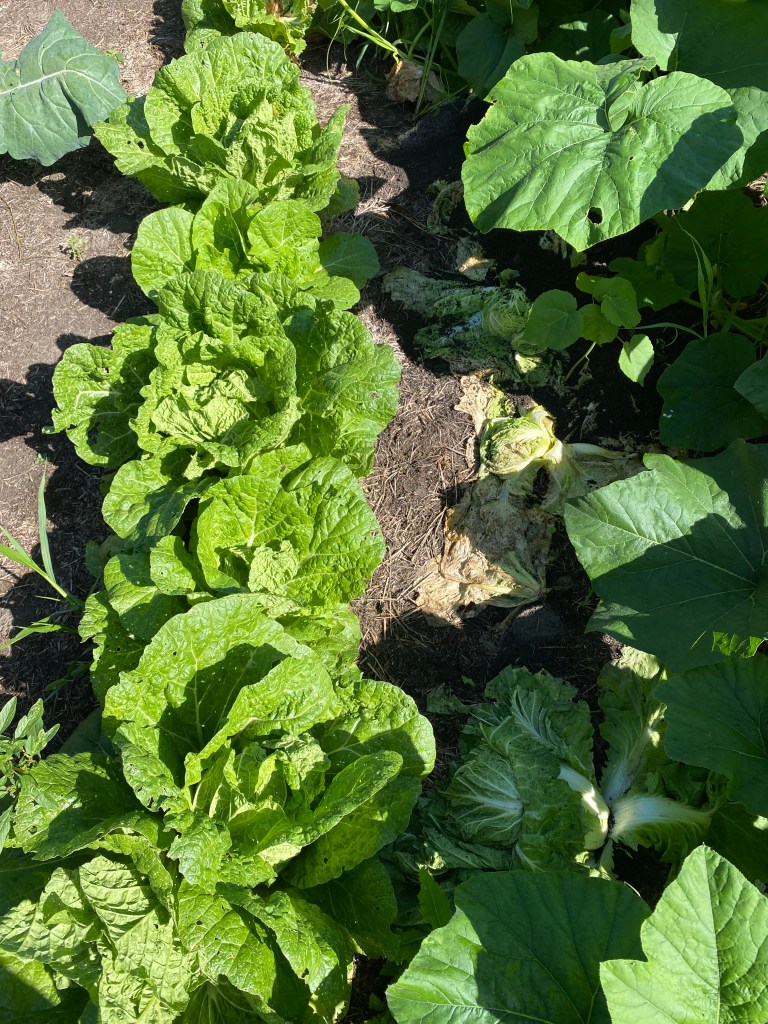
So, I dug out their tunnels, threw some raw garlic into them, and installed a sonic repellent stake which is supposed to drive them crazy enough that they pack up and move. I will see how it works. Fingers crossed! I would really like you to get at least one Napa cabbage this year!
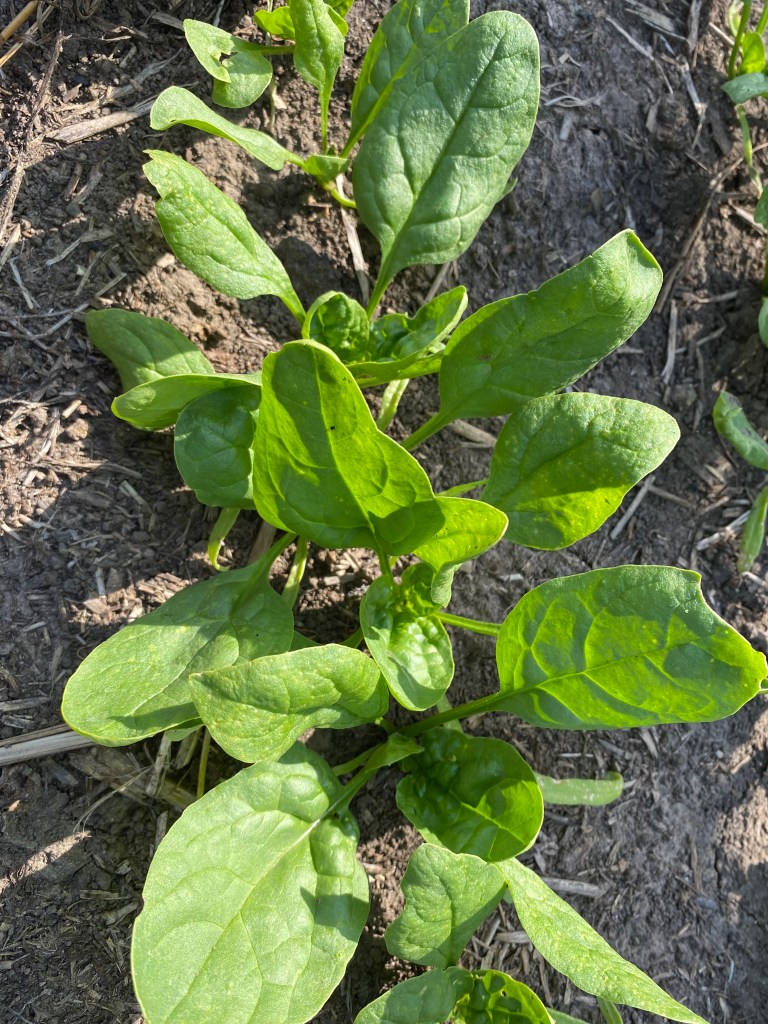
Here are a few other photos from the farm this week, showing the fall crops growing well. See what you have to look forward to!

Recipes
Classic Marinara Sauce // Uses Basil, Garlic, San Marzano Tomatoes (sub fresh for canned) // Vegetarian
Corn Okra Creole // Uses Green Peppers, Okra, Tomatoes // Vegetarian
Martha Rose Shulman’s Roasted Okra // Uses Okra // Vegetarian
Okra with Tomatoes // Uses Garlic, Okra, Onions, Tomatoes // Vegetarian
Pan Fried Okra // Uses Okra // Vegetarian
San Marzano Tomato Sauce // Uses Basil, Garlic, San Marzano Tomatoes // Vegetarian
Southern Fried Okra // Uses Okra // Vegetarian
 Middle Fork Farm
1 thought on “Week 14: September 6, 2022”