
We have arrived at our last month of CSA and things are slowly starting to wind down on the farm. I have to wait longer and longer to get out into the field each day as the plants stay wet well into the morning and there just isn’t as much to do. No weeds are growing anymore. The grass hardly needs mowing. Now it is more of a waiting game to see when the fall crops will be ready for harvest. This year is the first year I’ve had to figure out fall succession plantings and how to seed crops well into the summer to ensure the availability of a wide variety of veggies in October. It has been a steep learning curve determining when to seed based on cooler temperatures and decreasing daylight hours. The jury is still out on how well I did, but I am taking copious notes to help guide me next year, and I will ask for your input again at the end of the season.\
What’s in My Box this Week?
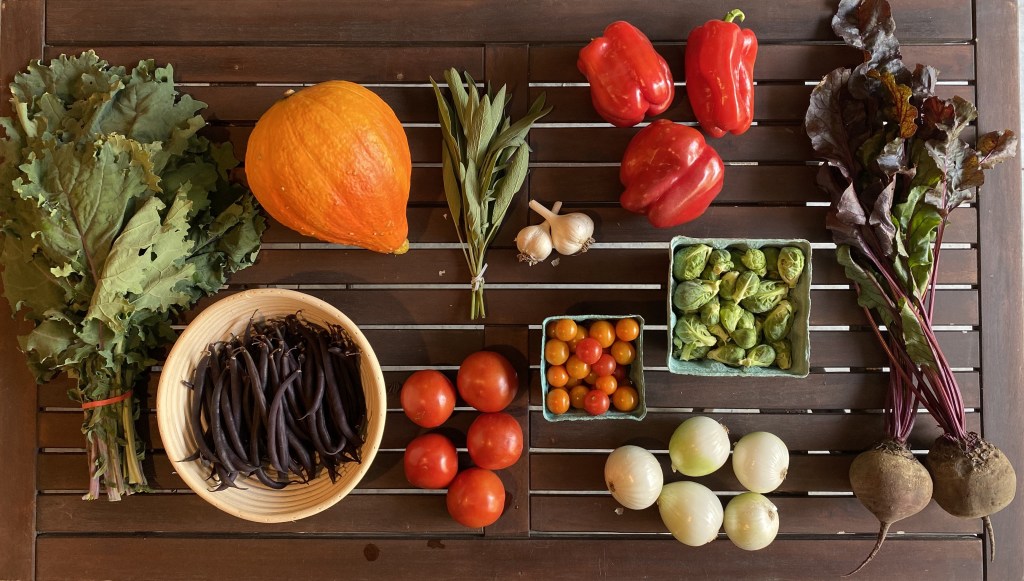
Beets – Refrigerate in a plastic bag in the crisper drawer of your fridge for best storage. Cut the leaves off and they will easily keep for six to eight weeks this way. If you have to store them loose, they should still last a month. After that they will begin to get a bit softer but will remain usable for two to three months.
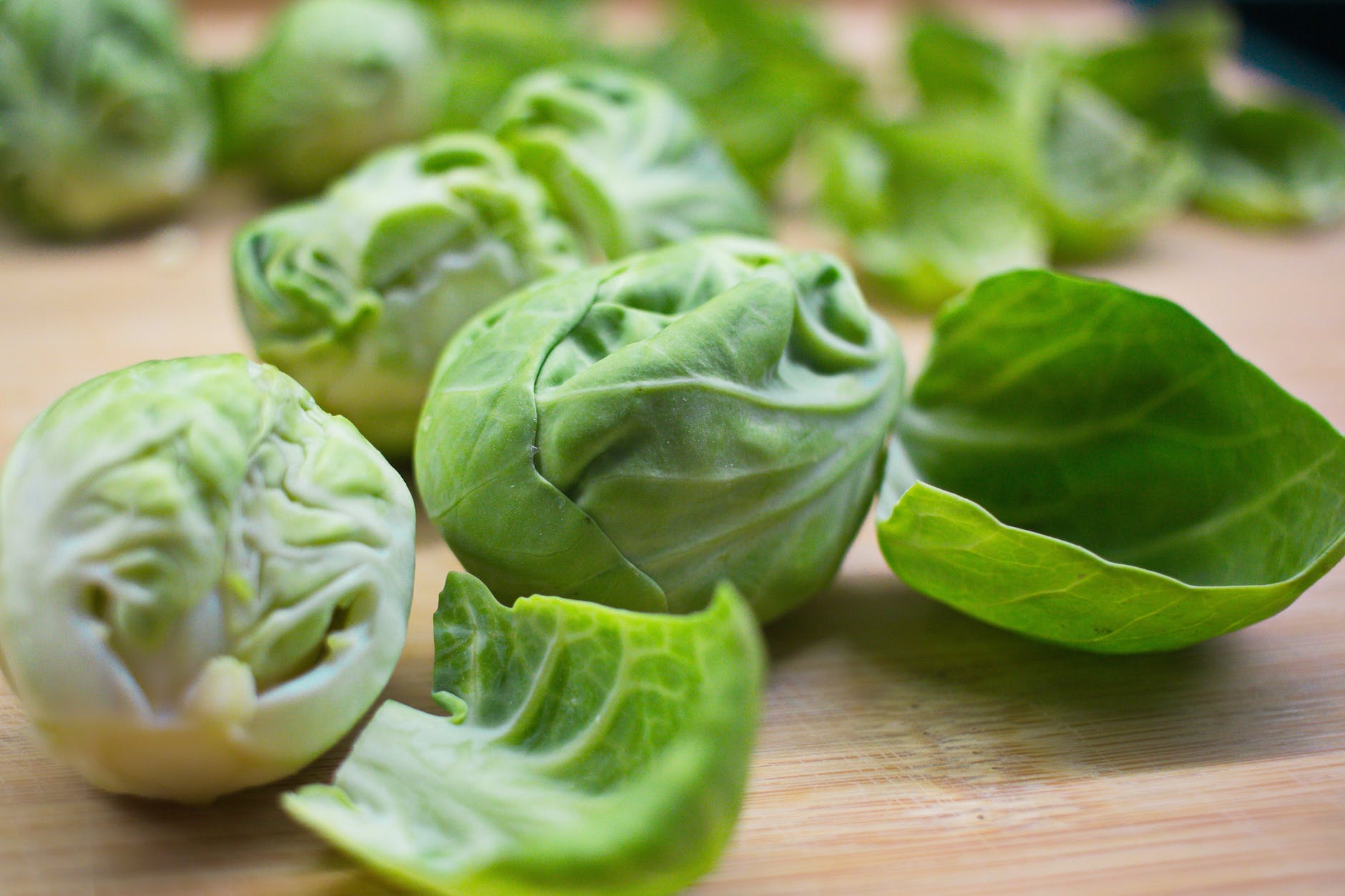
Brussels Sprouts (Large Shares and Small Shares who don’t receive a potimarron squash this week) – Store in a bowl or open container in the fridge. Do not trim or discard outer leaves before storage. Brussels sprouts should last up to a month this way. The outer leaves might get a little shriveled but you typically remove them anyway.
Cherry Tomatoes – This week’s cherry tomatoes will be a mix of orange Sungolds and red Peacevines. Cherry tomatoes can over-ripen pretty quickly, so it can be a good idea to store them in the fridge if you’re not going to eat them right away.
Garlic – Keep in a dark, dry, well-ventilated place at a cool room temperature. It can keep for several months if stored appropriately. Warm temperatures will encourage the cured garlic to sprout which will reduce the quality of it.
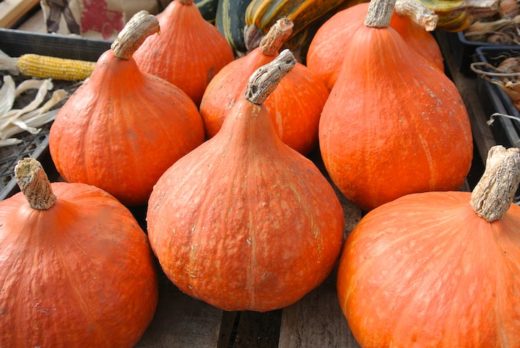
Potimarron Squash (Large Shares and Small Shares who don’t receive Brussels sprouts this week) – This is a beautiful small, reddish-orange winter squash that originated in France. Its name derives from the French for pumpkin (potiron) and chestnut (marron) because it has a chestnut-like flavor. (Photo from Adaptive Seeds)
Store winter squash in a cool, dry place and try to use within a week or two. Do not store in the fridge. This will cause it to spoil much more quickly.
Red Russian Kale – Wash the greens only right before using. To store, place in a plastic bag with most of the air removed and put in the fridge. It is best used within a few days.
Red Sweet Peppers – Refrigerate peppers unwashed in a sealed plastic bag in the crisper drawer for one to two weeks.
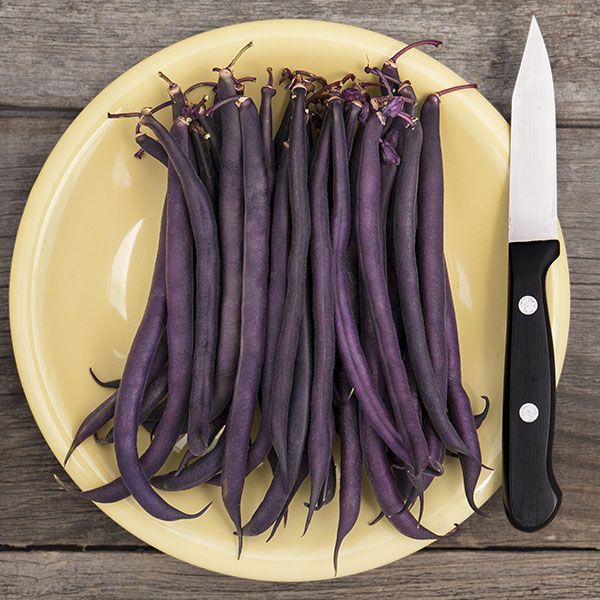
Royal Burgundy Beans (Large Shares and MAYBE Some Small Shares) – Treat these as you would fresh green beans. They actually turn green when you cook them. Refrigerate in a plastic bag and use within a week. (Photo from High Mowing Seeds)
Sage – To store, wrap the sage leaves in paper towels and put them in a plastic bag in the refrigerator. Make sure to use the leaves within four to five days. Fresh leaves that are covered in olive oil can be stored for much longer in the refrigerator, about three weeks.
Slicer Tomatoes – Store at room temperature for up to a week. Do not refrigerate.
White Onions – Keep in a dark, dry, well-ventilated place at a cool room temperature.
Notes from the Field
This past week was pretty productive on the farm. I was able to spend some more time cleaning up the field and getting it ready for winter. I dug around 40 lbs. of carrots that I washed, packaged, and placed in the storage cooler where they will keep for months and months.
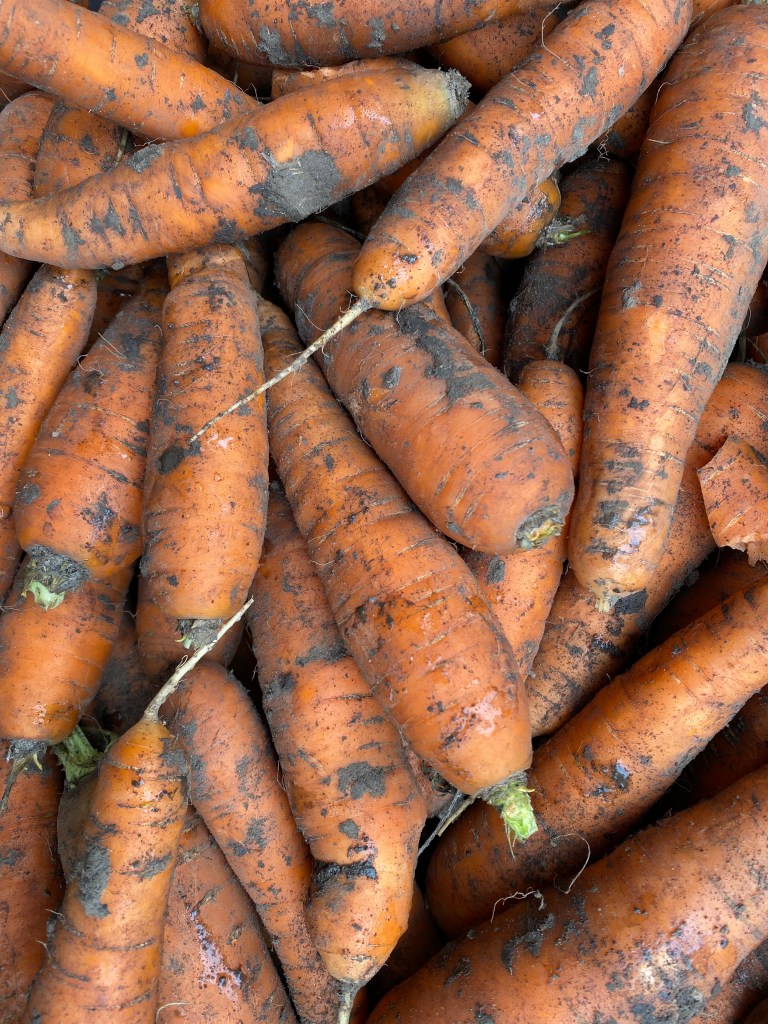
I finally found the key to easily digging carrots in heavier soils – do it when it hasn’t rained for two weeks. I only broke off about 10 carrots out of a couple hundred because the soil was dry and friable. This is an all-time best, for sure. If only I had thought to dig the Daikons then, too…
After pulling out veggies and cleaning up some beds, I seeded them with a cover crop called sorghum sudangrass. One of the main principles of regenerative agriculture is keeping the soil covered as much as possible for as long as possible, preferably with “living roots.” This can be a tricky in a northern climate because farmers are usually growing well into mid- to late-fall and waiting to seed a cover crop until then means there’s simply not enough time for seeds to germinate and the cover to grow. Also, there are very few cover crops that can grow in such cool temperatures.
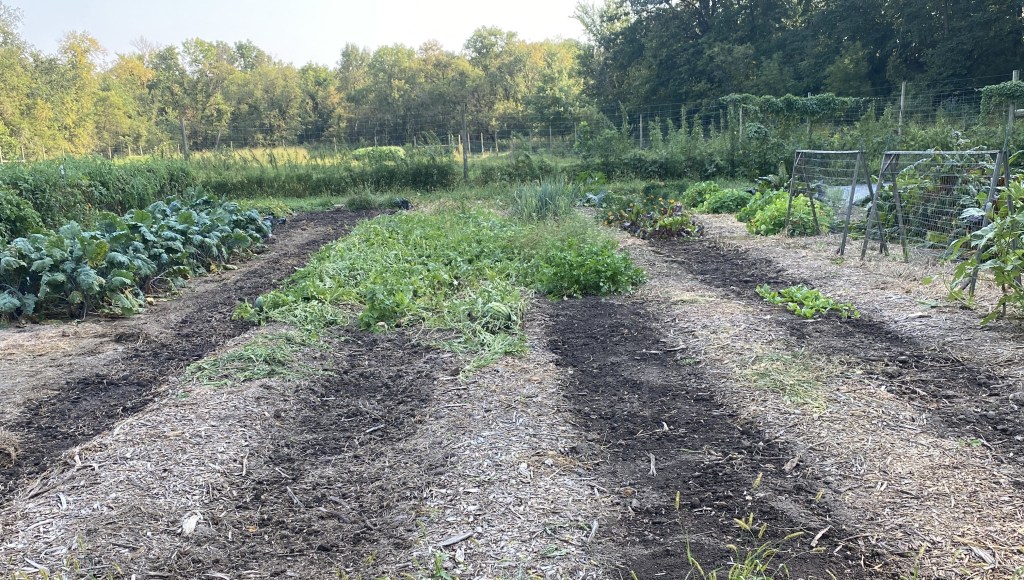
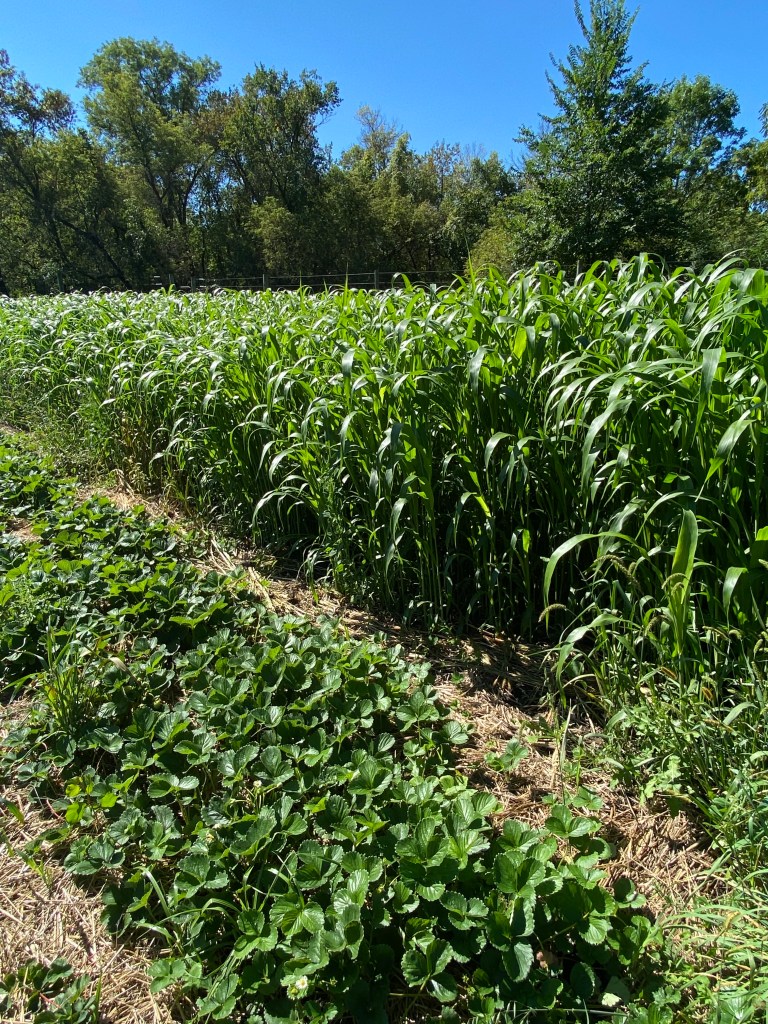
Sorghum sudangrass is actually a warm-season grass which grows best in the heat of summer, so it’s a bit of an experiment for me to seed it this late. I wanted to try it though because soil temperatures are still warm-ish and because it’s doing an outstanding job suppressing weeds down by the strawberries where we planted it earlier this summer. It’s an excellent soil builder because it produces so much biomass (leaves, stems, and roots that decay and feed the soil microorganisms). Also, if you mow it at the right time, it sends its roots down twice as far as it would otherwise and helps reduce compaction which is something we struggle with here. Finally, it will die back over the winter and leave a nice stand of mulch that I can plant directly into next year. I was very glad to get it in a day before it rained. I am curious to see if and how quickly it might grow now.
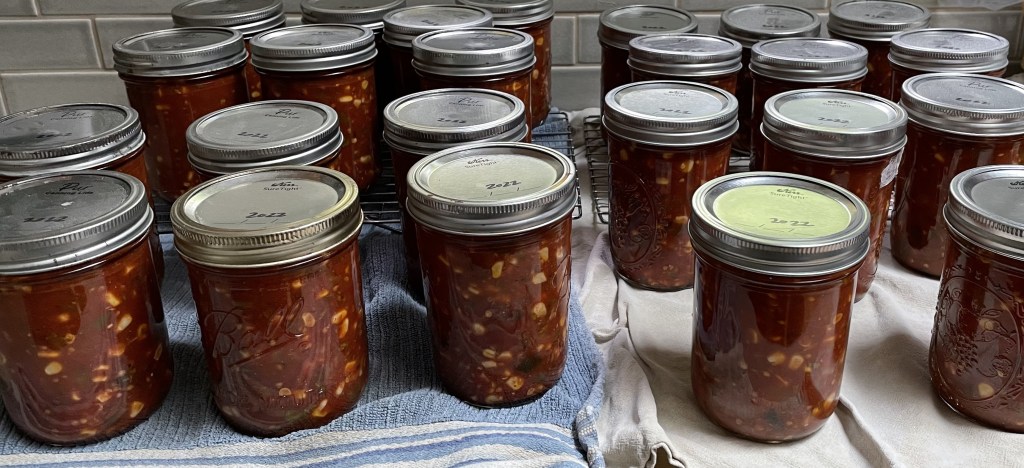
Other than that, most of last week’s farm work consisted of turning various crops into various goodies. Erik and I spent nearly all of Sunday smoking poblano peppers on the grill and roasting many, many pounds of tomatoes, jalapenos, onions, and sweet corn that the boys sat out on the porch and shucked. The result was 34 pints of smoky, delicious salsa that will remind us of summer all winter long.
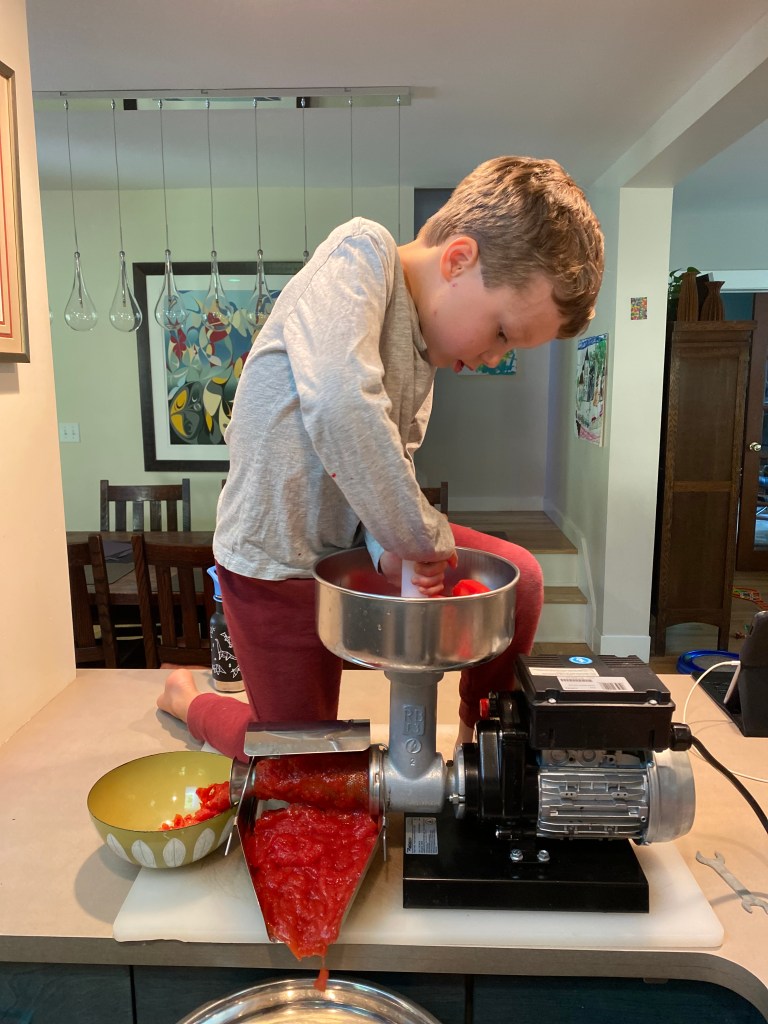
Next, Luka helped me process paste tomatoes into sauce, some of which I will use tonight when I make eggplant parmesan. I also shredded and froze the last of the zucchini and summer squash for future loaves of bread, but not before making a couple of fresh loaves which were devoured within a couple of days. It is hard to keep up with growing boys and their growing appetites!
Recipes
Beet and Rye Panzanella // Uses Beets // Vegetarian
Crisp Gnocchi with Brussels Sprouts, Brown Butter, and Sage // Uses Brussels sprouts, Sage //Vegetarian
Kung Pao Brussels Sprouts // Uses Brussels sprouts // Vegetarian
Perfect Roasted Brussels Sprouts // Uses Brussels sprouts // Vegetarian
Roasted Potimarron Thai Soup // Uses Garlic, Potimarron, Onion // Vegan
Roasted Winter Squash with Sage // Sub Potimarron Squash for Butternut Squash, Uses Sage // Vegetarian
Spicy Brussels Sprouts with Peanuts and Apples // Uses Brussels sprouts
Recipe from The Leek & The Carrots
Serves 2 to 4 for dinner
Takes 30 minutes
1 pound Brussels sprouts, trimmed and thinly sliced
1 tablespoon toasted sesame oil
1 tablespoon rice wine vinegar
1 tablespoon tamari
1 tablespoon fish sauce
1 tablespoon maple syrup
1/2 teaspoon red pepper flakes
1/2 cup dry-roasted peanuts
1-2 tart apples, cored and diced
- Place sliced Brussels sprouts in a large bowl.
- In a small bowl whisk together oil, vinegar, tamari, fish sauce, syrup and red pepper flakes. Add vinaigrette to Brussels and toss to combine.
- Serve with peanuts and apples.
Winter Squash Frittata with Sage // Sub Potimarron for Butternut Squash, Uses Sage, Sub White Onion for Yellow Onion // Vegetarian
 Middle Fork Farm