
Holy cow! We’ve done it! We have (nearly) finished our first season of CSA together. I will take some time once the fields are cleaned up for the winter to make some notes about what I should do differently next year (more heirloom tomatoes, more tender Chinese broccoli, prune those pumpkins!). I will also crunch some numbers, but even without knowing the final yields, I am feeling very grateful for what the land produced and for all of you who took a chance on us, most of you having never belonged to a CSA before.
I wasn’t sure whether starting a CSA was a good idea last winter when I decided to try it. I’d never done anything like this before and the one CSA farm I spent a summer working on was so horribly mismanaged that I didn’t learn much about how to do it properly. Still, it had always been something I’d thought I might like to do, and Erik helped convince me to take on the challenge. The worst that could happen was that it wouldn’t work, but at least I would have given it a shot.
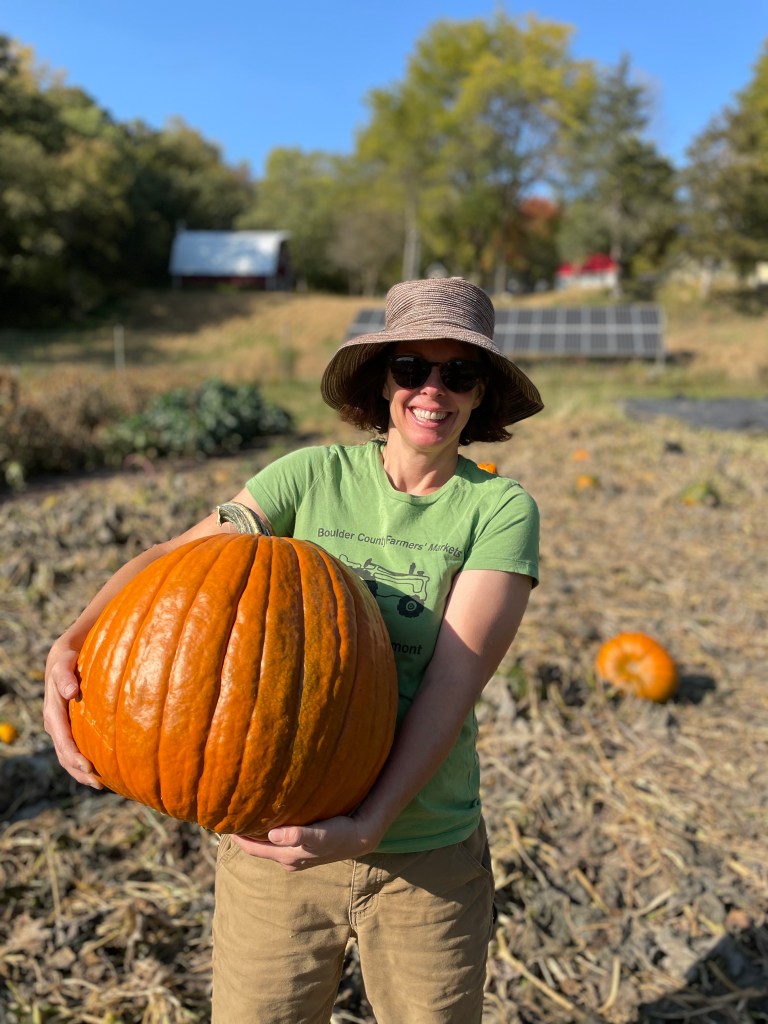
I’m so glad that I did. Running a CSA has been the most intellectually challenging type of farming that I’ve ever done. It required a lot of planning to get the timing of things right and to provide a nice variety or veggies each week. It also necessitated a fair amount of just “winging it” when things didn’t go according to plan, and the need to do a whole bunch of research to figure out how to bounce back. Since I’m the type of person who would be constantly taking classes if I could, I loved that aspect of it.
Your support – both financially and in terms of the feedback you provided – were key in allowing me the flexibility to figure things out and try new methods and crops which made farming more fun and satisfying than it had been before the CSA. I couldn’t have asked for a better group to try this out with; you are all fantastic!
I know that you had to learn a lot, too, and that cooking the “CSA way” presents its own unique challenges and rewards. I know, as I also had to learn how to do it, and every year I discover something new about cooking so seasonally. Happily, the reward for such hard work is a bellyful of delicious, healthy food and, if you’re like me, that is one of the greatest pleasures in life.
I hope that you all enjoyed being part of our CSA as much as I have enjoyed getting to know you and growing food for your families. Thank you so very much for being a part of the inaugural year of the Middle Fork Farm CSA.
What’s in My Box this Week?
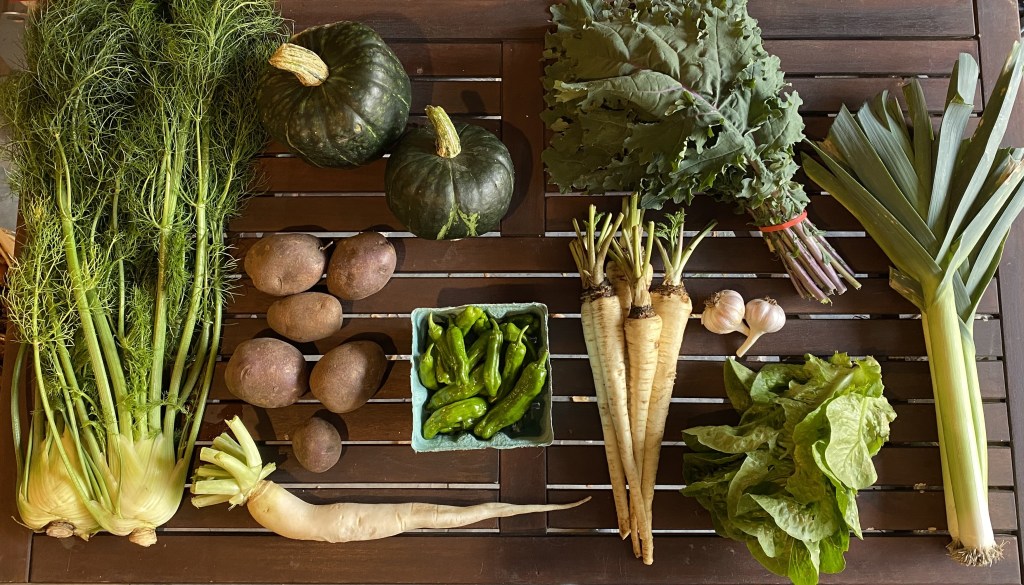
Daikon – I thought I would see if the second planting of daikon were any prettier than the first round and to my amazement, they were, so I’m going to give you one more of these this week. To store, refrigerate in a plastic bag in the crisper drawer of your fridge for best storage. They will easily keep for six to eight weeks this way. If you have to store them loose, they should still last a month. After that they will begin to get a bit softer but will remain usable for two to three months.
Fennel (Large Shares Only) – If you plan to use the fronds (delicate leaves), remove these before storage. Place the bulbs in a plastic bag in the fridge for up to two weeks. Wrap the leaves in a moist paper towel and store in the fridge for up to a week. Here is a tutorial from Lauren at Raleigh’s Hilltop Farm about how to cut it up.
Garlic – Keep in a dark, dry, well-ventilated place at a cool room temperature. It can keep for several months if stored appropriately. Warm temperatures will encourage the cured garlic to sprout which will reduce the quality of it.
Green Lettuce – Store loosely in a plastic bag in the crisper drawer of your fridge. Keep unused leaves on the head. Ideally use within a week, but it will probably store for up to two weeks if needed.

Leeks – I tried an experiment with the leeks this year and it wasn’t very successful. I’ll spare you the details, but the result was skinny leeks rather than the nice, big fat ones we’re used to getting at the store. Still, skinny or not, it’s the taste that matters, so I’ve decided to go ahead and include them in your boxes this week. You might get a bunch of leeks rather than a few fat ones, but you can use them the same way. (Photo: Johnny’s Selected Seeds)
Store in the fridge and try to use within 2-3 weeks. The outer leaves may get a little slimy after that but you can peel away the outer layers.
Parsnips – Parsnips have a tender-hearty texture and a nutty-sweet taste that improves after frost. Refrigerate unwashed in a loosely-wrapped plastic bag for two weeks in the crisper drawer.
Potatoes – This week you’ll be getting purple Peter Wilcox potatoes again. They are earthy-flavored and delicious roasted, boiled, sliced, or fried. We just harvested the last of the potatoes this weekend, so their skin is really delicate; thus, I’m not going to wash them before giving them to you.
Red Russian Kale (Standard Shares Only) – Now that the kale has experienced some frost, I want you to try it and see if you can notice a subtle difference in the taste. It ought to be slightly sweeter now. Wash the greens only right before using. To store, place in a plastic bag with most of the air removed and put in the fridge. It is best used within a few days.
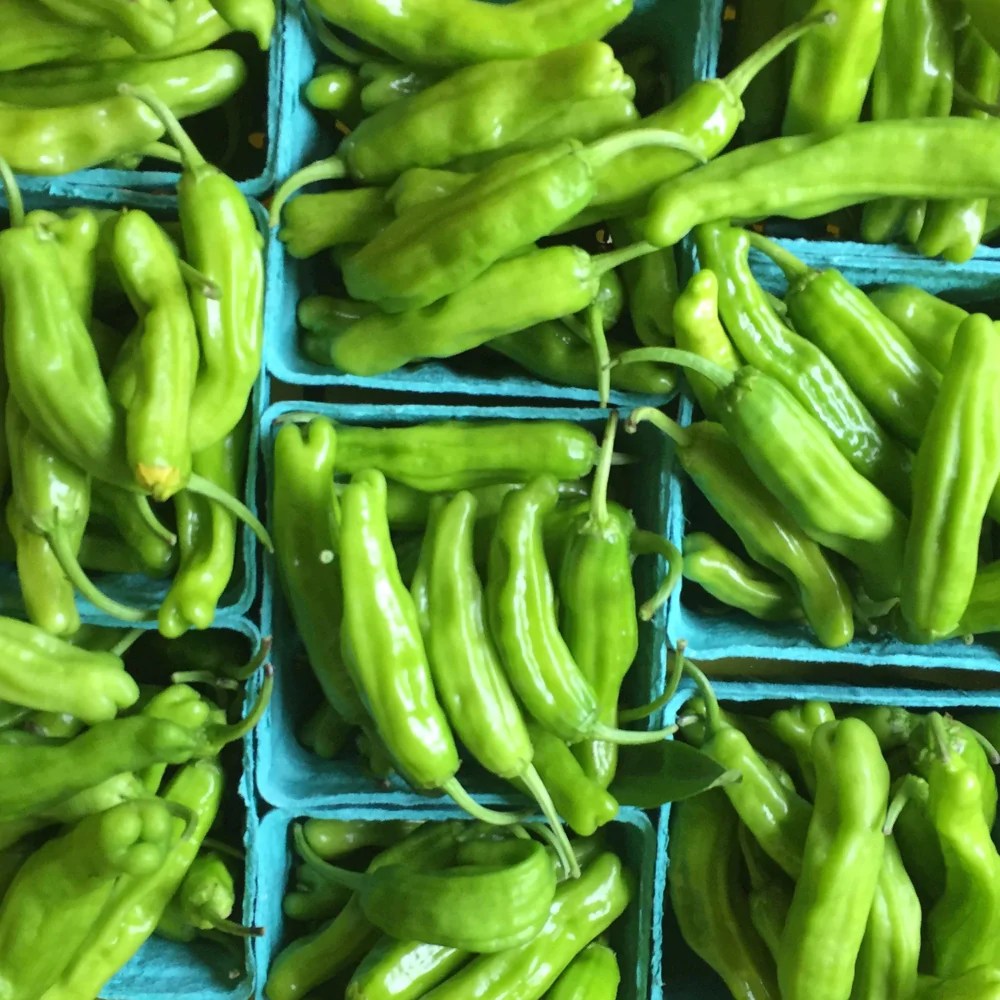
Shishito Peppers (Large Shares Only) – Shishito peppers are quite popular in Japanese cooking. In fact, the name “shishito” means “Lion Head pepper” in Japanese. Nine out of ten times, shishito peppers are mild, but every now and again, you’ll get a spicy one that makes eating these little beauties fun and surprising. (Photo: Hudson Valley Seed Company)
I had wanted to grow enough for everyone to try some, but I don’t think it will be possible. This is a new kind of pepper for me and I underestimated how much each plant would yield. Even the large shares aren’t going to get an ideal quantity (most recipes require about a pound of them), but you’ll at least be able to sample them a little bit. Accordingly, I have included recipes below that use lesser amounts of shishitos. You can also just roast or grill them, adding some coarse salt and lemon juice. They are delicious this way.
To store, refrigerate peppers unwashed in a sealed plastic bag in the crisper drawer for one to two weeks.
Winter Squash – Store winter squash in a cool, dry place and try to use within a week or two. Do not store in the fridge. This will cause it to spoil much more quickly.
Notes from the Field
As you know from my emails last week, frost arrived on the farm last Tuesday and Wednesday nights. It was a little early this year; the average date for the first fall frost is around October 10, but truthfully, I was okay with it. We’ve had bountiful eggplants, bell peppers, and tomatoes – the crops that perished in the frost – and I’m ready for the fall veggies to take center stage on our dinner plates now. It’s funny how much I look forward to the first tomato harvest of the season and how two months later, I’m over it. I know I’ll crave a fresh, field-ripened tomato come February, but for now, I’m satiated.
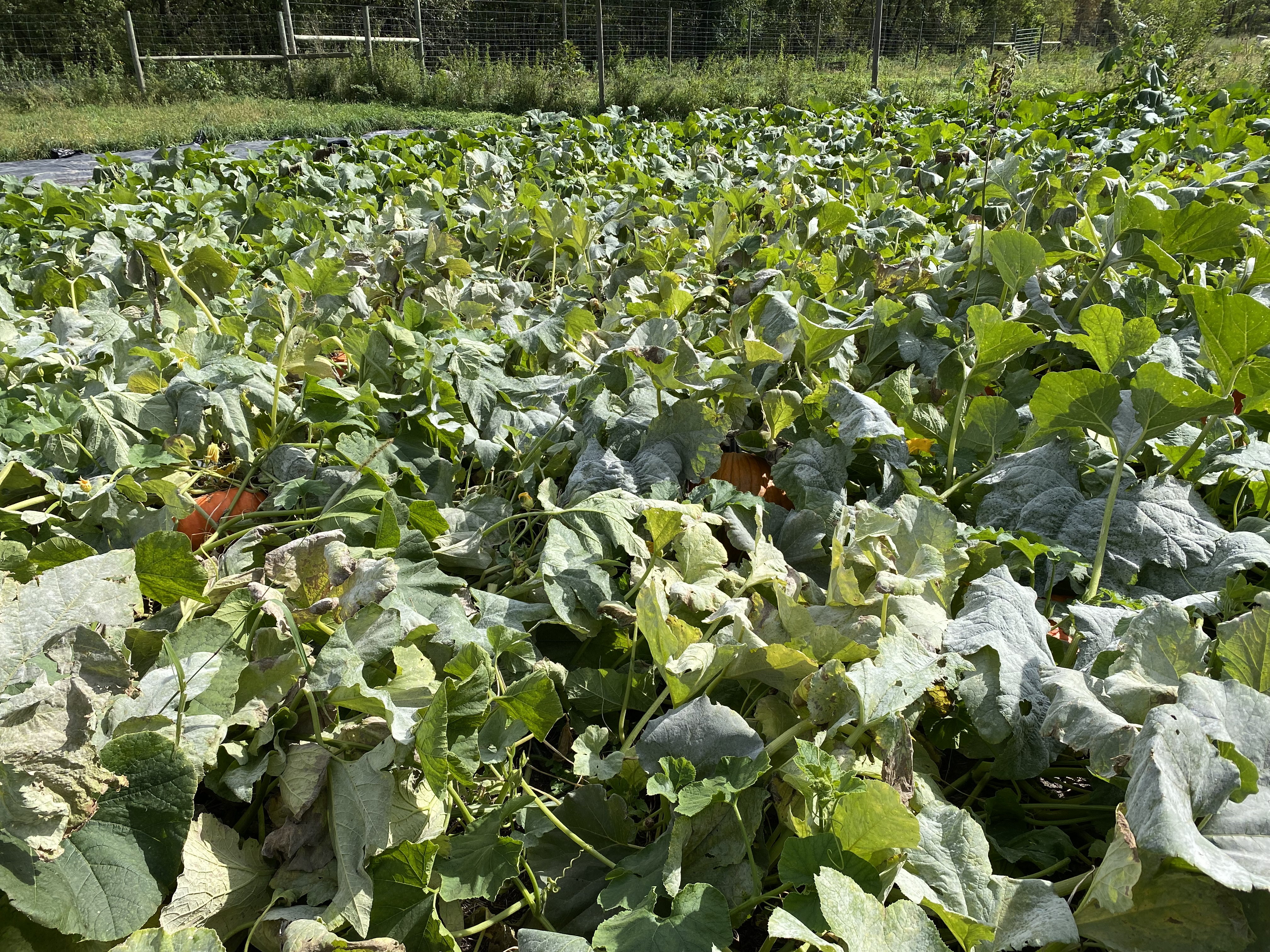
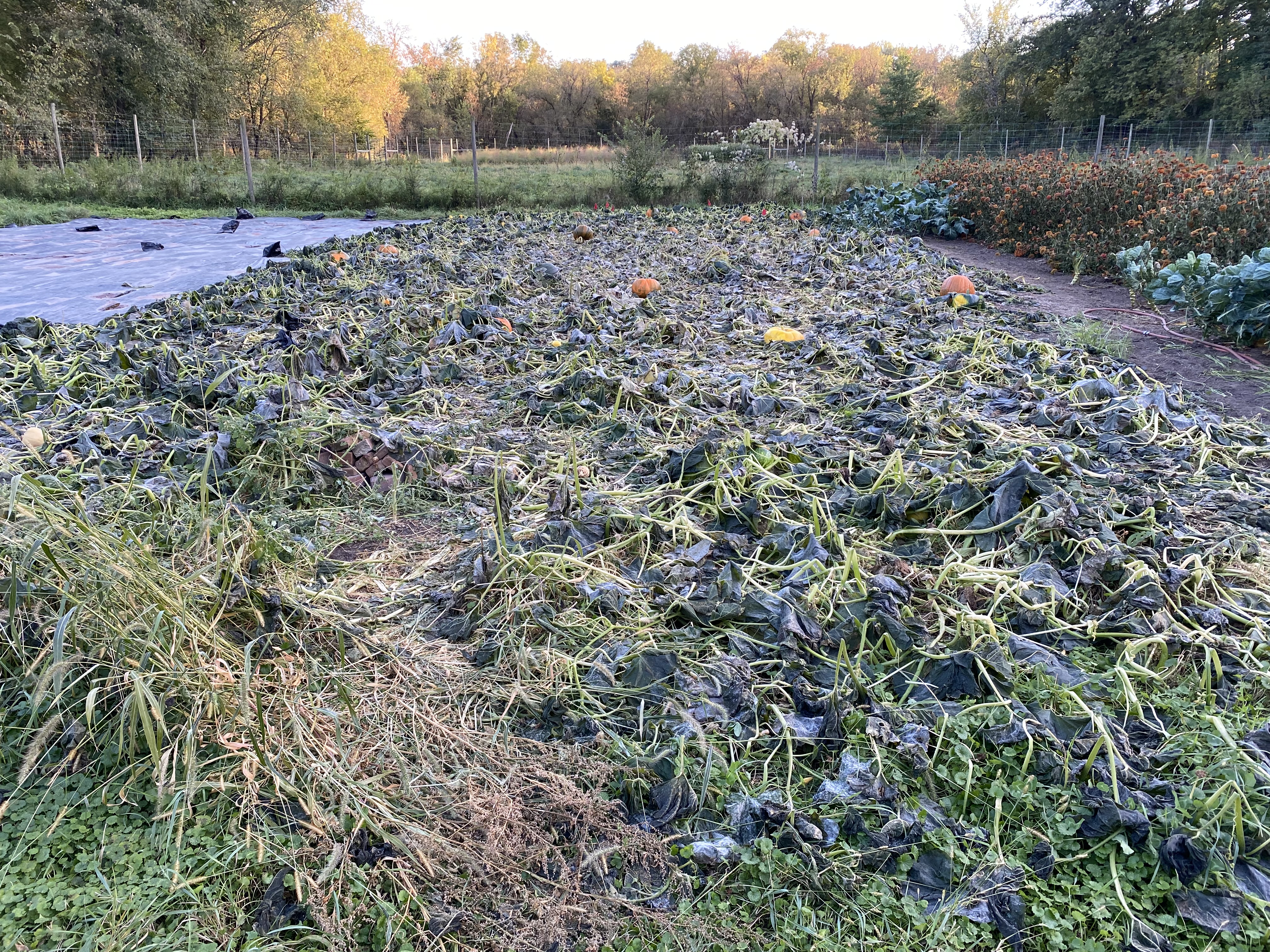
This past week, we harvested a gazillion pumpkins from mini Jack-Be-Littles to the 15 pound Rouge vif d’Etampes. These latter one are affectionately called “Cinderella” pumpkins because their shape is reminiscent of the carriage that Cinderella took to the ball.
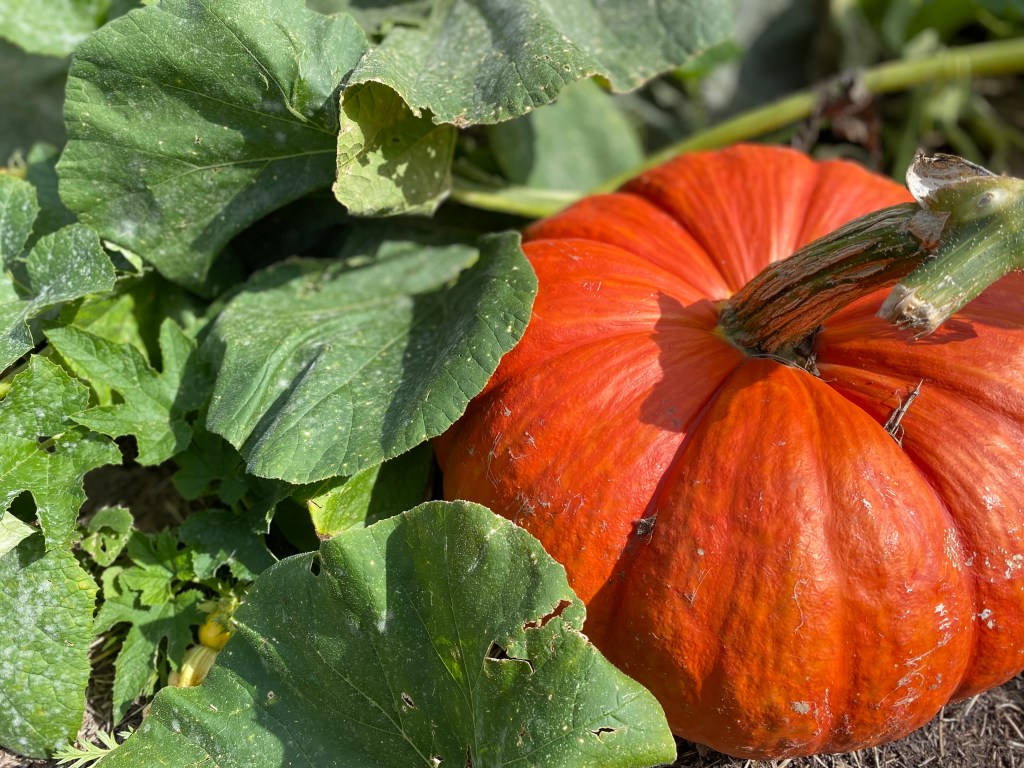
We will place these all over the farm for decoration and cook some down and freeze them for soups, breads, and pies later. I’ll also see if the food shelves might want some. One of these could feed a family of four for days!
Other than that, I covered some frost-sensitive crops – artichokes, shishitos, lettuce, fennel – with row cover to buy myself a few extra weeks and to make sure you still had some of these in your final boxes. I was really, really hoping the Romanesco would be ready by now, but they still haven’t formed heads yet. Next year, I will start them out in the field even earlier, so I can harvest them in time for the last week or two of the CSA.
Finally, I brought a whole lot of produce to the Oronoco Food Shelf and Rochester Outreach Center. Even we can’t eat all that we harvested before the frost. The man who manages the food shelf at ROC is Middle Eastern and he was thrilled to see so many eggplants, a staple in his culture. He gave me all sorts of suggestions for how to cook with it which I will share with you next year.
Last up on the farm will be pulling out the dead tomato vines and hauling them far away from the production field so as to prevent the leaf spot disease they had from overwintering in the field and infecting next year’s plants. I will flail mow down the remaining crops and let them decay in place, providing cover for the soil and food for the critters that live in it. The garlic will be planted in the next couple of weeks and the strawberries covered in a thick layer of straw mulch to keep them nice and cozy until spring. At that point, I will also be nice and cozy, more indoors than out for the first time in months, looking through seed catalogues and sipping hot cocoa with the cat purring on my lap. Wish me luck as I make plans for a wonderful 2023 growing season!

Recipes
Beet Pasta with Caramelized Leeks, Hazelnuts, and Blue Cheese // Uses Leeks // Vegetarian
Honey Roasted Parsnips // Uses Parsnips // Vegetarian
Mashed Parsnips // Uses Parsnips // Vegetarian
Mini Mushroom and Parsnip Pot Pies // Uses Kale, Parsnips // Vegetarian
Potato Leek Soup // Uses Garlic, Leeks, Potatoes // Vegetarian (if you use veggie broth)
Shishito and Potato Breakfast Bake // Uses Potatoes, Shishitos
Recipe from The Leek & The Carrot
Serves 6 to 8
Takes 1 hour (most of it inactive)
1 tablespoon olive oil
3 to 4 cups shredded potatoes
6 to 8 shishito peppers, sliced (about 1 cup)
1/2 yellow onion (or 1/2 bunch scallions), diced
1 pound breakfast sausage, browned**
8 eggs
1/2 cup whole milk
1 teaspoon hot sauce
1 teaspoon mustard powder
1 teaspoon Kosher salt
1/2 cup favorite cheese (I used a lovely dill havarti)
- Preheat oven to 350 degrees.
- Grease a 9×13 casserole dish with olive oil.
- Combine potatoes, peppers, onion and pork sausage in prepared casserole dish. Toss to combine.
- In a medium bowl, whisk together eggs and milk. Add hot sauce, mustard powder, and salt. Pour evenly over potato mixture.
- Place in preheated oven and bake for 30 to 40 minutes until the eggs are set. Add cheese and cook 5 minutes longer just to melt (or lightly brown).
- Enjoy!
**If you are vegetarian, feel free to substitute in 16 to 20 ounces of the most flavorful mushrooms you can find for the sausage. Then add in a couple cloves of garlic, a tablespoon of dried sage, and a pinch or two of red pepper flakes while sautéing them.
Slow Cooker Sweet Potato and Butternut Squash Chili // Uses Garlic, Leeks, Butternut Squash (could sub any other winter squash) // Vegetarian
Recipe from The Leek & The Carrot
Takes 20 minutes (active time) + 4 hours (in slow cooker)
Serves 8-12
1/4 cup olive oil
1 large leek, white and pale green parts only, roughly chopped
2 garlic cloves, minced
2 cups diced red, orange or yellow pepper
4 cups water
6 cups diced tomatoes (from fresh tomatoes, canned tomatoes or things you froze earlier in the year)
2 cups chopped sweet potatoes
4 cups chopped butternut squash
1 can (15-ounce) spicy chili beans
1 can (15-ounce) black beans, rinsed
1/4 cup brown sugar
1/4 cup chili powder
2 tablespoons Kosher salt
2 tablespoons cumin
1/2 teaspoon cayenne powder
Pinch cinnamon
- Add olive oil to crock pot or slow cooker along with leek, garlic and peppers. Turn crock pot up to high and let cook on it’s own with the lid off for 10-15 minutes while you peel and dice your squash and sweet potatoes and get the rest of your ingredients assembled.
- Add remaining ingredients to the crock pot. It will be a tight fit even in a standard 8-quart crock pot. Place lid on crock pot and cook for at least four hours on high heat. If you are making it and leaving for the day, eight hours on low heat will work just as well.
- Enjoy with cheese, diced raw onion, Greek yogurt and a handful of chives. Store whatever remains in your fridge to eat throughout the weekend/week.
Spicy Roasted Parsnip Soup // Uses Parsnips // Vegetarian
 Middle Fork Farm