
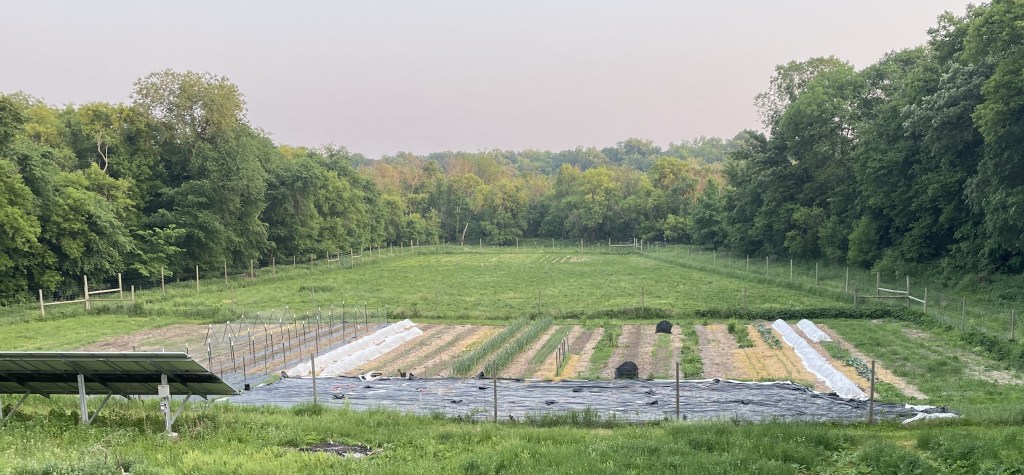
Welcome to Season 2, Week 1 of Middle Fork Farm’s Community Supported Agriculture (CSA)! It seems like just yesterday I was closing up the pack shed, putting away the tools, and latching the field gate for the last time before winter, and now I am gearing up to deliver your first CSA boxes of 2023. I am happy to leave behind the spreadsheet planning and seed ordering for the next few months and move into the field where I can once again marvel at the life flourishing around me. Just take a look at some of the photos of the farm that I took this morning and you’ll see just how much nature is thriving out there already.
What’s in My Box this Week?
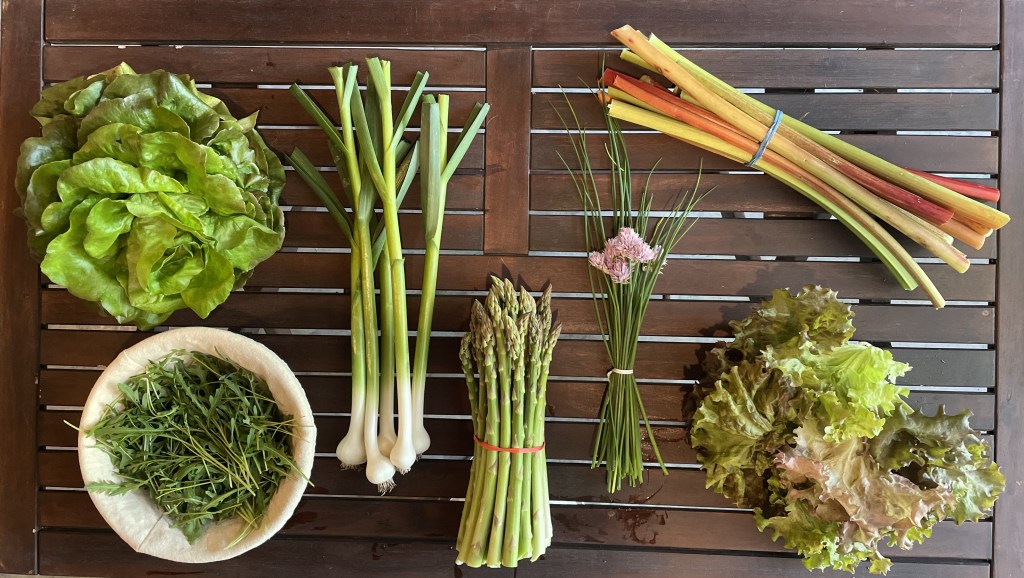
Arugula – Arugula has a peppery, spicy, and slightly bitter taste, so a little bit can go a long way. Arugula doesn’t last much longer than a couple of days, so try and use it right away. Store it in the fridge in a plastic bag. Arugula is most often paired with other greens, like in a salad, and I like to throw some leaves on a tomato-sauce based pizza.
Asparagus – The best way to store asparagus is standing up in a glass or jar with all of the ends submerged in an inch or two of water. Loosely cover the asparagus with a plastic bag and keep in the fridge for up to a week.
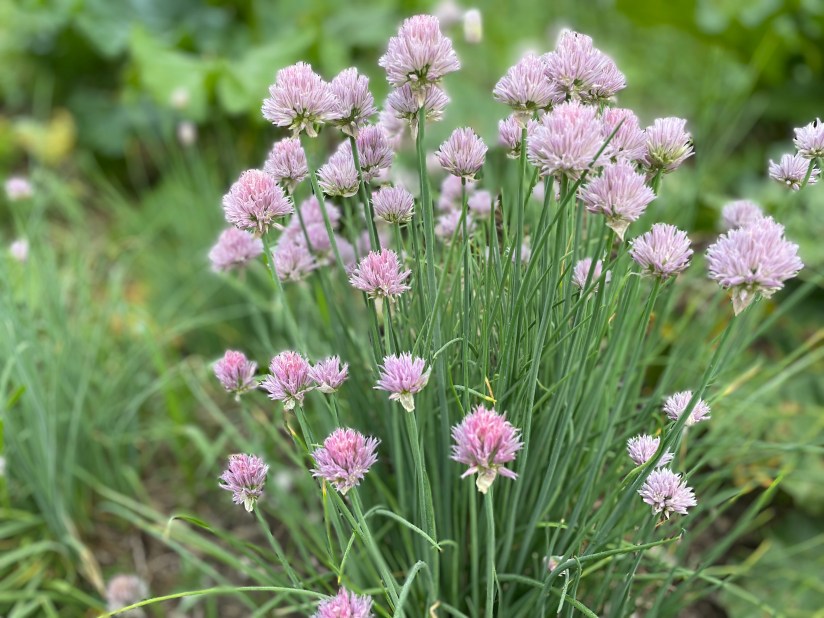
Chives with Blossoms – Chives are in the allium (onion) family and they produce blooms that are edible and taste just like the green leaves that you are probably more accustomed to eating. As such, they can be added to salads, dressings, or potato dishes just as you would the leaves.
Some of the chives you receive this week will have a blossom. For these, pull them out of the bunch, remove the blossom, place in a bag or container in the fridge, and compost the woody stem. The blossoms are best used within three to five days. The rest of the chives are should be stored in a small jar with about an inch of water. Make sure to put the stem side in the water, not the tender leaf tops. You can also keep them in the fridge in a plastic bag.
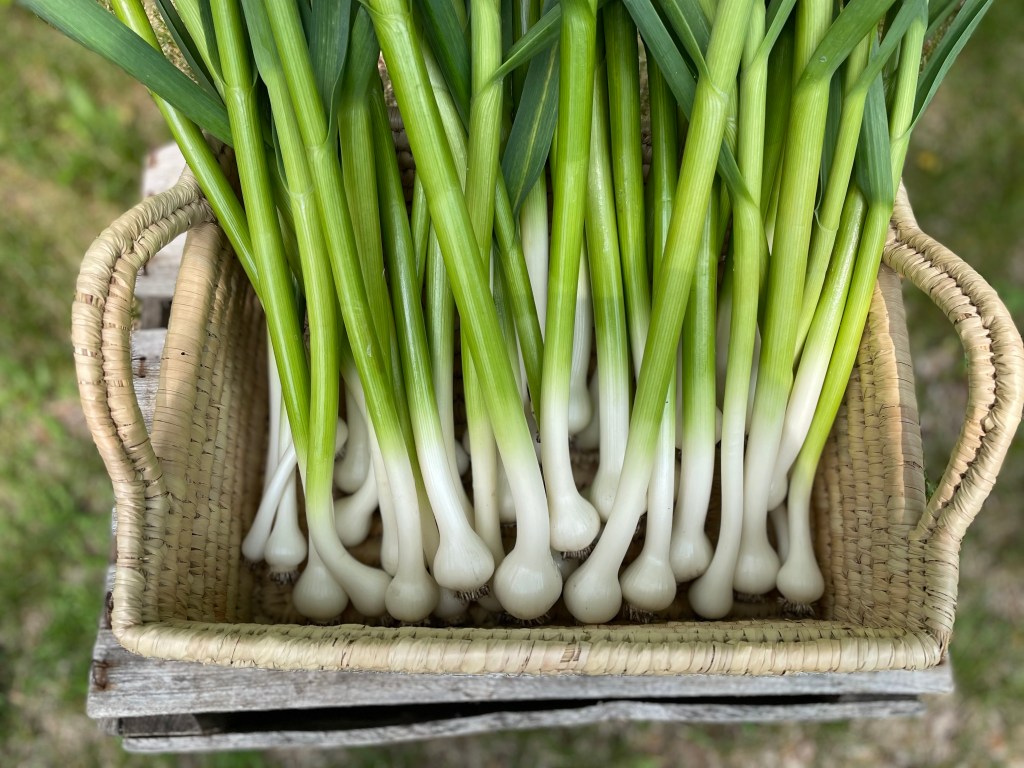
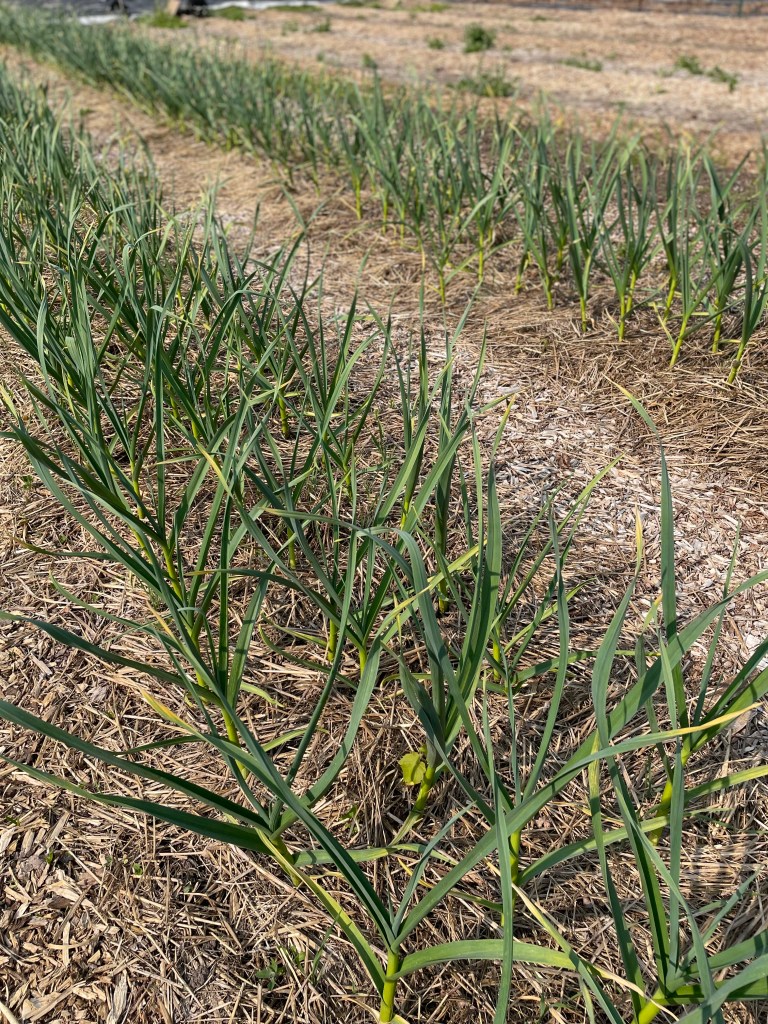
Green Garlic – Green garlic is simply an immature garlic bulb with a milder taste than that of fully mature garlic. Store it in the crisper of your fridge and use within five to seven days. For best storage, wrap bulbs (the white part) in a damp paper towel. Just trim the ends and the dark green portion (as you would do with a leek) and use like regular garlic.
Lettuce – Store loosely in a plastic bag in the crisper drawer of your fridge. Keep unused leaves on the head. Ideally use within a week, but it will probably store for up to two weeks if needed. Because we are short some of the greens we thought we would have for you right now, you’ll be receiving two different varieties of lettuce this week.
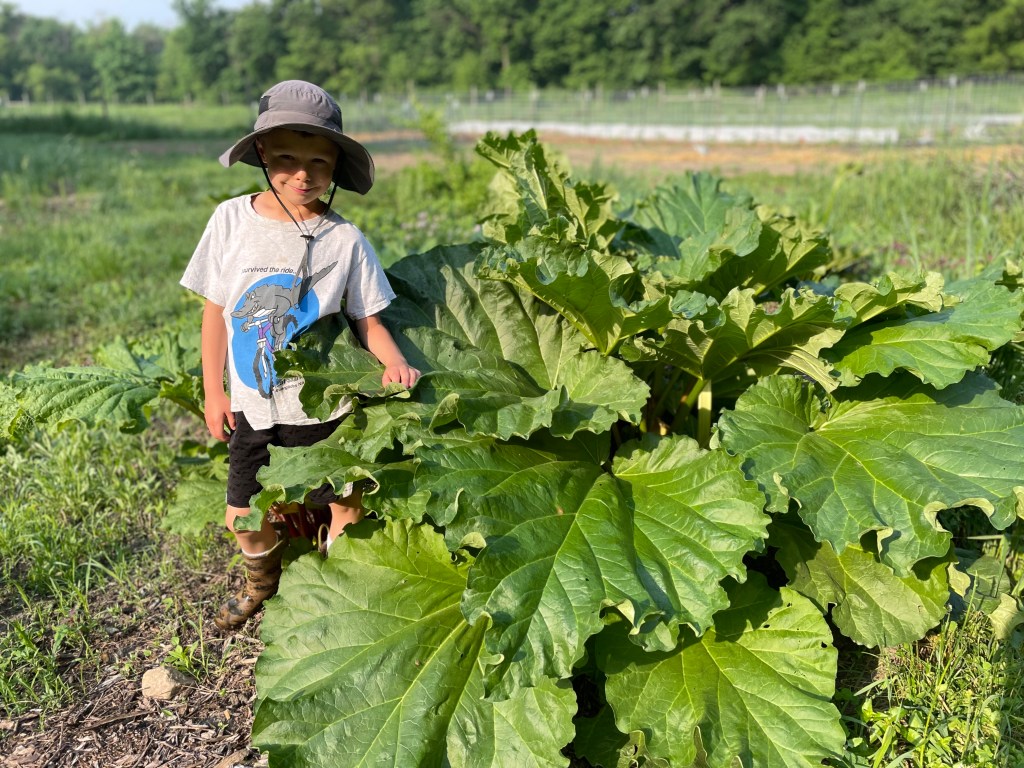
Rhubarb – Rhurbarb is one of the earliest spring crops and can be red or green. Most recipes that use it call for sugar because it can be so tart. To store rhubarb, wrap it loosely in damp paper towel and place it in a plastic bag in the fridge. When you’re ready to use it, remove about an inch from the bottom of the stalk. It is best used within a week. You can also chop and flash freeze rhubarb in freezer bags for future use. Some of your rhubarb will be coming from Sogn Valley Farm this week because a pocket gopher ate some of our plants over the winter.
Notes from the Field
While this week will be your first time receiving veggies this summer, the farm has been up and running since the end of March when I seeded onions, shallots, leeks, and scallions in the greenhouse. This year I was very grateful to be able to move out of our basement and into the greenhouse at Sogn Valley Farm about 35 minutes away in Cannon Falls. Our friends, Dana and Karin, graciously allowed me the use of some space there in exchange for me helping them seed and pot up the native plants that they sell. If I wasn’t convinced before that I need a greenhouse, I am now. The difference in quality and vigor of the greenhouse-started plants versus the basement-started plants was astounding.
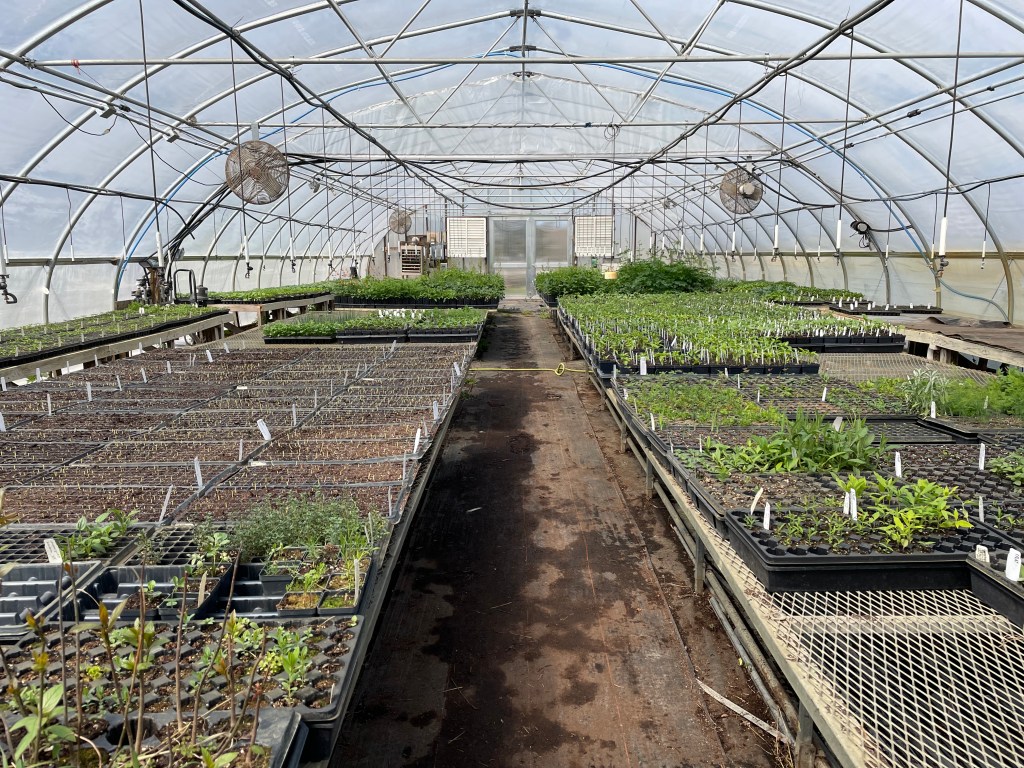
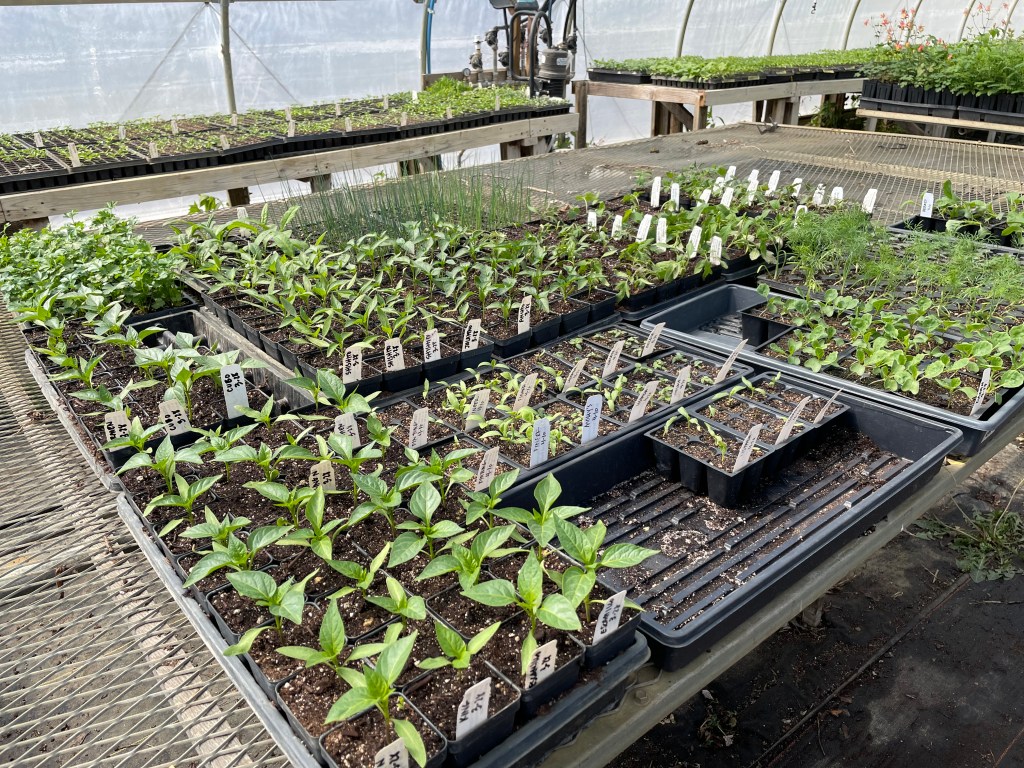
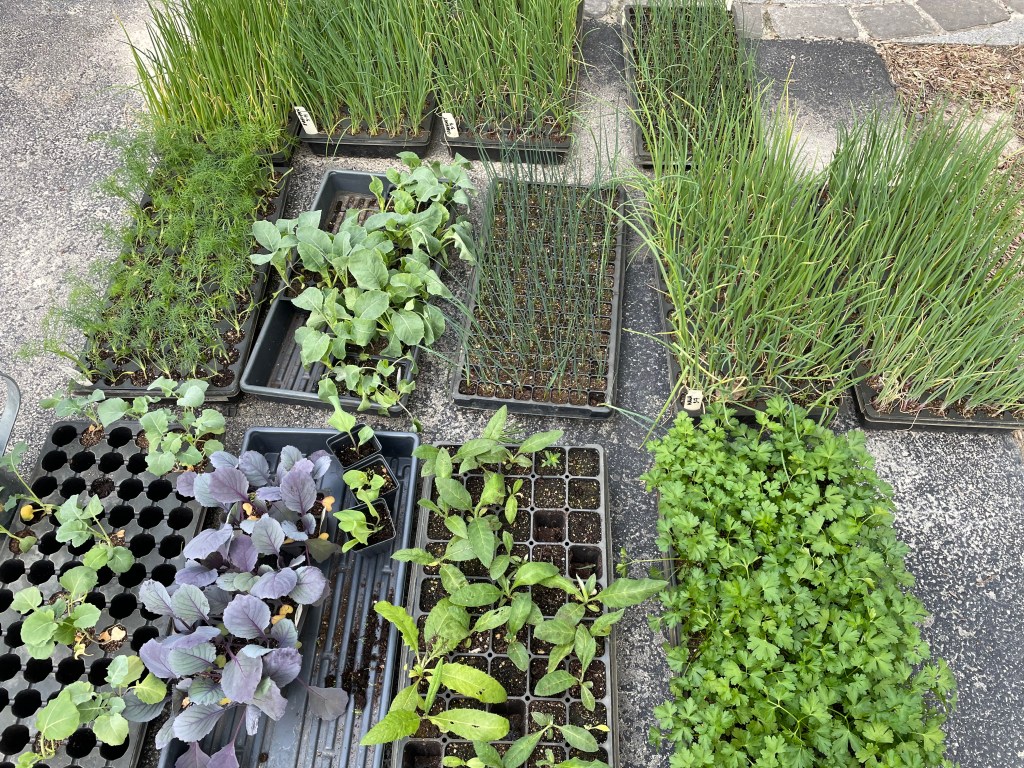
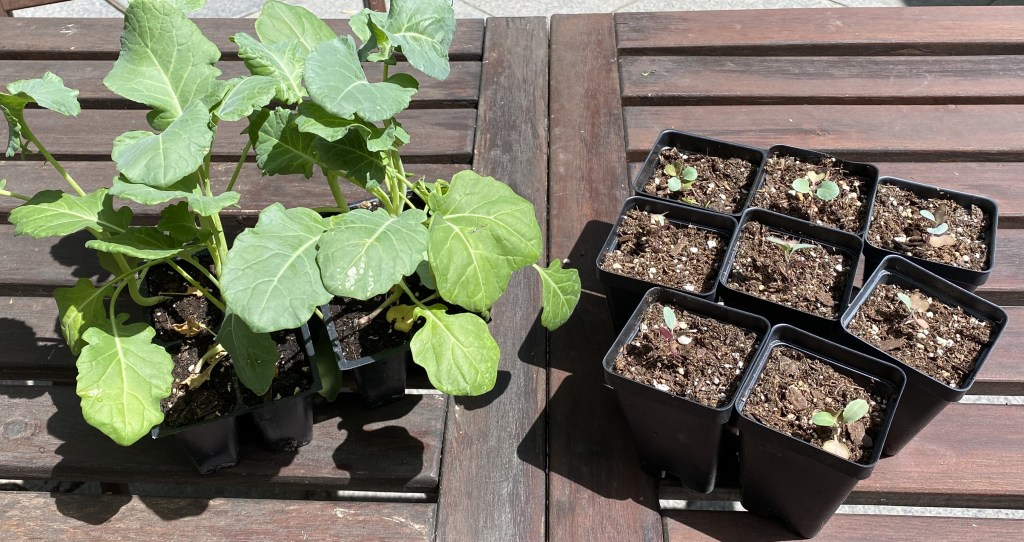
Remember these sad seedlings from last year? The ones on the right were those I tried to grow in the basement. The ones on the left were those I bought from a farmer who clearly had a greenhouse.
After spending about six weeks in the greenhouse, it was time to start seeding outside. We had a bit of a late start this year when we received 4.5″ inches of rain within a single week, making it too wet to plant unless we wanted to risk destroying the soil structure (which we didn’t!). Still, Mother Nature carried on as she is wont to do. The garlic came up on schedule, the strawberries began to bloom, and all sorts of babies were born in our production field.
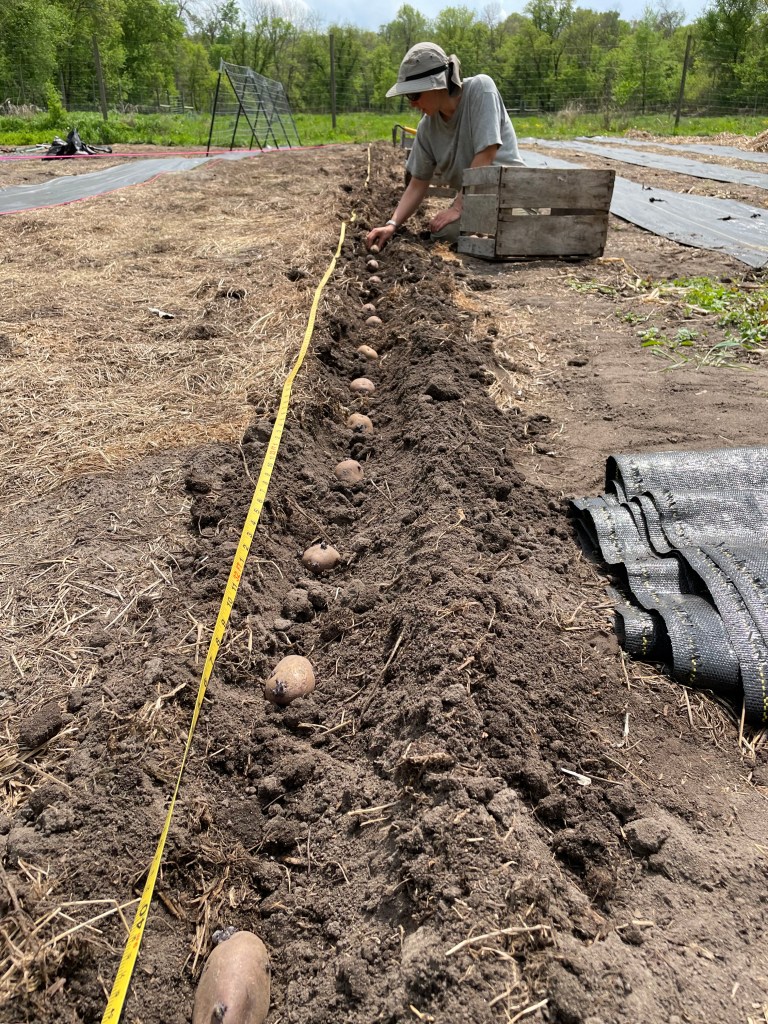

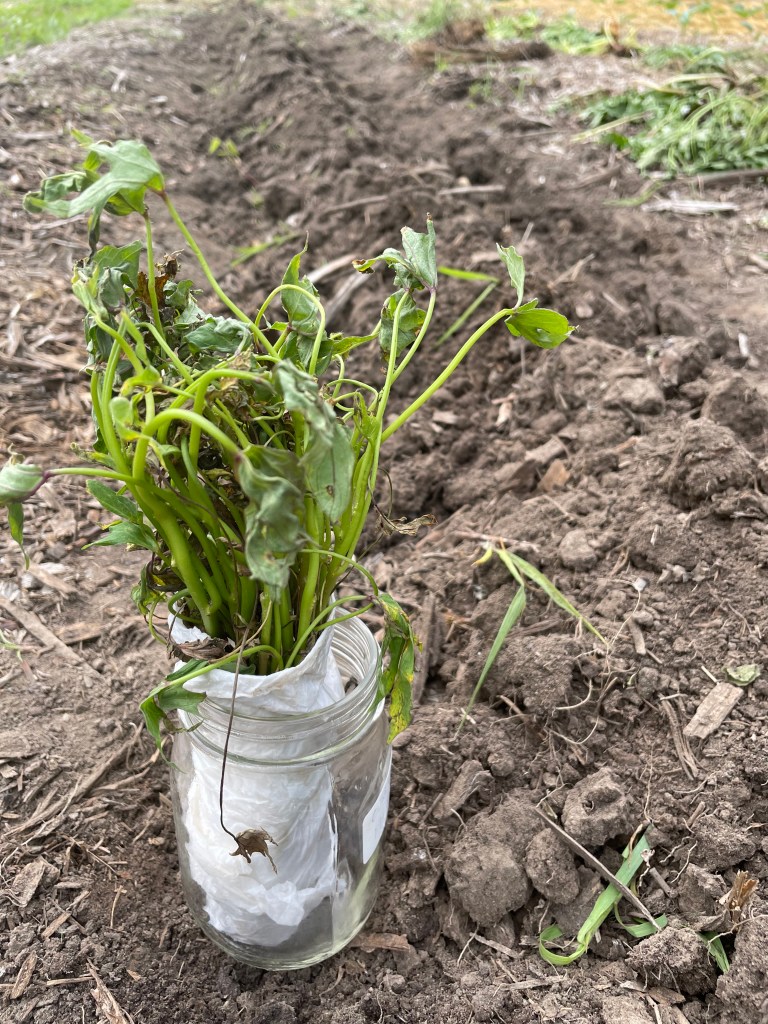
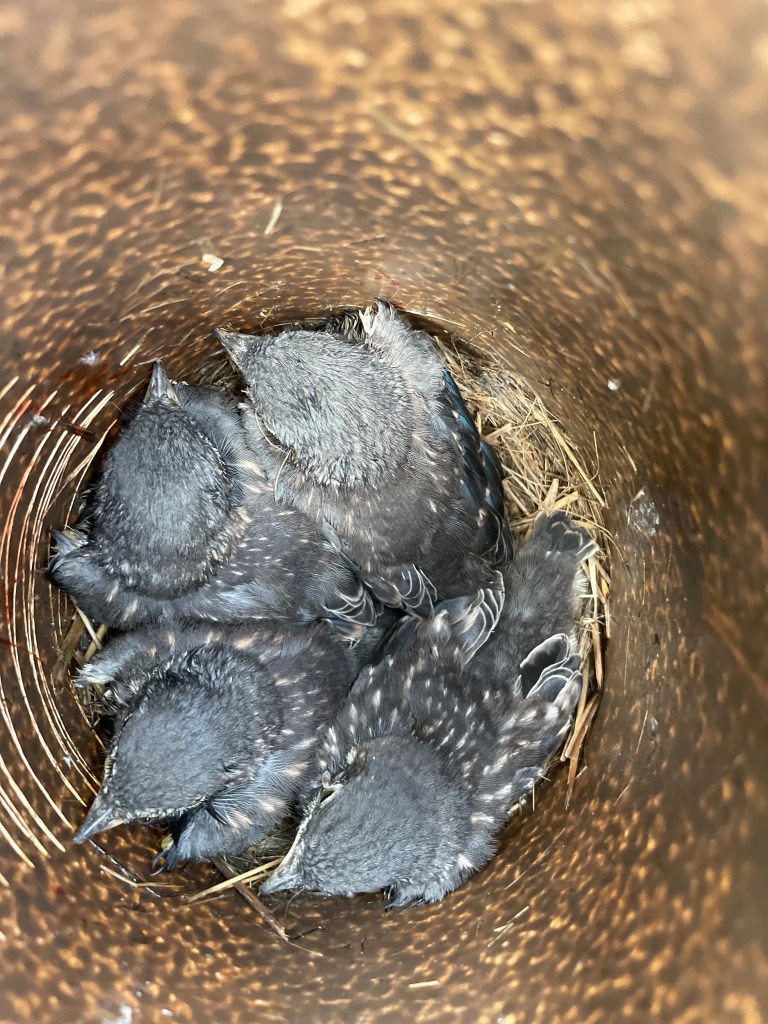
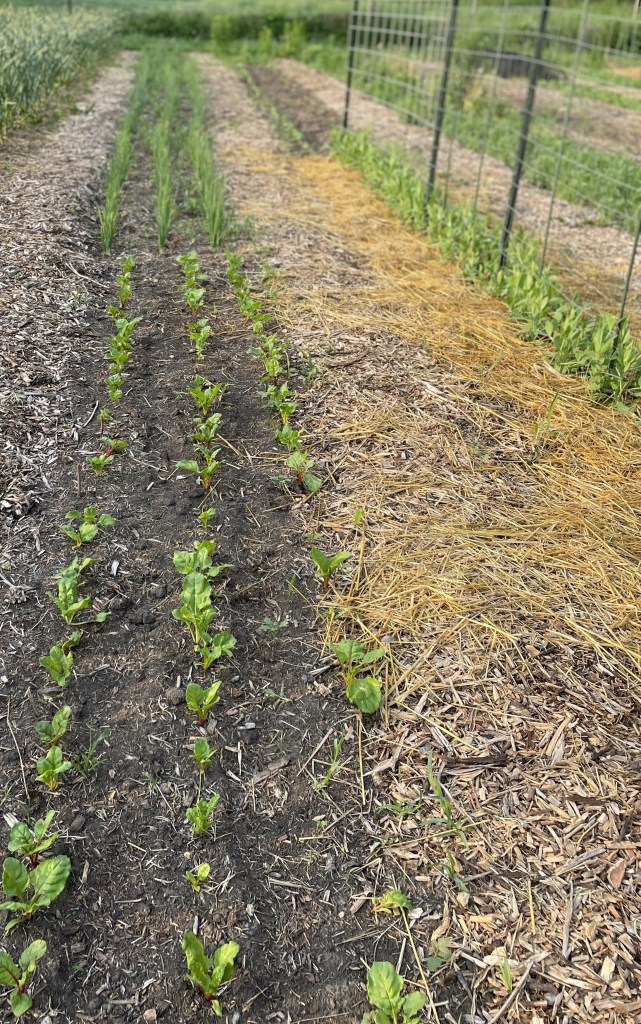

Of course, now we are short on rain which isn’t great, but at least we have hoses and the dry conditions have allowed us to seed and transplant pretty much everything that needs to be in the ground by now. This morning I planted a bunch of sweet potato slips (those are the sad, wilted plants in the glass jar above; they came like that, I swear!) and later today I will transplant the green cabbage and seed the winter squash and some flowers. This will largely conclude the spring planting marathon. It always feels really good when we get to this point, and we will celebrate with large bowls of ice cream when we get there.
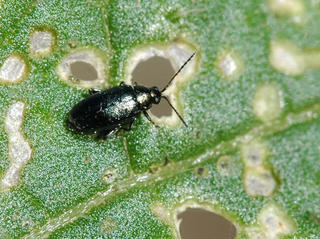
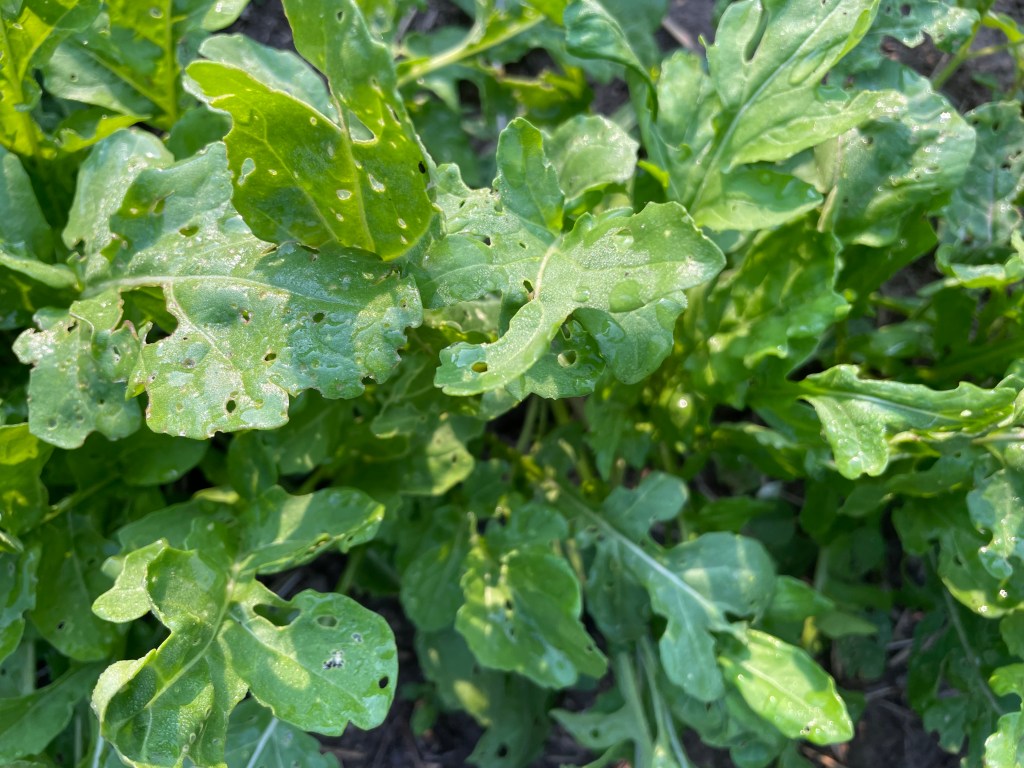
I was really hoping to introduce you to a new crop this week, Tokyo Market Turnips, but we had an old, familiar pest – the flea beetle – start to attack plants it’s never gone after before, at least in our field. We’ve had trouble with them on eggplant in the past and this spring they also went after the arugula, bok choy, and turnips. Once they find something they like, they chew about a gazillion holes in every leaf they come across until they peter out in mid-summer. Because of this, I will be able to reseed the crops that took a hit this spring and give you these things in the fall. I also did another seeding of the turnips a couple of weeks ago and immediately covered them with row cover. This seems to have done the trick and so I’m hoping that you’ll be able to have these in another couple of weeks or so. And…. surprise! surprise! I found a patch of arugula that had self-seeded last fall that the flea beetles didn’t damage quite so much, although you’ll probably see a few holes in the leaves here and there. We tried some in a salad the other night and it still tastes yummy, tiny holes and all.
Luckily, there are still a small number of delicious veggies ready for you this week. The asparagus is really tasty, the rhubarb that survived the gopher onslaught is huge (it’s as tall as Luka right now!), and the lettuce is beautiful. I hope that you will enjoy these first gifts of summer.
Recipes
Almond Rhubarb Picnic Bars // Uses Rhubarb // Vegetarian
Buttermilk Chive Dressing // Uses Chives // Vegetarian
Potato Asparagus Salad with Green Garlic // Uses Asparagus, Green Garlic // Vegetarian
Rhubarb Muffins // Uses Rhubarb // Vegetarian
Spring Lettuce Salad with Roasted Asparagus // Uses Asparagus, Lettuce // Vegetarian
 Middle Fork Farm