As you all know, this is the week when I join the National Sustainable Agriculture Coalition and Land Stewardship Project in Washington, D.C. to meet with legislators and USDA staff to discuss Farm Bill reforms that would benefit farmers who are growing food sustainably and at a smaller-scale. This includes not only people like myself who live out in the country, but farmers who are growing in some urban areas where a fair number of people don’t have easy access to fresh, affordable produce even at the grocery store (if they even happen to have one nearby). Many, many years ago I did a graduate internship for former Senator Lincoln Chafee up on the Hill. Times have certainly changed in the halls of power since then, but it will be fun to go back and relive my youth just a little bit.
What’s in My Box this Week?
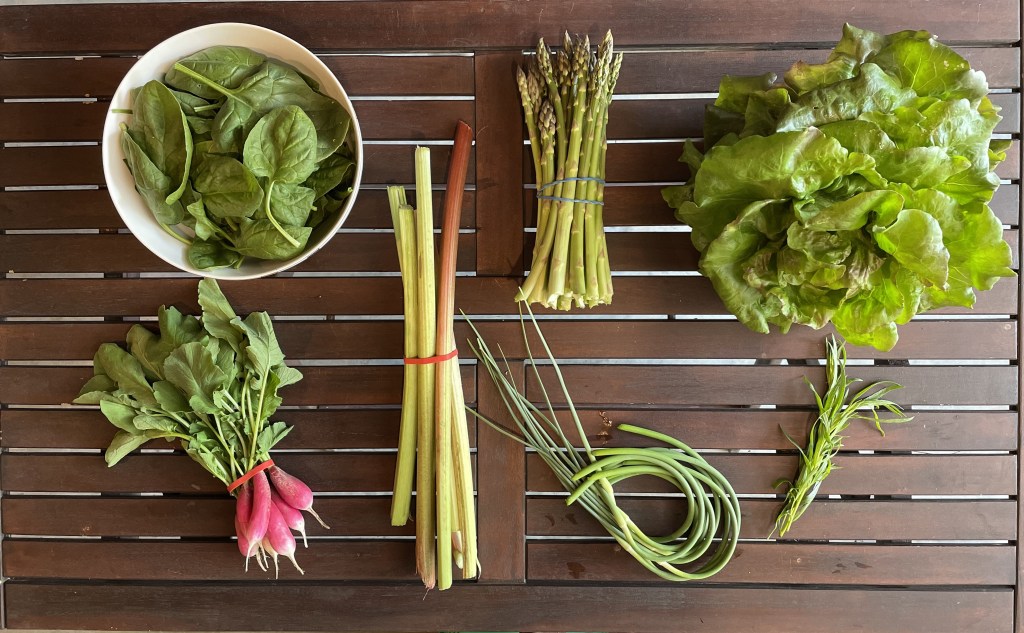
Asparagus – The best way to store asparagus is standing up in a glass or jar with all of the ends submerged in an inch or two of water. Loosely cover the asparagus with a plastic bag and keep in the fridge for up to a week.
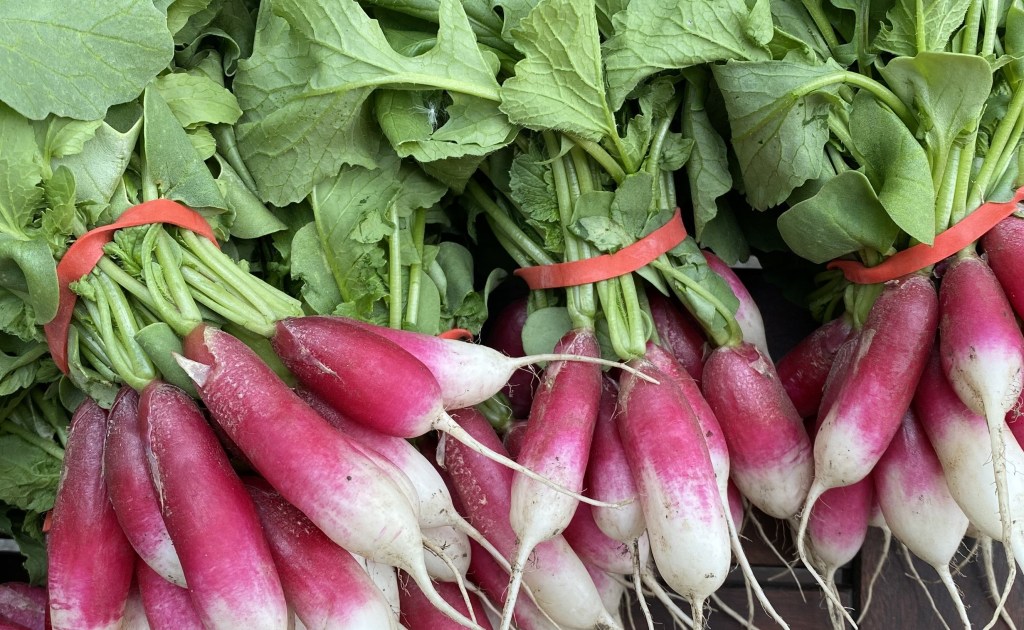
French Breakfast Radishes – The variety you’re getting this week is known for its mild, subtly sweet, and peppery flavor. These are often scored with an “X” and dipped in butter as a snack in France and frequently sprinkled with salt and put on top of buttered toast.
They are equally good raw in a salad. Store for up to two weeks in a plastic bag in the fridge. Store greens separately, ideally gently wrapped in a damp paper towel. Use the greens as quickly as possible.
Garlic Scapes – Garlic scapes are the flower stalks of hard-neck varieties of garlic plants. We have to cut these off before they flower so that the garlic puts energy into growing a big, fat bulb instead. These shoots are edible and delicious. They are mild and sweet with just a hint of garlic. You can chop them and use them in place of garlic cloves, make a salad dressing, or throw them on the grill like you would scallions.
Garlic scapes will last up to three weeks loosely wrapped in plastic in your fridge. If you can’t get to them, they can also be chopped and frozen for later use. I like to take a handful out of the freezer bag and add them to pasta dishes in the winter for a subtle, fresh garlic taste.
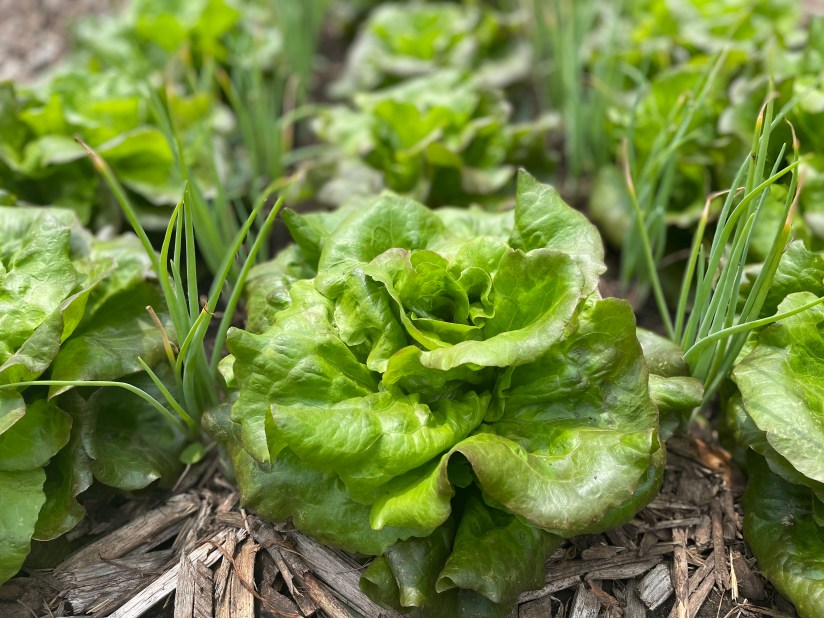
Lettuce – Store loosely in a plastic bag in the crisper drawer of your fridge. Keep unused leaves on the head. Ideally use within a week, but it will probably store for up to two weeks if needed.
Rhubarb -To store rhubarb, wrap it loosely in damp paper towel and place it in a plastic bag in the fridge. When you’re ready to use it, remove about an inch from the bottom of the stalk. It is best used within a week. You can also chop and flash freeze rhubarb in freezer bags for future use.
Spinach – Store dry, unwashed spinach in a sealed plastic bag for up to two weeks in the fridge. Right before using, wash the leaves in a basin of lukewarm water and spin dry. Try to use within a week. If it does get limp, you can still use it in cooked dishes.
Tarragon – This herb is a favorite of French gardeners everywhere who use it in some of their most famous sauces (béarnaise). It has a bit of anise taste and is good for meats like chicken and lamb, as well as seafood and egg dishes. Tarragon is frequently combined with vinegar or lemon to make salad dressings and marinades. The best way to store tarragon is to place it in a jar with a small amount of water and loosely cover in plastic before putting in the fridge, like storing asparagus. Tarragon can also be frozen and added to soups and other dishes later.
Notes from the Field
This past week had us obsessing about rain. All we could think about was whether it would rain and how much rain we might get. We repeatedly checked the weather report and thought we might have a good chance on Saturday but alas, the rain clouds passed us by. As I write this, Simon is out watering 1,300 asparagus plants with the hose. Normally this time of year we get at least ten pounds of asparagus a day; this morning Simon harvested just one pound. Thus, we will conclude our asparagus season a little early this June. As asparagus plants are perennials, it’s not a good idea to stress them too much if you want them to come back the next year as we most certainly do. Don’t worry though. We are pretty certain we’ll still have enough for your shares this week.
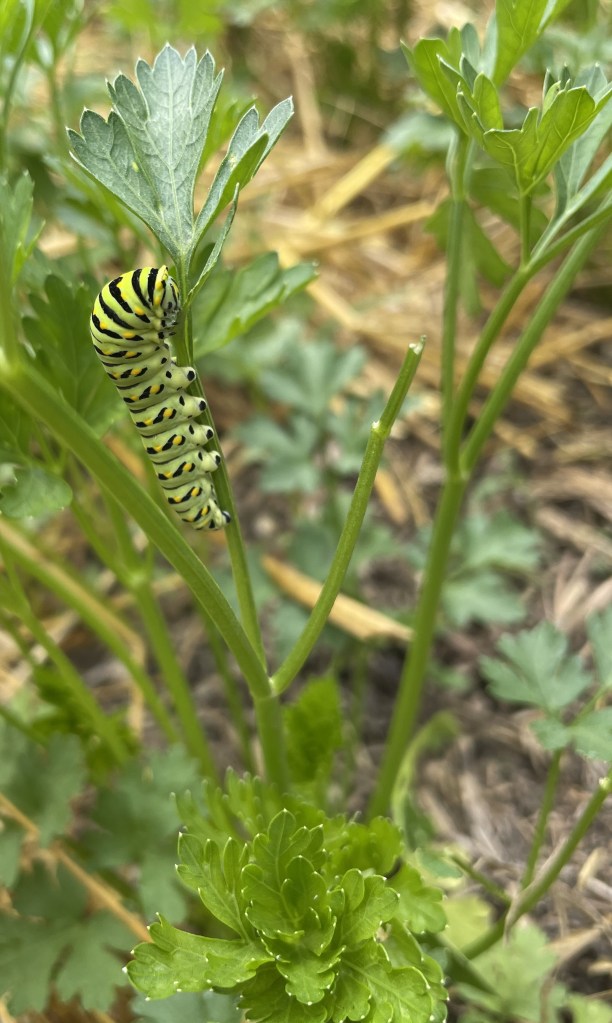
Other than spending much of our time watering lately, we seeded parsnips, cilantro, basil, pickling cucumbers, calendula, nasturtiums, sunflowers, and zinnias. Some of these flowers we like to put in salads and eat, but others I just like to have in the field because they’re pretty and they attract all sorts of pollinators and beneficial insects to help keep the more problematic bugs in check. (That’s a swallowtail caterpillar chomping on some parsley. I decided we had enough we could share.)
One task that I’m glad we recently decided to do was laying straw mulch around many of the plants. For some reason I had a hunch that we might be going into a dry spell and besides helping to build soil organic matter, mulch helps keep whatever moisture that makes its way into the soil stay there. It also does a good job – together with watering – at helping to reduce soil temperatures which is especially important for cool season crops like peas and broccoli. Warm soil temperatures encourage broccoli to form heads before they really ought to. When we had those really warm temperatures last week, I found the teeniest tiniest heads on some of the broccoli. I promptly picked them off; I’m not sure if they will try again with bigger heads, but that is the hope!
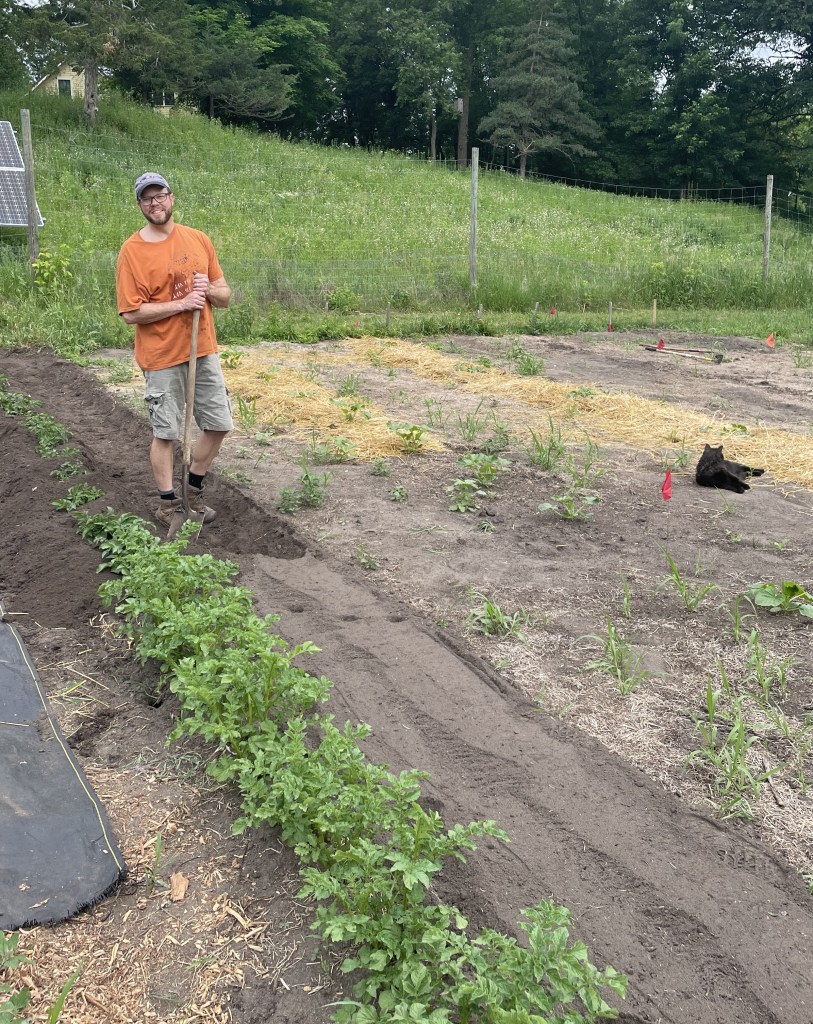
Erik got a workout this past weekend hilling up a 100′ row of potatoes. This task involves loosening the soil on either side of the potatoes that have sprouted and covering up their leaves with it. We do this for a few reasons: 1) it creates additional space for more tubers to grow; 2) it buries the weeds; 3) it causes the roots to deepen into cooler soil; and 4) it keeps the tubers covered and out of sunlight so they don’t turn green. Every year Erik takes pity on me and tackles this job himself. Of course, he is the family member who most looks forward to and enjoys potatoes, so maybe it’s fair?!
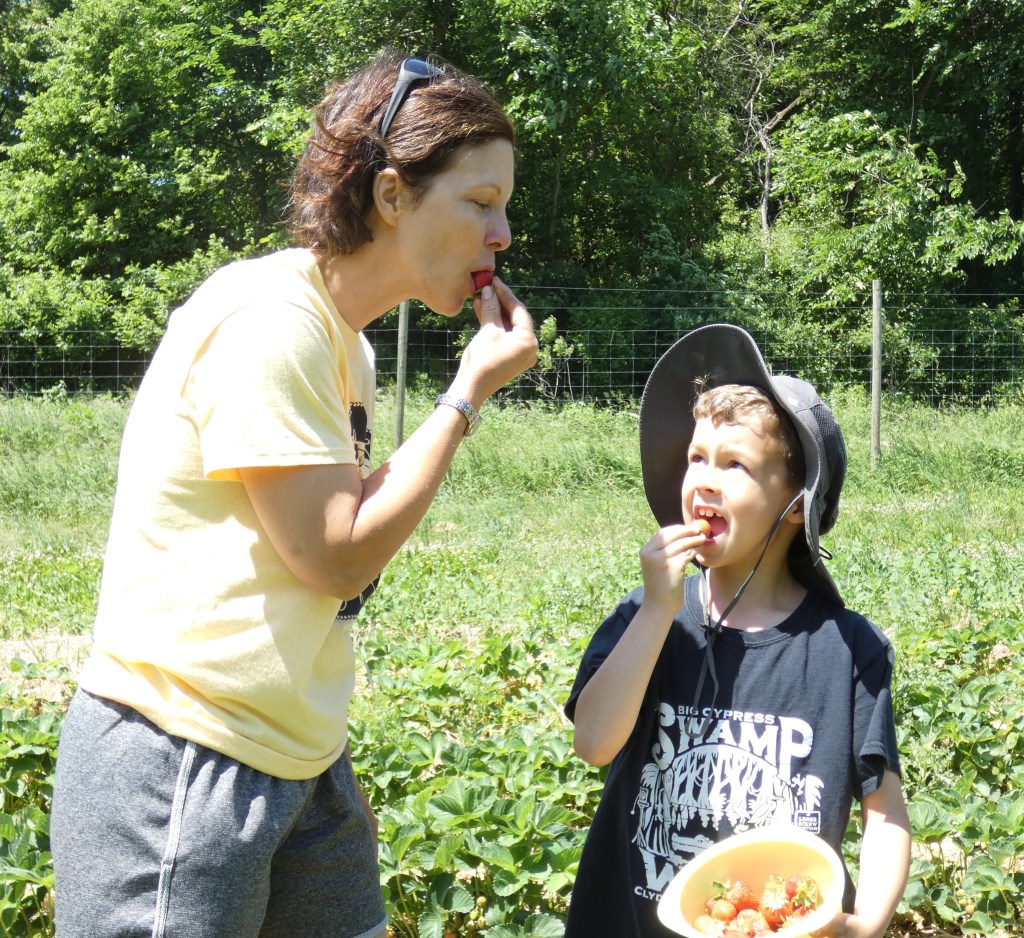
The most exciting news on the farm was the harvesting of our first ripe strawberries. It looks to be a really good crop this year. I have a feeling that we will be gorging on berries from now until the end of June.
Here are Luka and I biting into our the first strawberries this summer. Is there anything better than that?!
Recipes
Asparagus Radish Salad with Honey-Mustard Dressing // Uses Asparagus, Chives, Radishes, Spinach // Vegetarian
Asparagus with Creamy Tarragon Vinaigrette // Uses Asparagus, Tarragon // Vegetarian
Garlic Scape Soup // Uses Garlic Scapes, Spinach // Vegetarian
Savory French Toast and Breakfast Radishes // Uses French Breakfast Radishes // Vegetarian
Sheet-Pan Tarragon Chicken with Sherry Vinegar Onions // Substitute Garlic Scapes or Green Garlic for Garlic Cloves, Tarragon
Spinach and Garlic Scape Pesto // Uses Garlic Scapes, Spinach // Vegetarian
Spinach Lasagne // Substitute Garlic Scapes of Green Garlic for Garlic Cloves, Spinach // Vegetarian
 Middle Fork Farm