
Today’s newsletter will be a little different than usual as I spent much of last week dressed up and advocating for small farms in Washington, D.C. I did bookend the trip with an asparagus harvest Tuesday morning before I got on the plane and a rhubarb harvest at Sogn Valley Farm on my way home Thursday night, but other than that not a whole lot of field work was done. I’ll include some photos of what’s happening in the field below, but I thought I would use most of my “Notes from the Field” space to share what happened on my trip. After all, the way that we eat – what is available and for how much – and how we use and care for the land has a lot to do with the policies that are crafted in our nation’s capital every five years when the Farm Bill is hashed out.
What’s in My Box this Week?
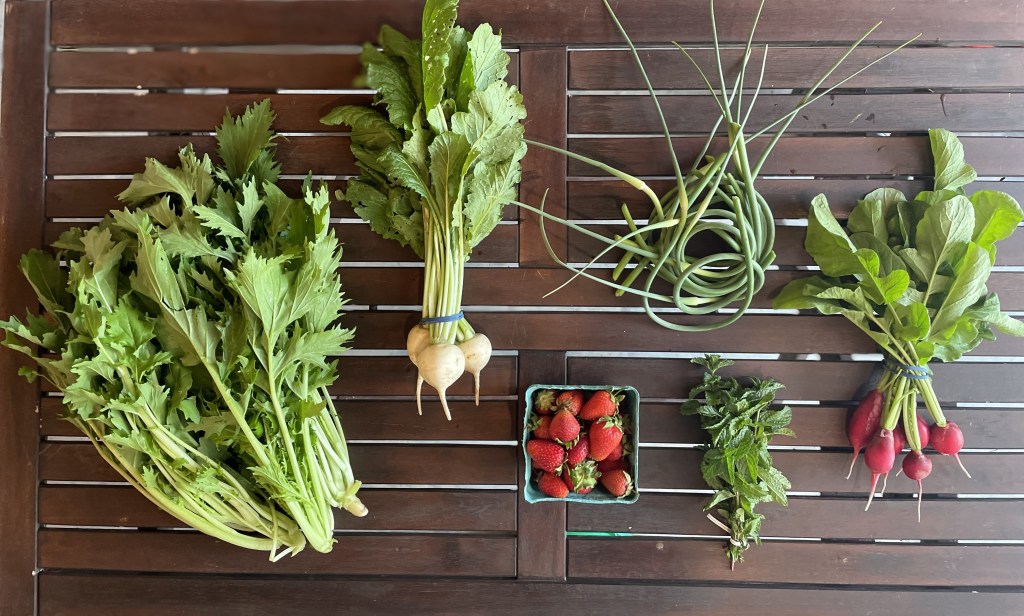
Baby Bok Choy (Large Shares Only) – Store unwashed in the crisper drawer of your fridge. Use within a couple days for best texture. Greens will wilt relatively quickly. Stems will retain firmness a while longer.
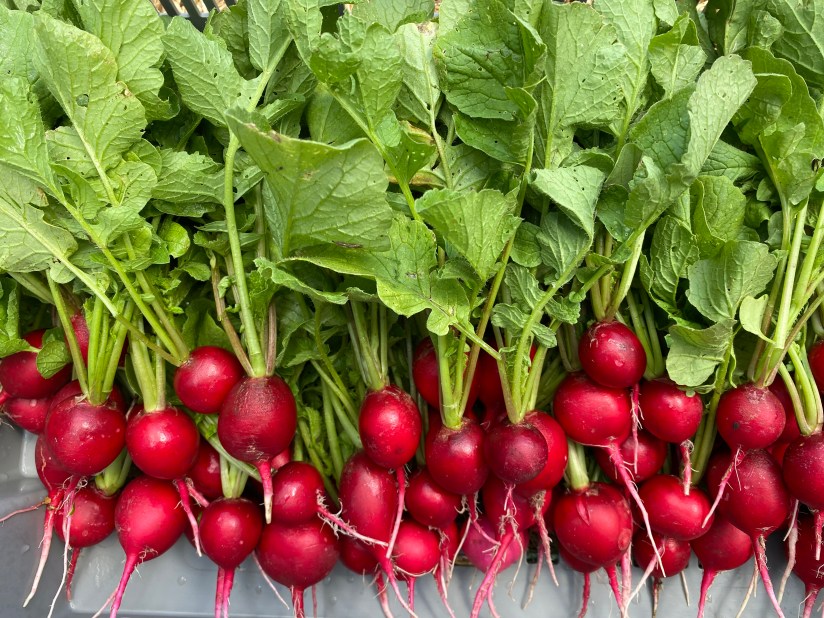
Cherry Belle Radishes – These red beauties are an heirloom variety from Holland with a mild flavor and crisp texture. Store for up to two weeks in a plastic bag in the fridge. For longer storage of roots, cut off the greens before placing the roots in the fridge and store the greens separately, ideally gently wrapped in a damp paper towel. Use the greens as quickly as possible.
Garlic Scapes – Garlic scapes will last up to three weeks loosely wrapped in plastic in your fridge. If you can’t get to them, they can also be chopped and frozen for later use.
Mint – For best storage, place in a small glass or jar (stem side down) in about an inch of water.
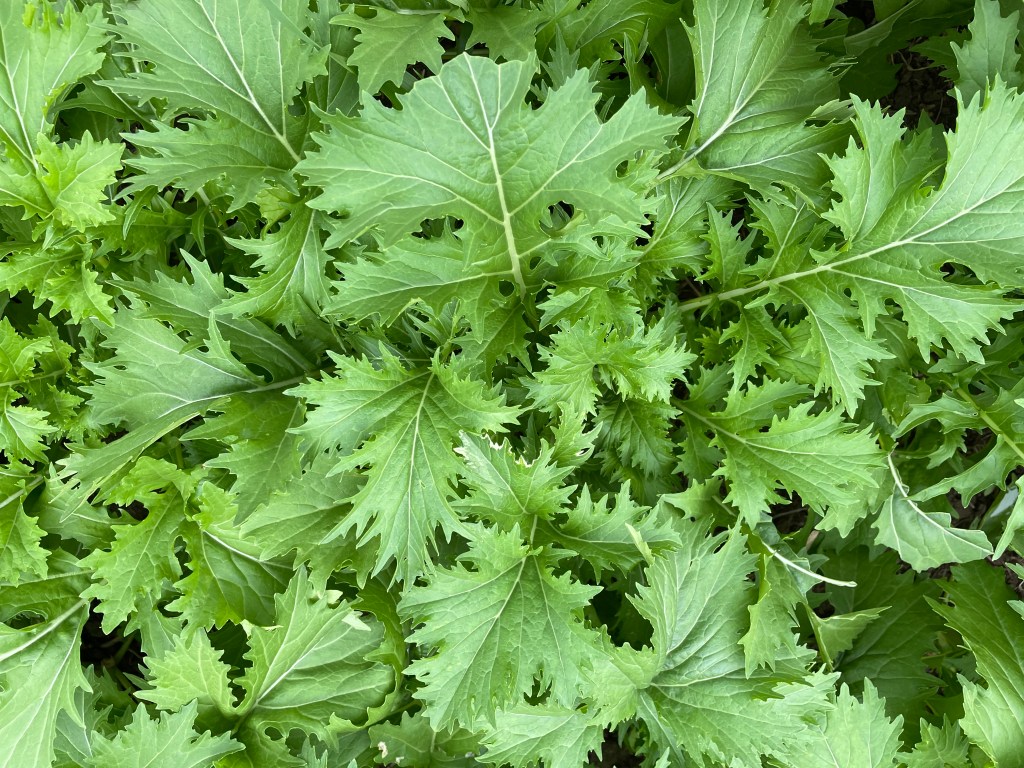
Mizuna – This elegant Japanese green has a delicious slightly spicy flavor and texture like arugula, but with a milder taste. You can use it raw in salads or, if it’s a little too on the spicy side for you, you can sauté it in some garlic and olive oil or add it to a stir-fry or soups. Cooking it will help tamp down any spiciness there might be.
To store, keep dry, unwashed greens in a plastic bag in the fridge for up to a week. Wash right before using.
Strawberries – Put your berries in an airtight containers in your fridge where they will keep for up to five days. Do not wash until you eat them.
Tokyo Market Salad Turnips – Salad turnips are delicate, tender and almost buttery in texture. These turnips are meant to be eaten raw and do not need to be roasted. Store in a plastic bag in the crisper drawer of your fridge. They will easily keep for six to eight weeks this way.
Featured Veggie: Tokyo Market Turnips
Turnips have been cultivated by many cultures for several hundreds of years. Their first recorded use was in Europe around 2,000 B.C. and coats of arms from several 16th century northern European nobility display images of them. Turnips first arrived in Japan about 1,200 years ago where breeding carefully selected for certain genetics that helped them adapt to their new environment and grow stronger with each generation.
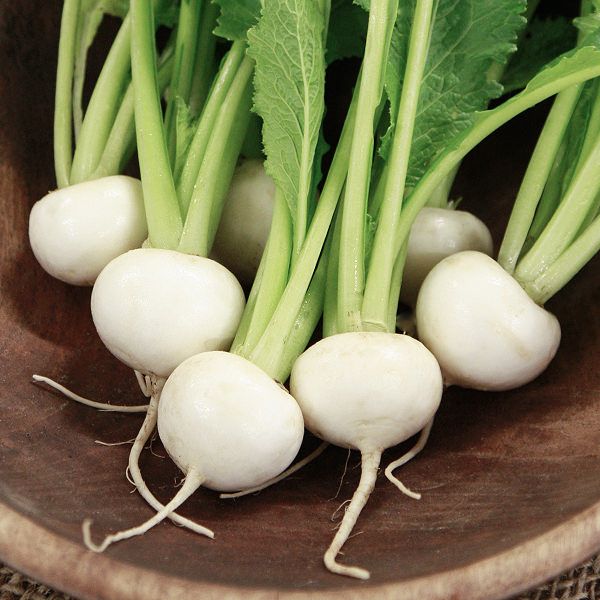
The Japanese turnips that we enjoy today, however – like the Tokyo Market Turnips in your boxes this week – were developed just after World War II when famine made them particularly valuable due to their fast-growing habit (they mature in just 25 days) and their ability to grow in a wide range of conditions. (Photo: High Mowing Seeds)
Salad turnips (or kabura in Japanese) have a flavor and texture somewhere between a turnip and a radish with very little spice. They are generally meant to be eaten raw, sliced up in a salad or slaw, on toast with salt and lemon, or eaten whole with some hummus or other dip. You can also pickle, steam, grill, roast, or mash them, but you might want to use a lot of butter if you do prepare them over heat as they then start to taste more like the larger, purple top turnips that we sometimes grow. Their greens are very nutritious and full of flavor, so don’t forget to enjoy those, too. As long as you don’t mind a few holes in them – the flea beetles had a field day eating these when they were just getting started – they should be good.
Notes from the Field (and Washington, D.C.)
Last week was a whirlwind! I flew out to D.C. Tuesday morning so that I could make it in time for a late afternoon training with eleven other farmers and National Sustainable Agriculture (NSAC) staff. These farmers were from Arkansas, Georgia, Michigan, and Pennsylvania as it is their representatives and senators who are the chairs and co-chairs of the House and Senate Agriculture committees. As a big agricultural state, Minnesota’s delegation also has a role in crafting the farm bill and that’s one reason why I was there. We were asked to share our farm stories with our respective legislators, let them know how various policies were impacting our businesses, and encourage them to make some changes to the farm bill on which they are working right now.



While I was there, I met with the staff of Representatives Craig and Finstad and Senators Smith and Klobuchar (I met the senators themselves the following day), showing them photos of our farm field under 12 feet of water in June of 2019 and explaining that we had three floods that year alone.
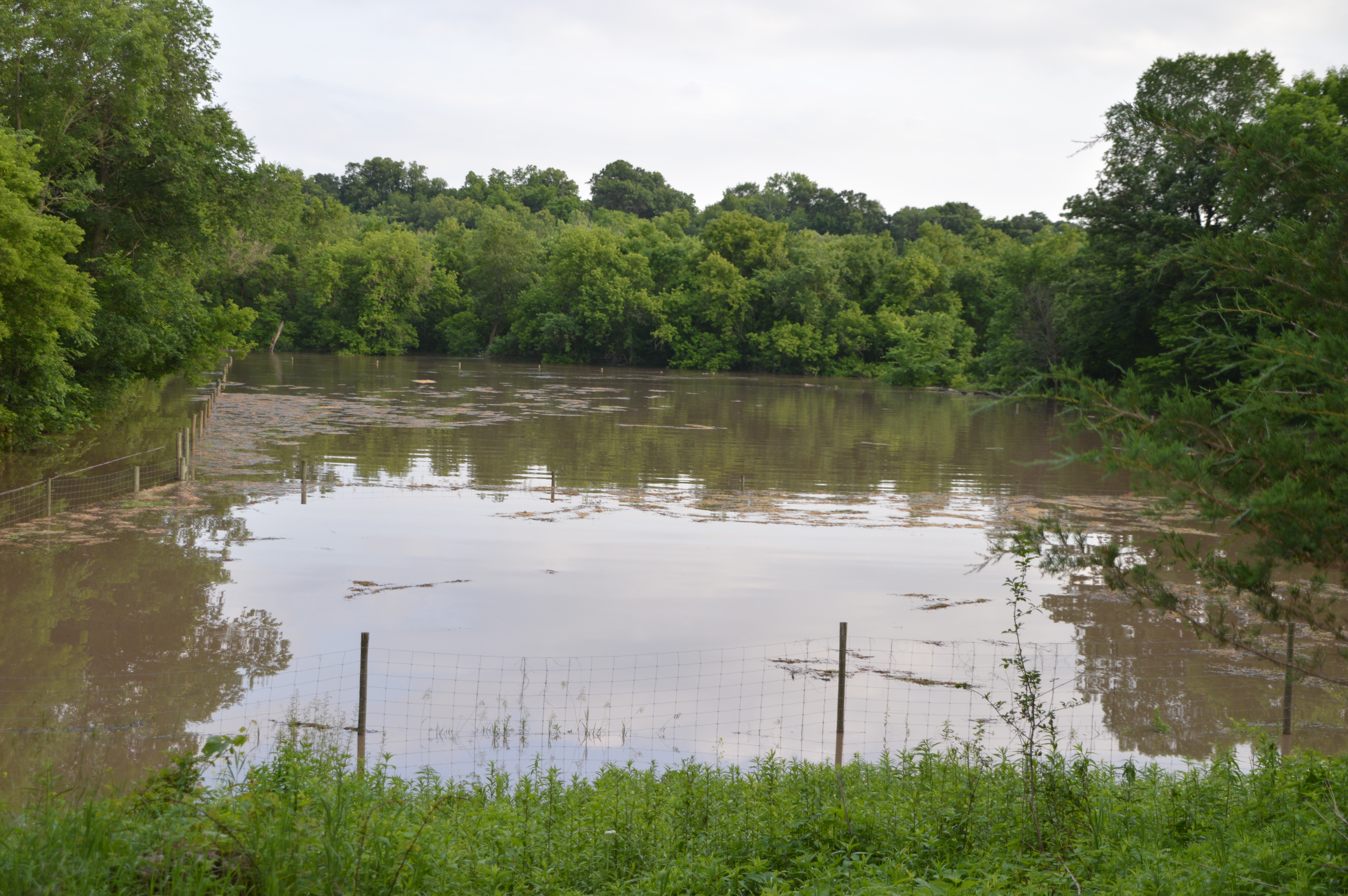

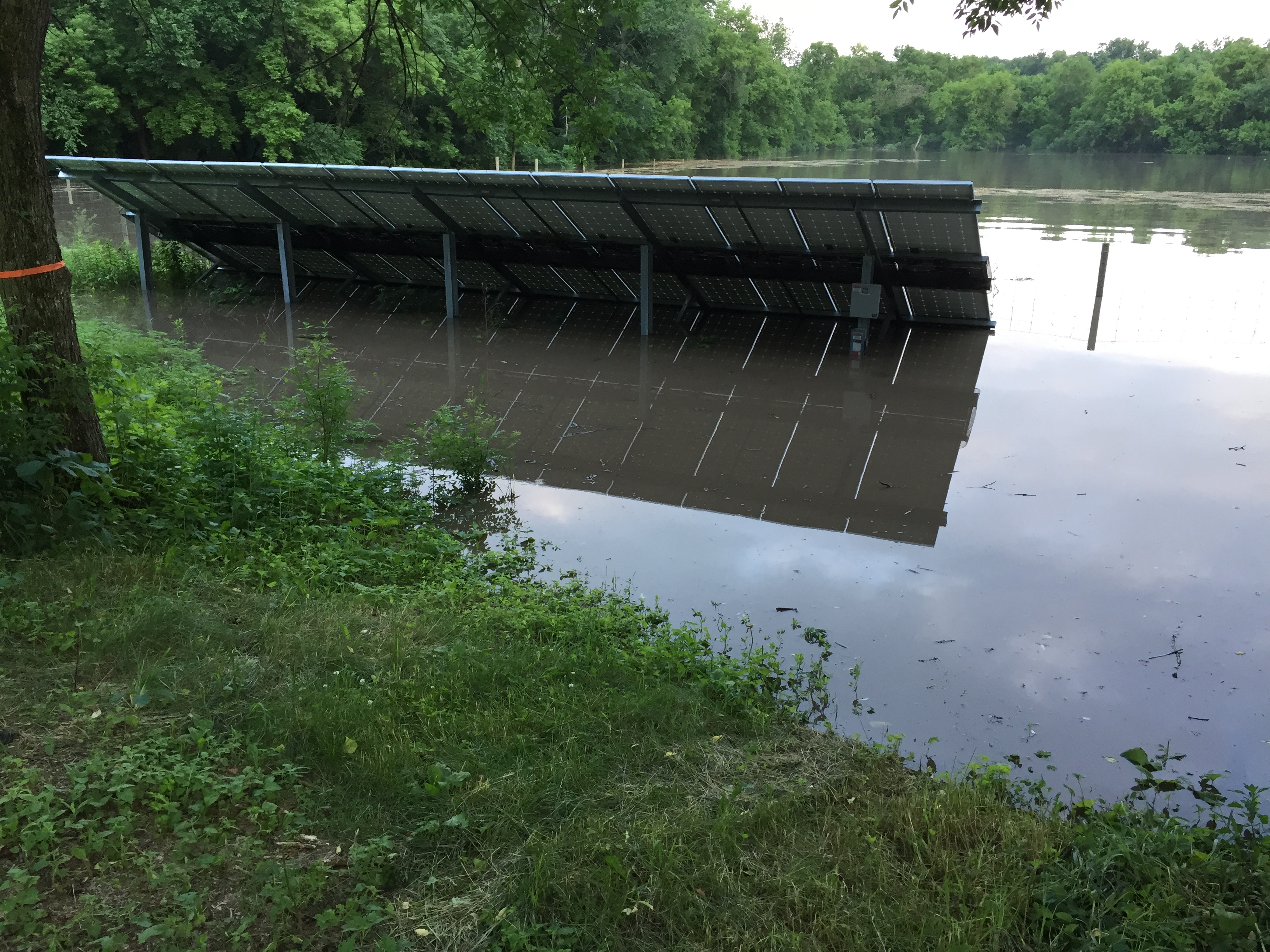
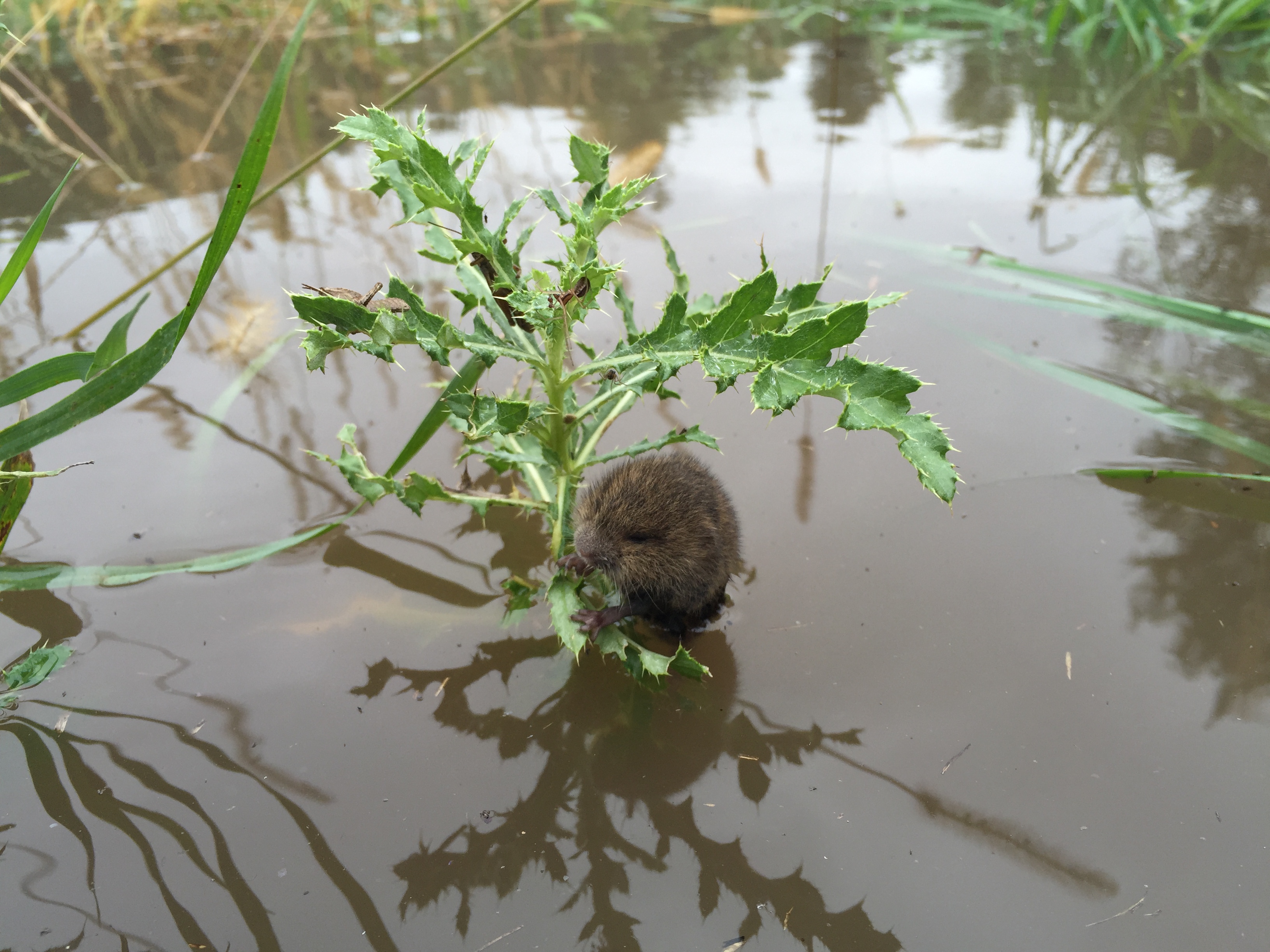
I explained the whiplash that farmers are experiencing with one year being too wet and the next – like this one, it seems – being too dry and how difficult that can make things. I told them about the steps we take to help mitigate these challenges, planting cover crops and buffer strips along the river, minimizing soil tillage, and employing other conservation practices to help soak up water when it’s in excess and to help keep moisture in the ground when it’s not enough. But there is nothing I can do when 8″ of rain falls in one day or it refuses to rain for weeks on end, so I asked for their help in providing a better safety net for farms by tweaking the micro-farm insurance program so that it can help cover more farmers who are doing what we’re doing.
It was only fairly recently (2014 to be exact) that fruit and vegetable farmers could even get decent crop insurance from the USDA; until that time it was mostly the commodity crop (think corn, soybeans, wheat, cotton, rice) growers who were covered. Micro-farm insurance is even newer than that; it’s only been around the last two years and evidently we are one of only 80 farms in the entire country who currently has it. I’ll spare you the details of the reforms we’re suggesting, but suffice it to say that the USDA has some work to do in getting the word out and making this program more accessible to folks.
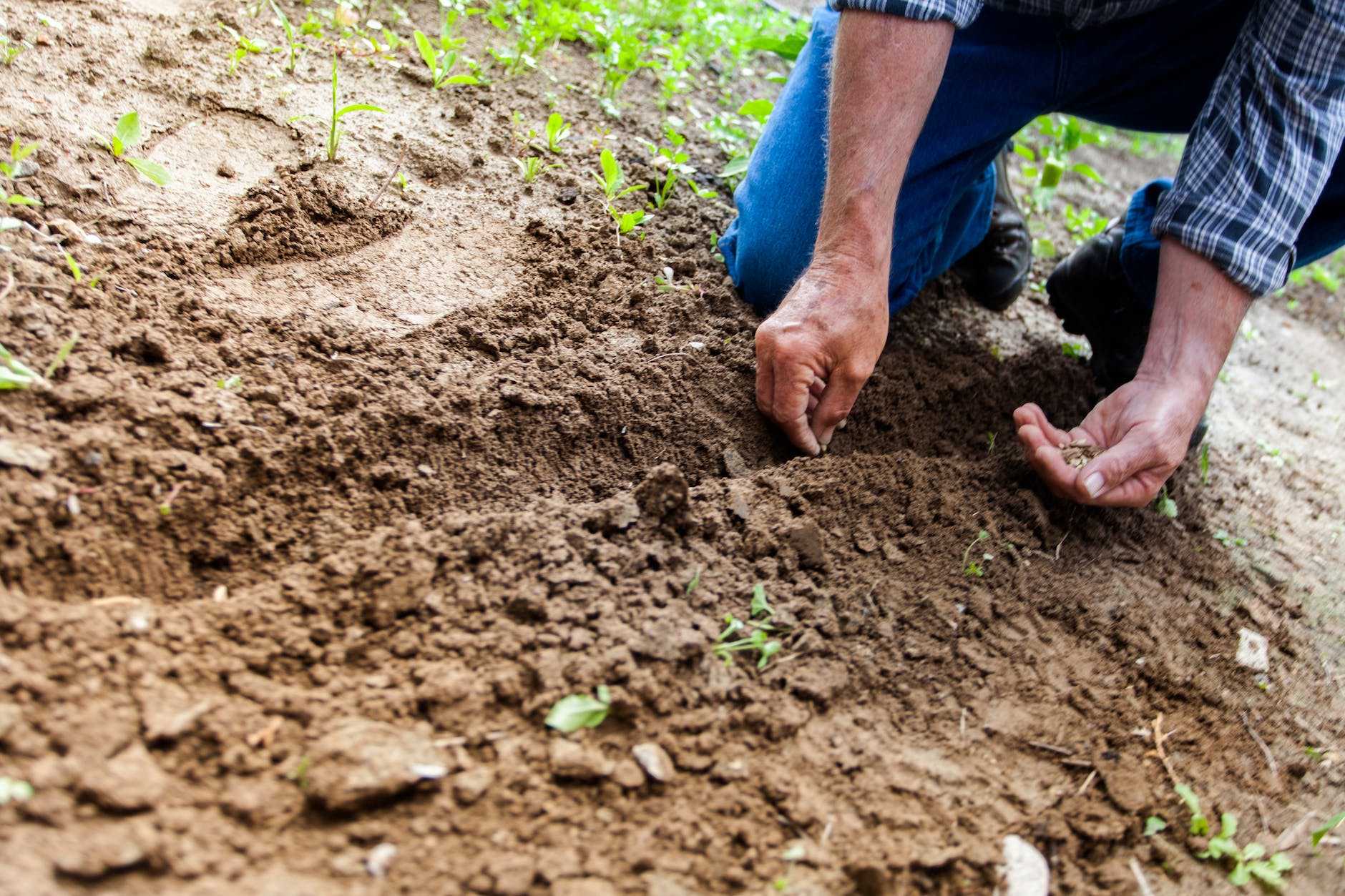
The other topic that I brought up repeatedly was the need for USDA to help us adapt to the impacts of climate change. Thus, besides providing us an insurance safety net for when the weather fails to cooperate, I asked for more farmer-led research into how we can adapt to climate change on our farms. (Photo by Binyamin Mellish on Pexels.com)
We need help figuring out how to alter our planting schedules as the old rules of thumb don’t seem to work anymore. We also need to develop varieties of fruits and veggies that can withstand hot and dry weather as well as cool and wet weather. And more dollars are needed for organic and sustainable agricultural research. This type of agriculture generally has a lower carbon footprint than conventional farming and can be a big part of the solution if more is done to support it.
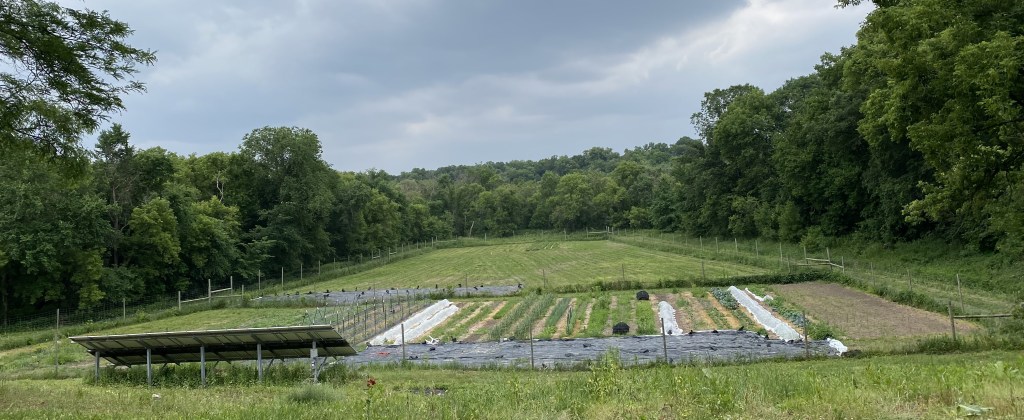
Speaking of farming… you’d probably like to see where things are at in the fields right now, too. Simon worked very hard last week while I was away to harvest, weed, and keep the crops watered. Over the weekend, the kids and I harvested most of the rest of the garlic scapes. These flower stalks of garlic need to be removed in a timely manner if we want good-sized bulbs; otherwise, the plants put their energy into flowering and setting seed instead. I thinned out the kale, bok choy, and some greens and spent countless hours trying to deter yet another pocket gopher wreaking havoc in the field: this one has eaten seven tomato plants so far. I am okay with sharing one or two with other critters, but seven is definitely crossing the line.
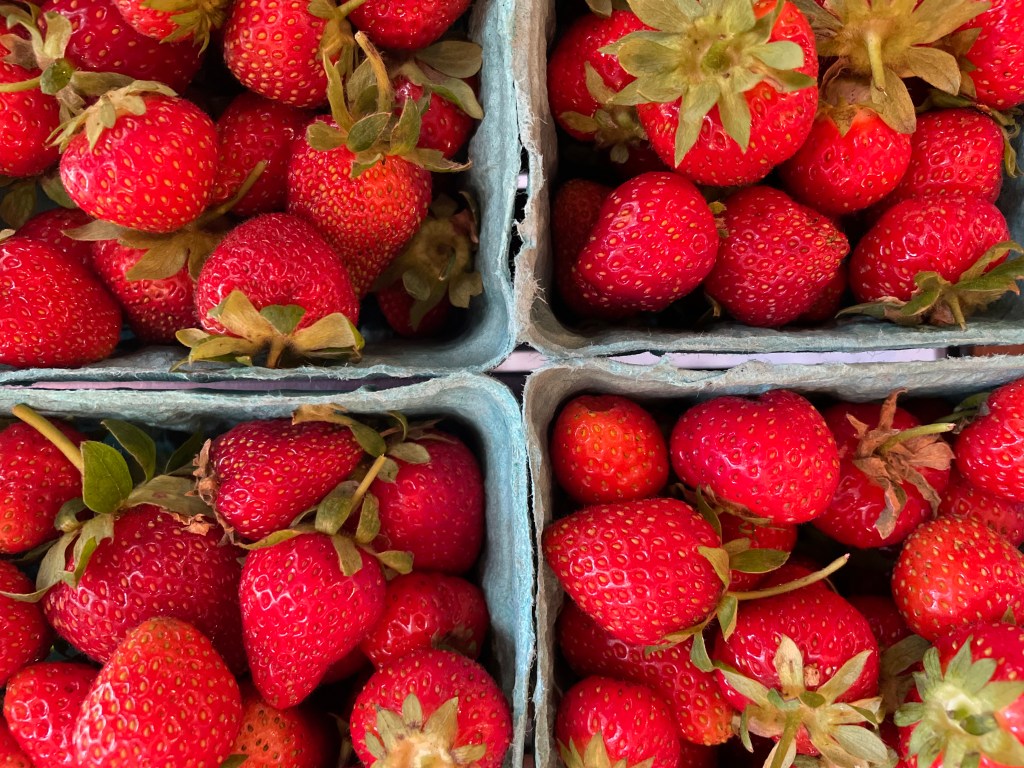
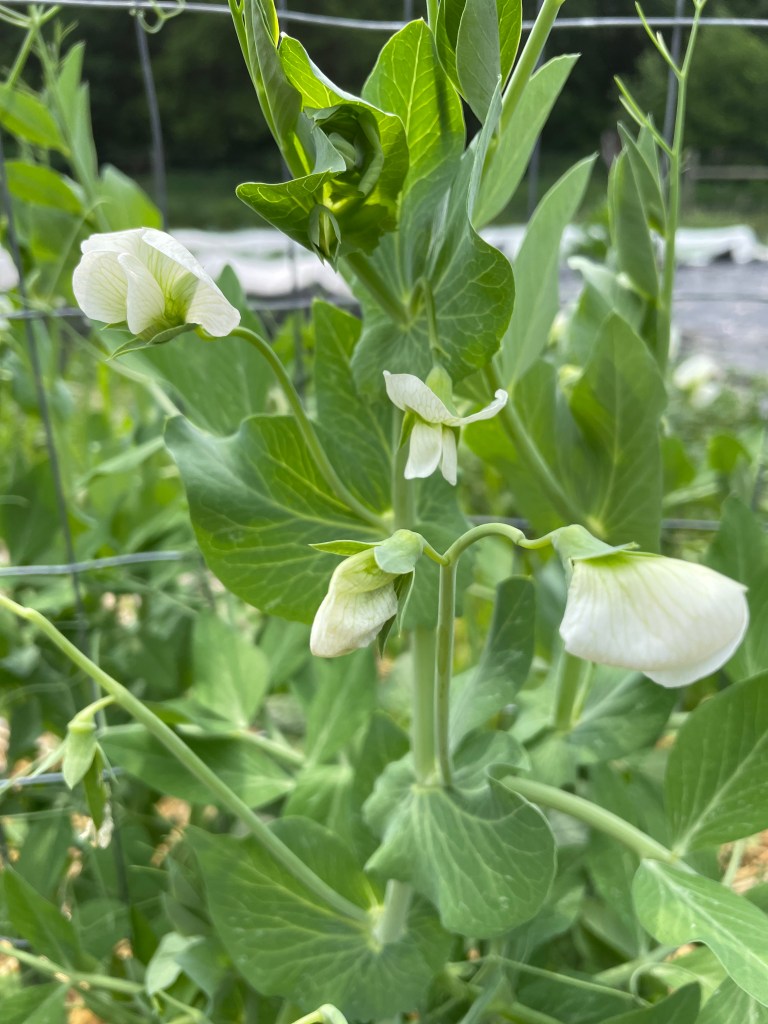
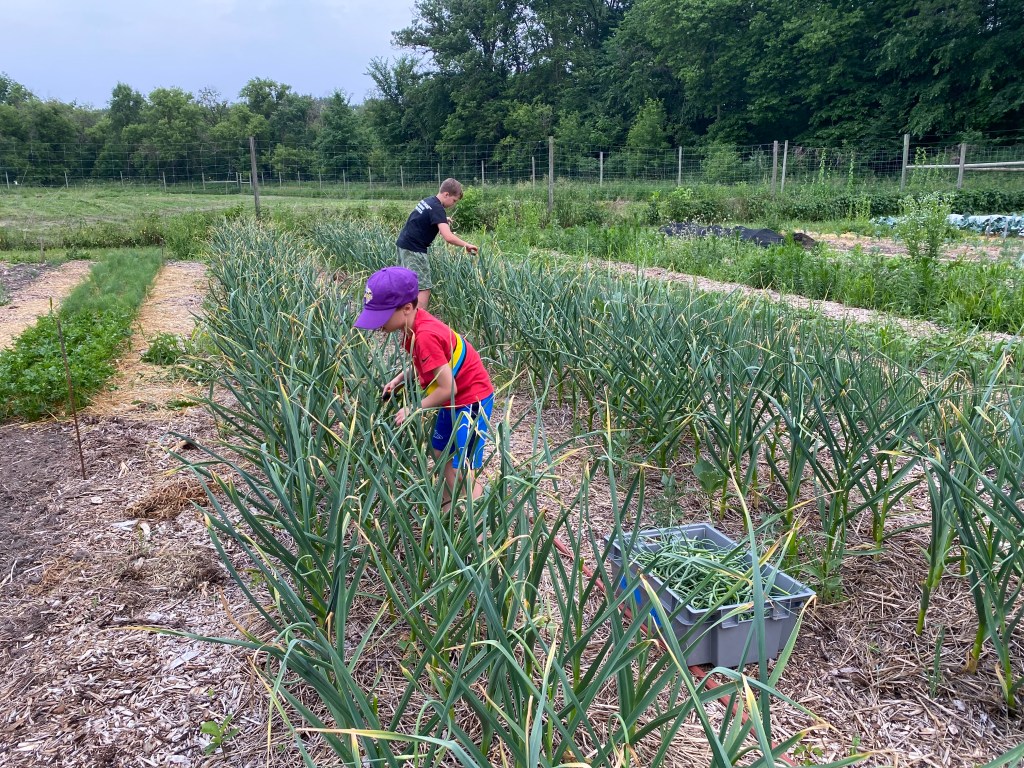
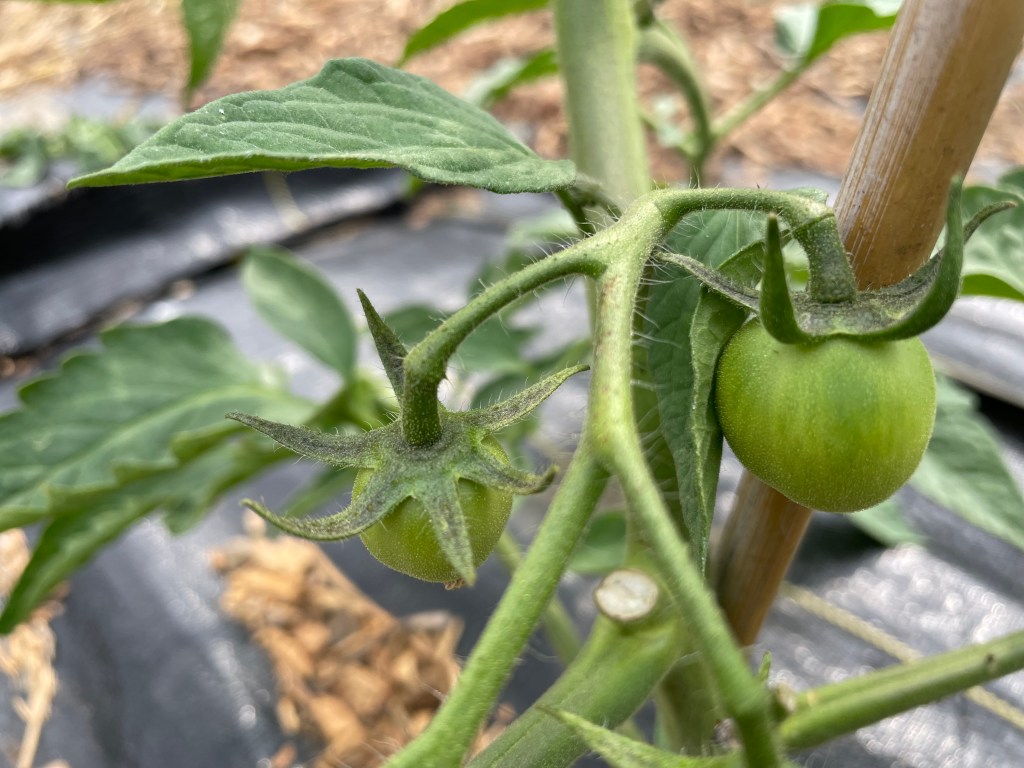
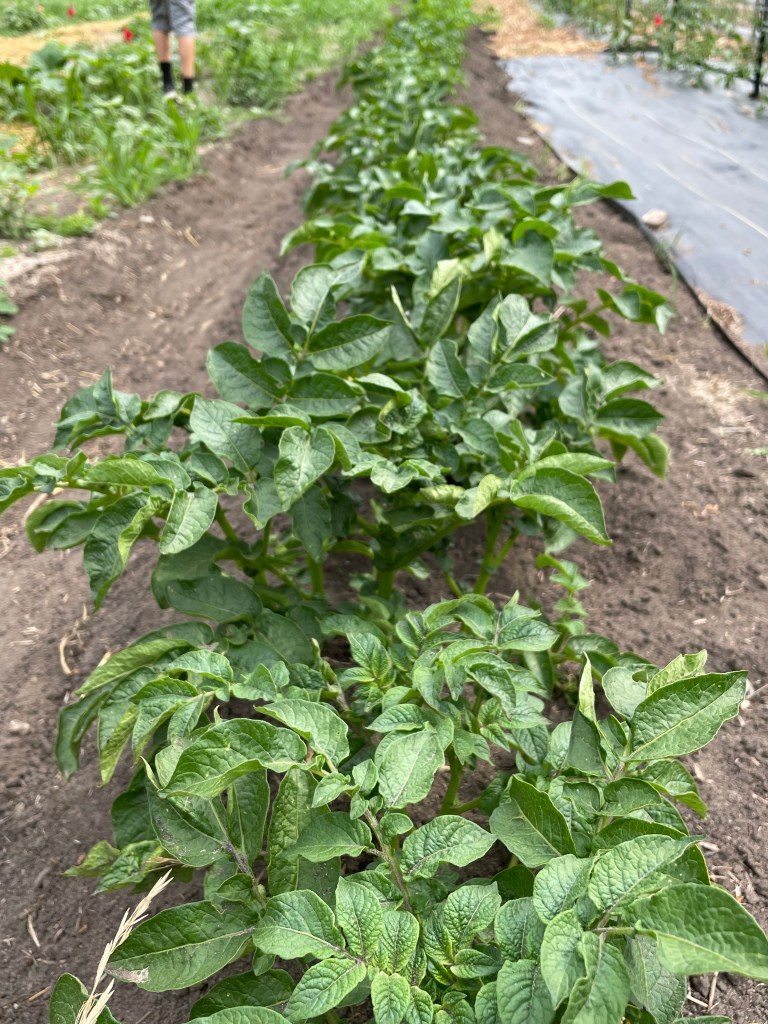
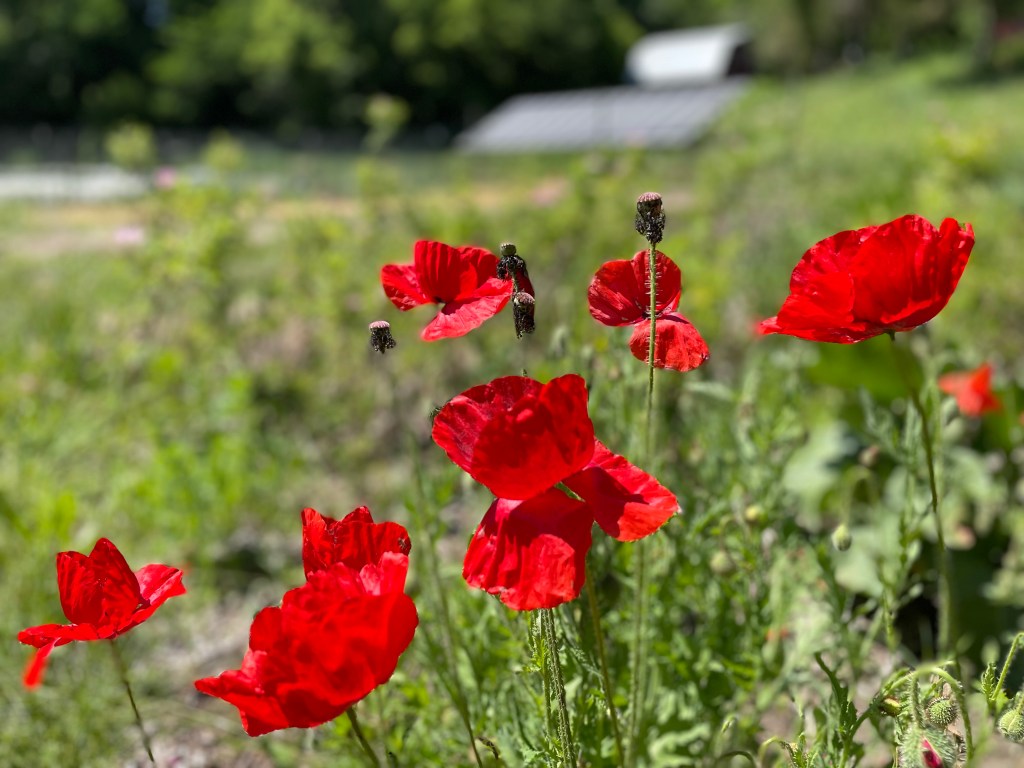
Other than that we are mostly waiting for crops to mature enough so we can include them in your boxes. With the dry conditions, things are taking a little longer than normal to reach maturity, but we will get there, I promise!
Recipes
Japanese Turnips with Miso Maple Sauce // Uses Salad Turnips // Vegetarian
List of Other Ways to Enjoy Japanese Salad Turnips
Mizuna Salad with Peanuts // Uses Chives, Mizuna // Vegetarian
Stir-Fried Baby Turnips with Spring Onions, Green Garlic, and Tofu // Uses Green Garlic, Salad Turnips // Vegetarian
Stir-Fried Mizuna // Uses Mizuna // Vegetarian
From Johnny’s Selected Seeds
1 bunch Mizuna (approximately 12 oz.), cut into 2 to 4″ pieces
1 Tablespoon oil (like peanut, grapeseed, or coconut)
Salt, soy sauce, tamari, or Bragg’s coconut aminos to taste
1) Heat wok or skillet over high heat for 1 minute, then add oil.
2) Add Mizuna and cook for 1–2 minutes, until just tender but not overcooked
3) Season to taste with soy sauce or salt and serve.
Note: The Mizuna also may be steamed for a few minutes rather than stir-frying.
Strawberry Mint Fruit Salad // Uses Mint, Strawberries // Vegetarian (Note: Half this recipe since you’re getting 0.5 lbs. of berries this week.)
Strawberry Mint Lemonade // Uses Mint, Strawberries // Vegetarian
 Middle Fork Farm