
We are now officially halfway through the summer. It feels like I was just prepping the first bed for a spring crop of arugula and now I am seeding a second succession of crops for the fall. These next two weeks are when we usually have a bit of a slow down on the farm. We’ve more or less weeded everything and put the gardening tools that were littered all over the field back where they belong. We’ve started to catch up on the “if we can get to it” chores and we’re spending more time in the kitchen, making jams and freezing veggies for the winter. Soon our days will be filled with lots more harvesting as the crops that are ripening now require picking nearly every day. The storage cooler will be filled to the brim and we will have trouble deciding what to make for dinner because there will be so many options. But for now, we relax a little and catch our breaths.
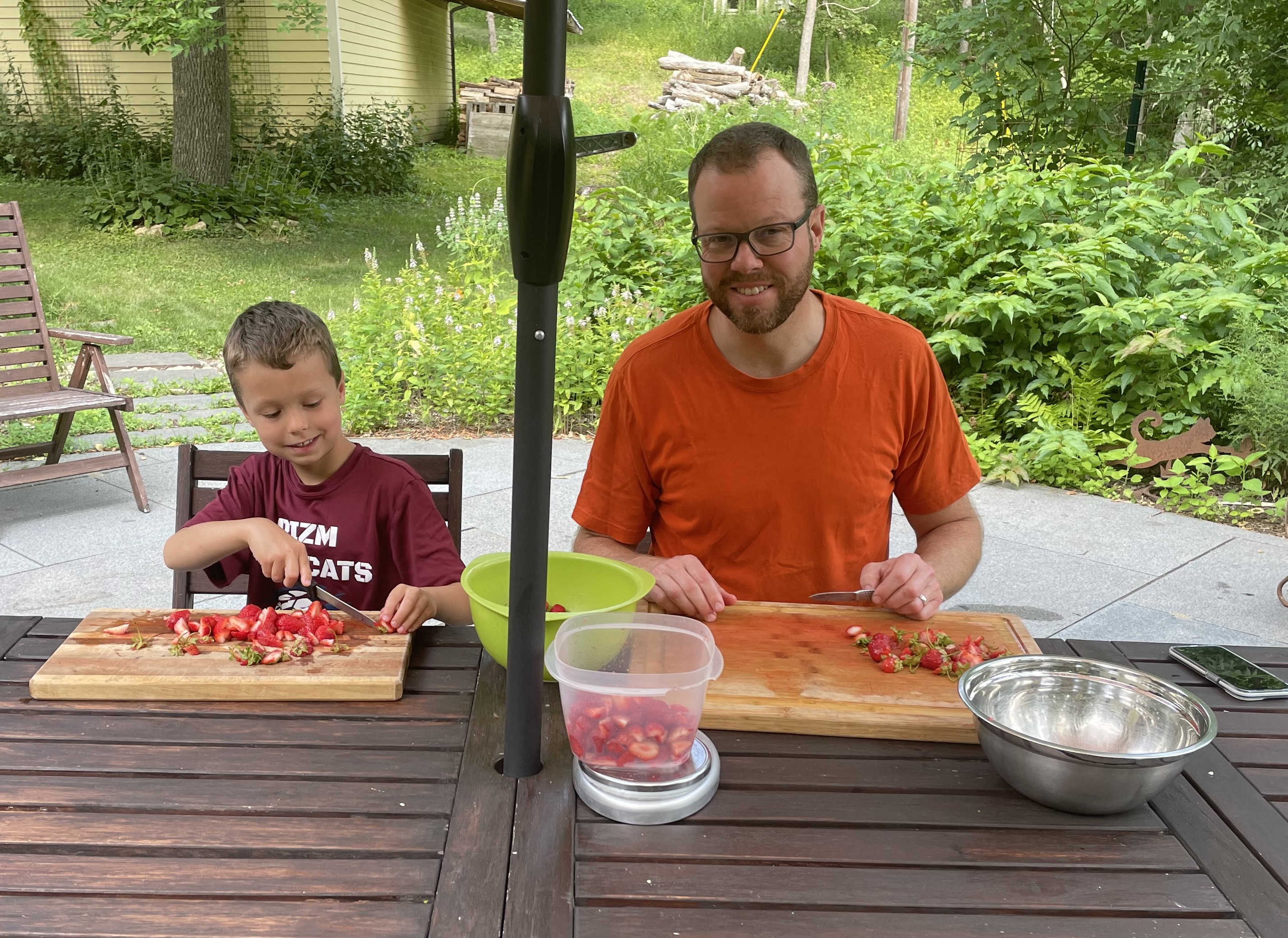
What’s In My Box this Week?
Benning’s Green Tint Patty Pan Squash – Store in the crisper drawer of your fridge and try to use within a week as they will quickly get soggy. You can use these interchangeably with yellow crookneck squash and zucchini in recipes.
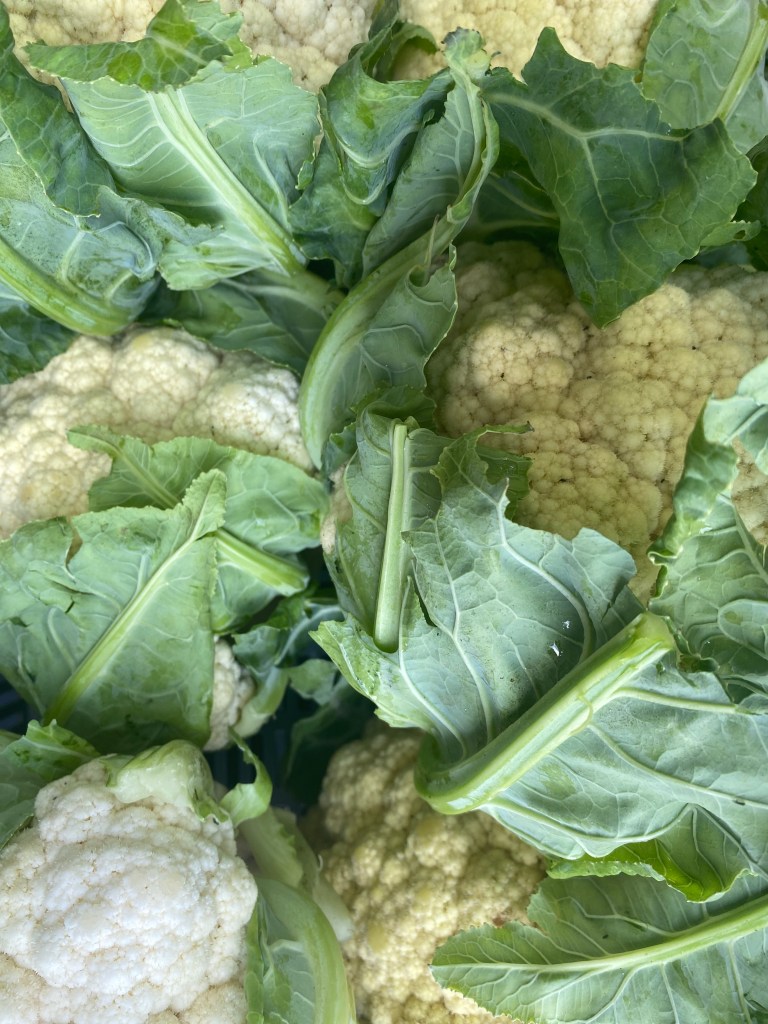
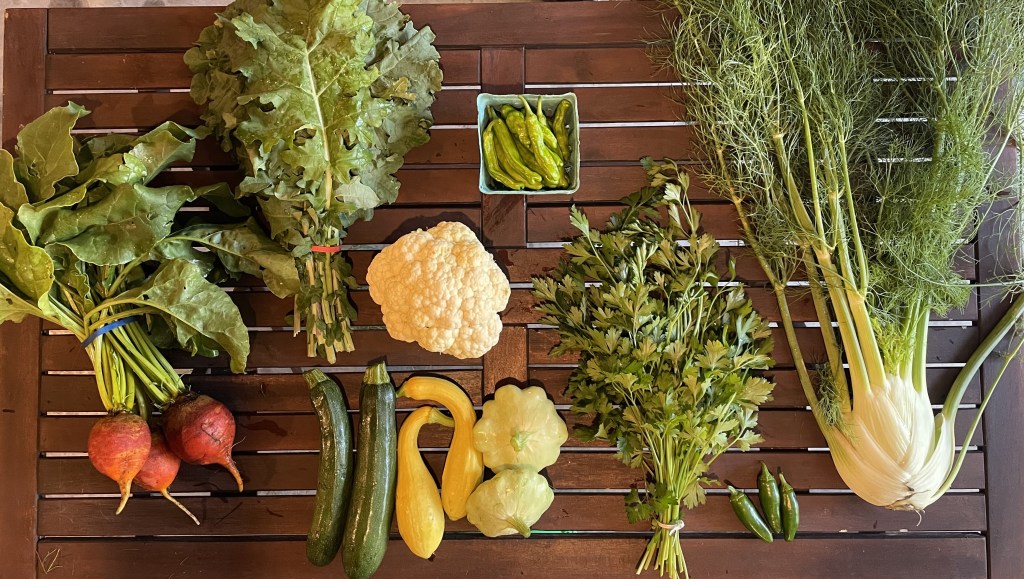
Cauliflower – Wrap dry, unwashed cauliflower loosely in plastic and store it in the refrigerator for up to a week.
Cherry Tomatoes (Large Shares Only) – Cherry tomatoes can over-ripen quickly, so it can be a good idea to store them in the fridge if you’re not going to eat them right away.
Fennel – If you plan to use the fronds (delicate leaves), remove these before storage. Place the bulbs in a plastic bag in the fridge for up to two weeks. Wrap the leaves in a moist paper towel and store in the fridge for up to a week.
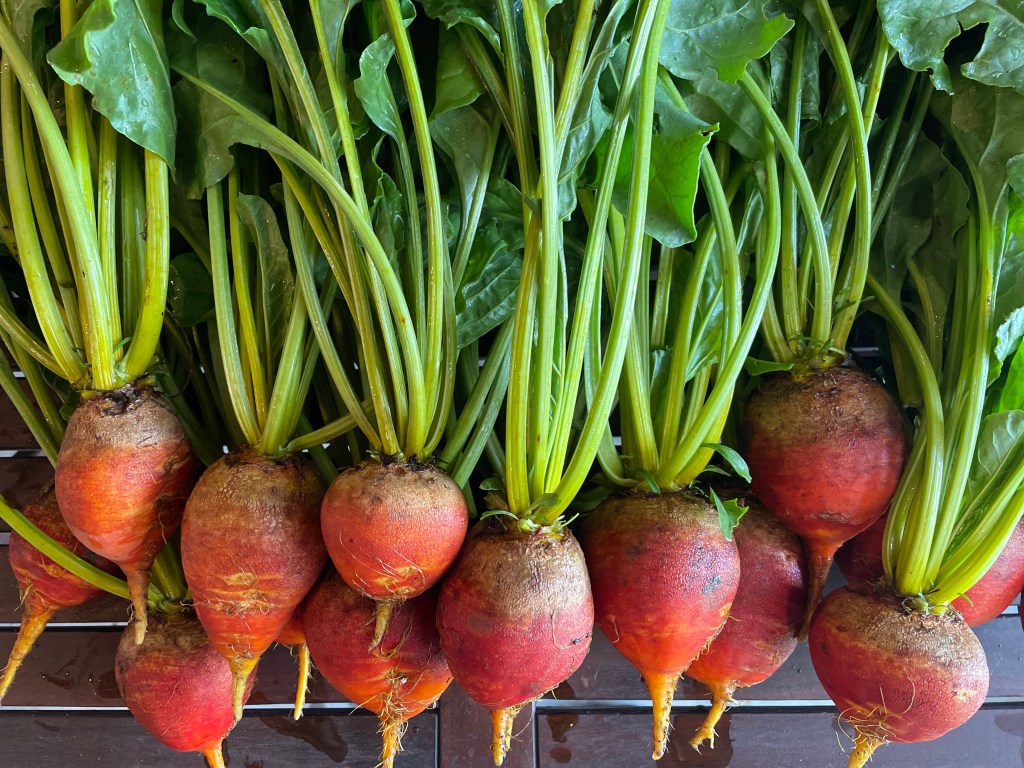
Golden Beets – You can use both the roots and the leaves of beets. If your beets still have greens attached, cut them off, leaving an inch of stem. Store the beet roots unwashed in a plastic bag in the crisper bin of your refrigerator. They will keep for two to three months. For the greens, keep them dry and unwashed until ready to use in a sealed plastic bag in the fridge for up to a week.
Jalapeno Peppers – Hot peppers keep well in the crisper drawer of the fridge. Refrigerate peppers unwashed in a sealed plastic bag in the crisper drawer for one to two weeks. You can also dehydrate peppers for long-term.
Parsley – Store in the fridge in a small glass with about an inch of water, stem side down (like flowers in a vase) for best storage.
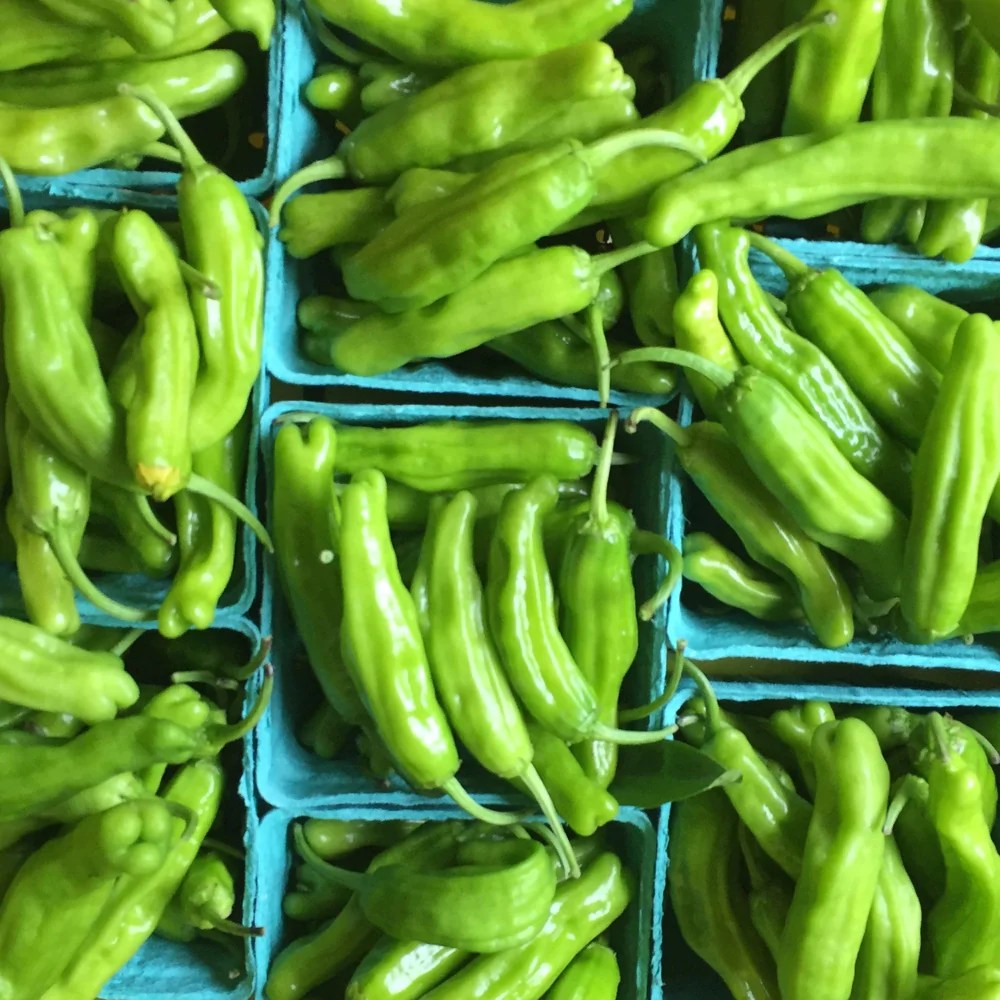
Shishito Peppers – These are quite popular in Japanese cooking. In fact, the name “shishito” means “Lion Head pepper” in Japanese. Nine out of ten times, shishito peppers are mild, but every now and again, you’ll get a spicy one that makes eating these fun and surprising. To store, refrigerate peppers unwashed in a sealed plastic bag in the crisper drawer for one to two weeks.
White Russian Kale – Wash the greens only right before using. To store, place in a plastic bag with most of the air removed and put in the fridge. It is best used within a few days.
Yellow Crookneck Squash –Store in the crisper drawer of your fridge and try to use within a week as they will quickly get soggy. You can use these interchangeably with patty pan squash and zucchini in recipes.
Zucchini – Store in the crisper drawer of your fridge and try to use within a week as they will quickly get soggy. You can use these interchangeably with patty pan and yellow crookneck squash in recipes.
Featured Veggie: Patty Pan Squash
Also sometimes called “scallop squash” because of their shape, these are a different type of summer squash than the yellow crookneck and zucchini most of you have been getting so far this summer. Patty pan squashes have been grown by East Coast Native Americans for centuries and they range in color from white to yellow to green with shades in between.
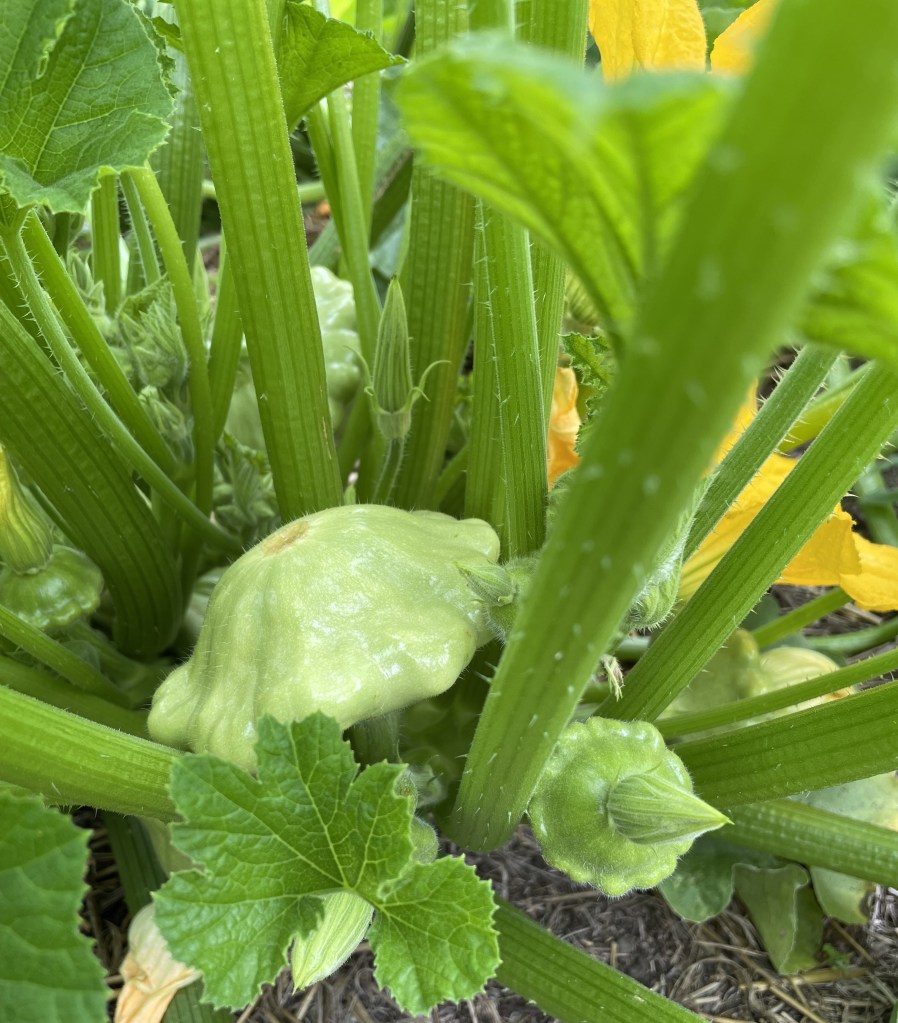
This year, the one we are growing is Benning’s Green Tint, an heirloom developed in 1914 by a man named Charles Farr who enjoyed its uniform fruit and pretty soft green/cream color. This squash is currently listed on the Slow Food Ark of Taste as a food facing extinction, and the best thing that we can do to prevent this tender and delicious squash from that fate is to grow it out and share it with you.
They are most tended to eat when they’re still pretty small, around 3 to 4” in diameter. Use them in any recipe that typically calls for other types of summer squash or zucchini. Check out last week’s newsletter for some recipes specific to patty pan squash.
Field Notes
Every January, Erik, Simon, Luka, and I sit down for our annual farm meeting. At this time, we look over the numbers – how much did we produce? what do the financials tell us? how many hours did we labor? – and write down the things that worked and the things that we need to improve upon during the upcoming growing season. One of the tasks that made it on the to-do list for 2023 was for me to learn how to properly prune tomatoes and to actually do it with some regularity.
We came up with this because traditionally pruning tomatoes has been one of those “if we can get to it” chores that I mentioned above. In the throes of a busy summer, it can often get neglected for other work that seems more urgent as tomatoes are vigorous vines that just seem to keep growing and growing whether you help them along or not. In fact, the year that Luka was a newborn, we didn’t even get around to trellising them and they still gave us a really good crop.
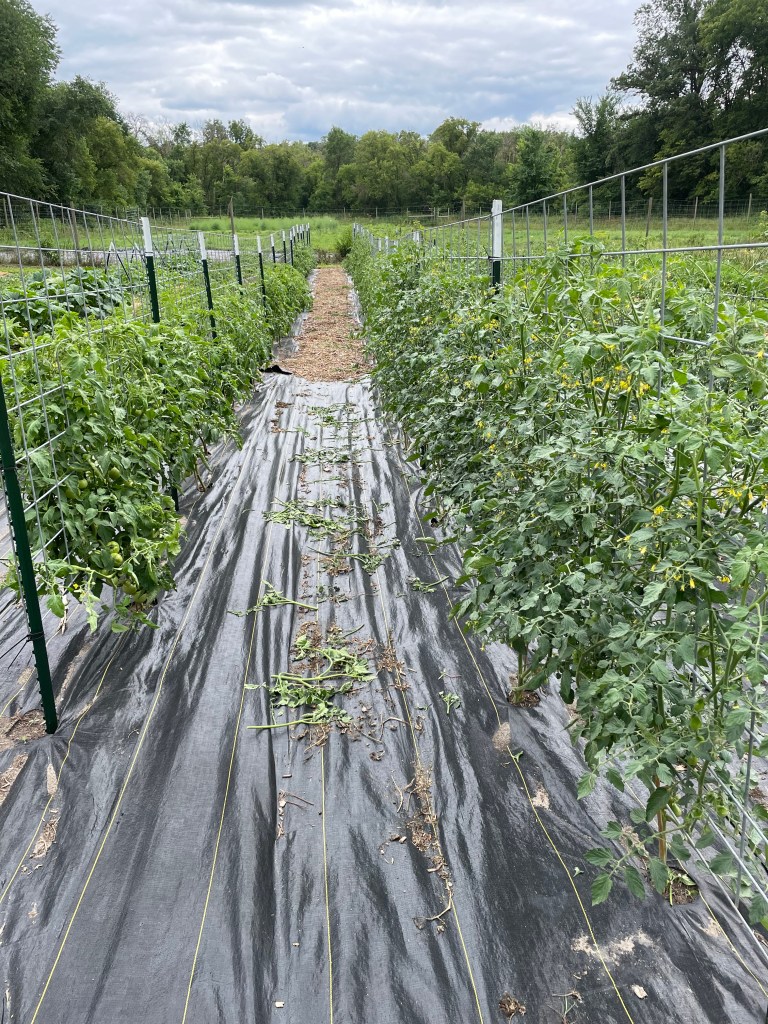
That being said, over the years we’ve dealt with more disease pressure in the tomatoes, from septoria leaf spot to late blight. (That’s the one that caused the potato famine in Ireland.) Some of these aren’t too bad, but some – like late blight – can wipe out an entire crop in just a couple of days. Good air circulation is key to preventing this and the best way to get good airflow, besides planting them a little further apart, is to prune the plants so that their foliage isn’t quite so dense.
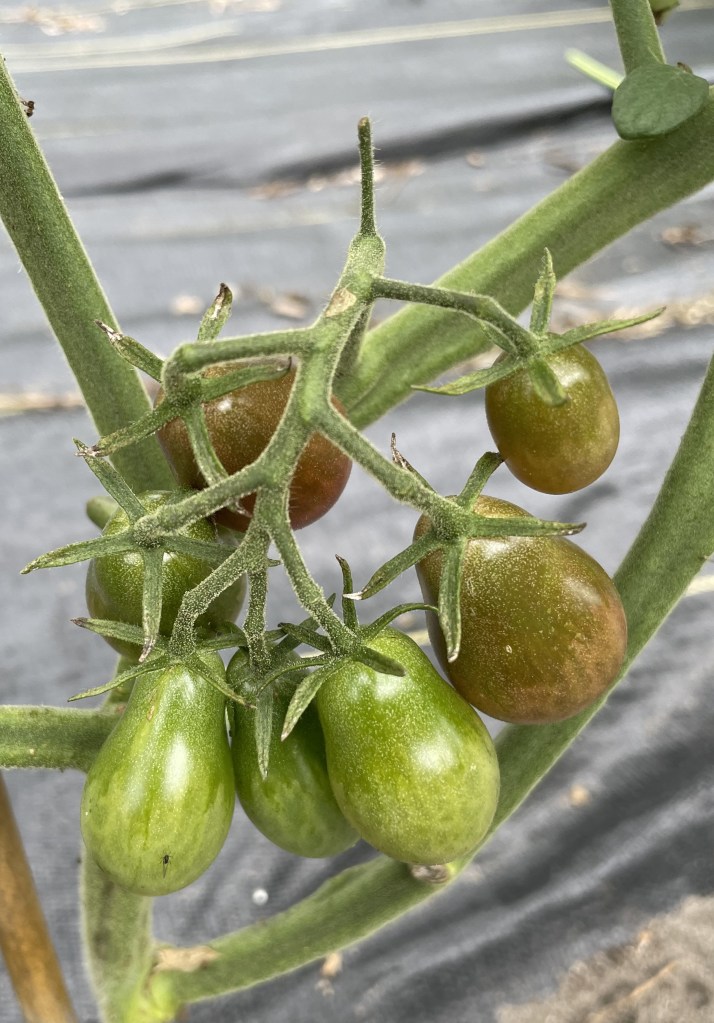
I therefore spent a lot of time this past week pruning and tying up tomatoes – again! I admit that I am probably slower than the average farmer when doing this – I tend to put on an episode or two of “This American Life” and take my time about it – and there are around one hundred tomato plants down there which is a lot to manage, but even so, the sheer vitality of these plants is truly astounding. I think that I could probably go out there, sit down in front of one of them, and watch it add nine inches in a day!
So far, the pruning has paid off and the plants are doing really well with virtually no sign of disease (although this could also be due to the drought since most diseases thrive best in wetter conditions). I don’t think we’ll have enough cherry tomatoes ready for your boxes this week, but there are lots of unripe tomatoes on the vine.
Other than that, I pulled out a bunch of crops that were past their prime – komatsuna, mizuna, radishes, arugula, and some broccoli – and seeded collard greens, napa cabbage, kohlrabi, beets, lettuce, gailaan, and savoy cabbage in their place. These went immediately under row cover lest the flea beetles destroy these, too. I’m a little worried it might become too hot for them all covered up like that when the heat dome arrives in Minnesota later this week, but watering them in the morning will create a small microclimate that will help cool them off.
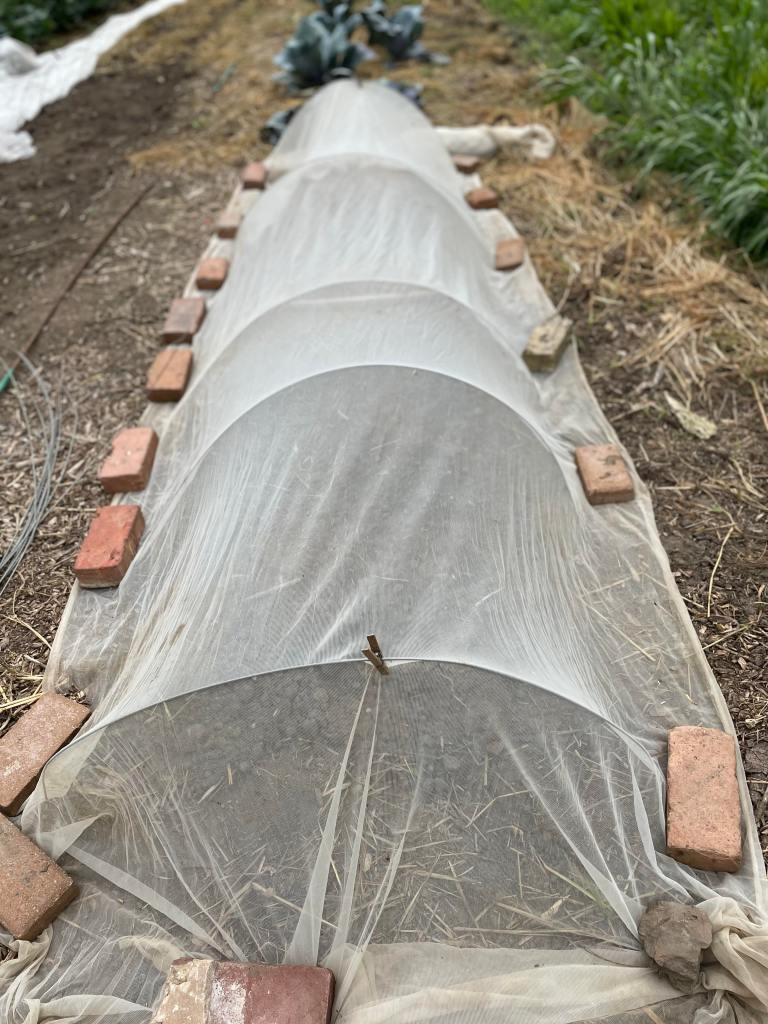
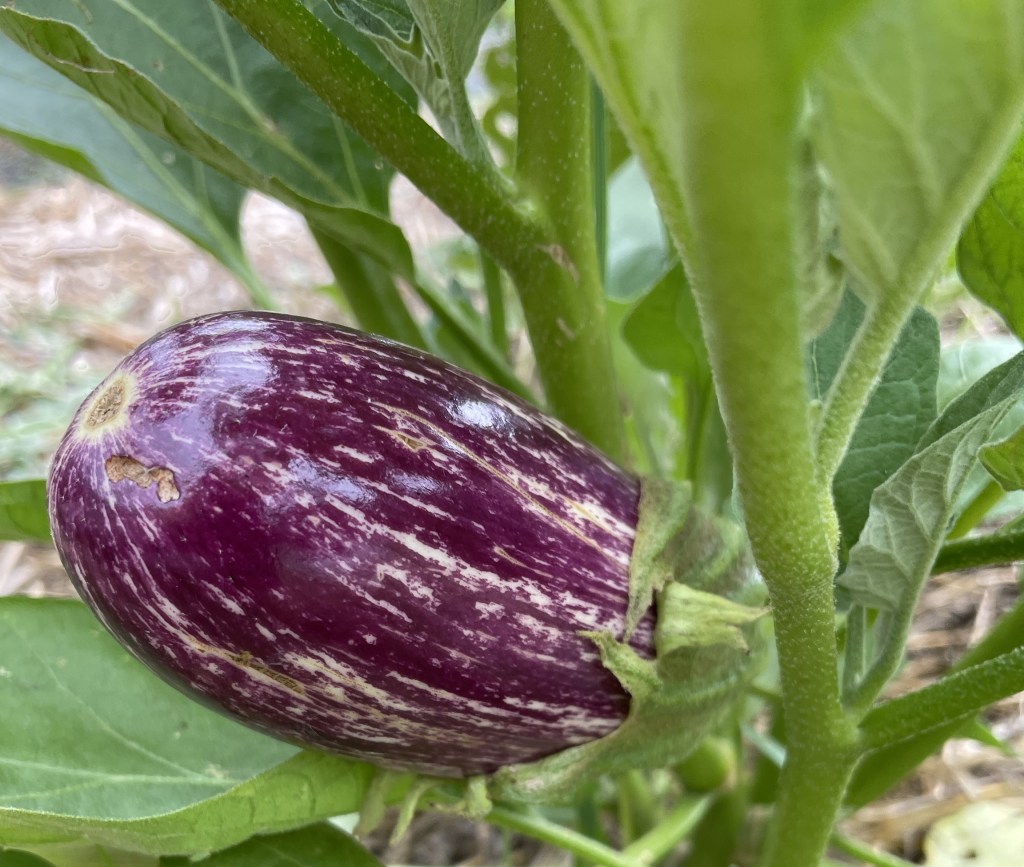
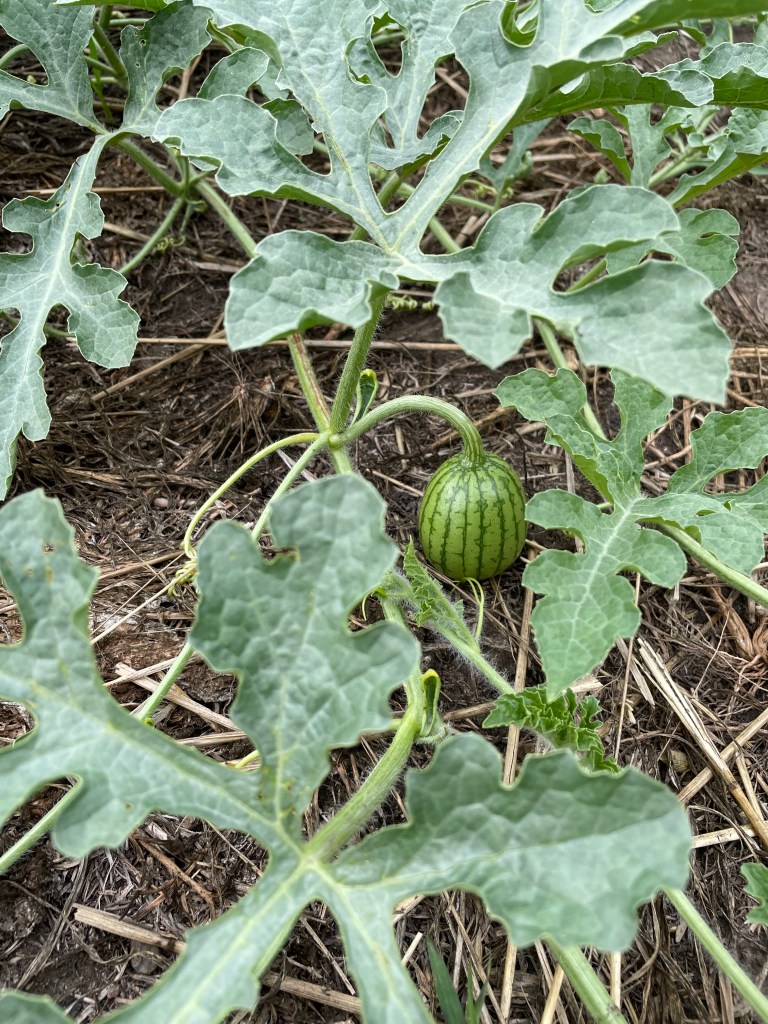
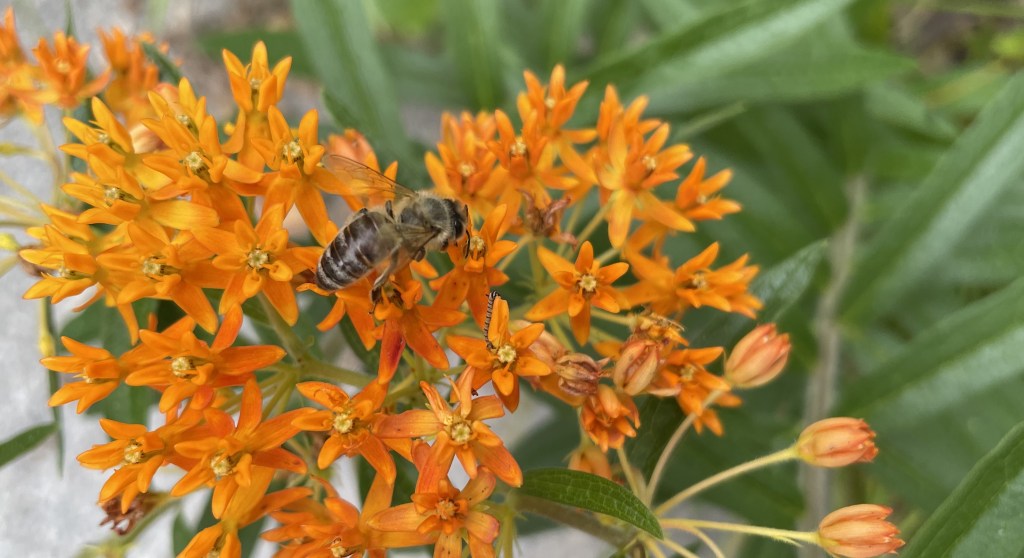
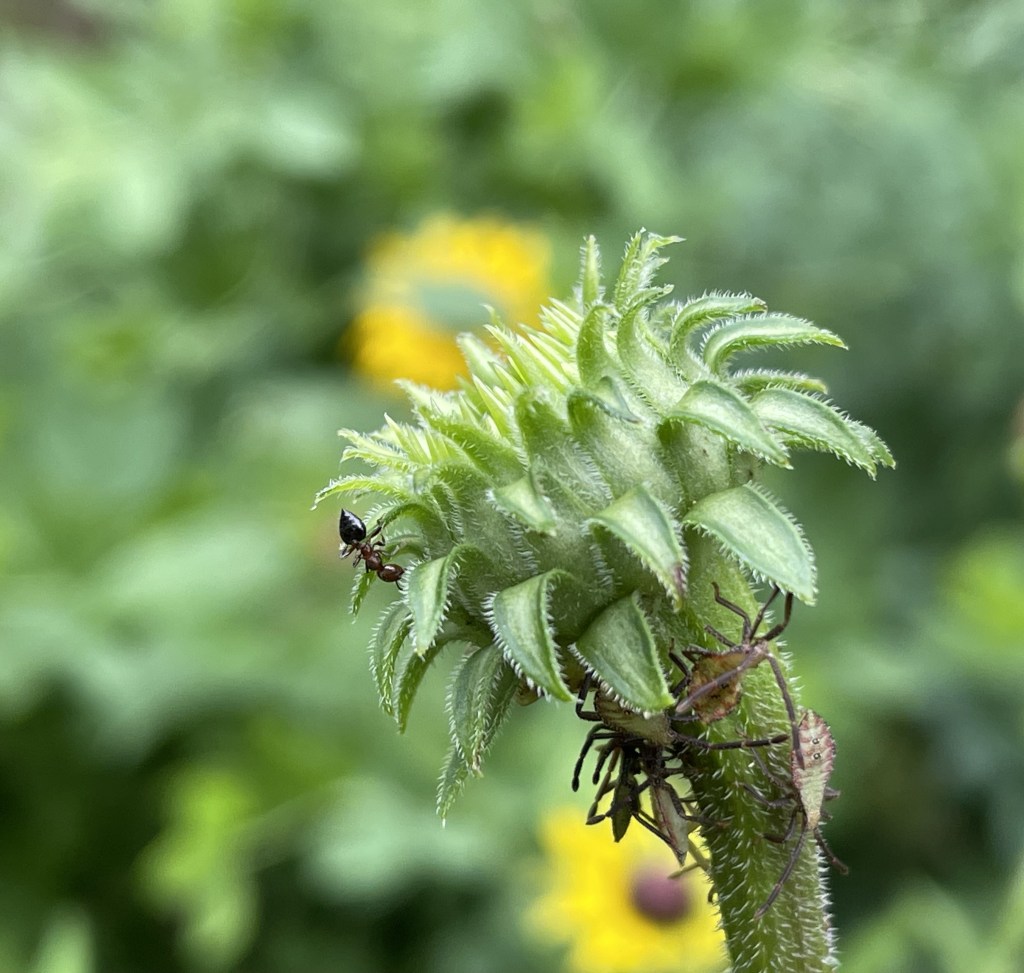
Here are some of this week’s photos from the farm. See is you can spot the baby monarch caterpillar on one of the flower blossoms. (Hint: it is very tiny compared to the other insect on the flower.)

Recipes
Blistered Shishito Peppers // Uses Shishito Peppers // Vegetarian
From Bon Appetit
2 Tbsp. extra-virgin olive oil
3 cups whole shishito peppers
Flaky sea salt
Heat oil in a large cast-iron skillet or other heavy skillet over medium-high heat. Cook peppers, turning occasionally, until they begin to blister on all sides. Sprinkle with salt and serve immediately.
Cauliflower Kale Curry // Uses Cauliflower, Garlic (if you have some from last week), Kale, Substitute Jalapeno for Serrano Pepper // Vegetarian
Kale Salad with Roasted Jalapeno Dressing // Uses Jalapenos, Kale // Vegetarians
Roasted Cauliflower Salad (Middle-Eastern Inspired) // Uses Cauliflower, Parsley // Vegetarian // Note: If you don’t have pomegranate molasses, you can use lemon or lime juice plus a little honey instead.
Roasted Zucchini and Beets // Uses Beets, Parsley (for herbs), Zucchini (can use yellow crookneck or patty pan instead) // Vegetarian
 Middle Fork Farm