
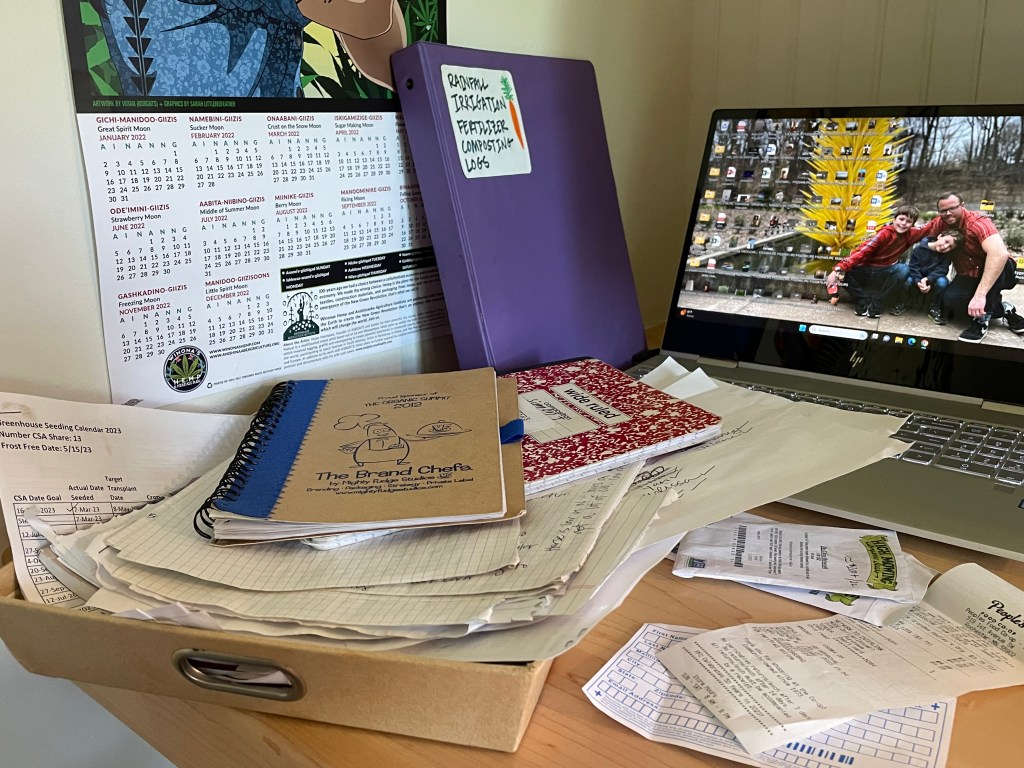
We are now at the halfway point of this year’s CSA. This feels a bit like a milestone in that the big transition from seeding and weeding to mostly harvesting and maintaining starts to happen around now. We are even starting to think ahead to (gulp!) fall and winter by deciding what cover crops to plant in beds where all of the veggies have already been harvested. I am hesitant to dream quite yet, but maybe I will even have a chance to catch up on the mountain of paperwork that has been piling up since May and is in desperate need of organizing. Take a look at my desk these days. And yes, for those of you with good eyesight, that calendar on the wall is from 2022. Will I get around to taking it down before the end of the CSA season? I dunno, but I wouldn’t wage any money on it.
What’s in My Box this Week?
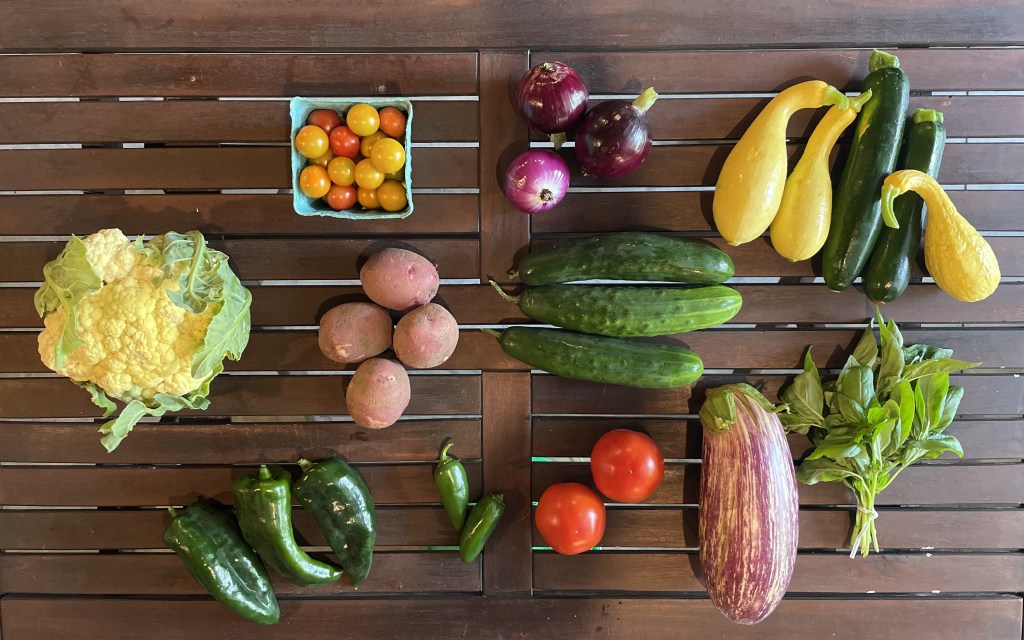
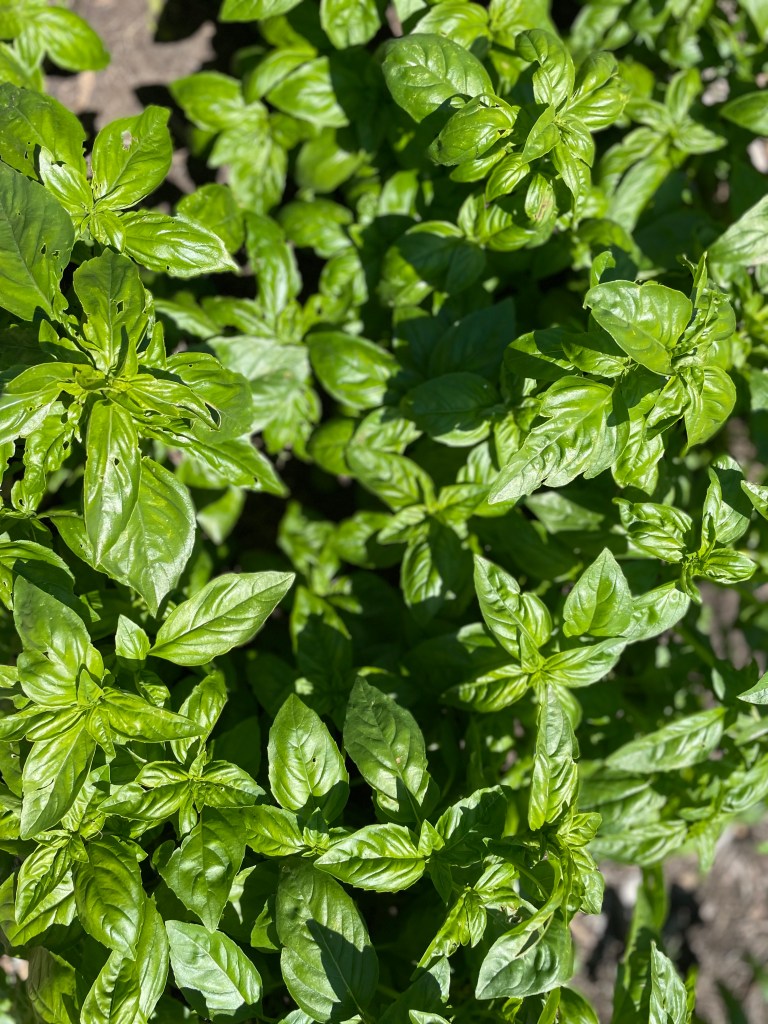
Basil – Store with the stems in a glass of water on your counter out of direct sunlight. Do not store in the fridge as it will blacken immediately and wilt after that.
Cauliflower (Some Standard Shares; those who get this won’t get eggplant this week) – Wrap dry, unwashed cauliflower loosely in plastic and store it in the refrigerator for up to a week.
Cherry or Saladette Tomatoes (Large Share and Standard Shares who didn’t get any last week) – Cherry tomatoes can over-ripen quickly, so it can be a good idea to store them in the fridge if you’re not going to eat them right away.
Dark Red Norland Potatoes – These are often the first potatoes of summer. We call these “new potatoes” because we harvest them before the vines die back which is usually the sign that a potato variety has reached its maturity. Dark Reds are great steamed or boiled right out of the garden with some butter and herbs. They were just harvested, so their skin is delicate; thus, I’m not going to wash them before giving them to you.
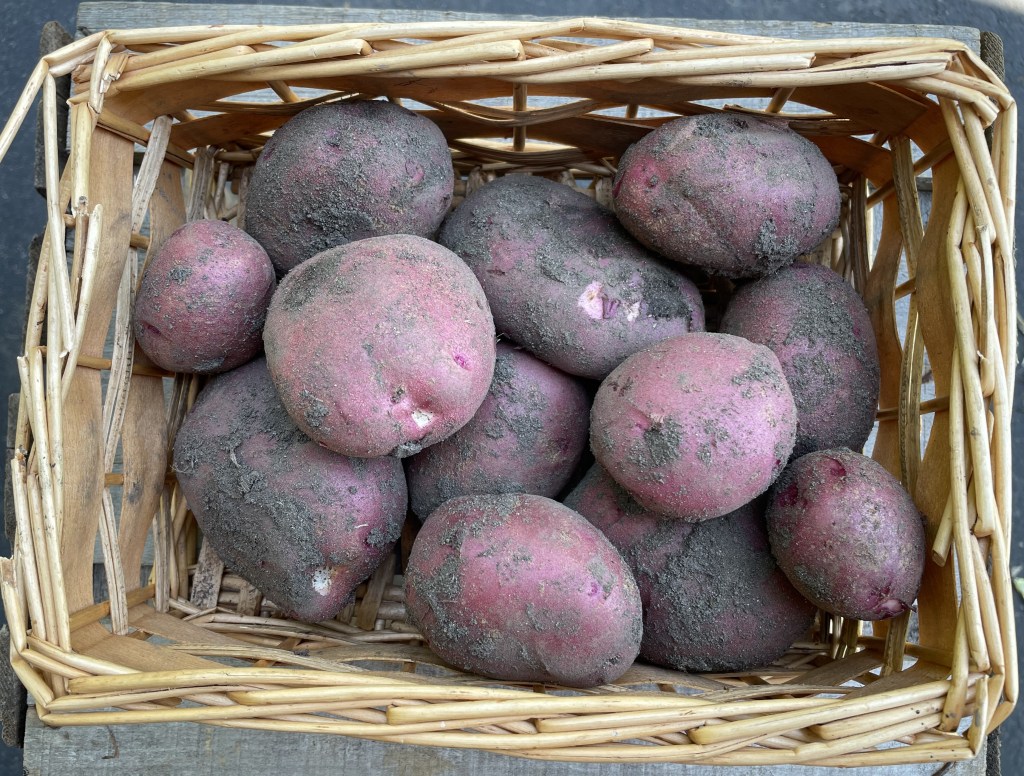
Keep unwashed potatoes in a cool, dark, dry place, such as a loosely closed paper bag in a cupboard. They will keep for two weeks at room temperature. Light turns them green, and proximity to onions causes them to sprout. Don’t put them in the refrigerator, as low temperatures convert the starch to sugars.
Asian and Italian Eggplant (Some Standard Shares; Those who get this won’t get cauliflower this week) – We have two varieties ready this week and you’ll get one of them. They can be used interchangeably in recipes. Eggplant is very perishable, so use it quickly or at least within the week. To store in the fridge, wrap it unwashed in a paper towel (not plastic) and keep in your crisper. You can also store it unrefrigerated at a cool room temperature.
English Cucumbers – Place in a sealed plastic bag in the crisper drawer of the refrigerator for up to a week.
Jalapeno Peppers – Refrigerate peppers unwashed in a sealed plastic bag in the crisper drawer for one to two weeks.
Patty Pan Squash/Yellow Crookneck Squash/Zucchini (Last Week for these, I think) –Store in the crisper drawer of your fridge and try to use within a week as they will quickly get soggy. You can use these interchangeably in recipes.
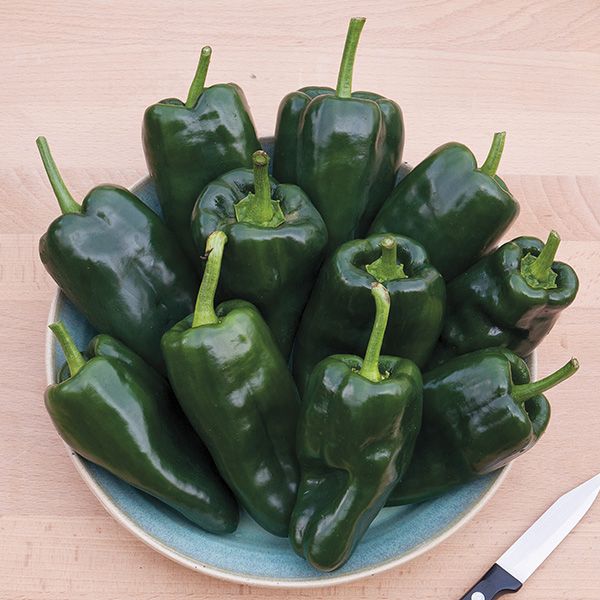
Poblano Peppers – Refrigerate peppers unwashed in a sealed plastic bag in the crisper drawer for one to two weeks. You can also dehydrate peppers for long-term. I have also sliced them and froze them individually on a sheet tray before placing them in a Ziploc bag. In the winter, I simply shake out the peppers I need. They will be soggy then, but are still perfectly good in chilis and soups.
Red Onions – Keep in a dark, dry, well-ventilated place at a cool room temperature. These onions are freshly harvested and haven’t gone through the curing process that we typically use when preparing onions for longer storage. Therefore, they won’t last as long as those you might buy at a store and I might even consider storing them in the fridge because of that.
Slicer Tomatoes (These are just starting to come on, so you’ll only get one or two this week) – Store at room temperature for up to a week. Do not refrigerate.
Featured Veggie: Listada di Gandia Eggplant
Eggplant is a member of the Solanaceae or nightshade family, which includes tomatoes, potatoes, and peppers. It is thought to have originated in India where you can still find varieties of it growing wild, although these are spiny, bitter, orange, and pea-sized, a far cry from the fruit we enjoy today.
Cultivated eggplant has been grown in India and China for more than 1,500 years. In fact, according to the American Horticultural Society Encyclopedia of Gardening — Vegetables, “A 5th Century Chinese book contains one of the oldest references to eggplant. A black dye was made from the plant, and ladies of fashion used it to stain their teeth which, when polished, gleamed like metal.”
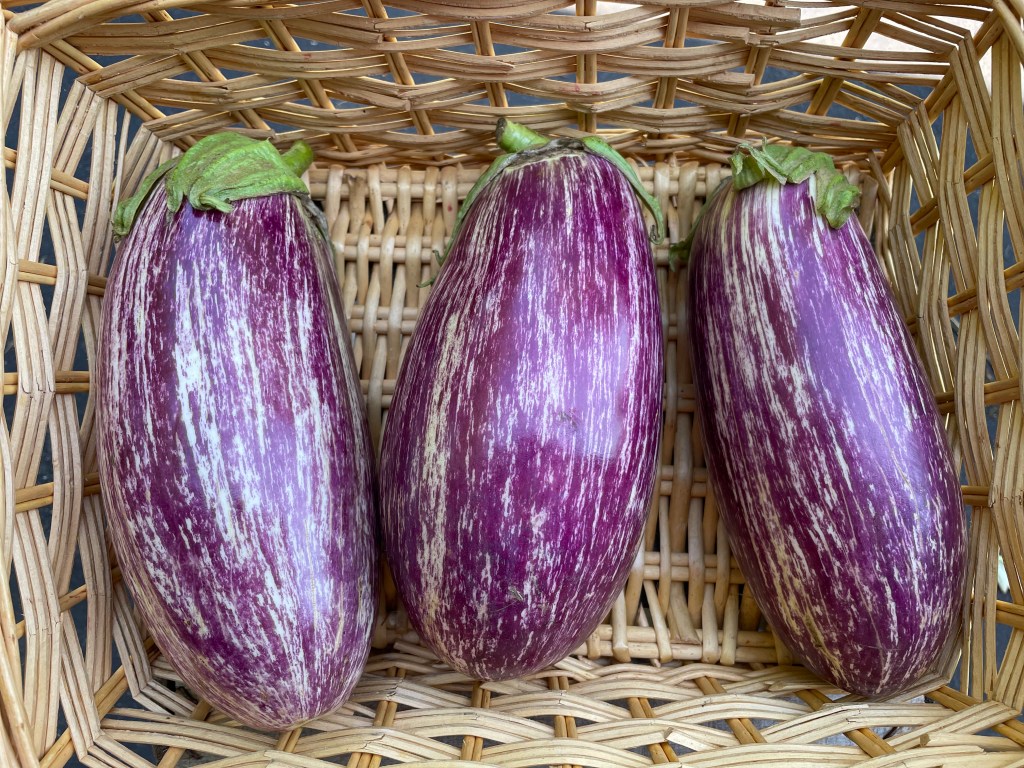
Also in China, a woman was required to have at least 12 eggplant recipes prior to her wedding day as part of her “bride price” which I think indicates just how much these fruits were prized. When trade routes opened up, eggplant seeds were taken to Europe, Africa, and finally North America with the Spaniards in the early 1800s.
The variety that you’re getting today is called Listada di Gandia, and it is a lovely thin-skinned fruit with white and purple stripes that is sweet and tender. There does seem to be some confusion as to the origin of this particular variety though. Among the different seed houses that sell it, some say that it was developed in France; others say Italy. After reading through these listings, I’m landing on Spain as “listada” means striped in Spanish and Gandia is an actual place there.
Field Notes
This week I’ve been thinking a lot about how farming is a little bit like emergency medicine. The word that keeps popping into my mind when I’m thinking about my job these days is “triage.” Every evening I list out what I need to accomplish on the farm the next day and nine times out of ten, I have to change my plans once I get down to the field in the morning. This is usually because something has happened in the last day – while I’m in the field even – that requires swift attention in order to prevent a problem from getting worse.
Take, for instance, the bunny that showed up two days ago and enjoyed nibbling on some edamame seedlings. In hindsight, the chomped clover growing nearby should have given me a heads up that there might be a rabbit somewhere, but I thought that some caterpillar had probably been responsible.
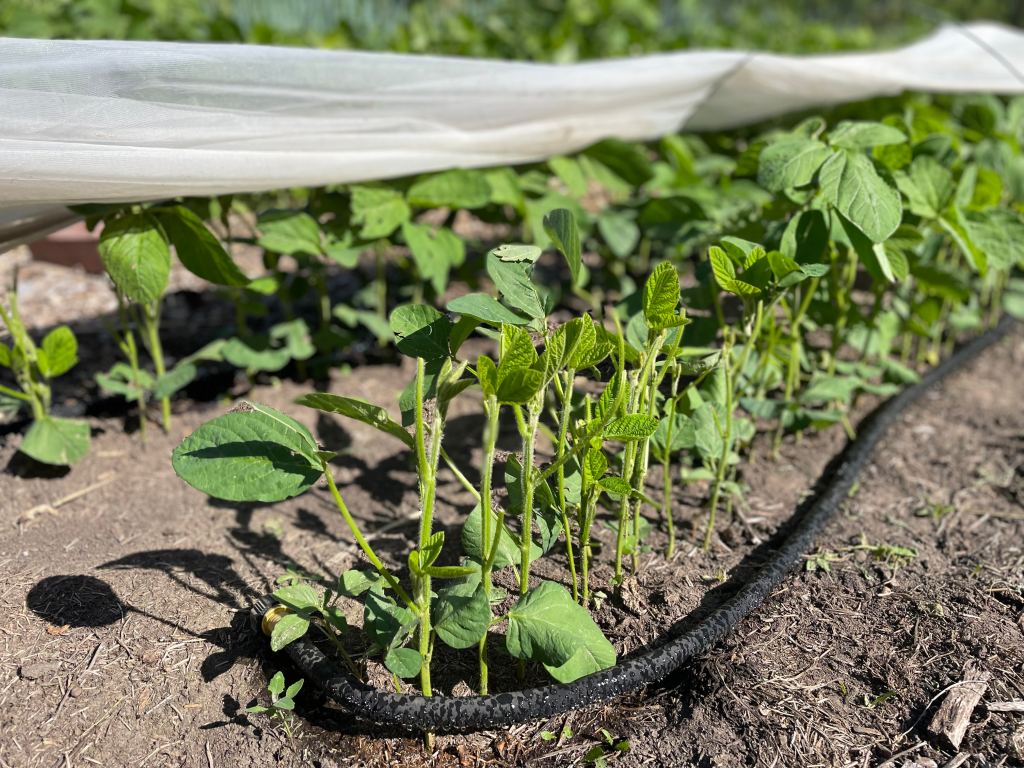
Don’t ask me how the bunny got into the field; the fence is wrapped with 3′ tall chicken wire, but every year around this time, one seems to show up. Not to worry though. I quickly grabbed some row cover and threw it over the beans to protect them. Now I must be on the lookout for any other crops the bunny might go and sample. I am hoping it won’t be the fall crop of snap peas. Those are on a trellis and I can’t figure out how to easily cover them up.
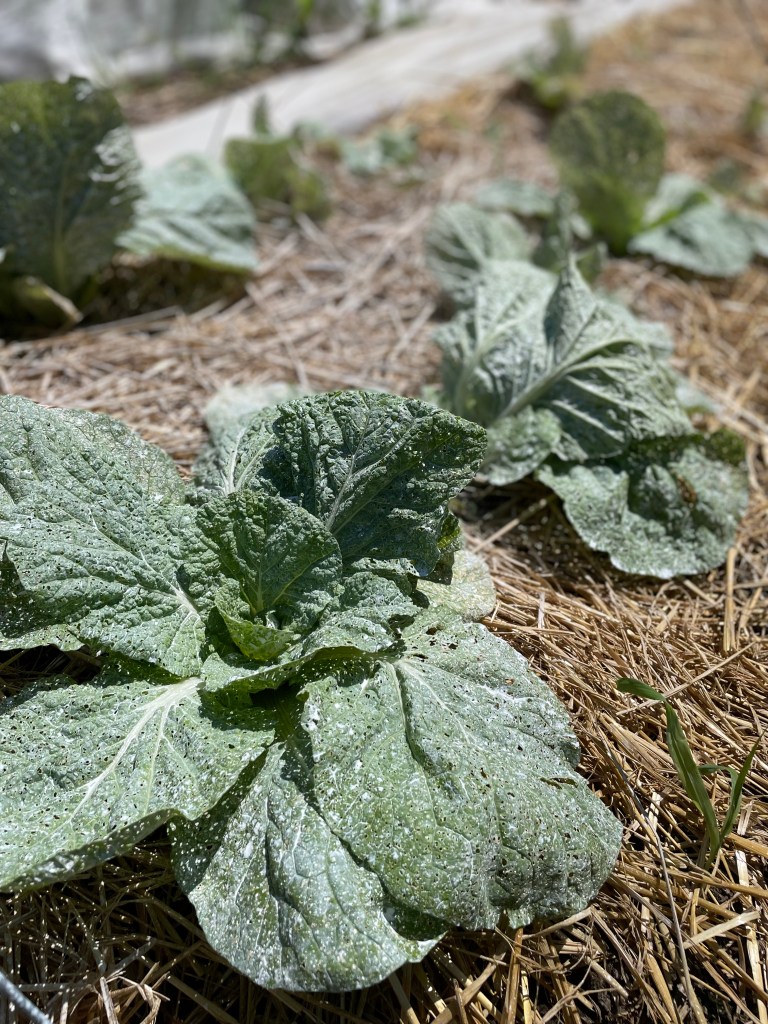
Here is another example of triaging: consider that I took Saturday off and when I went back into the field on Sunday, the napa cabbage that had been growing so beautifully just the day before now looked like this. Somehow the flea beetles – about a gazillion of them by my estimate – had gotten under the row cover and went to town. I hurriedly mixed up some kaolin clay and water and spray the mixture on what’s left of the leaves to try and protect them from any more damage. Plants are pretty tough, but can they survive an onslaught like this? We’ll see.
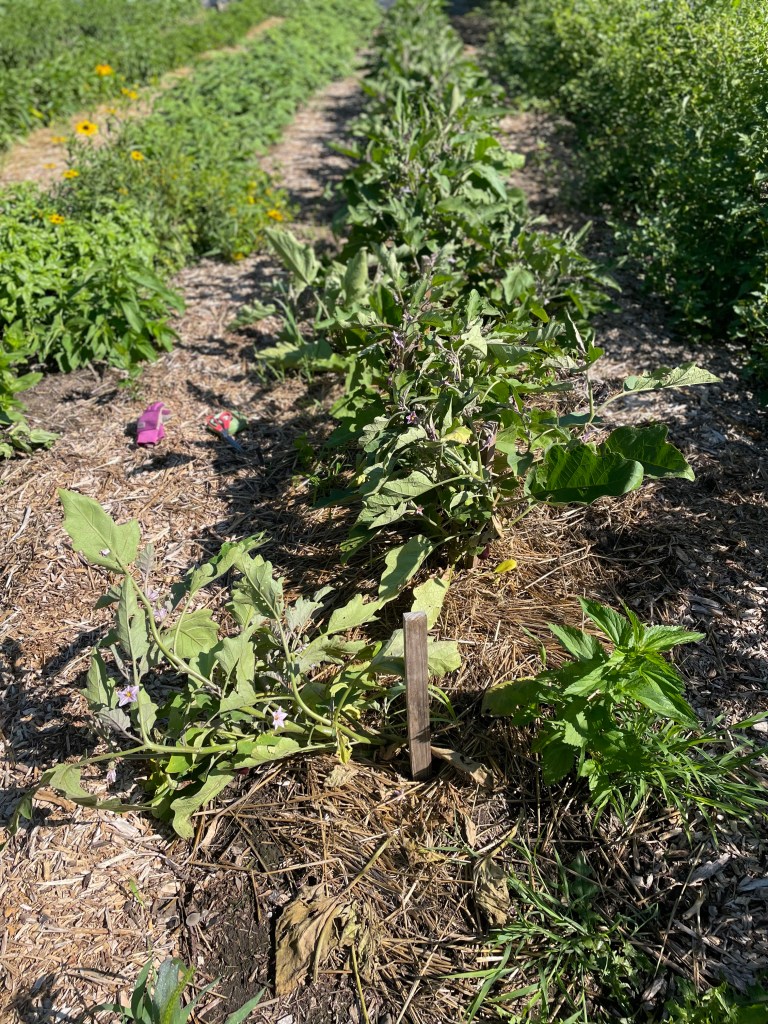
Then there are the Asian eggplants and pepper plants that are getting so heavy that many of them decided to fall over yesterday, all at about the same time. If I don’t stake those up right away, their stems could crack and we might lose some fruits, so I hurried to do that this morning.
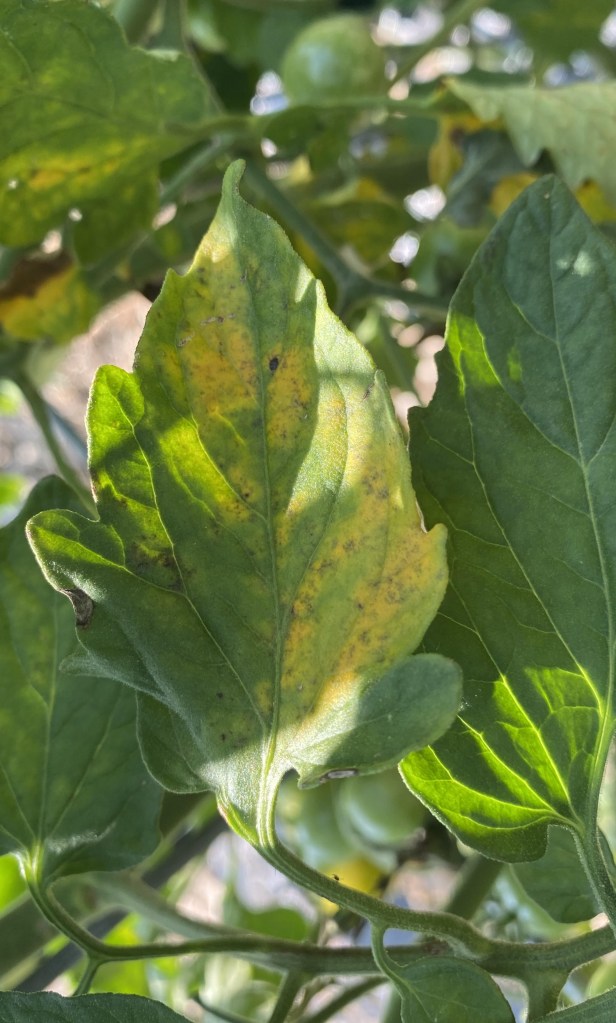
Last week we noticed that the cherry tomatoes have leaves that are yellowing and starting to die. I took some photos for diagnostic purposes, sending them to folks at University Extension and other vegetable crop experts who can help me figure out what’s going on and how to treat it.
Finally, in keeping with the medical analogy, last Monday evening we actually had to perform surgery. I was down weeding the watermelon that is growing adjacent to the squash when I noticed that some of the potimarron plants were looking very wilted. At the same time, I saw the most beautiful moth – one I had never seen before – flying around them and my suspicions were raised. I pulled out my phone, did some research, and identified the insect as a squash vine borer. With a name like that, I probably don’t need to tell you what this bug does, but long story short: the moth lays one egg per each main stem of a squash plant. From this single egg, a larvae hatches and burrows into the stem near the base of the plant, eating it from the inside out until the stem is nearly severed and the plant can no longer take up food and water and dies. (Moth and larvae photos from University of Minnesota Extension)

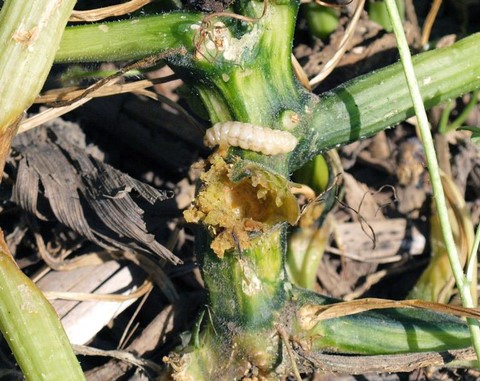

We decided to see if we could save the plants – after all, we don’t have too many of them – so we took a pen knife, sliced a little notch in the stem (properly sterilizing the knife between cuts, of course), found and disposed of the caterpillar, and then bound the wound with some masking tape. After that, we covered the rest of the stems with straw so the adult moth can’t so easily find a place to lay her egg. This was a week ago now and incredibly, none of the plants have yet died.
I recently heard an interview with a farmer from Colorado who was talking about earworms infesting about half of the Olathe sweet corn there. He was frustrated, but he also seemed to be taking it as par for the course. He said that he believed farmers were among the most optimistic of people in that while there will always be some problem or other that arises in the field, most farmers simply scratch their heads for a minute and then get to work figuring out what to do about it. I don’t know that I’m quite that relaxed about my plans always needing to change, but I do know there’s never a dull moment around here.
Recipes
(I don’t know how it ended up this way, but looks like I am featuring “Roasted Veggies” now that I have gathered all my saved recipes for this week in one place!)
Bolognaise Stuffed Eggplant (scroll down a little for recipe) // Uses Basil, Cherry Tomatoes, Eggplant, Garlic, Onions, Tomatoes (substitute fresh for canned)
Roasted Cauliflower with Tomatoes with Olives and Garlic Breadcrumbs // Uses Cauliflower, Cherry Tomatoes // Vegetarian
Roasted Eggplant and Tomato Orzo Pasta // Uses Basil, Eggplant, Tomatoes // Vegetarian
Roasted Eggplant and Tomatoes with Cheese // Uses Basil, Eggplant, Tomatoes // Vegetarian
Roasted Poblanos in Cream // Uses Garlic, Onions (substitute Red for White), Poblanos // Vegetarian
Roasted Poblano Quesadillas // Uses Onions, Poblanos // Vegetarian
 Middle Fork Farm