
I hate to say it, folks, but I think fall is in the air. I just glanced out the window at the fog that is blanketing the production field and it looks decidedly wet down there. This is a change! Until now, I was working in the field on Monday mornings, saving the newsletter-writing until the afternoons when it was hot outside, but from now on I am guessing my computer time will happen in the mornings while I am waiting for the field to dry out. (It’s not a good idea to work when leaves are wet as fungal diseases can be more easily spread around then.)
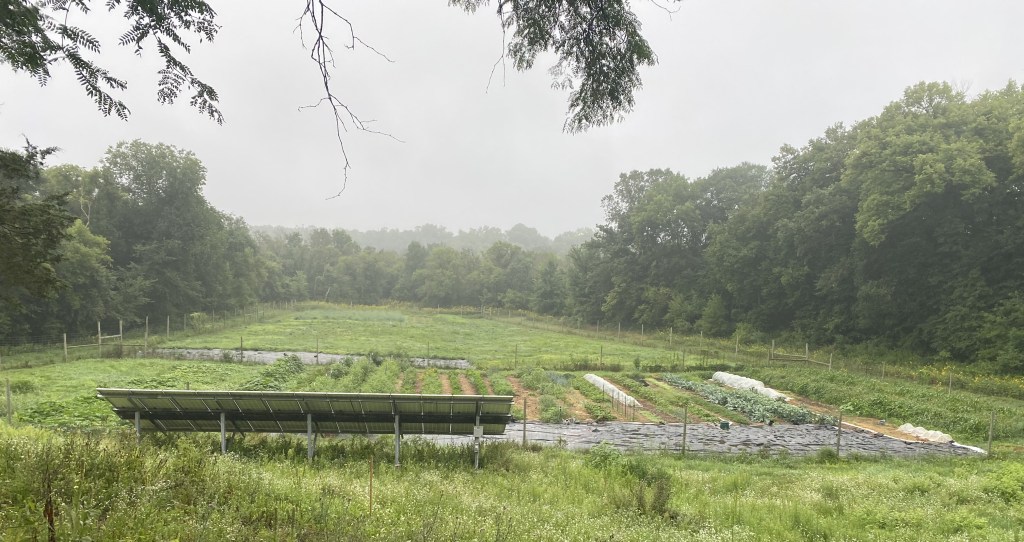
It’s around this time of the season when overnight temperatures start to be cool enough to fall below the dew point. But the plants themselves – both wild and cultivated – also have something to do with increased humidity in late summer. This is because when crops reach maturity, their leaves are bigger and therefore more water evaporates from them, creating more moisture in the air. It also helps get water to our plant’s roots as the dew that collects on their leaves is gradually funneled down their stems to the ground. We’ll take any help we can get this year, even if it means things are a little sticky down there!
What’s in My Box this Week?
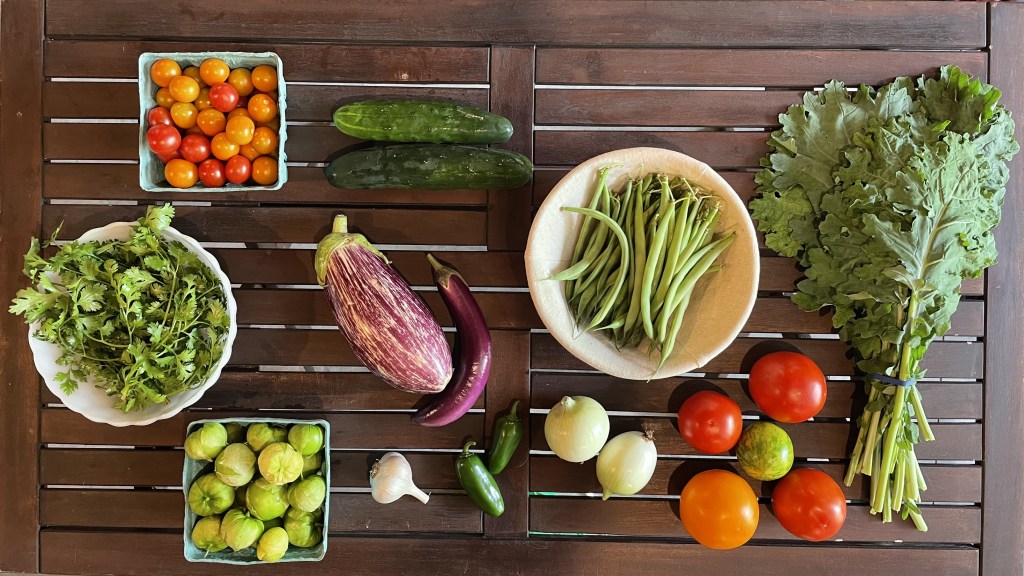
Cherry or Saladette Tomatoes – Cherry tomatoes can over-ripen quickly, so it can be a good idea to store them in the fridge if you’re not going to eat them right away.
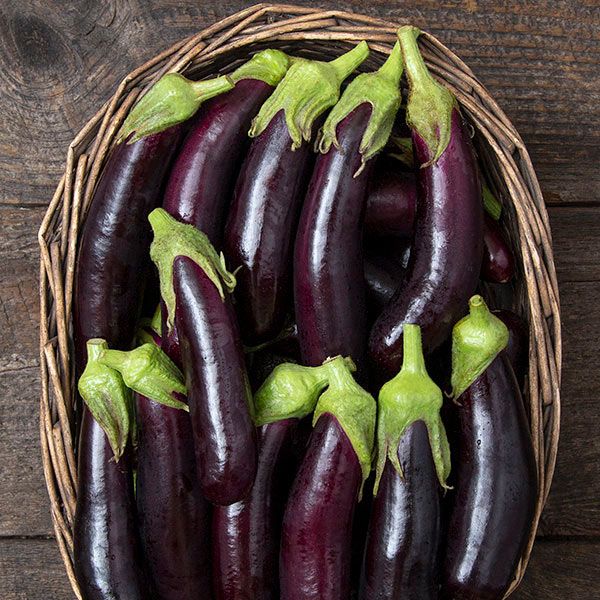
Asian or Italian Eggplant – We have two varieties ready this week and you’ll get one of them. They can be used interchangeably in recipes. Eggplant is very perishable, so use it quickly or at least within the week. To store in the fridge, wrap it unwashed in a paper towel (not plastic) and keep in your crisper. You can also store it unrefrigerated at a cool room temperature. (Photo: High Mowing Seeds)
Cilantro – Stand upright in a container with an inch of water. Then cover the herbs loosely with a plastic bag and refrigerate for up to two weeks.
English Cucumbers – Place in a sealed plastic bag in the crisper drawer of the refrigerator for up to a week.
Garlic – Keep in a dark, dry, well-ventilated place at a cool room temperature. It can keep for several months if stored appropriately. Warm temperatures will encourage the cured garlic to sprout which will reduce the quality of it.
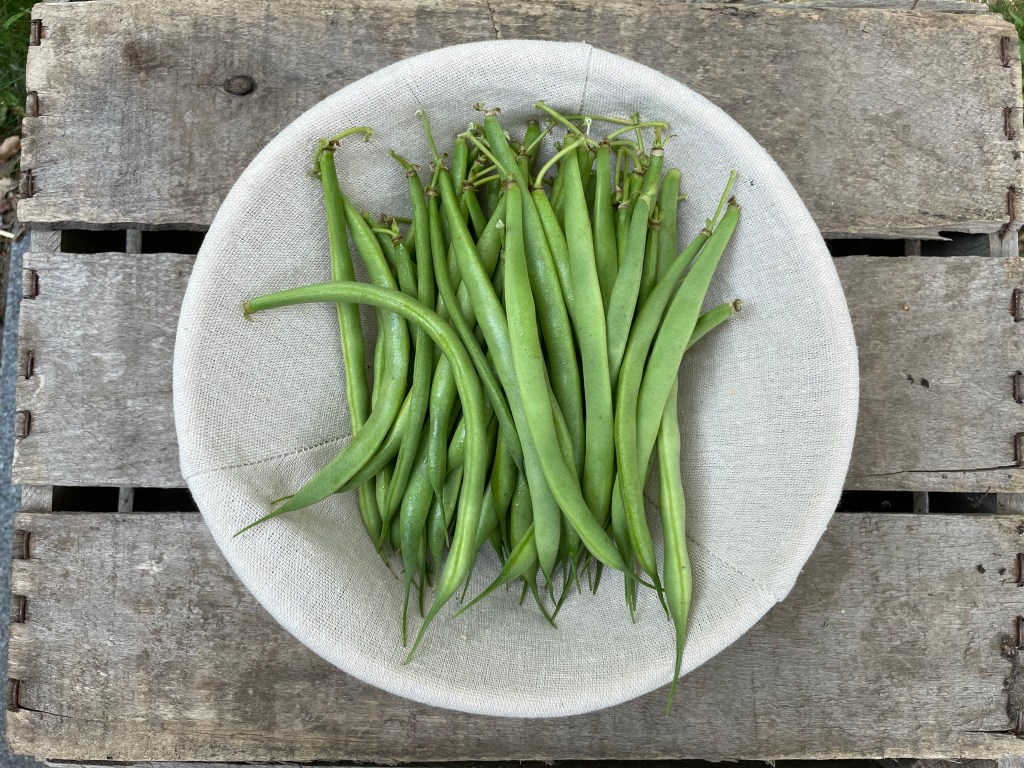
Green Beans – Refrigerate in a plastic bag and use within a week.
Heirloom Tomatoes – You’ll get either a Nebraska Wedding, Green Zebra, Cherokee Purple, or Kellogg’s Breakfast tomato this week. Some might need to sit out on the counter for a few more days to fully ripen. Heirlooms have a tendency to crack if left on the vine until peak ripeness, so sometimes we harvest them a day or two before they reach that point. Store at room temperature for up to a week. Do not refrigerate.
Jalapeno Peppers – Refrigerate peppers unwashed in a sealed plastic bag in the crisper drawer for one to two weeks.
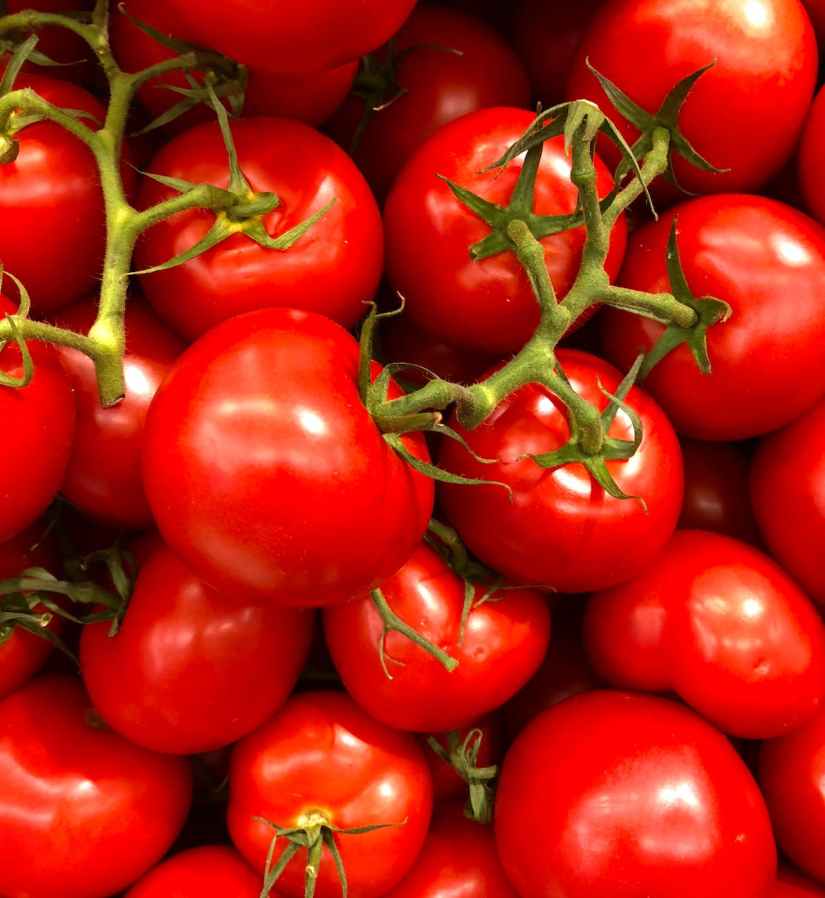
Slicer Tomatoes – Store at room temperature for up to a week. Do not refrigerate.
Tomatillos – Store in the crisper drawer of your fridge. They should last at least a week.
White Russian Kale – Wash the greens only right before using. To store, place in a plastic bag with most of the air removed and put in the fridge. It is best used within a few days.
Yellow Onions – Store in a cool dark place. These onions are freshly harvested and haven’t gone through the curing process that we typically use when preparing onions for longer storage, so while they won’t last as long as those you might buy at a store, but they will be good for a week or two.
Featured Veggie
The tomatillo, also known as the Mexican husk tomato, is a perennial plant that is in the Solanaceae family along with its more famous relatives: tomatoes, peppers, and potatoes. They have been around for a long, long time; researchers dated a tomatillo plant fossil all the way back to 52 million years ago in Patagonia, at the southern tip of Argentina. The word tomatillo comes from the word “tomatl” in Nahuatl which is the language of the Aztecs, and the fruit was a main food source for the Mayans.
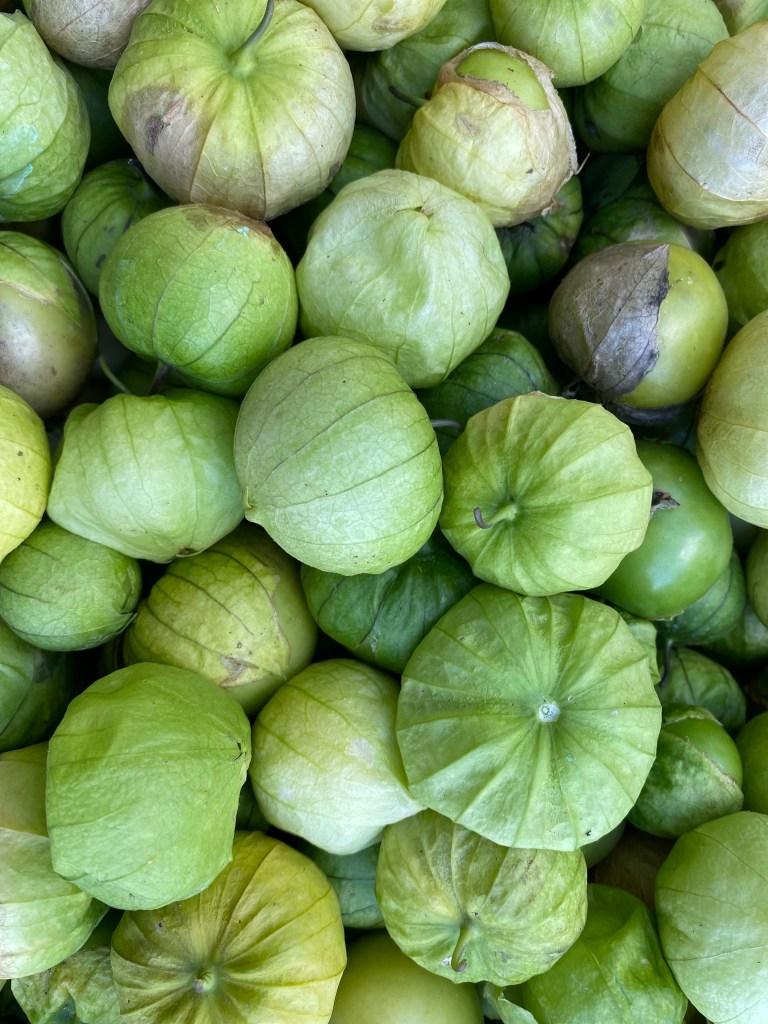
Tomatillos are always a little bit sticky (wash before using!) and they grow inside of a papery skin (thus the name “husk tomato”) that starts to turn a little brown and open up when ready for harvesting. Tomatillos are brighter, less sweet, and more acidic than tomatoes. This makes them good to turn into a salsa or sauce. They are not usually eaten raw although I have heard that there are some purplish-tinted varieties that that taste quite good right off the vine and uncooked.
Perhaps we will try to grow that variety next year and see if the rumor is true…
Notes from the Field
Last week was a short work week as Simon and Erik were up north on their annual BWCA camping trip, and Luka and I headed to the Wisconsin Dells for a couple of nights to meet up with my college roomate, Jeanette, and her family who were visiting from Michigan. Still, I managed to get a lot done and the field is looking great, all lush and with lots of colorful fruits ripening on the vine.
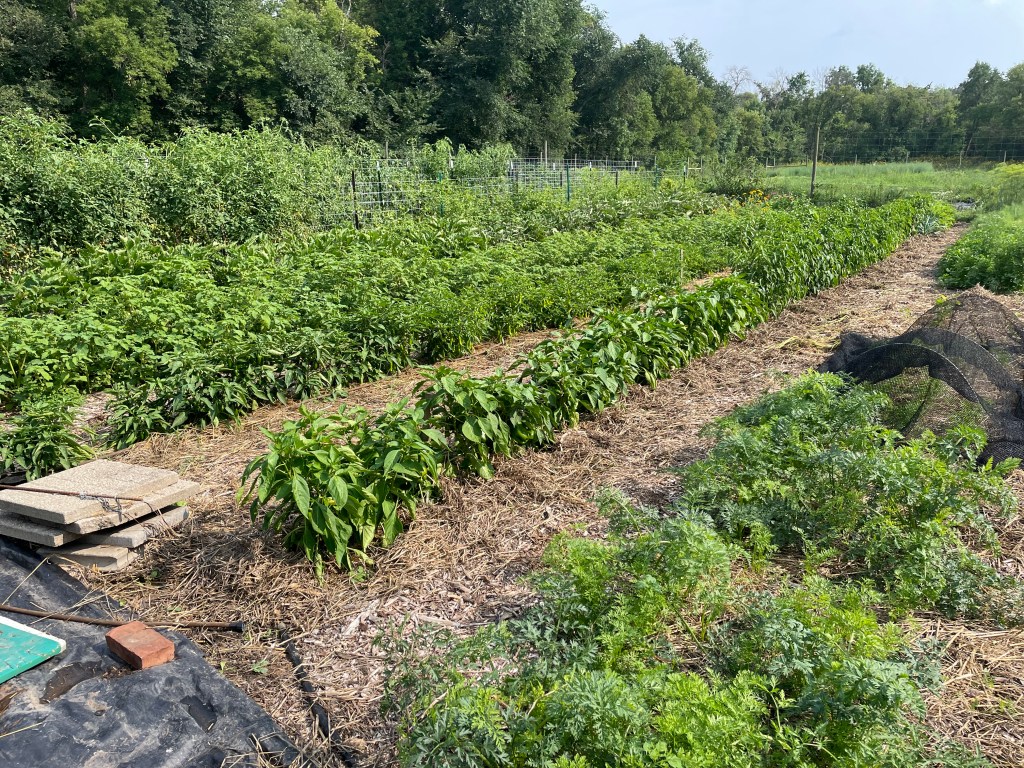


Erik was shocked at how much things had grown in just the week that he was away. I was shocked at how much things had grown in just the two days that I was away. You can hardly walk down the tomato rows at this point, they are so overgrown. And you know from a recent newsletter that it’s not for lack of pruning. More leaves = faster growth = more leaves = faster growth and so on and so on. A simple formula, but one that is quite something to see in action. Needless to say, I am teaching Simon how to prune tomatoes today and that’s probably all we’ll get to!
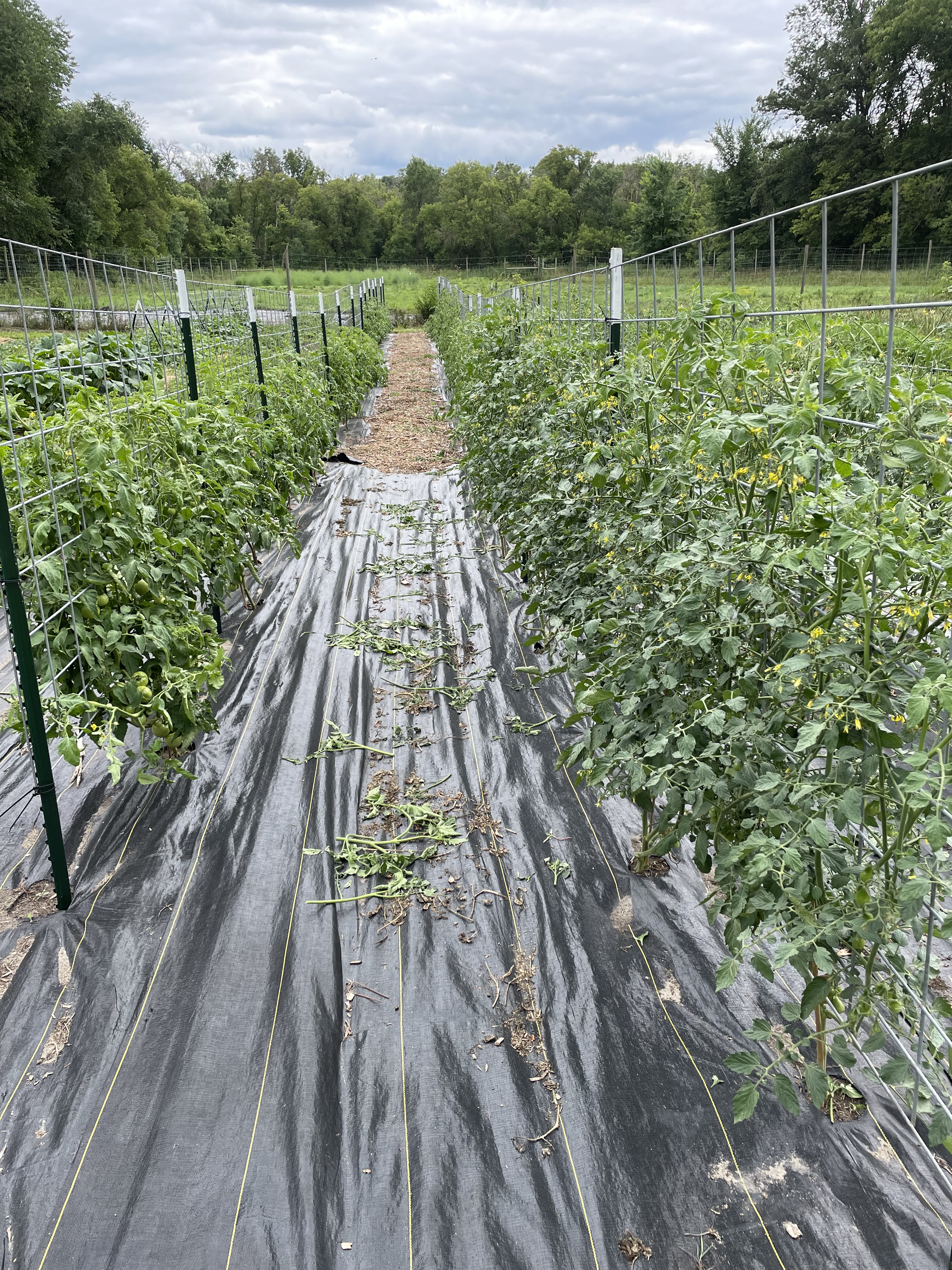
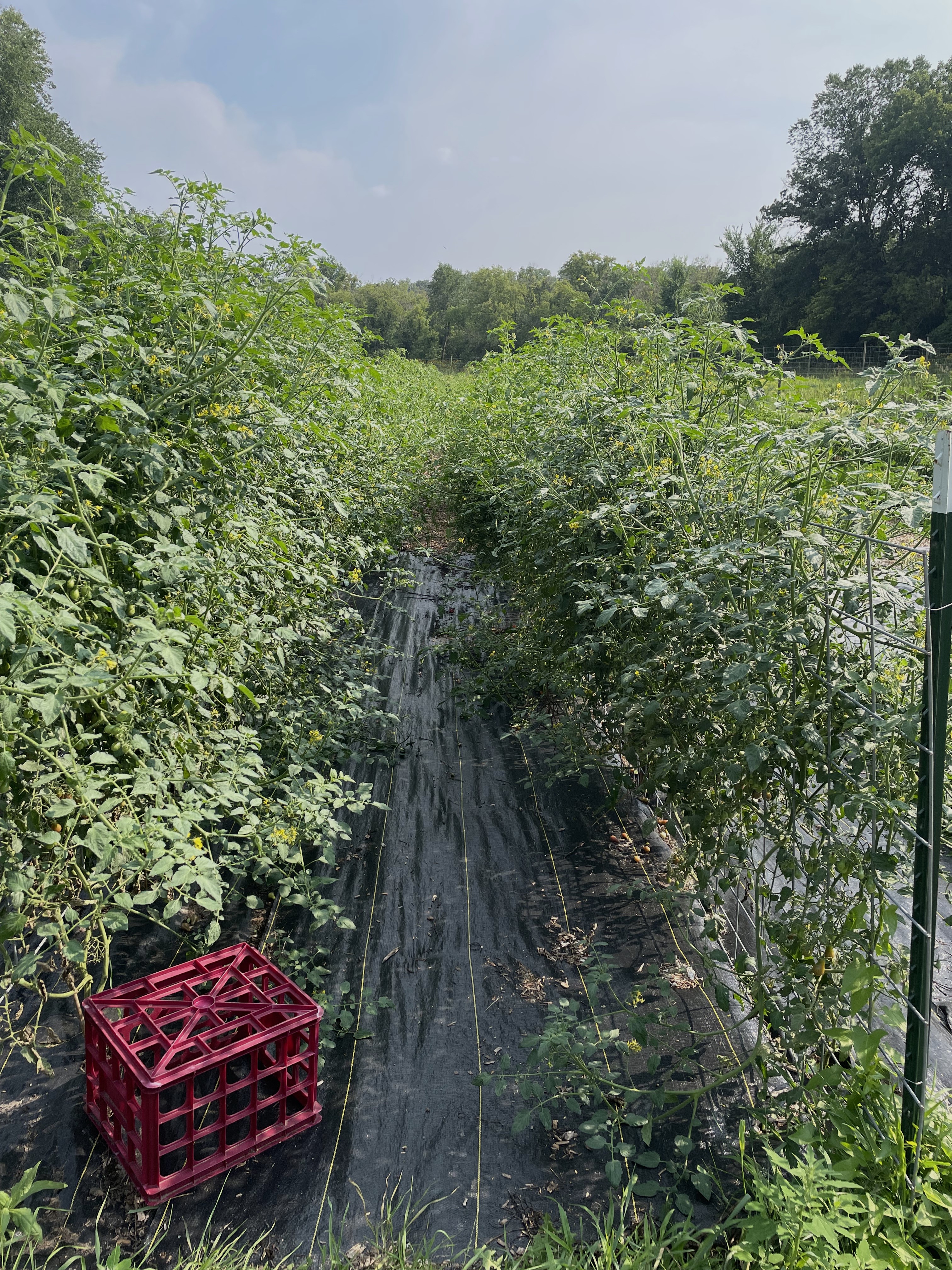
Other than that, I spent most of my time weeding along the edges and generally tidying things up. The hand tools that had been sitting up in the yard next to the spigot where I dumped them last month were washed and hung up. The packing shed was better organized. I did have to go back to watering the crops by hand, hose, and sprinkler again, but there are fewer crops now, so it’s getting easier.
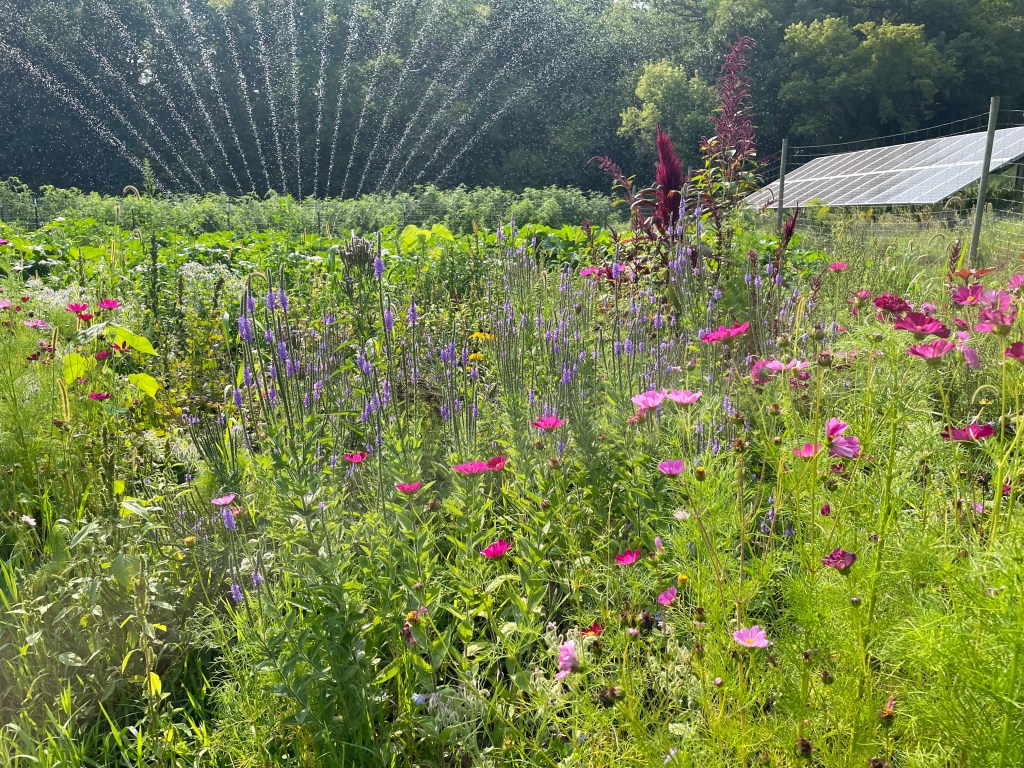
This week, I am contemplating pulling out most of the summer squash and zucchini plants. I hesitate to do this, especially when they are still producing, but they make SO MANY fruits ALL THE TIME that it’s constant work to keep them harvested and there’s only so much squash one can eat. We’ve been donating a lot of it to the food shelf, but so does every other gardener in the area and I suspect that folks are all but zucchini-ed out at this point. Removing them from the field will improve airflow which is a good thing this time of year (see above about moisture and fungi) and give more room for the vining cantaloupes, watermelons, and winter squash which are trying to take over that area anyway. Still, after all the hard work they’ve done to feed us so far, it does feels a little crummy to turn on them like this.
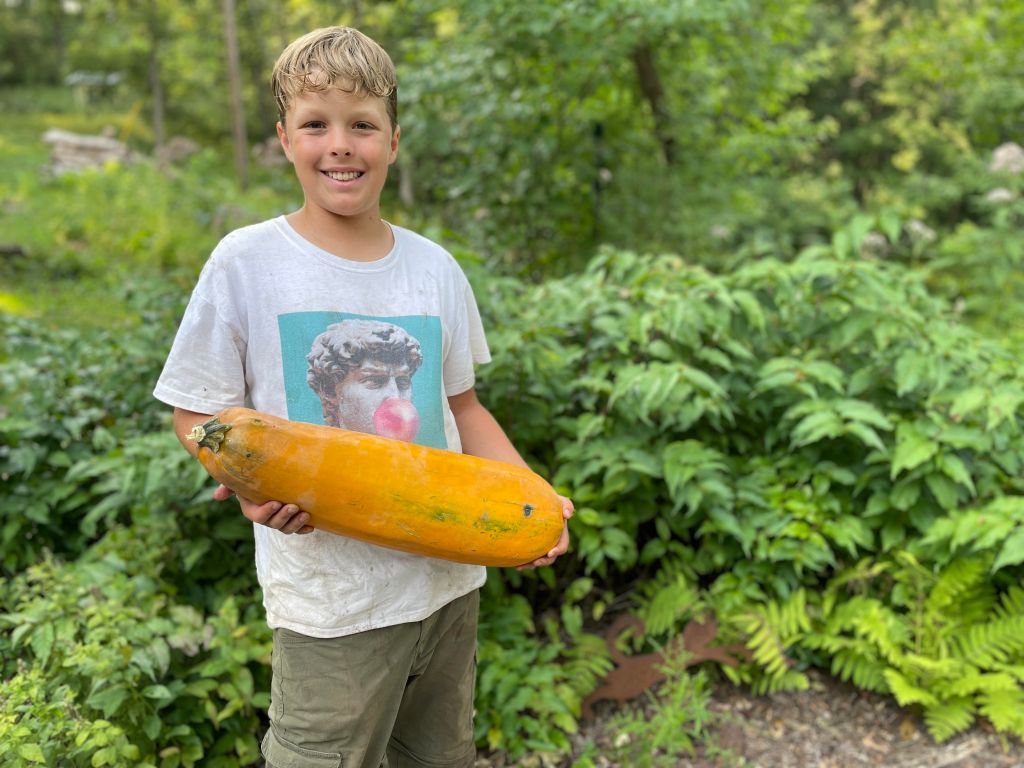
Speaking of zucchini… I just had to share a photo of the giant zucchini we grew last year. For those of you who were able to come to our CSA harvest gathering in October, you may remember this zucchini as it was larger than some of the babies that were there. (Some of you even cradled it as if it were a baby!).
After the party, we decided to put it in the basement to see how long it lasted. It turned orange over time and, incredibly, it just started to rot this week. By my figuring, that makes this zucchini ten months old. I knew that our produce was harvested so fresh that it usually lasts longer than veggies from the grocery store, but this is probably record-setting. I wonder if there is a category for longest-lasting zucchini at the State Fair?
Recipes
Cucumber Tomatillo Gazpacho // Uses Cilantro, Cucumbers, Garlic, Tomatillos // Vegetarian
Green Beans and Okra with Dill // Uses Green Beans, Okra // Vegetarian
Roasted Tomatillo Chicken Soup // Uses Cilantro, Garlic, Jalapenos, Tomatillos
Roasted Tomato and Tomatillo Salsa // Uses Cilantro, Tomatillos, Tomatoes // Vegetarian
Salsa Verde // Uses Cilantro, Garlic, Jalapenos, Onions, Tomatillos // Vegetarian
Stuffed Eggplants with Carrots, Peppers, and Tomatoes // Uses Eggplant, Garlic, Onions, Bell Peppers, Tomatoes // Vegetarian
 Middle Fork Farm