
This week we are introducing a new section in the newsletter: the weekly haiku. Simon and I came up with the idea when we were contemplating what to do with the free time we had been granted once the rain started to fall last week. This is the first time we’ve actually had to wait to do some field work this entire summer, and we’re not used to putting things on hold like we must typically do about once a week during a normal precipitation year. The truth of the matter is that farmers love rainy days, not just because we get a break from watering, but because we get to do things like clean our houses and put the laundry away as these things usually take a back seat to farm work during the summer months. We are in that beautiful space right now where both our indoor and outdoor spaces are mostly all picked up. The car is even parked in the driveway to be washed by the rain right now. For a Type A person like myself, this feels amazing. (It really is the little things…)
What’s in My Box this Week?
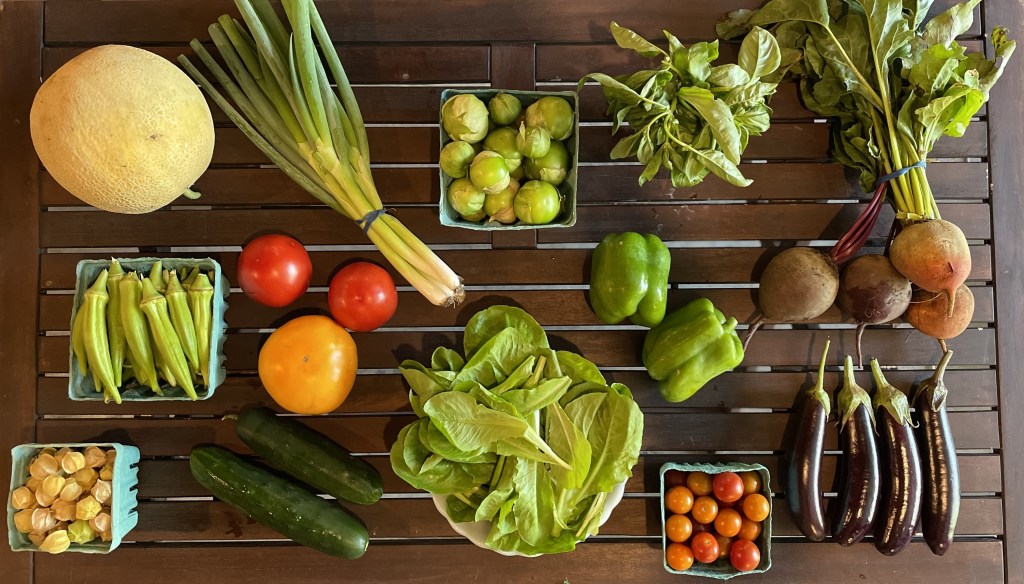
Basil – Store with the stems in a glass of water on your counter out of direct sunlight. Do not store in the fridge as it will blacken immediately and wilt after that.
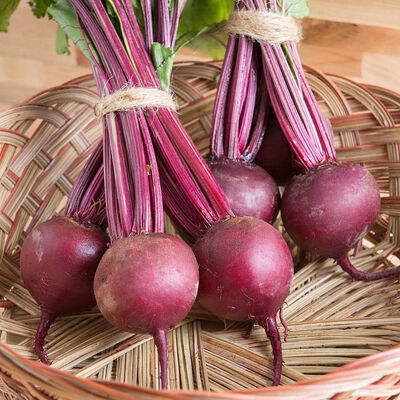
Beets – You can use both the roots and the leaves of beets. If your beets still have greens attached, cut them off, leaving an inch of stem. Store the beet roots unwashed in a plastic bag in the crisper bin of your refrigerator. They will keep for two to three months. For the greens, keep them dry and unwashed until ready to use in a sealed plastic bag in the fridge for up to a week.
Cantaloupe – Place in the fridge until you’re ready to use them or they may get overripe fairly quickly. Store leftover melon in the fridge wrapped with plastic wrap. The flesh will dry out if left exposed. Use quickly.
Cherry Tomatoes – Store at room temperature for up to a week. If you’re not going to eat them right away, go ahead and put them in the fridge.
Eggplant (Asian or Italian) – Eggplant is very perishable, so use it quickly or at least within the week. To store in the fridge, wrap it unwashed in a paper towel (not plastic) and keep in your crisper. It is preferable to store it unrefrigerated at a cool room temperature.
English Cucumbers – Place in a sealed plastic bag in the crisper drawer of the refrigerator for up to a week.
Green Peppers – Refrigerate peppers unwashed in a sealed plastic bag in the crisper drawer for one to two weeks.
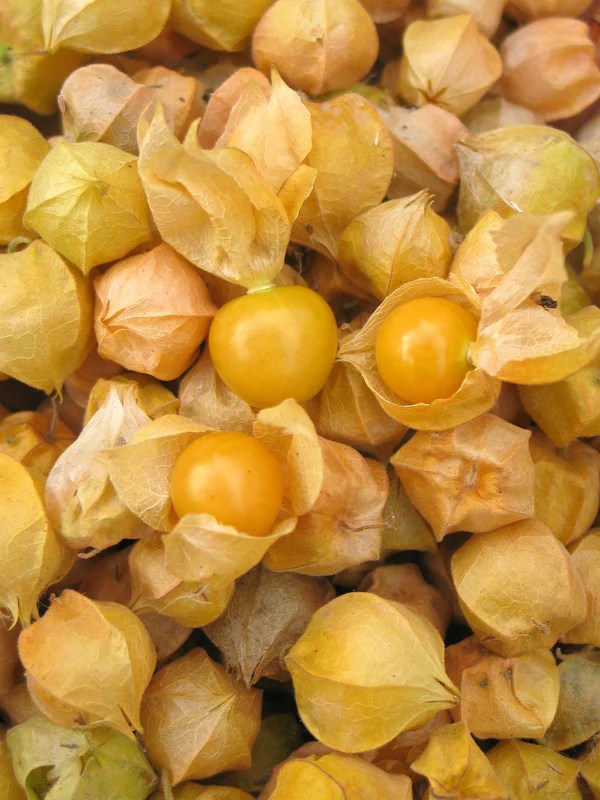
Ground Cherries – Don’t know what these are? Check out the “Featured Veggie” section below.
Store in their husks in a paper bag in the refrigerator for seven days. When ready to use, remove fruit from husks and wash well. (Photo from Uprising Seeds)
Heirloom and Slicer Tomatoes –Store at room temperature for up to a week. Do not refrigerate.
Lettuce – We will have a small amount of lettuce this week as we go through the bed and thin out the plants we seeded. The lettuce you get will be loose leaf. Store loosely in a plastic bag in the crisper drawer of your fridge. Ideally use within a week, but it will probably store for up to two weeks if needed.
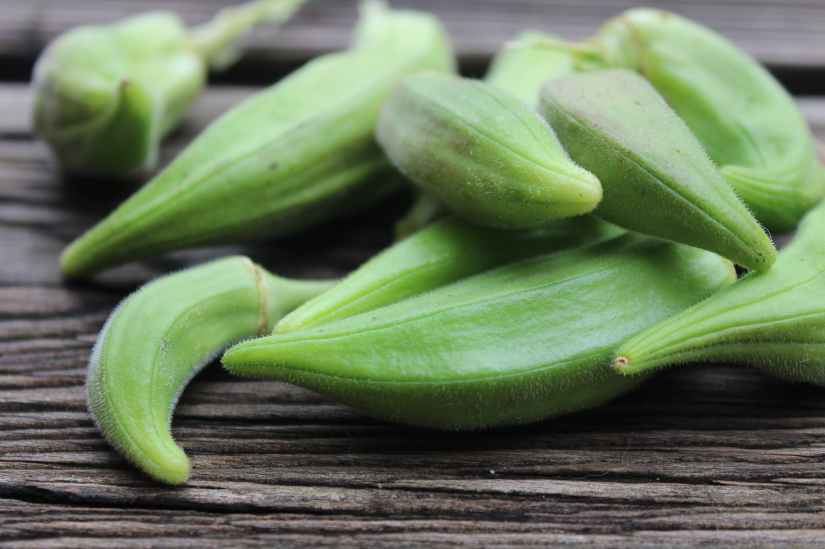
Okra (Large Shares Only) – Wrap in a paper towel and place inside a paper bag, and store in the vegetable drawer. It is best to use it within a day or two. Do not wash fresh okra until you are ready to use it.
Scallions – Store in the veggie drawer of your refrigerator and try to use within a week. If you use these after a week, you can peel off any dry and/or “slimy” outer layers of the onion.
Tomatillos – Store in the crisper drawer of your fridge. They should last at least a week.
Weekly Haiku by Simon T.
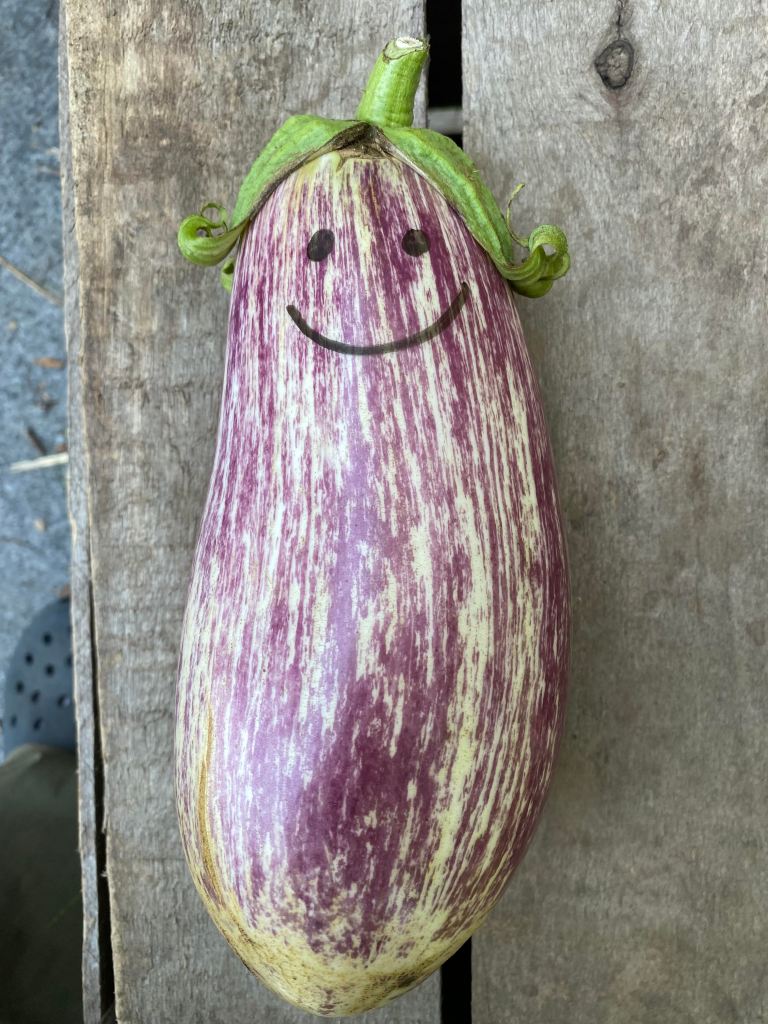
We have a friend, Jane
She has wavy lime green locks
Jane is an eggplant
Featured Veggie: Ground Cherries
If you’ve never seen or heard of a ground cherry before, think of a sweeter, smaller, and more golden version of a tomatillo and you’ll have a pretty good idea of what they are. Sometimes they are called “husk cherries” because of the papery husks the fruit grows inside of.
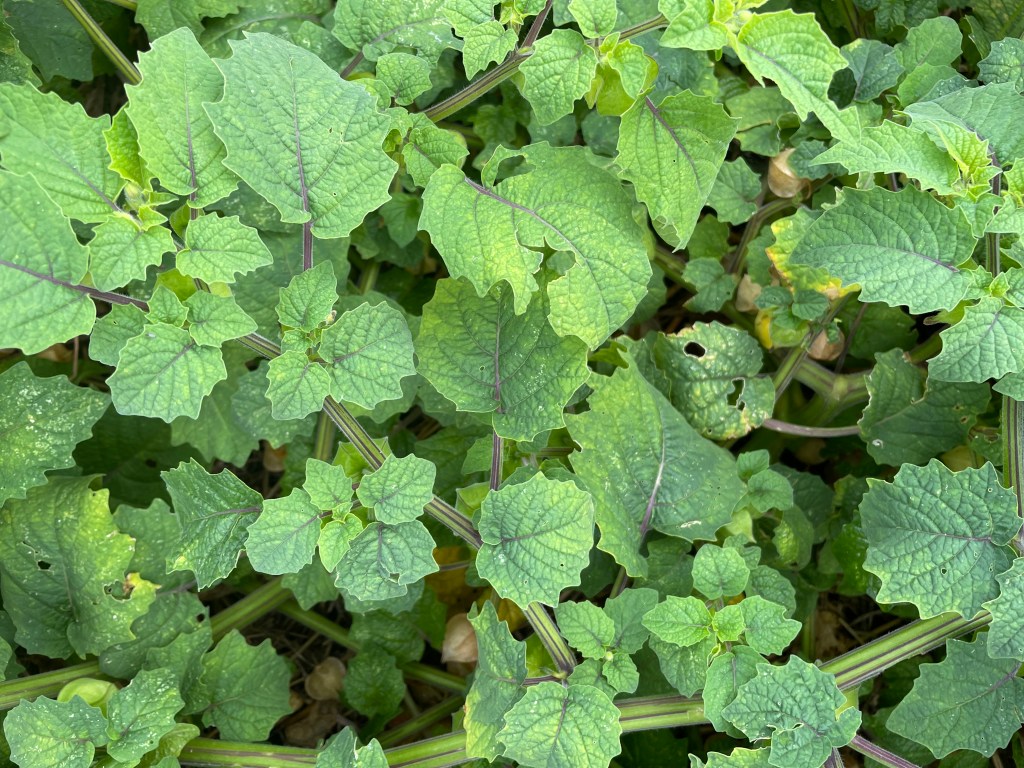
Ground cherries are native to North America and we (and the deer!) have found them growing wild along the road, in our prairie remnant, and even in our asparagus field. That being said, they aren’t grown nearly as widely as they used to be by home gardeners and as with Benning’s Green Tint patty pan squash that you received a few weeks back, the variety that we’re growing this year (Aunt Molly’s) is listed on the Slow Food Ark of Taste as in danger of being lost.
Ground cherries have a delicious pineapple-meets-vanilla taste and this variety was named by the Territorial Seed Company after their owner’s old ice cream shop, Aunt Molly’s Ice Cream Treats. First mentioned in horticultural writings around 1837 in Pennsylvania, Aunt Molly’s remain a favorite of the Pennsylvania Dutch who love them for their high pectin count which makes them perfect for jam and pie-making. We like to eat them on top of vanilla ice cream and in fruit salads.
Field Notes
As I mentioned in the intro to this week’s newsletter, we’ve been a little on hold since your last delivery because we’ve been getting some rain every day but this past Saturday. (Hooray!) Still, we did make some decent progress on pruning those tomatoes; Erik took pity on me Saturday afternoon and attended to the heirlooms while my mom was visiting as the warm, sunny, windy weather was perfect for that task. (The cuts heal over more quickly and reduce the potential for diseases to enter the wounds.)
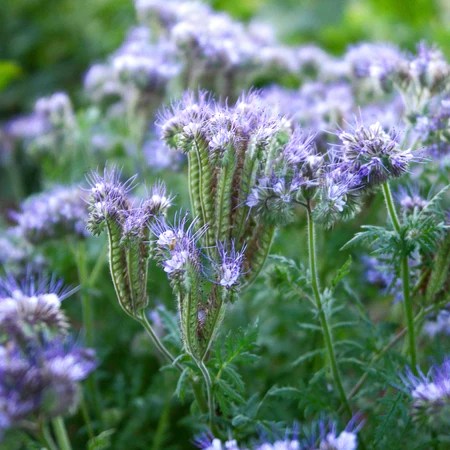
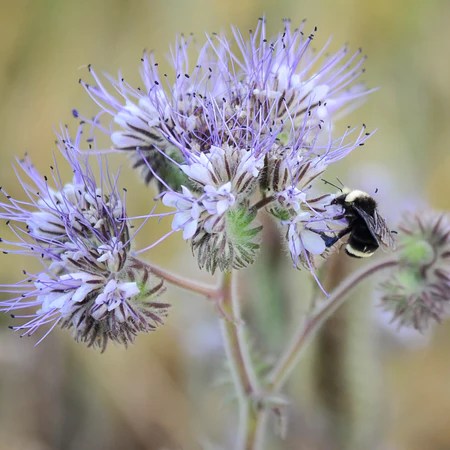
Simon and I also cleared out some more beds, seeding them with phacelia, an annual cover crop that is tolerant of low water conditions and is an abundant producer of nectar-rich flowers that support beneficial insects and other pollinators. Phacelia also scavenges nitrogen from the soil, concentrating that nutrient into its leaves which rapidly decompose after the plant dies, making the nitrogen available to the next crops that are planted there and reducing our need to bring fertilizer on to the farm from elsewhere. We’ve never planted phacelia before and I’m curious to see how it does. (Photos from Territorial Seed Company)
Yesterday, I ran down to the field in between bouts of rain and quickly harvested the onions that were flopping over on the ground, indicating that they were done growing and needed to be brought up out of the wet soil to dry and cure in the barn for a couple of weeks. This is the first time we grew shallots and sweet Walla Walla onions and they did really well. We are big fans of onion rings and are excited to try making our own this year.
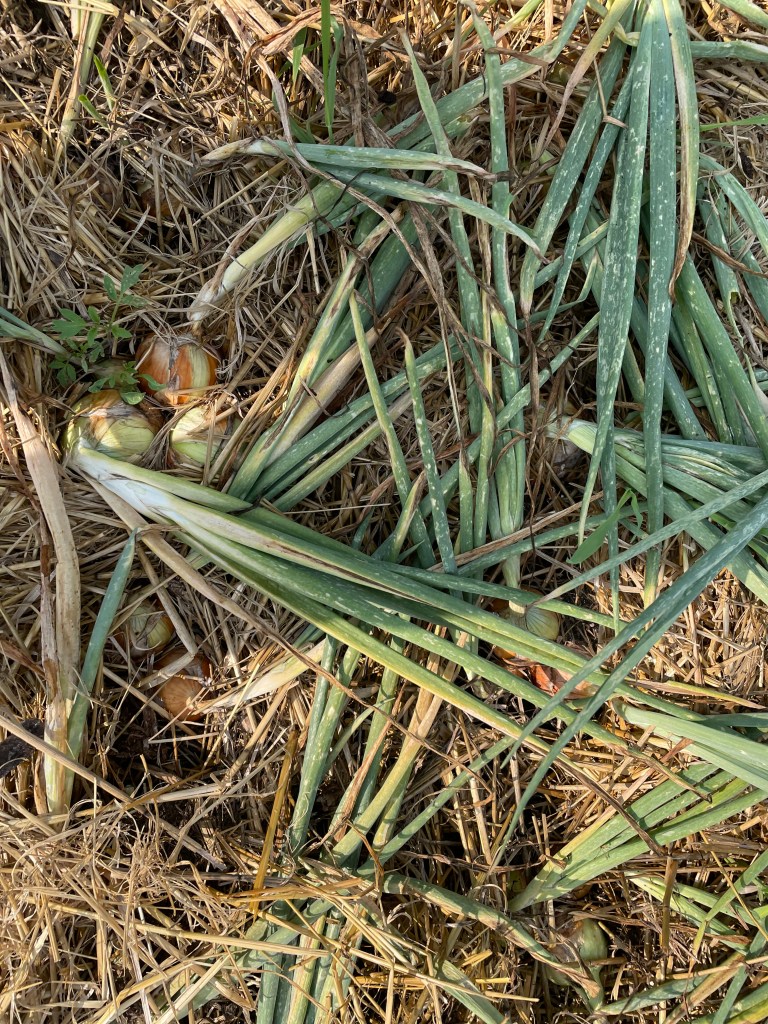
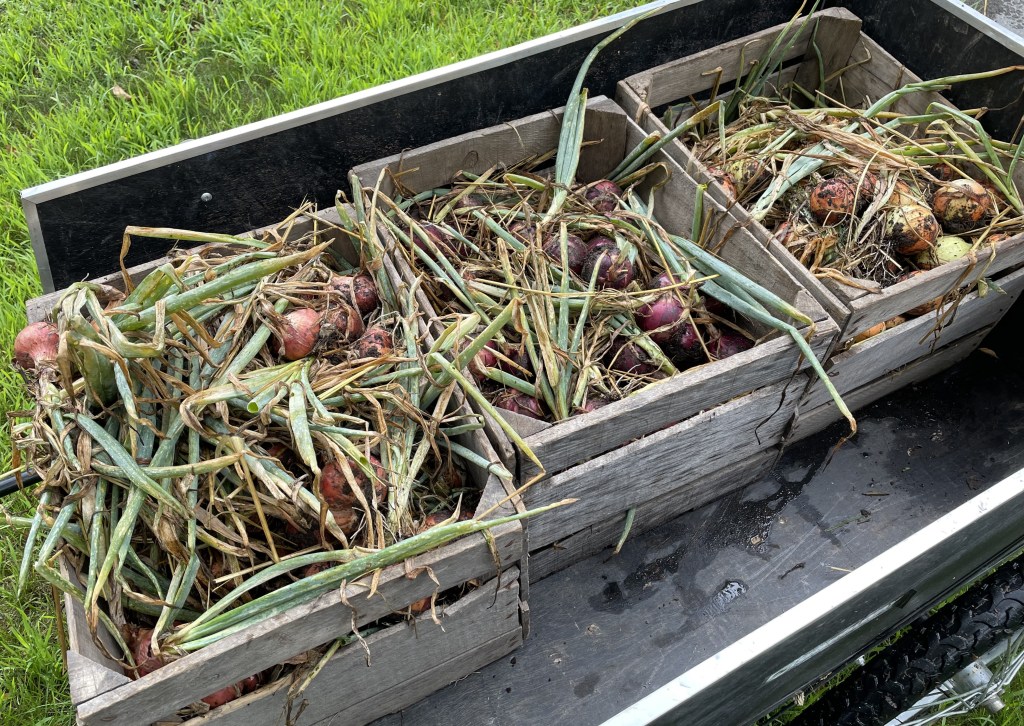
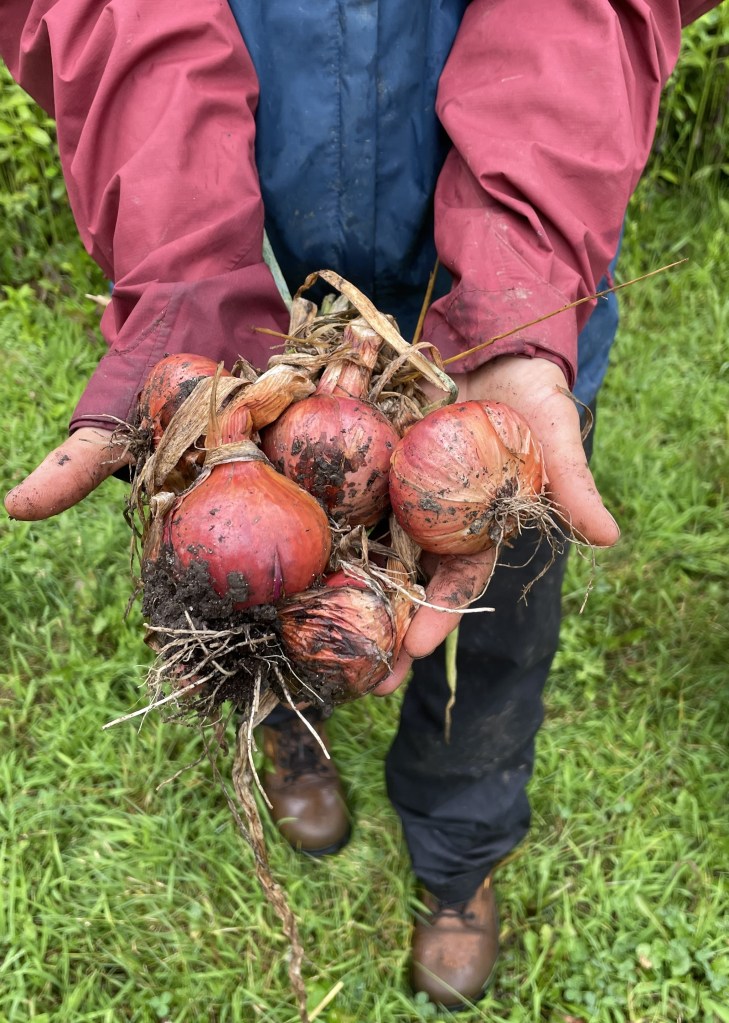
This week we will finish taming the tomatoes, weed the herb garden, and make pickles in between running Simon back and forth to football practice and getting ready for school to start. It is t-minus two weeks and counting, so these next fourteen days we will spend as much time together as we can, enjoying the last days of summer and crossing some fun things off of our summer bucket list.
Recipes
Deep Mexican Carrot Soup with Tomatillos and Lime // Uses Garlic, Tomatillos // Vegetarian
Fried Okra with Corn, Tomato, and Squash Sauté // Uses Cherry Tomatoes, Garlic, Okra, Scallions // Vegetarian
Ground Cherry and Vanilla Compote // Uses Ground Cherries // Vegetarian
Ground Cherry Torte // Uses Ground Cherries // Vegetarian
Sesame Cauliflower and Bell Peppers // Uses Green Peppers, Scallions (called Green Onions in recipe) // Vegetarian
Watermelon, Cucumber, and Husk Cherry Salad // Uses Cucumber, Ground Cherries (called Husk Cherries in recipe), Watermelon // Vegetarian
 Middle Fork Farm