Just when I thought that fall was here with its cooler temperatures, the hottest days of the summer arrive and prove me wrong. In my younger years, I reveled in the warmth of 90 degree days and I didn’t even mind so much when it topped 100. I remember happily wandering through the stone streets of Pompeii with nary a tree in sight during the Italian heat wave of 2007 when temps were well into the 100s while Erik huddled in the shade of a doorway and told me to come back for him later. Now my ideal temperature – especially for field work – is probably in the mid-60s. Is it my age or my profession which has changed me? Probably it’s a little of both.
What’s in My Box this Week?
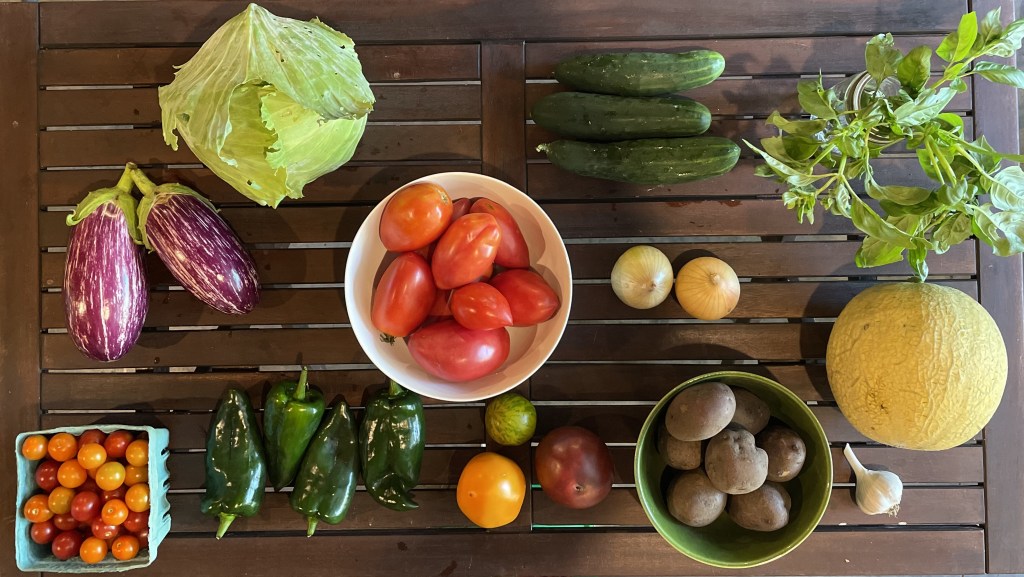
Basil – I know you got this last week, too, but I wanted you to have it in case you ended up making pasta or pizza sauce with your paste tomatoes and wanted some basil to put in it. Store with the stems in a glass of water on your counter out of direct sunlight. Do not store in the fridge as it will blacken immediately and wilt after that.
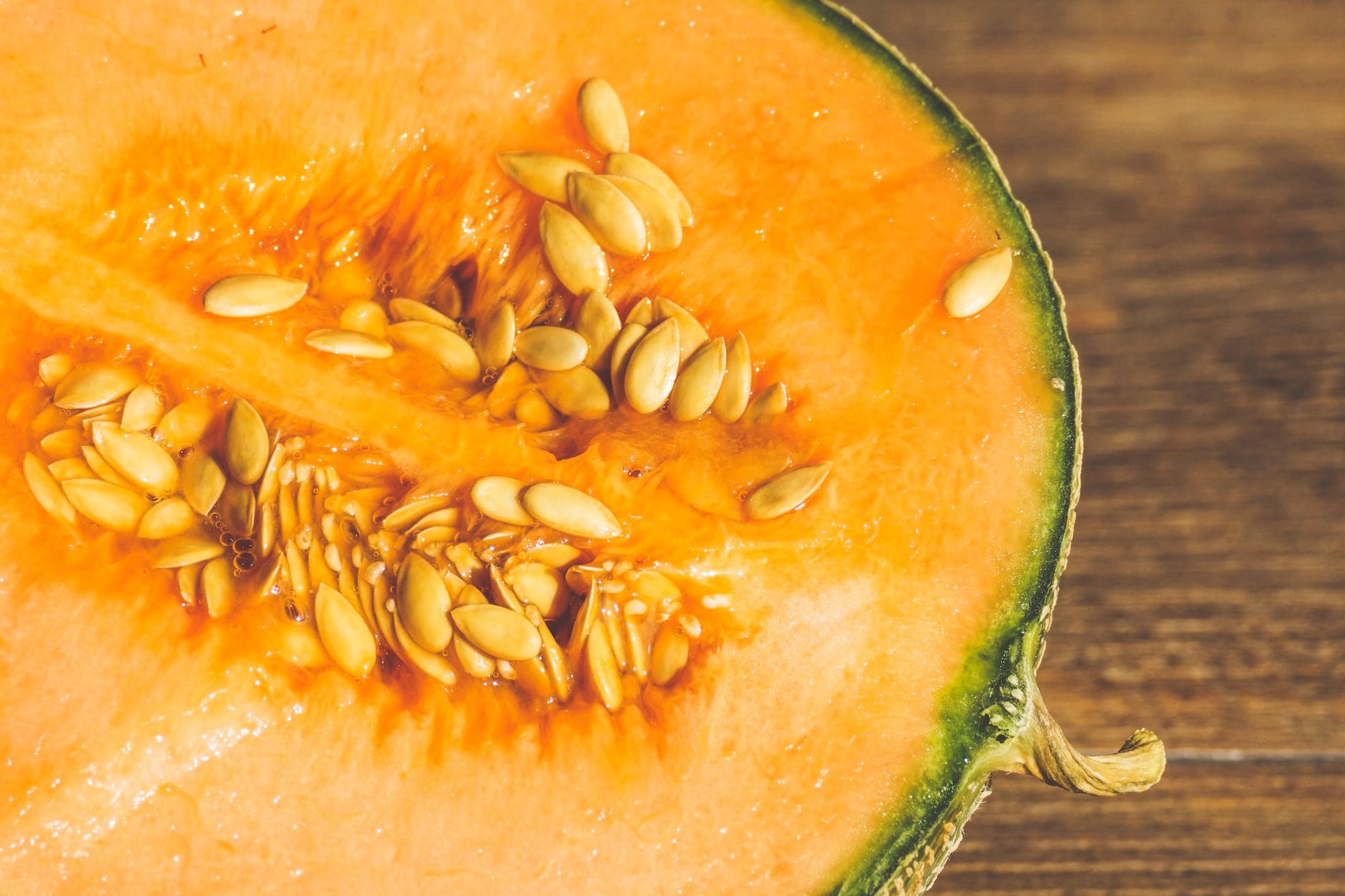
Cantaloupes (I think; some folks might get watermelon if the cantaloupe ripens up too quickly between now and Wednesday) – Place in the fridge until you’re ready to use them or they may get overripe fairly quickly. Store leftover melon in the fridge wrapped with plastic wrap. The flesh will dry out if left exposed. Use quickly.
Cherry or Saladette Tomatoes – Cherry tomatoes can over-ripen quickly, so it can be a good idea to store them in the fridge if you’re not going to eat them right away.
Eggplant – Eggplant is very perishable, so use it quickly or at least within the week. To store in the fridge, wrap it unwashed in a paper towel (not plastic) and keep in your crisper. You can also store it unrefrigerated at a cool room temperature.
English Cucumbers – Place in a sealed plastic bag in the crisper drawer of the refrigerator for up to a week.
Garlic – Keep in a dark, dry, well-ventilated place at a cool room temperature. It can keep for several months if stored appropriately. Warm temperatures will encourage the cured garlic to sprout which will reduce the quality of it.
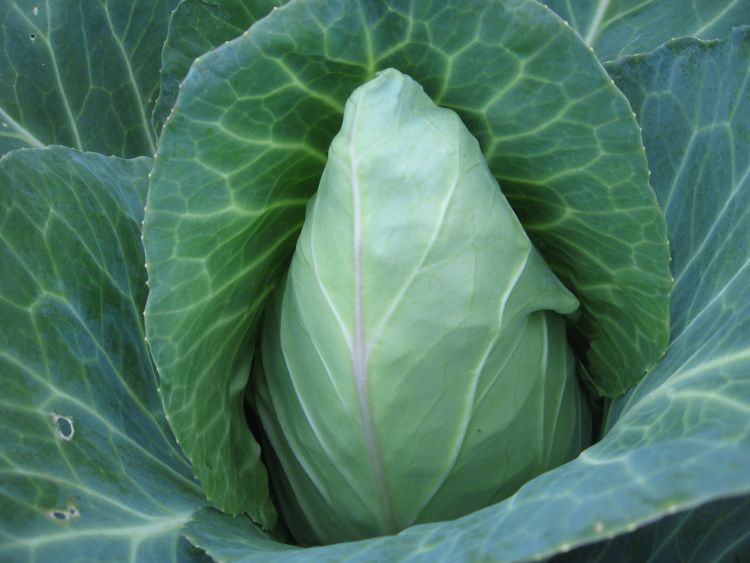
Green Cabbage (You will get either this or a Romanesco this week) – Cabbage can store for three weeks to two months, and it doesn’t require much special care to have it last this long. Just keep it in the crisper of your fridge and remove the two outer leaves before eating. (Photo: St. Clare Heirloom Seeds)
Heirloom Tomatoes –Store at room temperature for up to a week. Do not refrigerate.
Italian Frying Peppers (Large Shares Only) – Refrigerate peppers unwashed in a sealed plastic bag in the crisper drawer for one to two weeks.
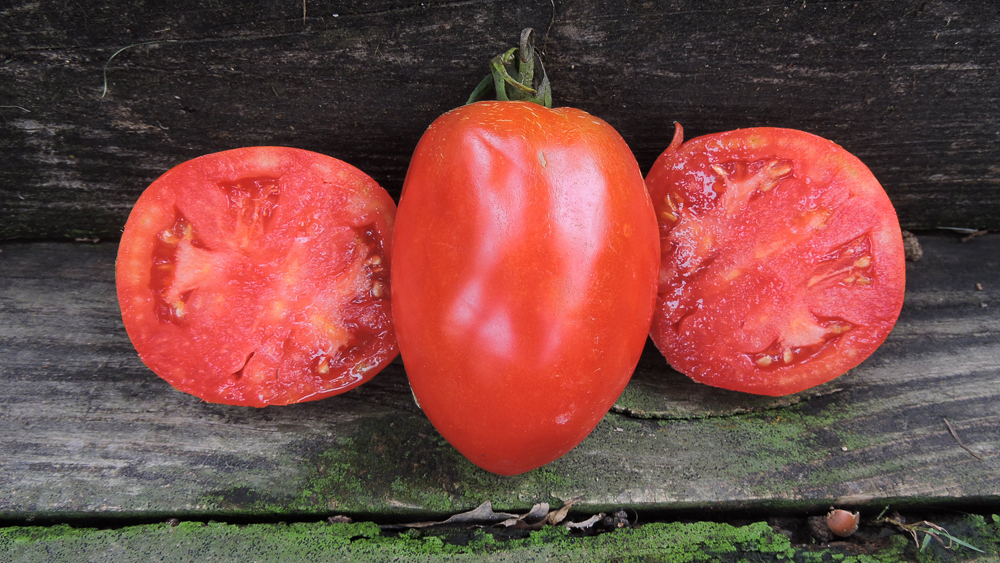
Paste Tomatoes – Paste tomatoes are primarily used for making sauces, although you can also slice them and use them fresh as well. This week you’re getting Salvaterra and Sheboygan paste tomatoes. Store at room temperature for up to a week. Do not refrigerate. (Photo: Seed Savers Exchange)
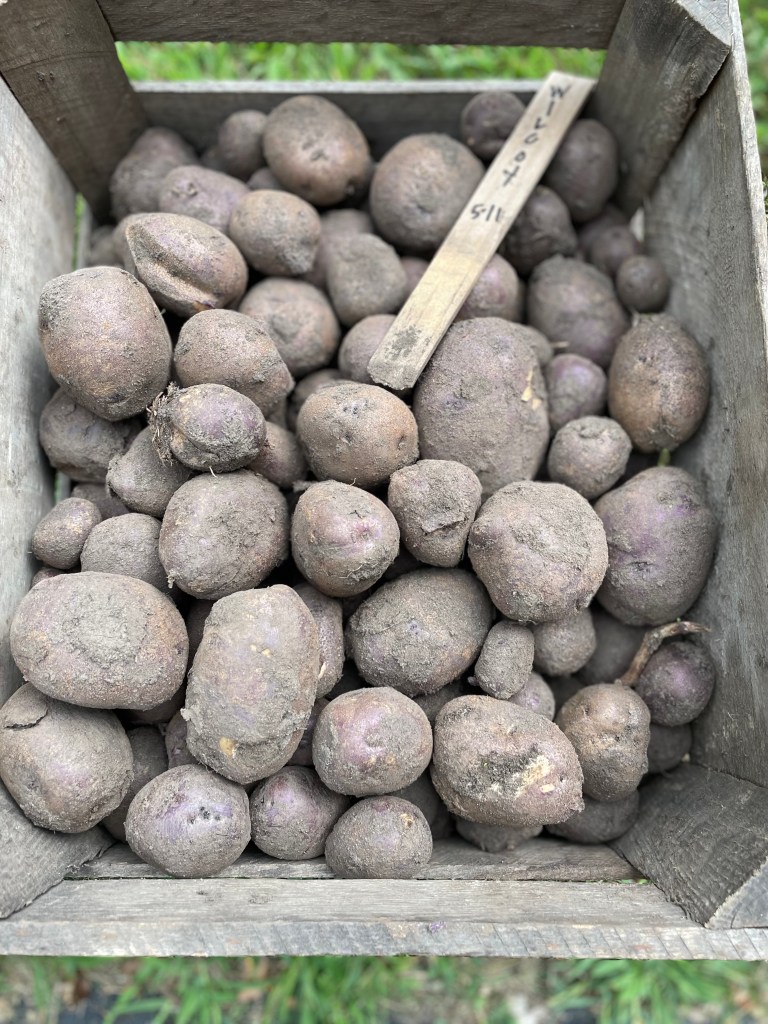
Peter Wilcox Potatoes – We were put on to these potatoes by the chef at Forager Brewery who asked us to grow them for him because his name was also Peter Wilcox. These potatoes are earthy-flavored and delicious roasted, boiled, sliced, or fried. They were recently harvested, so their skin is delicate; thus, I’m not going to wash them before giving them to you. Keep unwashed potatoes in a cool, dark, dry place, such as a loosely closed paper bag in a cupboard. They will keep for two weeks at room temperature. Light turns them green, and proximity to onions causes them to sprout. Don’t put them in the refrigerator, as low temperatures convert the starch to sugars.
Poblano Peppers (Standard Shares Only) – Refrigerate peppers unwashed in a sealed plastic bag in the crisper drawer for one to two weeks. You can also dehydrate peppers for long-term.
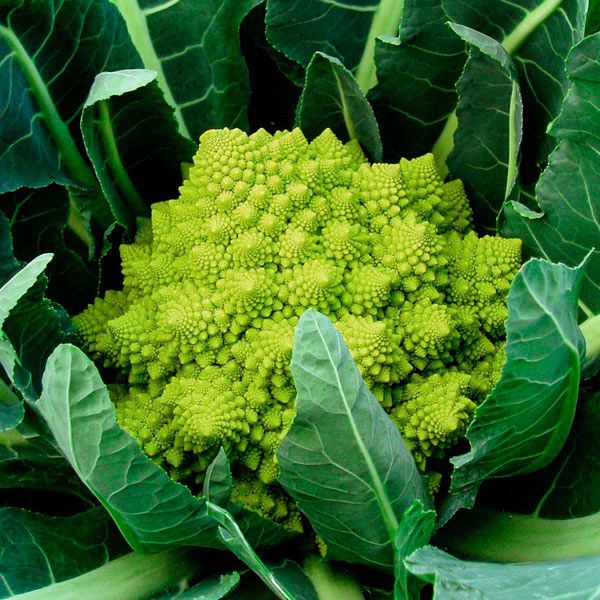
Romanesco (You will get either this or a green cabbage this week) – Wrap dry, unwashed Romanesco loosely in plastic and store it in the refrigerator for up to a week. (Photo: High Mowing Seeds)
Walla Walla Sweet Onions – Keep in a dark, dry, well-ventilated place at a cool room temperature.
Weekly Haiku by Simon
I know that last week I said everything was in good order down in the field and this was true because I had decided to give up on the ornamental herb garden this year. For some crazy reason, Simon and I decided that we were going to take it on after all this last week of summer vacation. He is in the photo below, believe it or not. Here is the haiku that resulted:

We have to weed herbs
It’s a whole jungle in there
I’m kind of lost now
Featured Veggie: Romanesco
Romanesco is a broccoli-cauliflower hybrid sure to make a mathematician swoon for this brassica is a fractal whose logarithmic spiraling allows for its buds to be so much more efficiently arranged that it can produce more seeds than another plant of the same size. (For those of you who do not have children under the age of 12 years who were obsessed with the movie “Frozen”, a fractal is a geometric figure made up of parts with the same visual and statistical characteristics as their whole.)
Romanesco got its name from, you guessed it, Rome which is the capital of the Lazio region in Italy where it is believed to have been developed. It is a hybrid cross between broccoli and cauliflower, but with a more mild, nuttier taste.
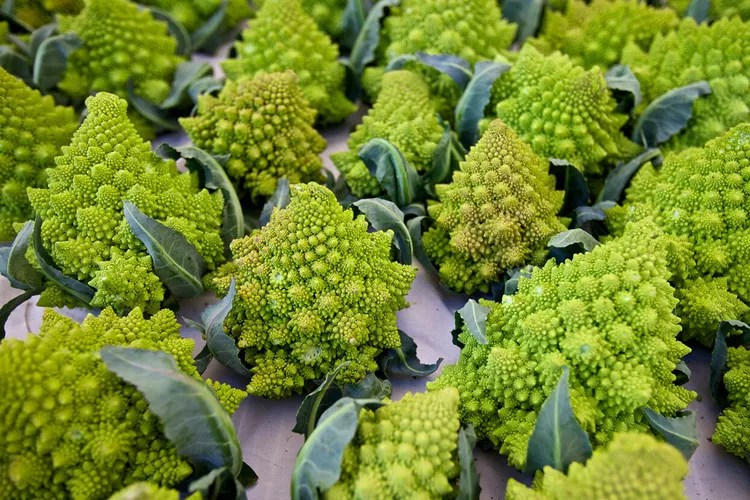
Romanesco can take a while to grow, and it prefers cooler temperatures; this is why it’s most often offered in CSA shares in the fall.
Notes from the Field
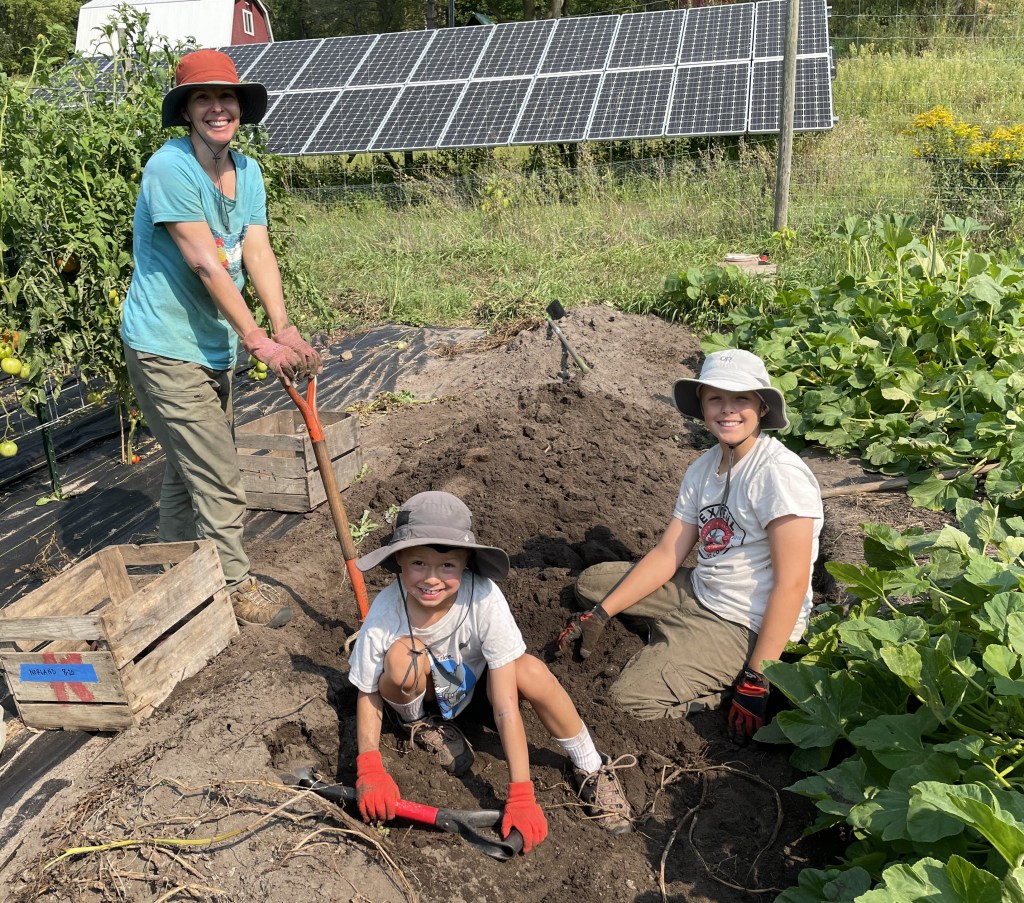
Things have mostly been quiet down in the field lately. We have been prepping for this week’s heat by putting shade cloth on some of the cool-weather plants and giving them long drinks of water. The cover crops have all germinated, and we dug half of the potatoes yesterday morning. Luka likes to pretend he is an aardvark for this task, thrusting his hands deep into the earth and seeing what he can discover. Inevitably, we each end up piercing through several potatoes with the pitchfork, but these just become our dinner, so we really don’t mind.
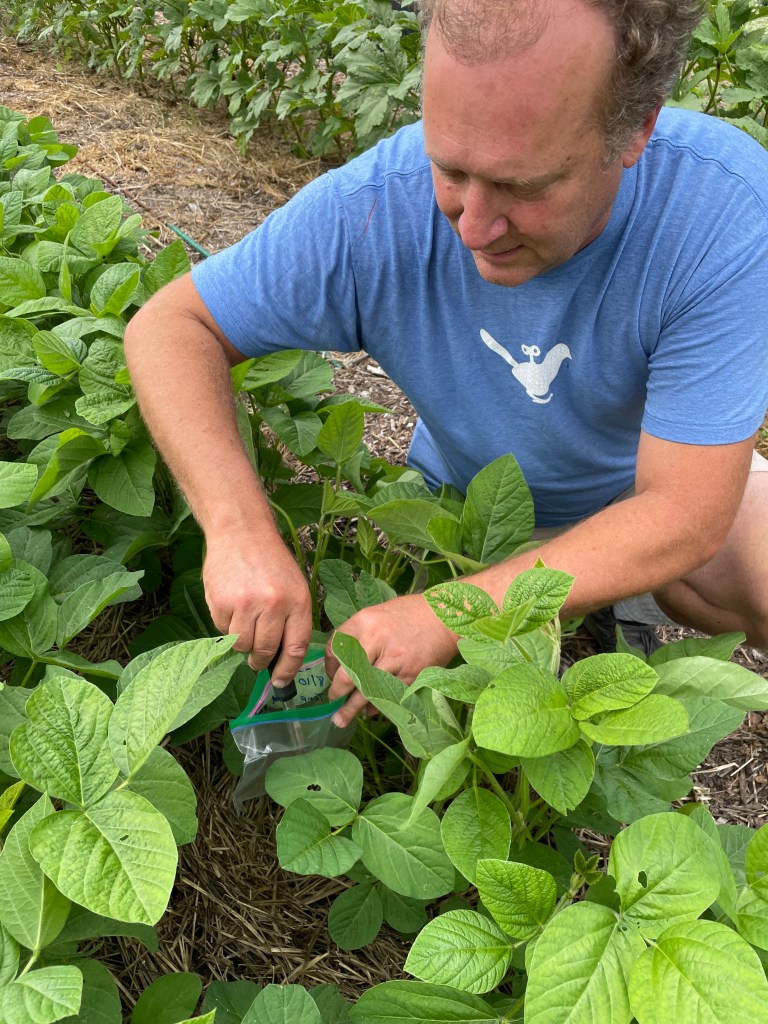
One morning last week, I was pleased to show Erik Harris from Clear View Regenerative Farms and Services around our various production and fallow fields. I met Erik last winter at a lecture on how to improve soil health by nurturing soil biology given by Dr. Elaine Ingram from the Soil Food Web School. Dr. Ingram wrote the USDA’s Soil Biology Primer, served as the chair of the Ecological Society of America, and was the chief scientist at The Rodale Institute which has been doing research into organic farming systems since the 1940s.
Erik had completed a series of Dr. Ingram’s courses, becoming a Certified Soil Food Web Technician, and he was looking for farms to volunteer their soil for testing. I jumped at the opportunity.
Dr. Ingram’s basic premise is that by improving the biology of our soils, our yields will increase, pests won’t attack the plants as much, and the crops will be better able to fend off disease. The goal is a soil microbiome that is so well-functioning as to negate the need for fertilizers or sprays or any of the other things that farmers use to treat problems in the field. It’s akin to building up the overall health of the system rather than treating the symptoms that result when things are out of balance.
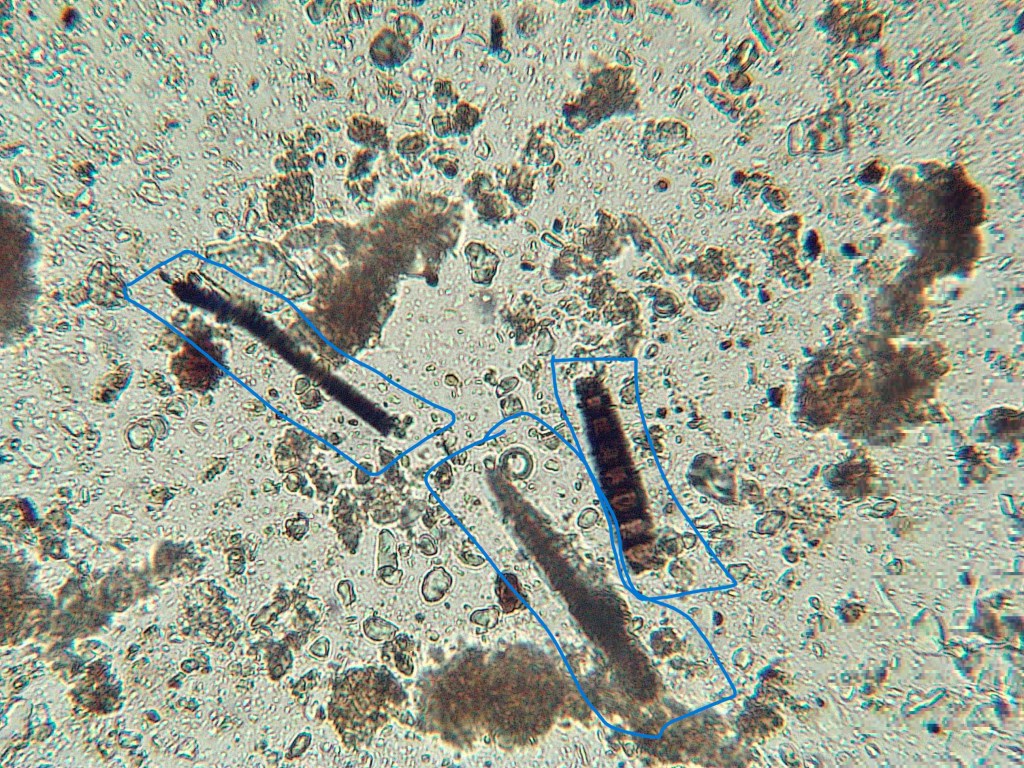
To that end, Erik kindly took around seven different soil samples, brought them home, and looked at each of them under the microscope. We wanted to compare areas that were currently being tarped to those that were tarped two years ago to those which have been in cover crops for the better part of a decade now to those which hadn’t been tilled in a long time. If all was functioning as it should, then we would see certain numbers of beneficial soil-dwelling fungi, bacteria, protozoa, and nematodes. Here are some photos of the critters we were looking for: The first shows a fungal filament and the second an amoeba.
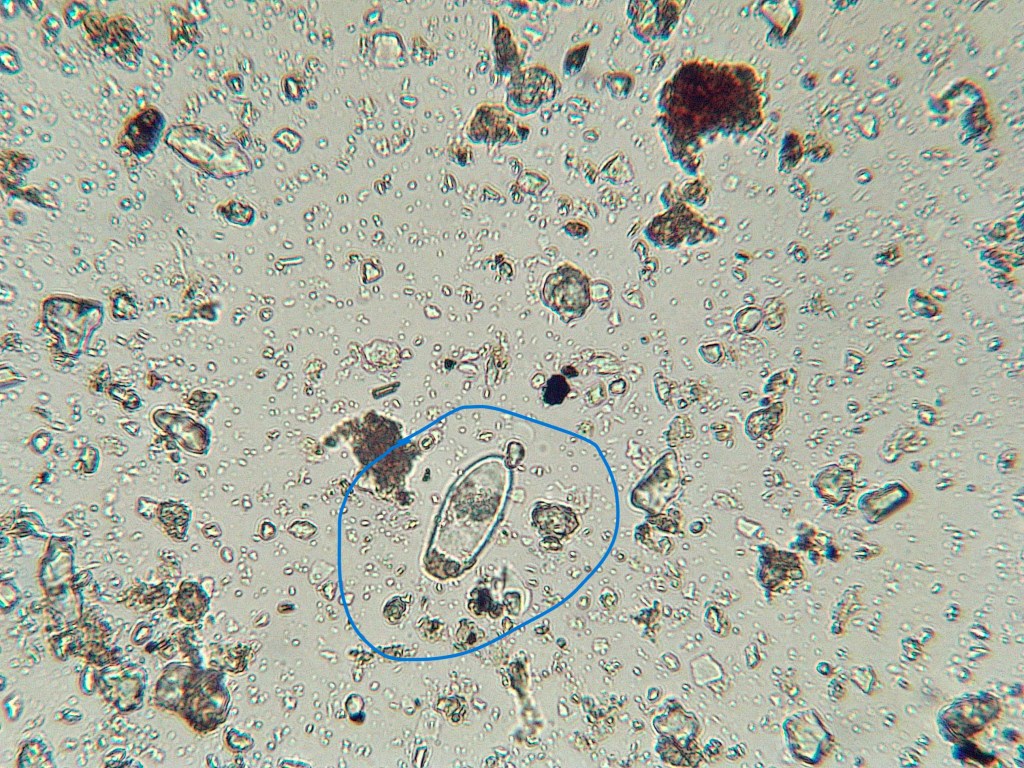
I won’t go into all the nitty gritty, but our numbers could be better and we still have some work to do. I was a little disappointed in the results, but I’m told they are pretty typical for a field like ours which had been farmed conventionally for decades prior to our taking it over. (We are also not sure how the drought might be impacting the biology this year; it will be interesting to take some samples again when soil moisture conditions are improved.) Still, it’s good to have a baseline from which to work, and we’re up for the challenge. I have some ideas in mind for how to move forward, but I think I’ll save sharing those for another newsletter sometime.
Recipes
Cantaloupe Salad with Thai Basil and Chili // Uses Cantaloupe, Thai Basil (substitute regular basil instead) // Vegetarian
Garlic and Lemon Roasted Romanesco Cauliflower // Uses Garlic, Romanesco
Green Cabbage Cucumber Salad // Uses Cabbage, Cucumbers // Vegetarian
Old-Fashioned Onion Rings // Uses Walla Walla Onions // Vegetarian
Pan Roasted Romanesco with Hazelnuts and Crispy Bits // Uses Romanesco
Stir-Fried Quinoa with Eggplant and Cabbage // Uses Cabbage, Eggplant, Garlic, Onion // Vegetarian
Sweet and Tangy No Mayo Coleslaw with Celery Seed and Mustard // Uses Green Cabbage, Sweet Onion // Vegetarian
 Middle Fork Farm