
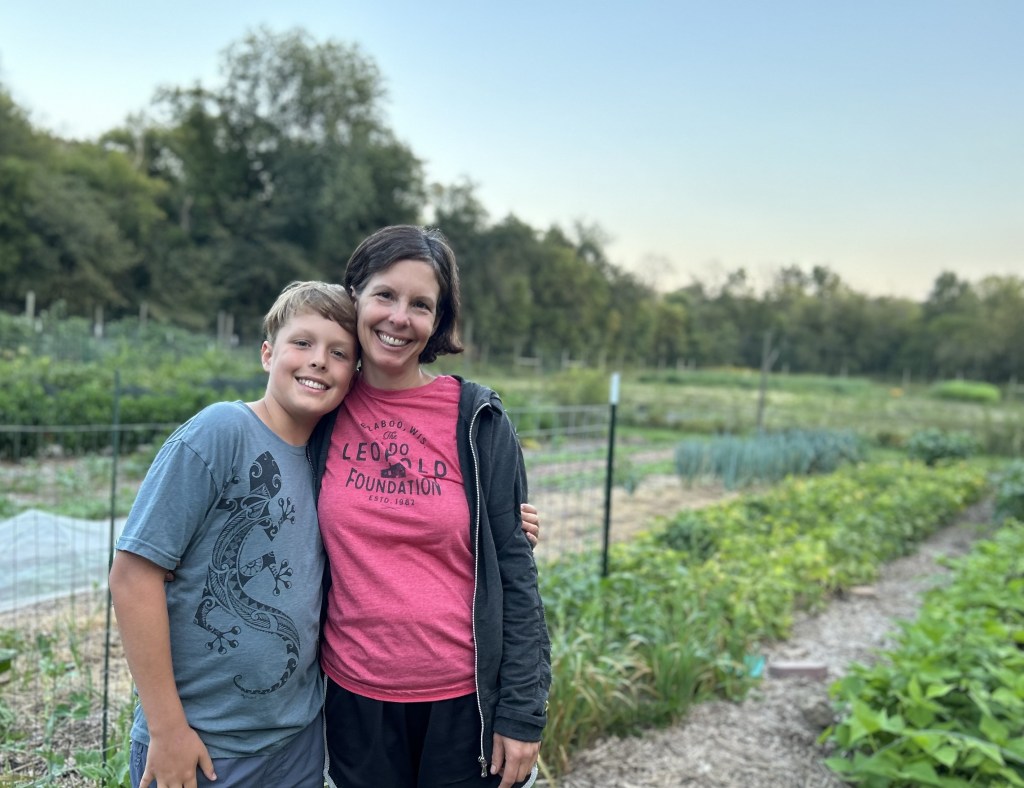
Today I am in denial as Simon starts high school for the first time. The end of the summer always has me reflecting upon the passage of time and this is even more the case this year now that we have a freshman in the house. I am so, so grateful that I hired Simon to work with me on the farm this summer, not just because he had a good work ethic and I couldn’t have kept up with things without him, but because we got to spend so much one-on-one time together which seems to happen less often the older he becomes. I especially benefited from his sense of humor, his more relaxed approach to life, and his ability to put things into perspective whenever I started to get anxious that we were behind or that something wasn’t growing like I wanted it to. Our favorite times were on harvesting and packing days when we would see the fruits of our labor (literally!) all spread out before us, waiting to go into your boxes. I will miss him in the field and in the barn the next six weeks, but I’m also excited for him as he starts this new phase of his life. Thank you, Simon, for a great summer and for all of your hard work! You make your mom proud!
What’s in My Box this Week?
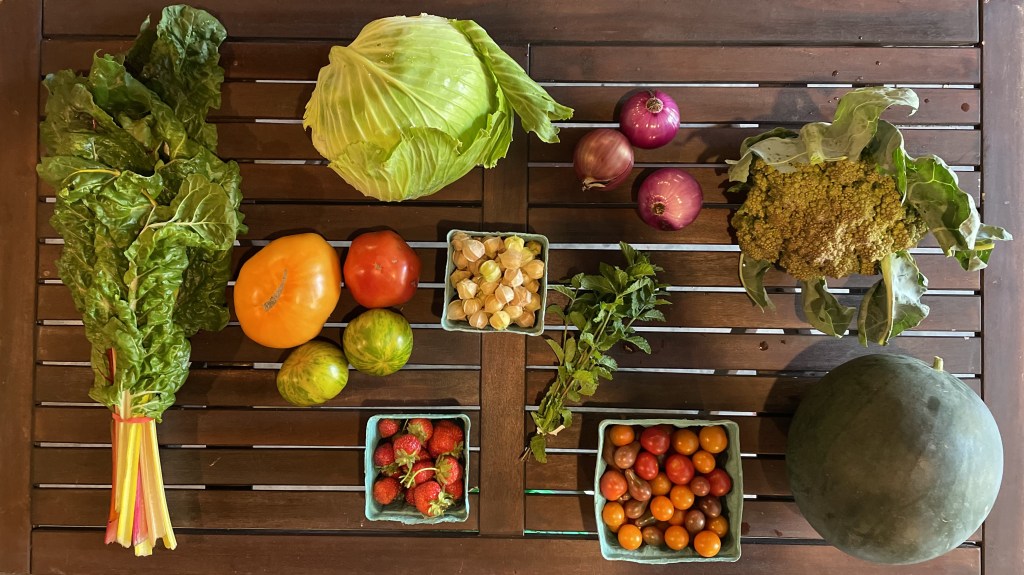
Cherry or Saladette Tomatoes – Cherry tomatoes can over-ripen quickly, so it can be a good idea to store them in the fridge if you’re not going to eat them right away.
Green Cabbage (You will get either this or a Romanesco this week) – Cabbage can store for three weeks to two months, and it doesn’t require much special care to have it last this long. Just keep it in the crisper of your fridge and remove the two outer leaves before eating.
Ground Cherries (Maybe! We’ll have to see how they fared after last week’s heat wave once we get closer to Thursday) – Store in their husks in a paper bag in the refrigerator for seven days.
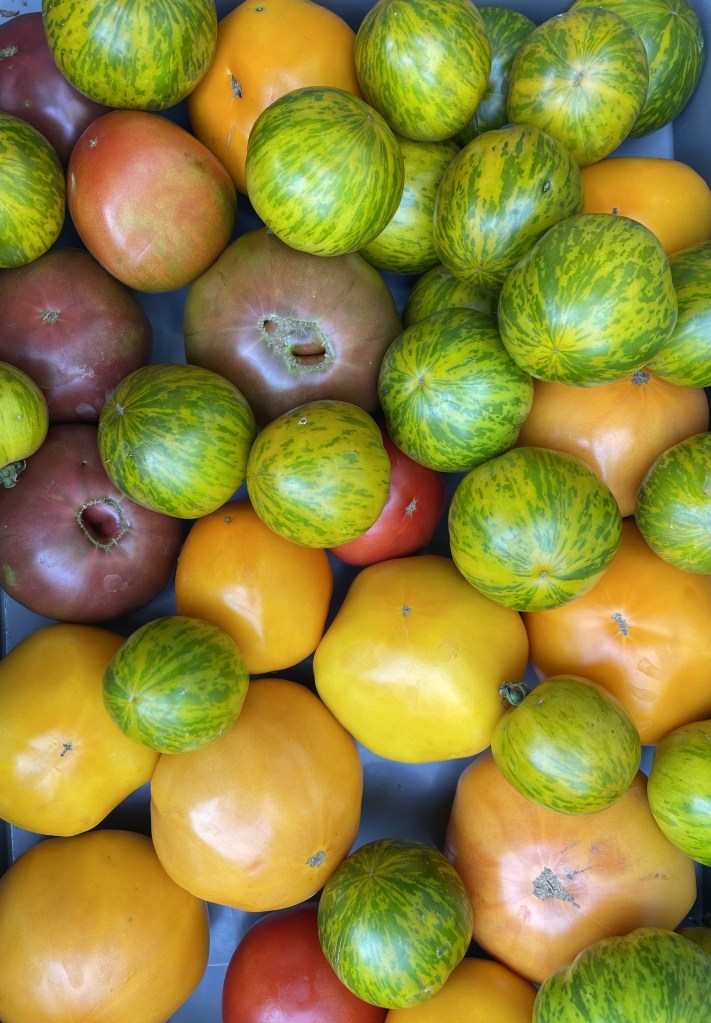
Heirloom Tomatoes –Store at room temperature for up to a week. Do not refrigerate.
Jalapeno Peppers – I wasn’t planning on including these, but then I remembered the watermelon salad recipe I shared below and thought I’d go ahead and include them. Refrigerate peppers unwashed in a sealed plastic bag in the crisper drawer for one to two weeks.
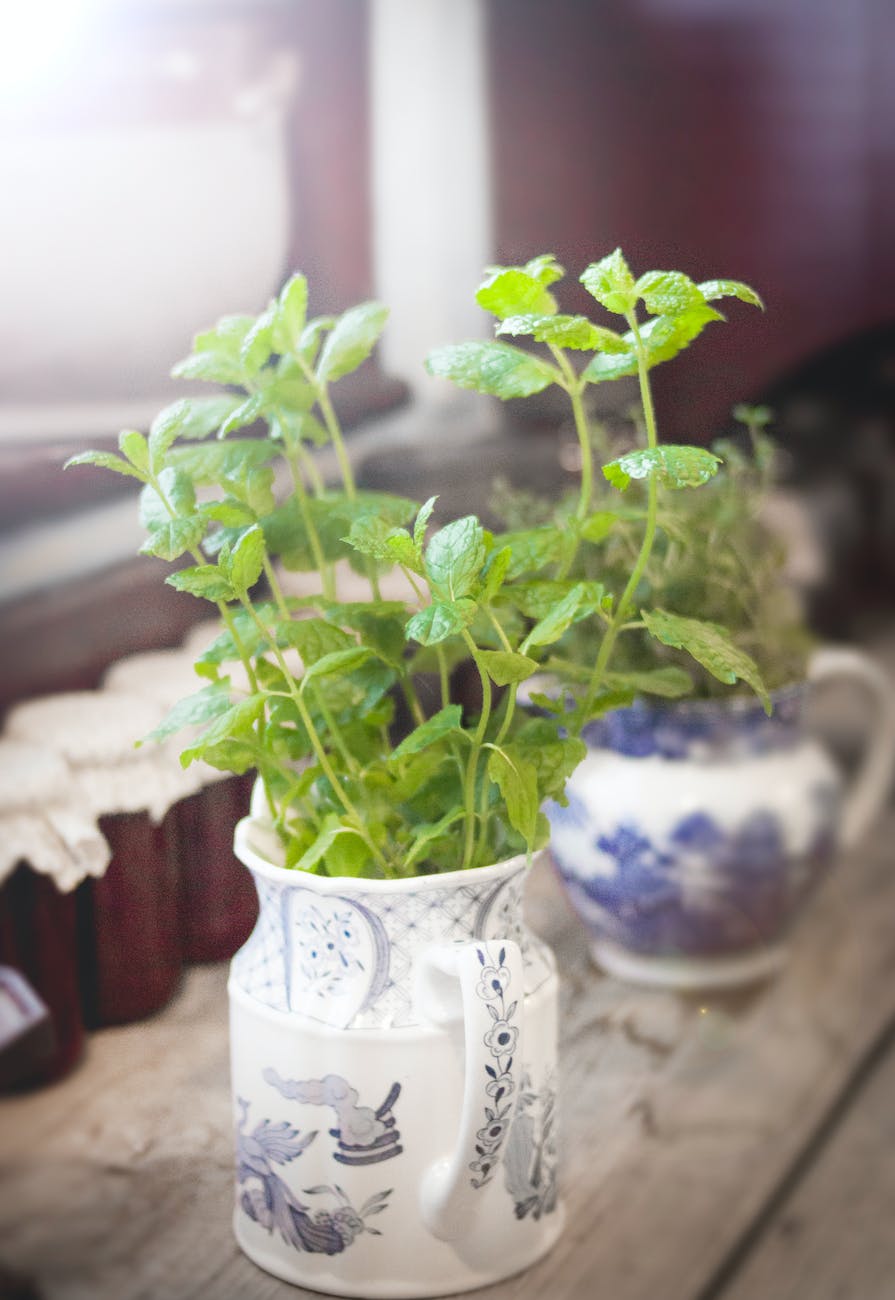
Mint – For best storage, place in a small glass or jar (stem side down) in about an inch of water.
Poblano Peppers (Large Shares Only) – Refrigerate peppers unwashed in a sealed plastic bag in the crisper drawer for one to two weeks. You can also dehydrate peppers for long-term.
Rainbow Chard – Wash the chard only right before using. To store, place in a plastic bag with most of the air removed and put in the fridge. It is best used within a few days. You can also freeze chard and use in dishes later.
Romanesco (You will get either this or a green cabbage this week) – Wrap dry, unwashed Romanesco loosely in plastic and store it in the refrigerator for up to a week.
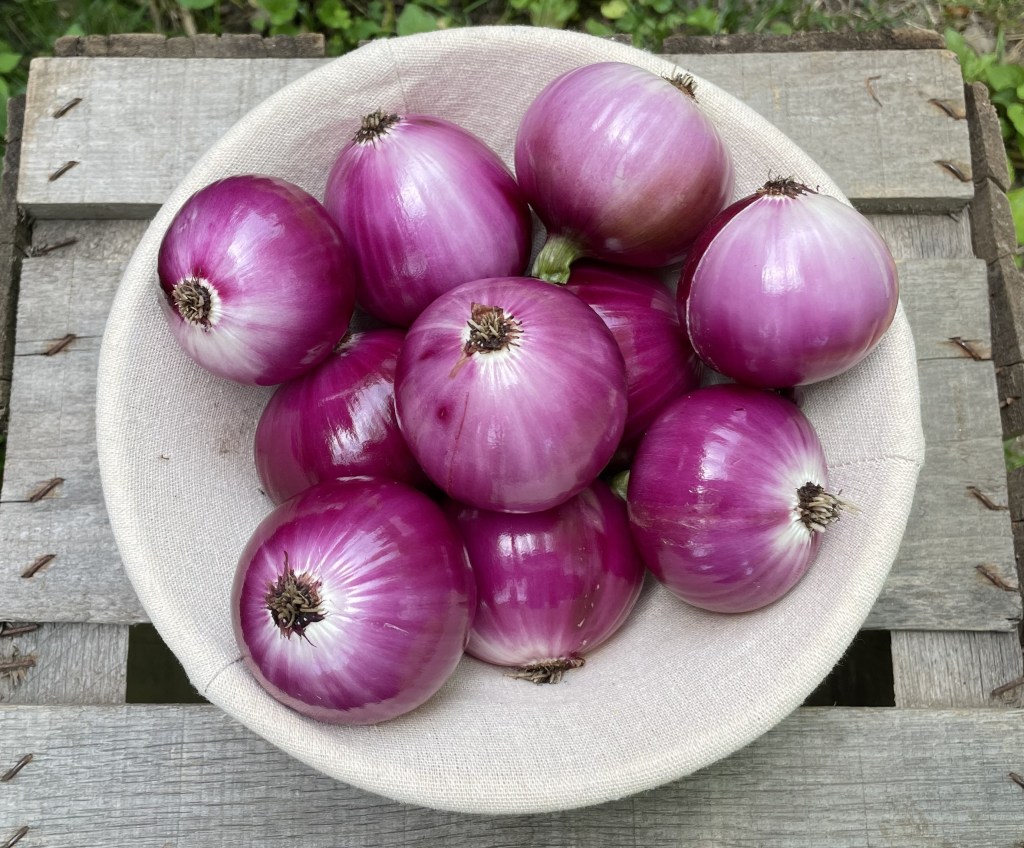
Red Onions – Keep in a dark, dry, well-ventilated place at a cool room temperature.
Strawberries – It is a long shot, but we might just have enough for a small pint’s worth. We planted a new type of strawberry this year that produces once in June and once again in late summer/early fall. We’ve been getting some decent-sized berries this past week and I just watered them again, so if all goes well, we’ll include these in your box this week. To store, put your berries in an airtight containers in your fridge where they will keep for up to five days. Do not wash until you eat them.
Watermelon – To store, refrigerate right away as watermelons don’t continue to ripen once picked. Cut melon should be covered in plastic wrap, and chunks or slices should be kept in an airtight container. Eat melons within a week.
Featured Veggie: Watermelon
Seeded or seedless? Red, orange, or yellow? As large as a baby or icebox-sized? Striped or solid-colored? Dark green or light green? The varieties of watermelon seem endless. This week you’re getting a variety called “Blacktail Mountain” which was developed in northern Idaho to withstand nighttime temperatures in the 40s. Taking just 70 to 75 days to mature, this watermelon ripens quickly relative to most watermelons which is helpful in Minnesota where our summers are fleeting. It is also Luka’s favorite fruit, so we make sure to grow a lot of it.

Archaeological remains of watermelons, mostly seeds, that date from 5000 years ago have been found in northeastern Africa where they likely originated and were then domesticated. The flesh of wild watermelons is watery, hard-textured, pale-coloured and bland or bitter. Researchers believe that the watermelons we enjoy nowadays originated from a single ancestral population as they have a fairly narrow genetic base.
Watermelons are notoriously tricky to harvest. There are all sorts of “rules” to follow to know when a watermelon is ready for picking, but it seems to be as much of an art as it is a science to get it right. Unlike cantaloupes which slip off their vines when they’re mature, farmers look for other signs of ripeness on watermelons to determine when to harvest them. The first is that they have a hollow sound when you knock on them. The second is that they have a bright yellow spot on the portion of their rind that was sitting on the ground. The third is that the tendril nearest the fruit has died back. Even then, it’s not infrequent that I pick the first few earlier than I should. (This is usually at the urging of my kids.) They are still a little sweet when I do that, but their flesh is white instead of the red or yellow I’m aiming for. Luckily, we have a bumper crop of watermelon this year, so if I’m premature in my harvesting this week, we’ll have another shot at getting it right the next.
Notes from the Field
I am a horribly impatient person and this is a challenging trait for a farmer. Every spring, I stick seeds in the ground, making sure that the soil temperature is ideal for germination and watering them in, only to wonder just days later whether I should reseed because no seedlings have yet appeared. Simon then reminds me that I ought to check the “days to germination” chart and sure enough, I’ve usually gotten too far ahead of myself and if I just wait a few more days, something usually pops up.
I am also pretty restless when it come to waiting for things to ripen. I have numerous planning spreadsheets that I use to determine exactly when I want a crop to be ready for the CSA, but any number of things can happen – usually weather, pest, or disease-related – that can slow things down. This is why it’s good to always have a lot of things growing in the field at the same time. Farming is a little bit about hedging one’s bets.

Two crops that always takes longer to ripen than I want are the red and orange sweet peppers and the red and yellow Italian frying peppers. These get started in the greenhouse way back in April and although I select for short-season varieties, they still like to take their sweet (no pun intended) time.
Last week while I was sitting out the heatwave indoors, I started to wonder if there was something I could do to speed them along. I did some internet-surfing and decided to try out some of the recommendations I found to see if I can get the peppers to ripen more quickly this year.
Don’t get me wrong. I like green peppers, but these are just the immature stage of colored, sweet peppers and as such aren’t as delicious or as nutritious as when they’re fully ripe. That being said, it sounds like I ought to be removing more green peppers than I usually do so that the plants have increased energy available to ripen the remaining peppers, and this is why you received green peppers last week.
I mean, seriously: look at how many green peppers are on this one plant!
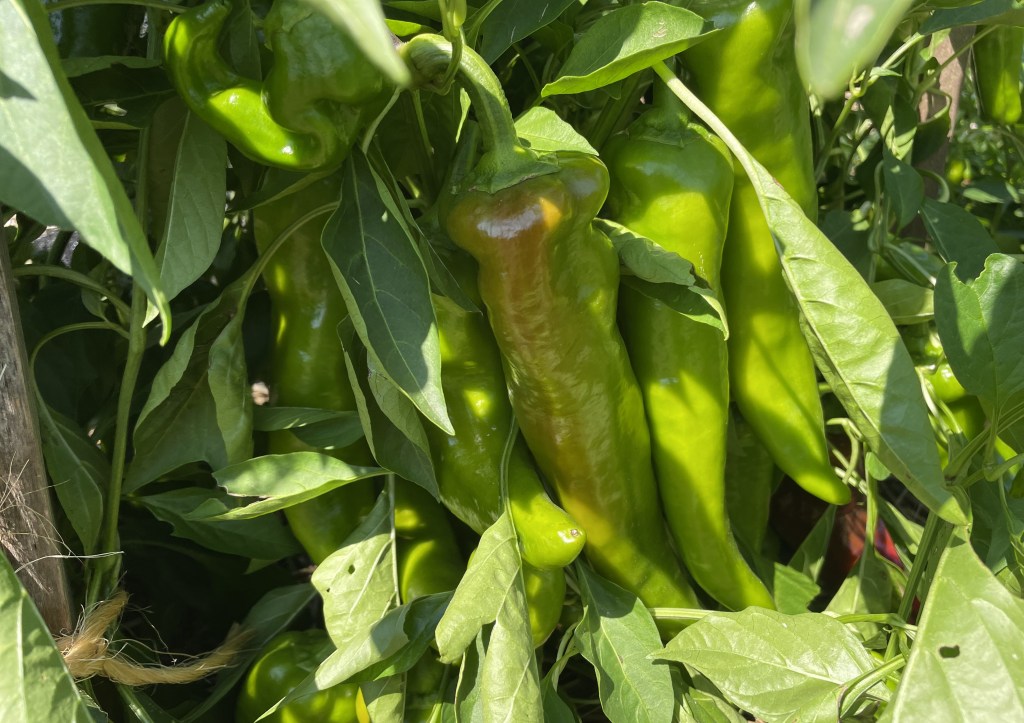
After harvesting some green peppers, I also nipped off any small flowers and tiny fruits, for essentially the same reason. I don’t want the plant putting any more energy into making more fruits at the expense of ripening the ones that are already of good size. Plus, these small fruits wouldn’t have enough time to grow and ripen before the first fall frost anyway, so it’s not such a sacrifice.
Finally, I covered the peppers with shade cloth to reduce the amount of direct sun hitting the fruit. This felt counterintuitive to me because I know peppers typically like warmer conditions, but sometimes the fruit – if it’s not directly underneath a leaf – can become sunburned (with veggies, it’s called “sunscald”) and all the energy that the plant made growing it is then wasted as the fruit will start to rot.
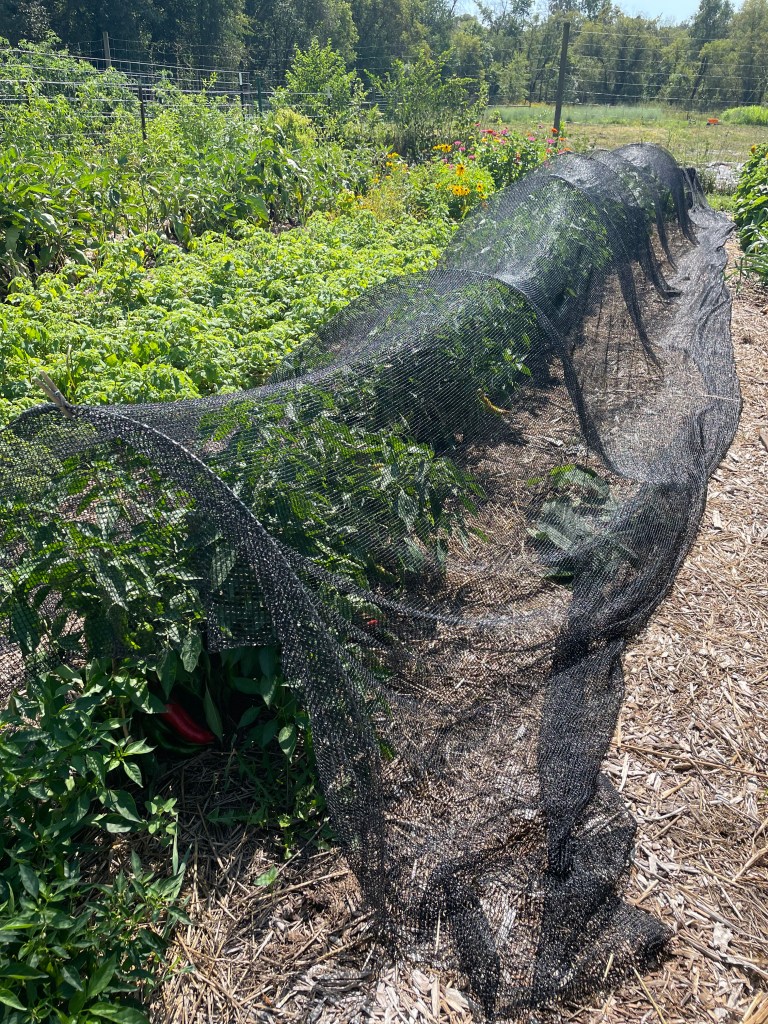
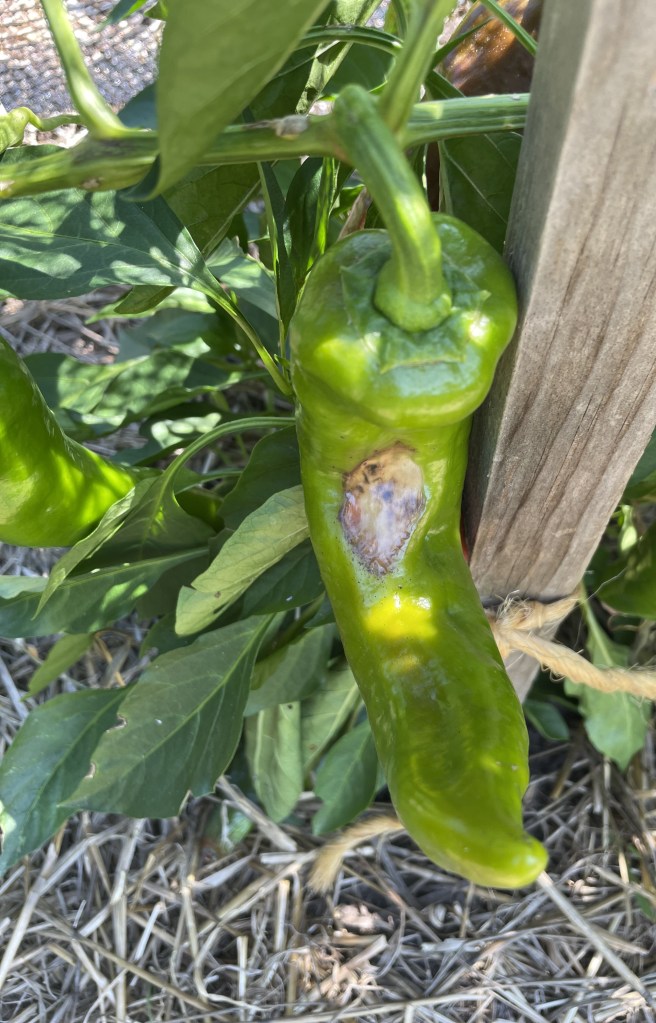
I know that some of you are also anxious for these delicious veggies to ripen up and we only have six weeks left, but I think we’ll make it!
Recipes
For the adults on Labor Day weekend: Boozy Watermelon Mint Lemonade // Uses Cucumber (if you have some from last week), Mint, Watermelon // Vegetarian
And for the kids: Watermelon Lemonade // Uses Mint, Watermelon // Vegetarian
Chard Cauliflower Carrot Wraps // Uses Cauliflower (substitute Romanesco), Chard // Vegetarian
Creamy Poblano Chicken Enchiladas // Uses Poblano Peppers
Roasted Romanesco with Turmeric Tahini Sauce // Uses Romanesco // Vegetarian
Watermelon Salad with Feta // Uses Cucumber and Garlic (if you have some left from last week), Jalapeno Peppers, Mint, Red Onion, Watermelon // Vegetarian
 Middle Fork Farm