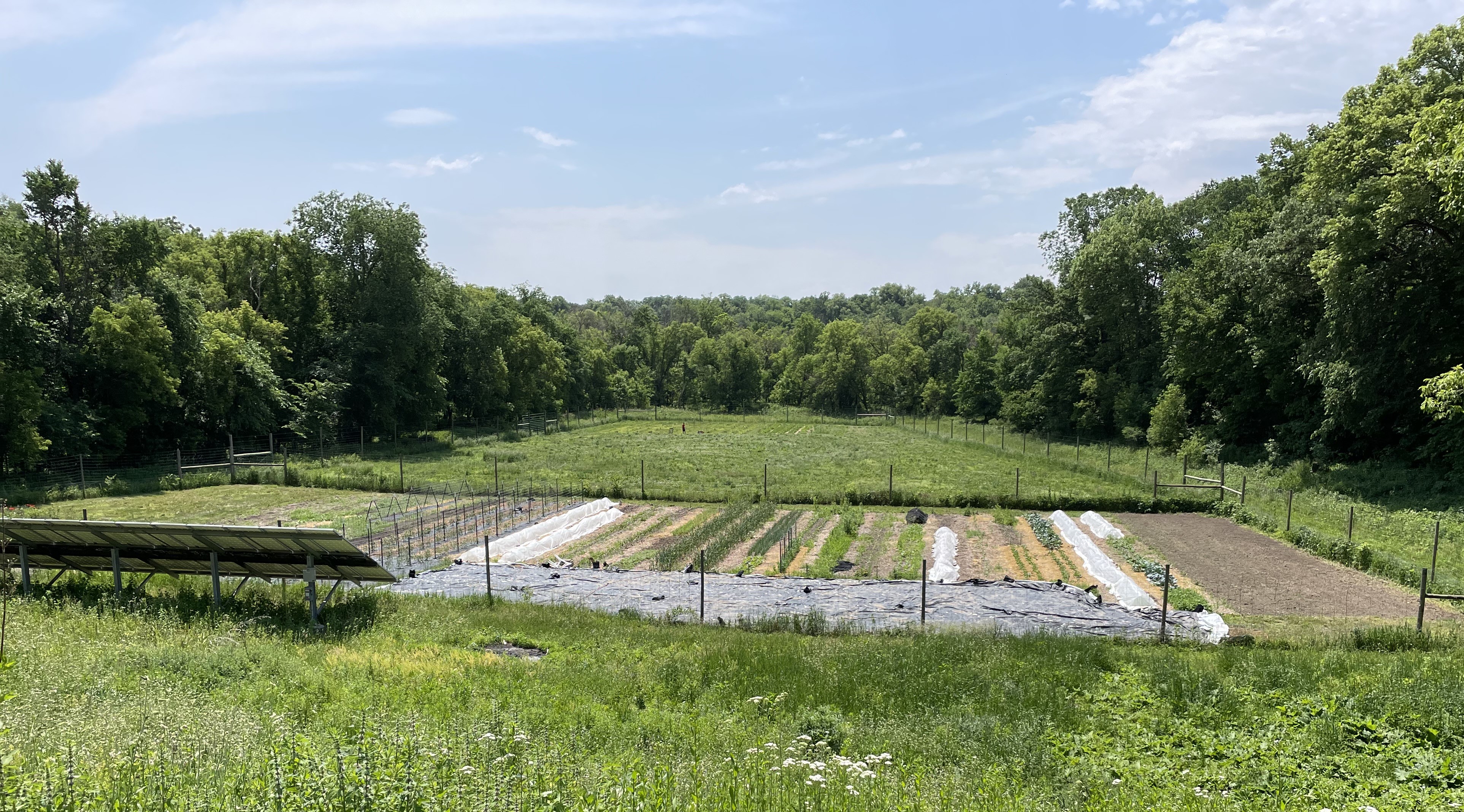
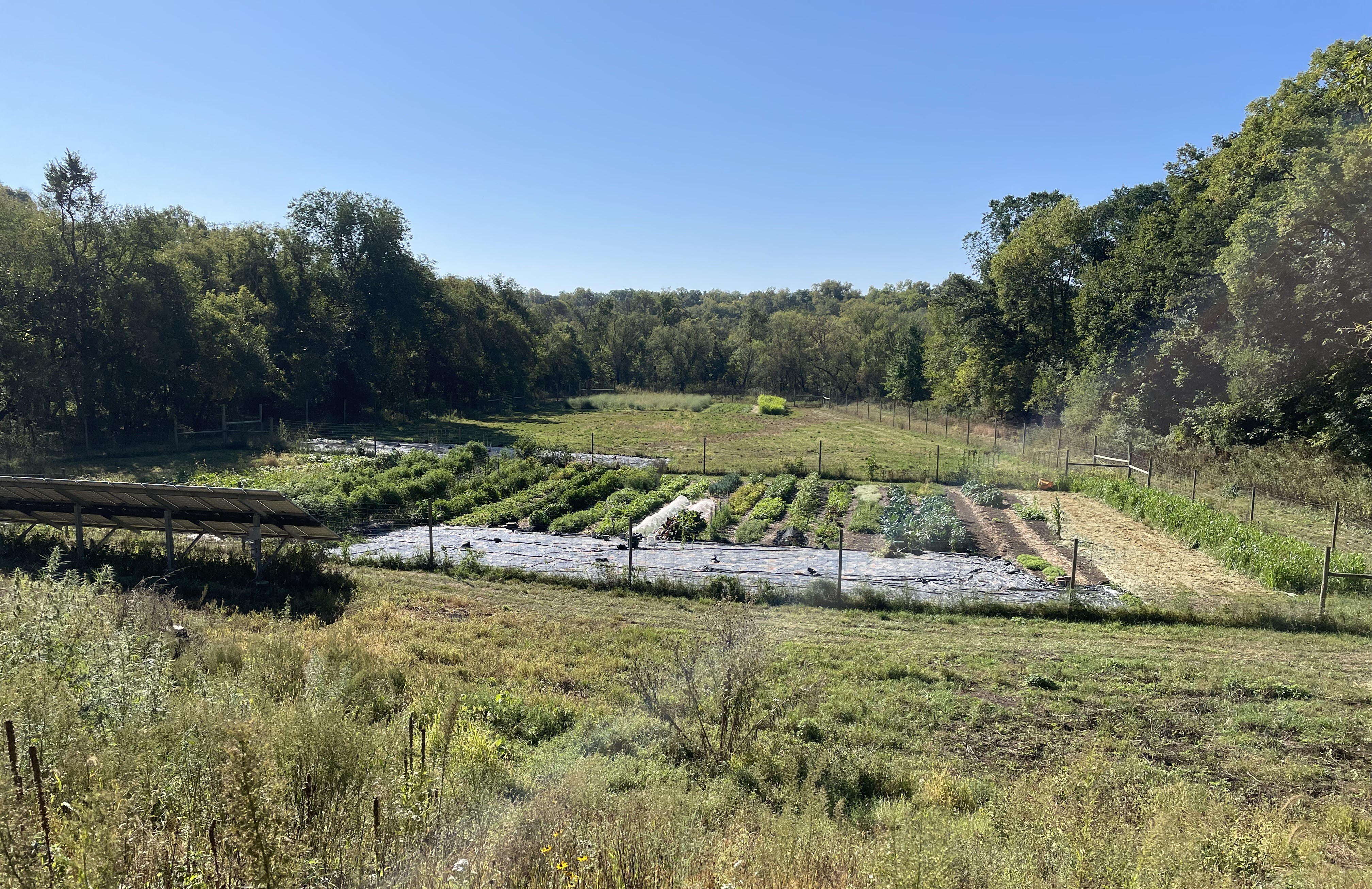
This morning I was thinking about how quickly the rhythm of one’s days can change on a farm. Things are definitely slowing down more and more these days. The sense of excitement and urgency that always begins a farming season in the spring when there is so much to do has largely been replaced by feelings of calm and satisfaction. It’s the time of year when I can really take my time in the field, steadily plugging away at field tasks and not worrying so much if they don’t end up getting done that day. I turn the radio on, listen to the music of my youth, and enjoy the fact that any growing that remains to be done is largely up to the plants at this point.
What’s in My Box this Week?
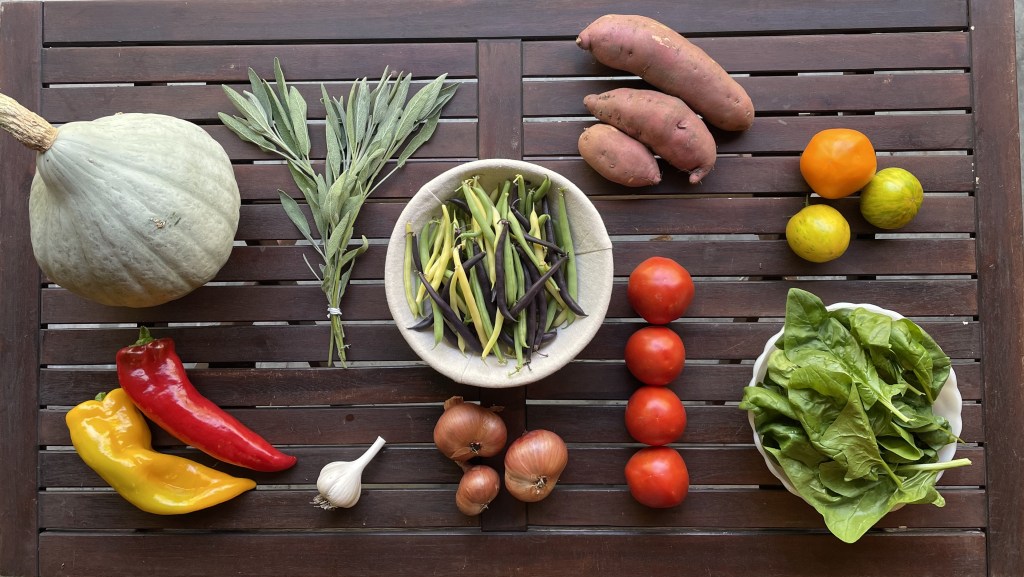
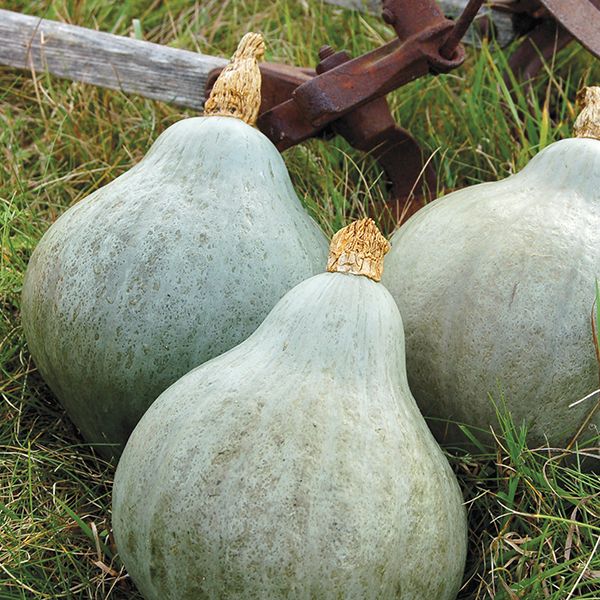
Baby Blue Hubbard Squash (I am pretty sure all shares will get one of these.) – Since these are freshly harvested, it would be worth it to set them out in a warm, sunny spot in your house for about five to seven days to cure them and develop their sugars. Waiting even a few weeks longer to eat them will further sweeten them up. (Unfortunately the CSA doesn’t go that long or we would do this for you.)
After this, store them in a cool, dry place and try to use within a few months. Do not store in the fridge. This will cause it to spoil much more quickly. (Photo: High Mowing Seeds)
Carrots (Large Shares and Some Standard Shares) – Remove the green tops as soon as you can, leaving about an inch of stems, and place the roots in a plastic bag in the crisper drawer of your refrigerator. They will last for several weeks. You can also store them in a bin of water to keep them crisp, changing out the water every few days. Save the tops in a plastic bag and use them in salads and other dishes.
Garlic – Keep in a dark, dry, well-ventilated place at a cool room temperature. Keep in a dark, dry, well-ventilated place at a cool room temperature.
Green Cabbage (Some Standard Shares Who are Still Owed One of These) – Cabbage can store for three weeks to two months, and it doesn’t require much special care to have it last this long. Just keep it in the crisper of your fridge and remove the two outer leaves before eating. (These leaves are used to help store the cabbage.)
Italian Frying Peppers or Sweet Bell Peppers – Refrigerate peppers unwashed in a sealed plastic bag in the crisper drawer for one to two weeks.
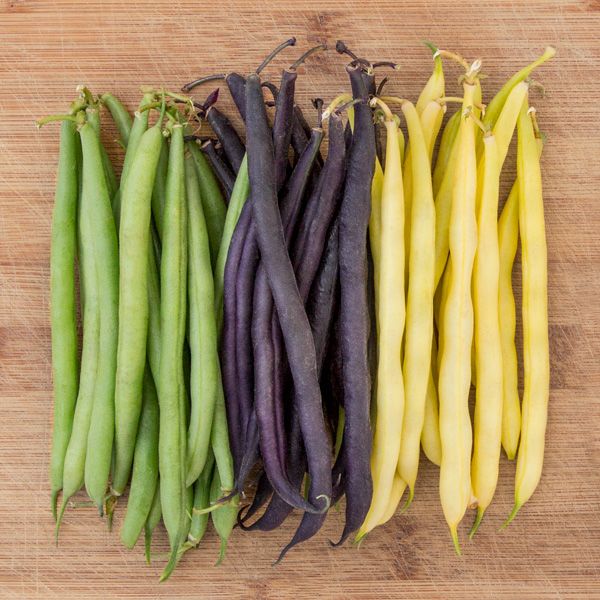
Mardi Gras Beans (Standard Shares who don’t receive spinach) – Treat these as you would fresh green beans. Purple beans will turn green when you cook them. Refrigerate in a plastic bag and use within a week. (Photo: High Mowing Seeds)
Romanesco (Some Standard Shares Who are Still Owed One of These) – Wrap dry, unwashed Romanesco loosely in plastic and store it in the refrigerator for up to a week.
Sage – To store, wrap the sage leaves in paper towels and put them in a plastic bag in the refrigerator. Make sure to use the leaves within four to five days. Fresh leaves that are covered in olive oil can be stored for much longer in the refrigerator, about three weeks.
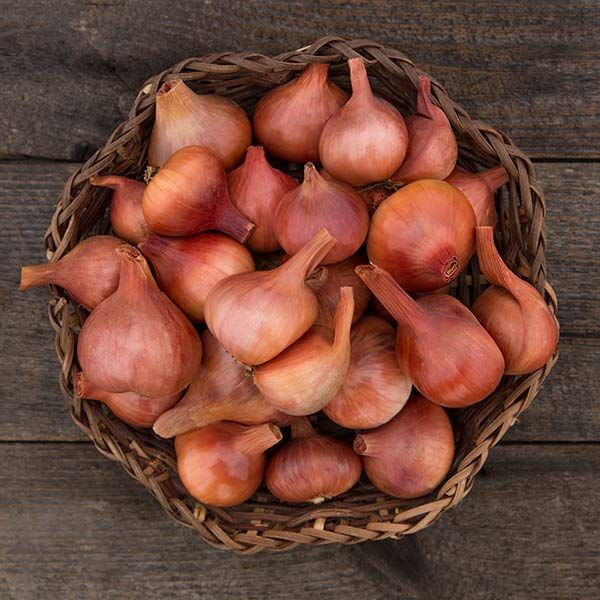
Shallots – Keep in a dark, dry, well-ventilated place at a cool room temperature. (Photo: High Mowing Seeds)
Spinach (Standard Shares who don’t receive beans) – Store dry, unwashed spinach in a sealed plastic bag for up to two weeks in the fridge. Right before using, wash the leaves in a basin of lukewarm water and spin dry. Try to use within a week. If it does get limp, you can still use it in cooked dishes.
Sweet Potatoes – Store these just as you would regular potatoes. Place unwashed sweet potatoes in a cool, dark place like inside of a cupboard or closed paper bag. Do not place them in the fridge. Sweet potatoes can last for many months if properly stored.
Tomatoes – Store at room temperature for up to a week. Do not refrigerate.
Weekly Haiku by Simon
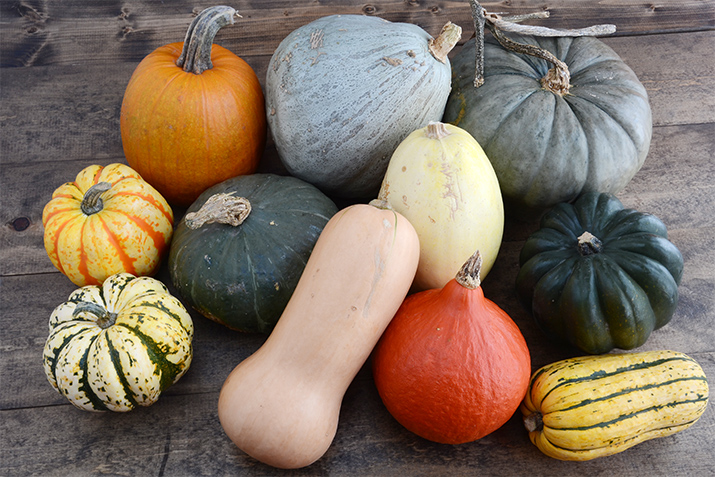
Squash vines dying back
Baby blues, bright oranges, greens
Sweet, warm meals ahead
Featured Veggie: Sweet Potatoes
Sweet potatoes are members of the morning glory family that are most often propagated by planting vine cuttings (slips) rather than with seeds. They are mild, starchy, and sweet (obviously) when cooked and crisp and caramelized when fried.
According to Wikipedia (the source of all knowledge!), sweet potatoes were present in Central America at least 5,000 years ago with their origin possibly being between the Yucatan Peninsula of Mexico and the mouth of the Orinoco River in Venezuela. (Did you know that our town, Oronoco, is named after this river, but no one knows why?)
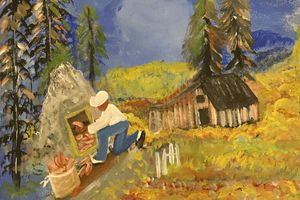
In fact, the word “potato” likely comes from a combination of the indigenous Taino “batata” and the Quechua “patata” which was used for the white potato from which it wasn’t distinguished in Europe for some time. (Painting is Sweet Potatoes by Pearl Graham)
England’s John Gerard wrote about the sweet potato in his 1597 Herball or Generall Historie of Plantes, suggesting that it “comforts, strengthens, and nourishes the body,” as well as “procuring bodily lust.” Maybe the fact that King Henry VIII had six wives had something to do with the fact that he reportedly consumed enormous amounts of sweet potatoes?
Notes from the Field
It was a joy to be outside working on the farm last week. Most of my time these days is spent between two different tasks. The first is to harvest! harvest! harvest! This year we had bumper crops of tomatoes, eggplants, parsley, fennel, shishitos, beets, summer and winter squashes, watermelons, and English cucumbers. In fact, our family is pretty satiated when it comes to eating some of those veggies. I try to remind us that we should still enjoy them while we can because it’s going to be another 10 months before we have many of those on our plates again and we will be missing them come the middle of winter.
Yesterday we harvested sweet potatoes for the first time. One of our CSA members suggested that we try growing them this year, so we did, and they did splendidly. We weren’t quite sure what to expect when we started digging them up, but we were quickly rewarded with large, beautifully-colored tubers that were super easy to harvest and which made Simon immediately request sweet potato fries for dinner. We were surprised at how well they grew given how they started life in our field and think these will definitely be a standard offering in our shares going forward.

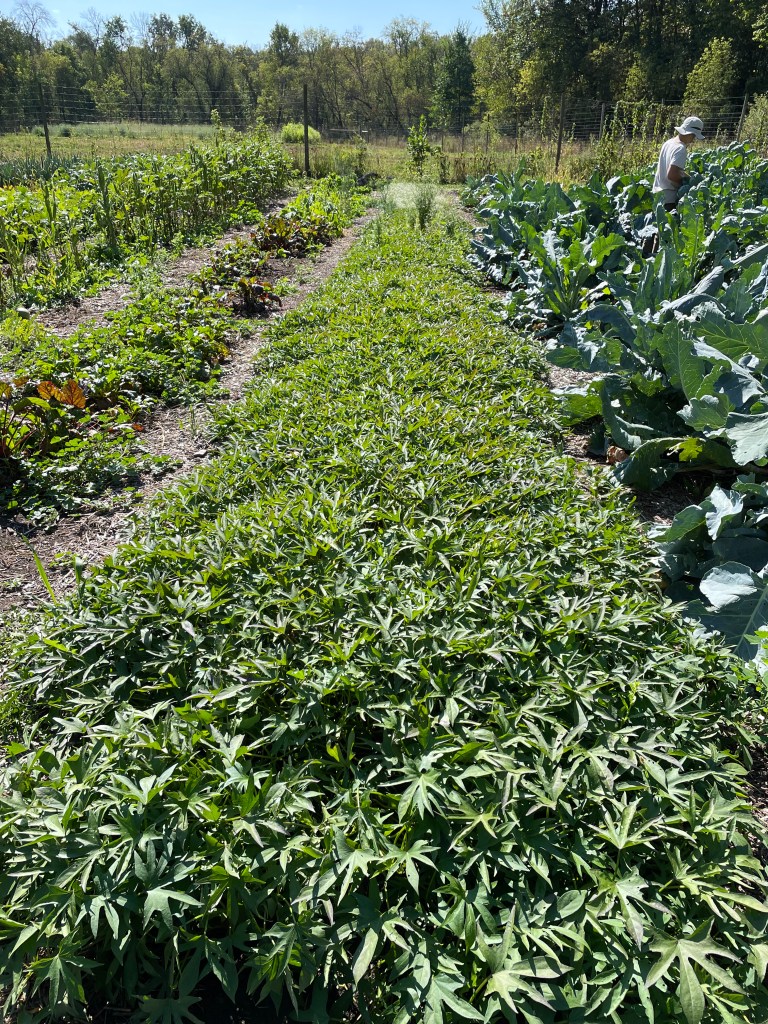

My other task these days is to put many of the veggies beds to bed (ha!) for the year. This involves pulling out any plants that are done for the season – either because we already harvested from them (like cabbages and romanesco) or because they just tired out (like cukes and some of the lettuce). I also remove any remaining weeds, rake back the straw mulch from the soil, and seed a cover crop of oats. I managed the timing of this just right last week and got the seeds in Thursday, the day before we got some rain. Oats should grow until they reach 10 degrees outside at which point they will die back. Their leaves won’t decay over the winter though; they will just lay flat on the ground and I am hoping that I will be able to use them as mulch in those beds next year, just planting right into them and not having to spread mulch I brought in from off farm.
(For those of you who don’t know much about cover crops, they have multiple benefits such as controlling erosion, suppressing weeds, reducing soil compaction, increasing moisture and nutrient content of soil, improving yield potential, providing habitat for beneficial insects and wildlife, and attracting pollinators.)

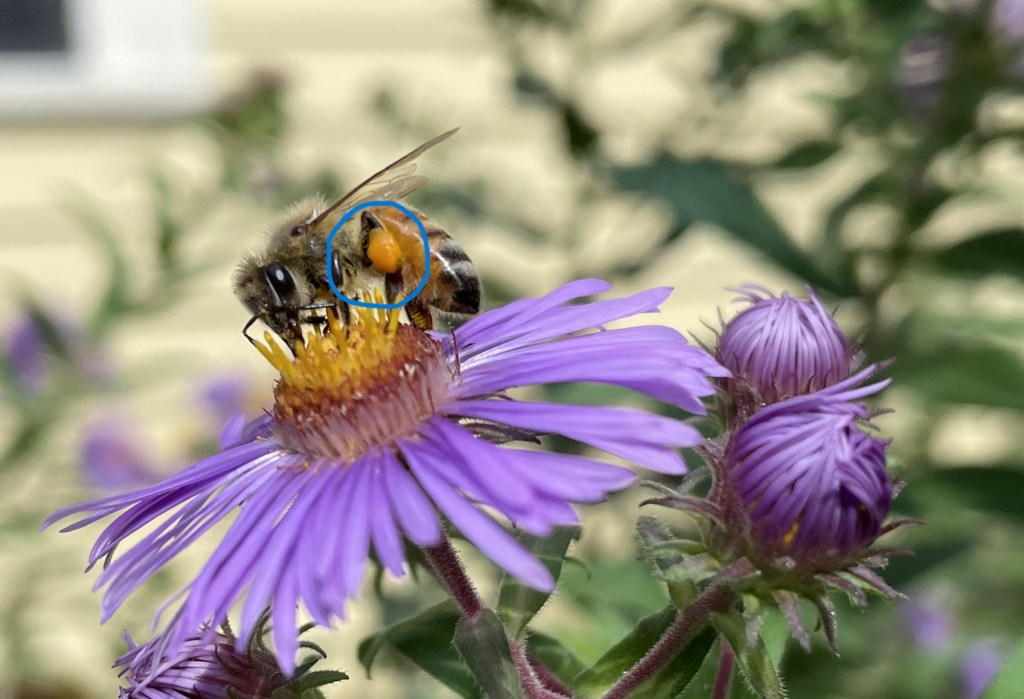
That reminds me… Did you know that wasps can be great pollinators? And look at the pollen this honeybee has collected in the pollen baskets on her legs!
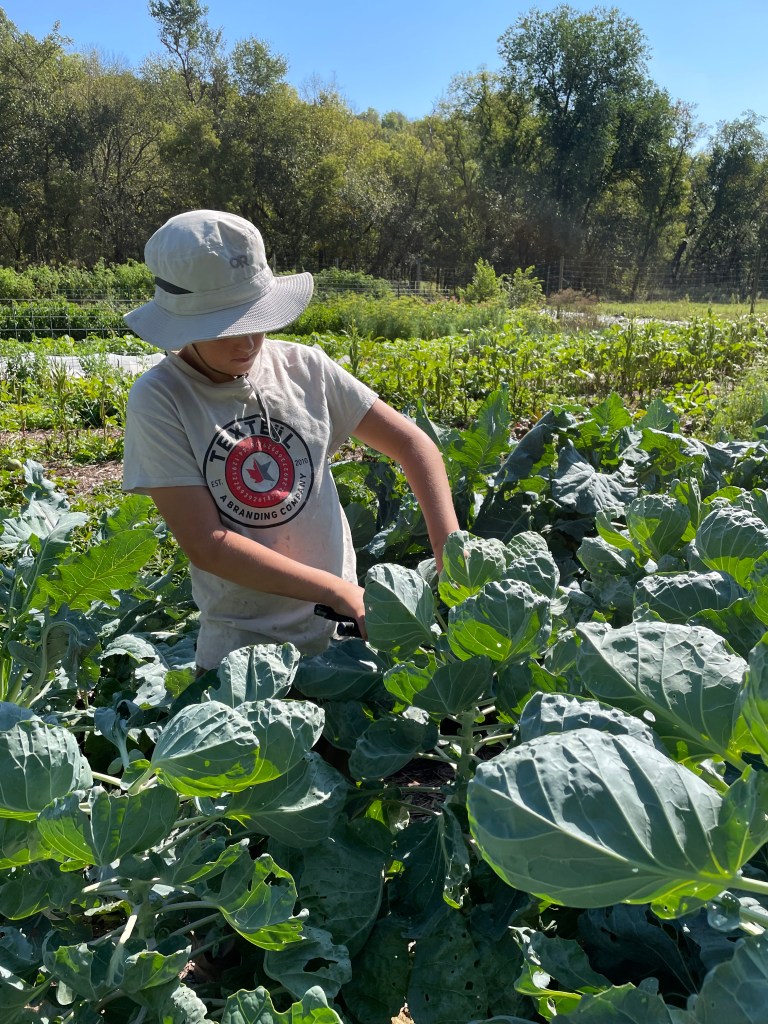
Other than that, we finished harvesting the late-season potatoes and Simon helped me cut off the tops of the Brussels sprouts so that they would stop trying to grow upward and start making bigger sprouts. We’ve never tried this before, but research indicates that we should get larger, more uniform sprouts doing this. We shall see!
Recipes
Baked Eggs with Spinach and Mushrooms // Uses Spinach //Vegetarian
Black Bean Sweet Potato Enchiladas // Uses Sweet Potatoes, Add Italian Frying Peppers and Tomatoes, too // Vegetarian
Charred Green Beans with Brown Butter Vinaigrette // Uses Green Beans, Shallots, Sage // Vegetarian
Hubbard Squash with Parmesan and Brown Butter // Uses Hubbard Squash, Sage // Vegetarian
Thai Carrot and Sweet Potato Soup // Uses Carrots, Sweet Potatoes // Vegetarian
 Middle Fork Farm