
This past week I’ve been thinking about the passing on of knowledge that occurs in farm families that have been working with the same piece of land for decades, if not longer. I imagine that the older folks would say something like, “Oh, yeah. I saw that happen back in 1950. This is what we did then,” or some such thing when brought a question about how to handle a particular issue. Many small-scale vegetable farmers these days didn’t grow up on a farm and so we rely instead on our relationships with each other, the different associations we belong to, university extension services, internet search engines, and listserv forums to help us figure things out. While this collective knowledge might not go very far back in time or reflect a very deep relationship with a particular piece of land, I am nonetheless incredibly grateful for it. For instance, I thought it was something I did wrong that was preventing my peppers from ripening in a timely fashion this year until a whole slew of emails hit my inbox this past weekend with other farmers saying they were also having trouble. No one knows why this is happening – was it the smoke? is it the drought? is it the soil they’re planted into? – but hearing that it’s been a common problem is reassuring. The best thing to do, I think, is to take copious notes so that if (probably when) it happens again, we can try and figure out a pattern. Still, I suspect some things in farming will always remain a mystery.
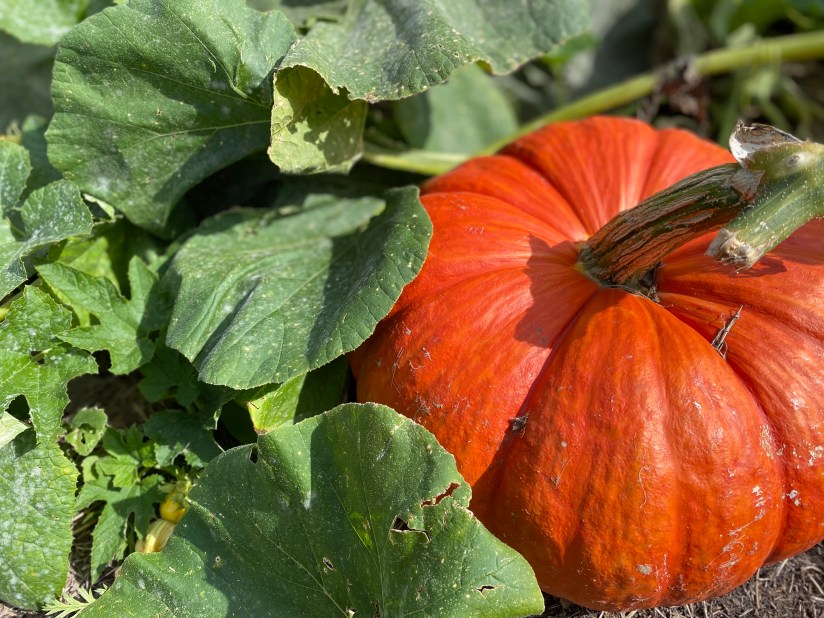
What’s in My Box this Week?
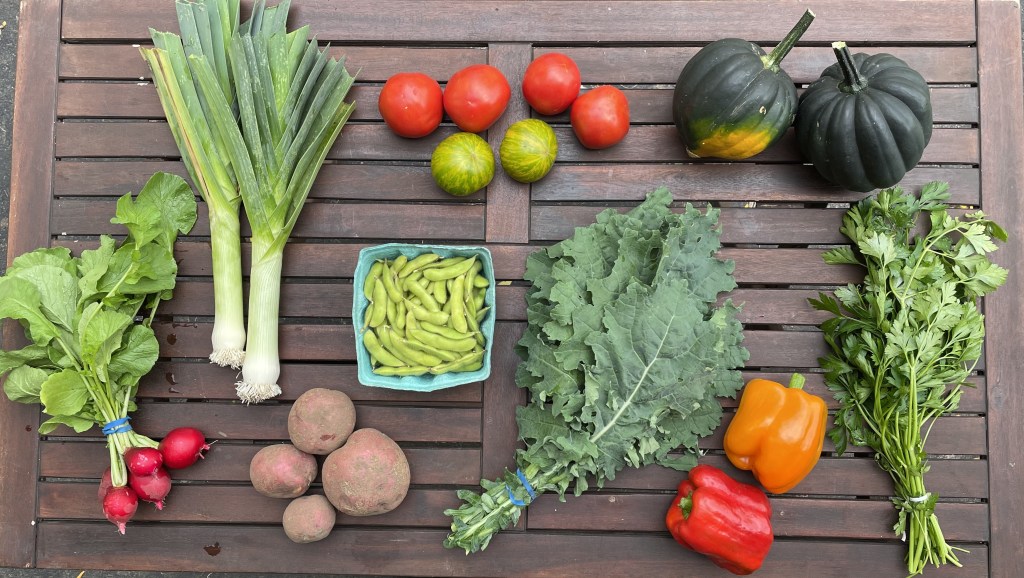
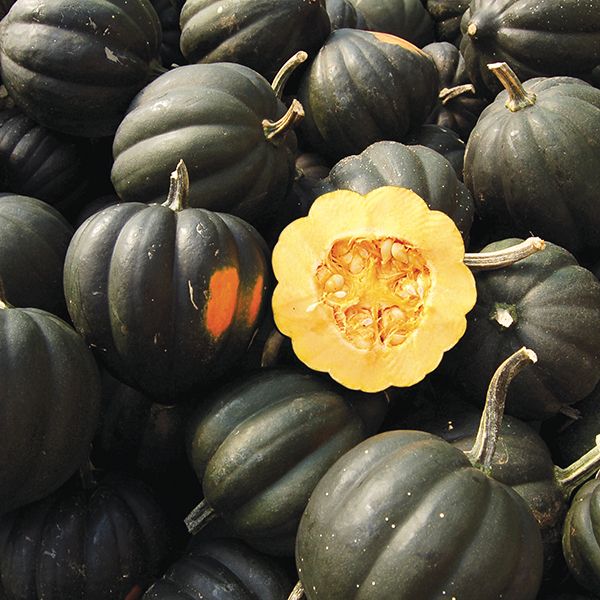
Acorn Squash – Since these are freshly harvested, it would be worth it to set them out in a warm, sunny spot in your house for about five to seven days to cure them and develop their sugars. Waiting even a few weeks longer to eat them will further sweeten them up. After that, store them in a cool, dry place. Do not store in the fridge. This will cause them to spoil much more quickly.
Cherry Belle Radishes (Standard Shares Only) – Store for up to two weeks in a plastic bag in the fridge. For longer storage of roots, cut off the greens before placing the roots in the fridge and store the greens separately, ideally gently wrapped in a damp paper towel. Use the greens as quickly as possible.
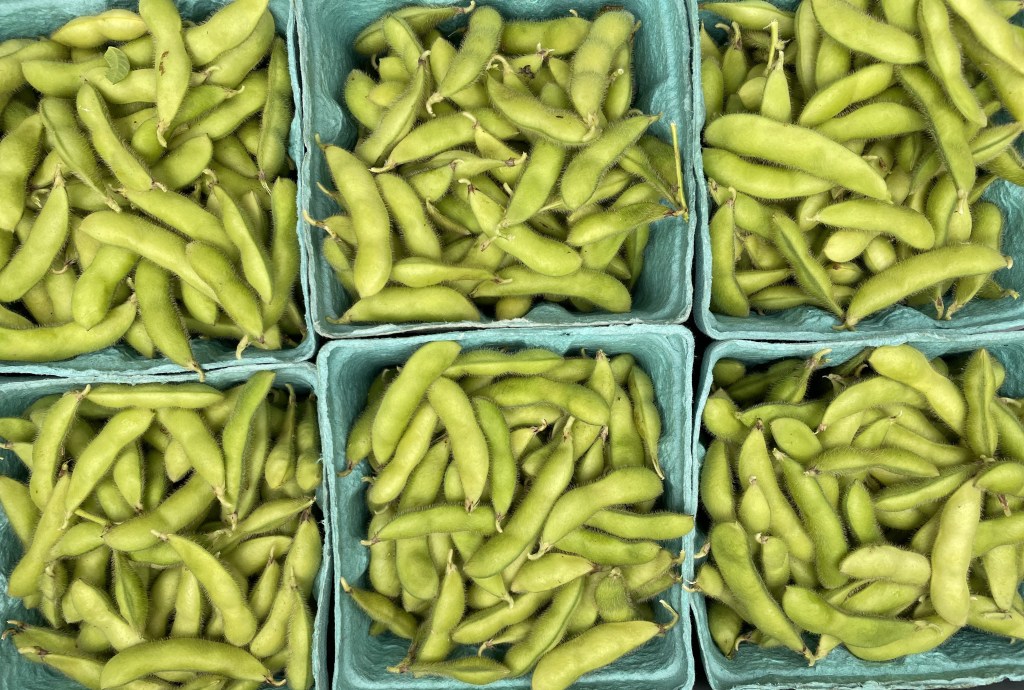
Edamame – Edamame is best used with two to three days. Store in a refrigerator in a perforated plastic bag. Also, don’t forget that it is the bean seeds themselves, rather than the pods they grow in, which are meant to be eaten. My favorite way to eat these is also the simplest: boil and salt them, crack the pod open with your fingers, and pull out each bean either with your hands or squeeze them directly into your mouth.
Italian Frying Peppers or Sweet Bell Peppers – Refrigerate peppers unwashed in a sealed plastic bag in the crisper drawer for one to two weeks.
Leeks – Store in the fridge and try to use within two to three weeks. The outer leaves may get a little slimy after that, but you can peel away the outer layers.
Mardi Gras Beans (Standard Shares who didn’t receive them last week) – Treat these as you would fresh green beans. Purple beans will turn green when you cook them. Refrigerate in a plastic bag and use within a week.
Parsley – Store in the fridge in a small glass with about an inch of water, stem side down (like flowers in a vase) for best storage.
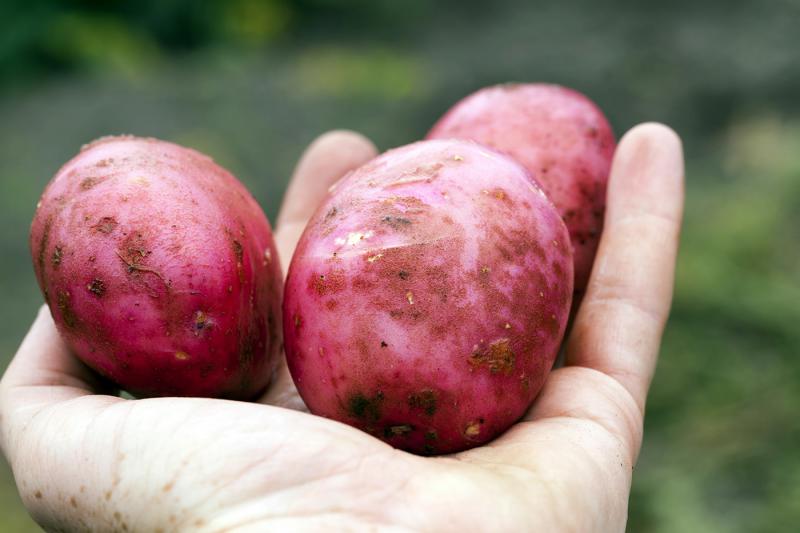
Red Maria Potatoes – Red Maria is a late-season potato with extra-sweet moist flesh that is perfect for boiling, mashing, roasting, or being made into potato salad. It retains its moisture when baked and stores well for many weeks.
The potatoes you’re getting this week are freshly harvested. Their skin is really delicate; thus, I’m not going to wash them before giving them to you. Keep unwashed potatoes in a cool, dark, dry place, such as a loosely closed paper bag in a cupboard. They will keep for two weeks at room temperature. Light turns them green, and proximity to onions causes them to sprout. Don’t put them in the refrigerator, as low temperatures convert the starch to sugars.
Red Russian Kale – Wash the greens only right before using. To store, place in a plastic bag with most of the air removed and put in the fridge. It is best used within a few days. (The kale has been enjoyed by the grasshoppers a little, so you’ll have to forgive all the holes.)
Tomatoes – Store at room temperature for up to a week. Do not refrigerate.
Weekly Haiku by Simon

It finally rained
Things are lush and happy now
We are so grateful
Featured Veggie: Mardi Gras Beans
The beans that you’re getting lately are a blend made up of Strike Bush beans (green), Royal Burgundy bush beans (purple), and Gold Rush Yellow Wax beans. The company that sells their seeds calls this their “Mardi Gras” beans and I happen to love New Orleans, so I felt I just had to feature them this week. Also, sometimes even the most unsung of heroes have interesting stories to tell.
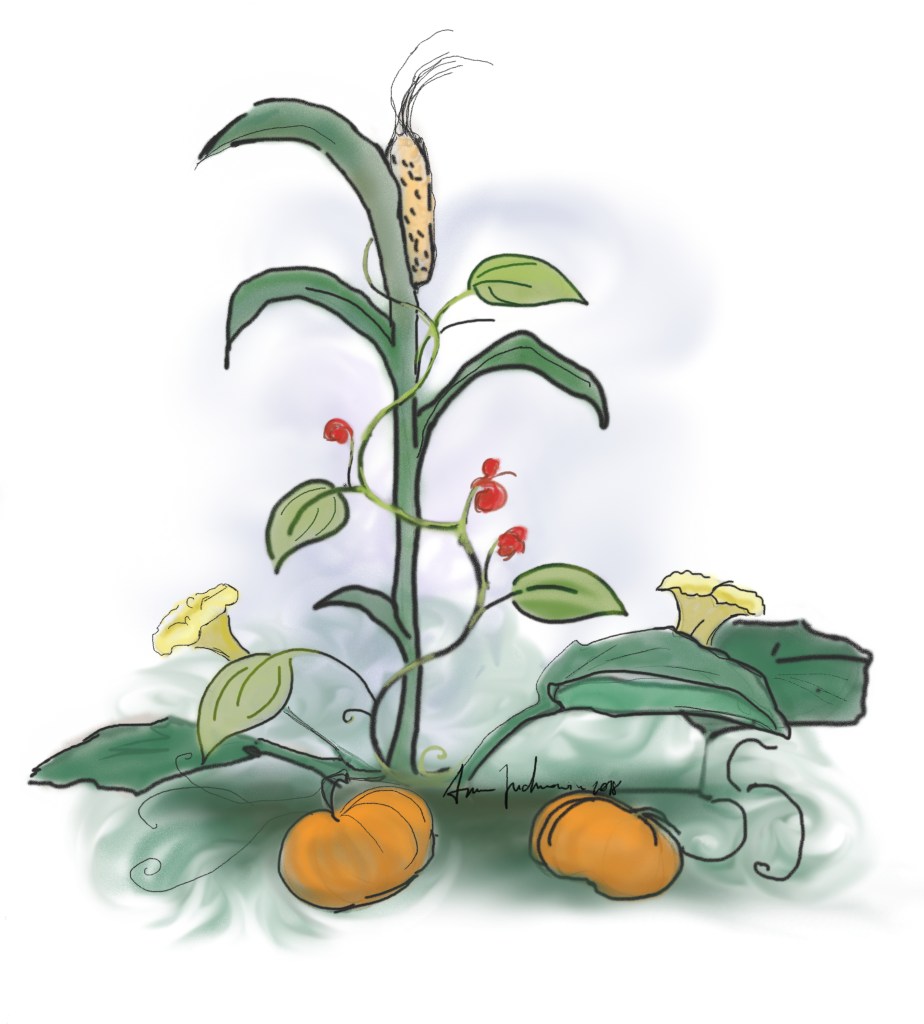
Green beans were important crops to the indigenous peoples of the western hemisphere. Originating in South and Central America and eventually moving northward, Native Americans grew them as part of the “Three Sisters” system that involved corn, beans, and squash. (Drawing by Anna Juchnowicz, CC BY-SA 4.0 , via Wikimedia Commons)
In this system, the corn would start to grow tall; bean seeds would be placed near the corn plant and use it as a trellis to climb up; and squash would be planted around the edge of the field because the large leaves of squash plants shaded out weeds and helped retain soil moisture. Also, beans are a legume, meaning that they can take nitrogen – an essential nutrient for plant growth – out of the air and put it into the soil where it’s available for other plants to take up. Corn is a notoriously greedy user of nitrogen, so having the beans planted nearby helped to feed the corn.
Nutritionally, eating the Three Sisters together provides one’s body with all the essential amino acids needed to build quality protein without having to ever eat much animal-based foods.
Beans come in two main types: pole, which require trellising, and bush, and there are many different colors and patterns of them. They are pretty easy to grow (if a bunny doesn’t find them!) and after tomatoes and peppers, they are the most common home-garden veggie out there.
Notes from the Field
There is not a whole lot to report that is different from what I shared last week. My primary mission these days remains to clean up the field in preparation for the winter. I continued to pull out spent plants, weed, and seed cover crops. This is actually taking a surprisingly long time for certain beds (two hours!) as the number of dandelions that had taken root in some places was higher than I had anticipated. I am looking at it like this though: dandelion roots go deep and they help to break up compaction so it was good to let them get so big; there will now be fewer dandelions to remove in the spring when time is short; and my lower back needed a workout anyway, so all-in-all… I consider it time well spent.
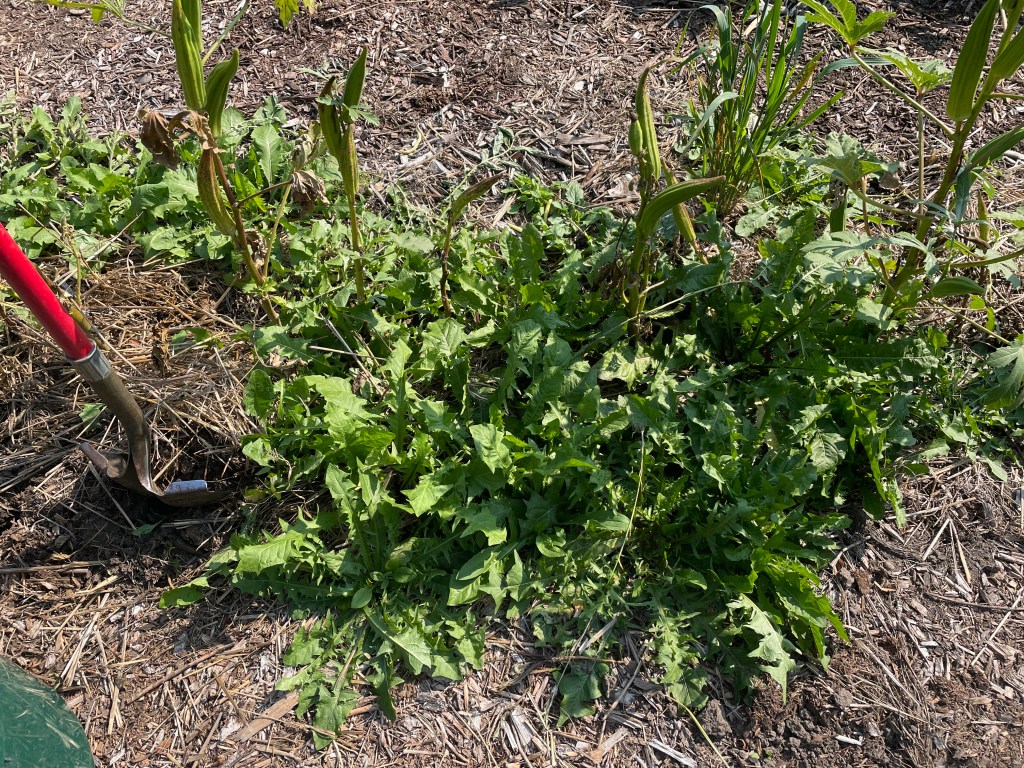
(I think there were about 20 in just this small patch alone.)
The okra bed was particularly full of weeds. I had planted an entire row of okra intending to give you some this summer, but soon realized that the pods grew really, really quickly and really, really unevenly. Also, okra is highly perishable and must be sold within just a day or two of harvesting. This means that I would have had to wait until right before packing your boxes to harvest it, but often by then, the pods were either too big or too small to be any good. I think the only way it would have worked would have been if I planted A LOT of okra to make sure there was enough ready at any given moment, but I don’t have space for that.
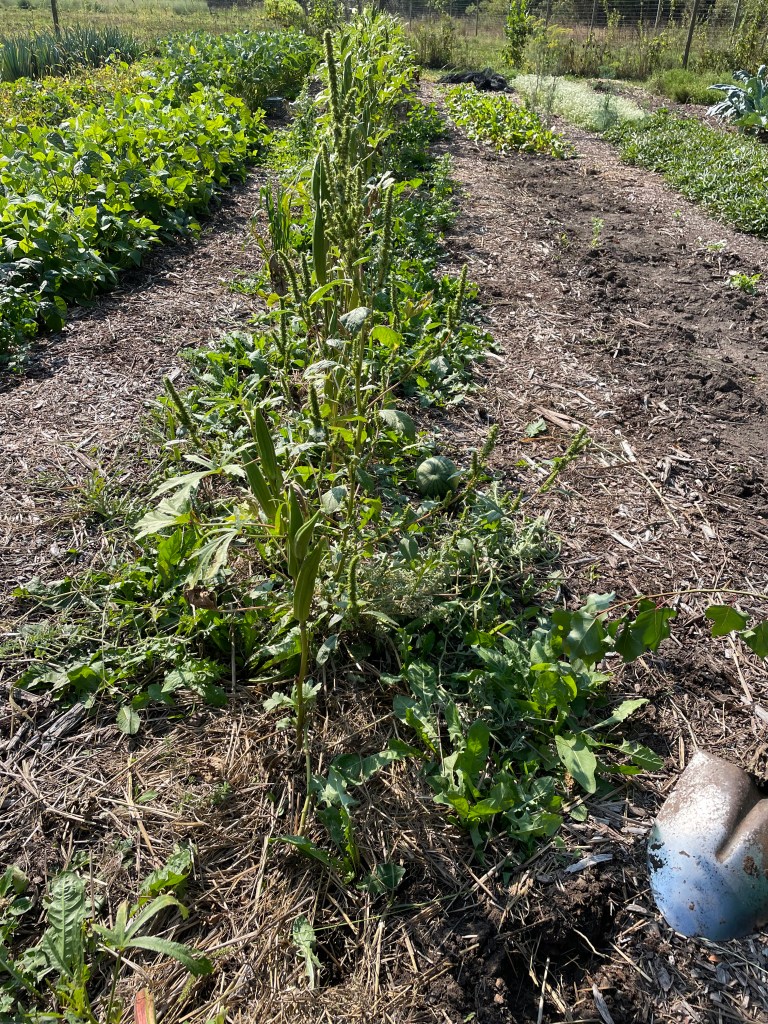
At any rate, once I decided to leave the okra out of your shares, I pretty much abandoned that bed until last week; thus, all the weeds. I also discovered that mature okra plants hurt when you cut them down and haul them to the compost. It turns out they have tiny, fuzzy spines all over them that cause itching and burning when they come in contact with your skin. O-kay. Lesson learned.
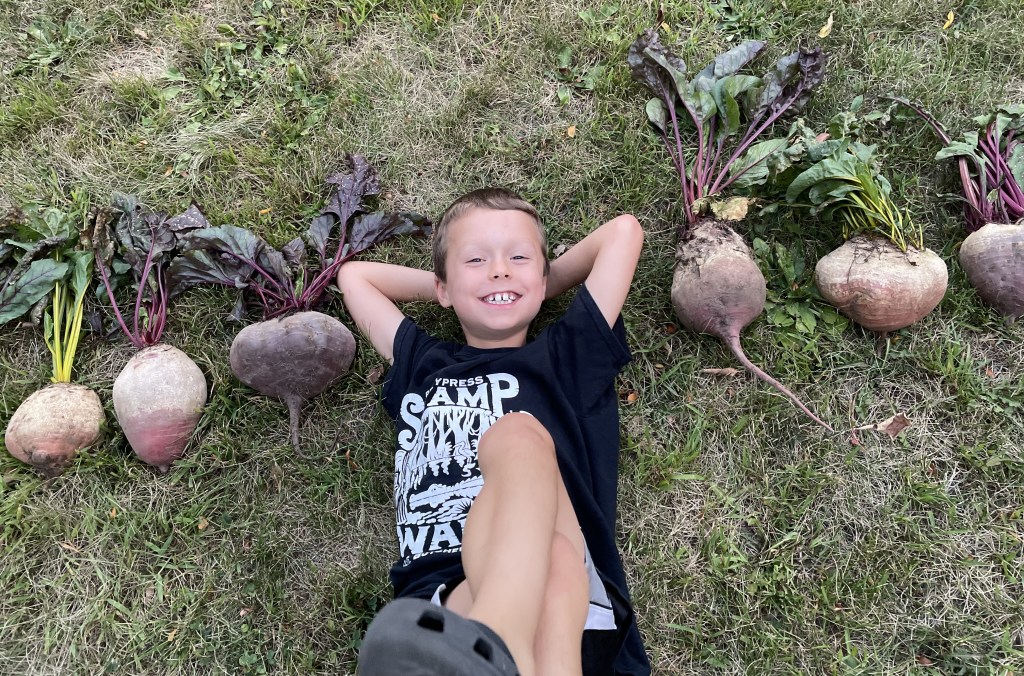
Other than that, we cleaned up some yellow onions that had been curing, pulled some very mature (i.e., horrifyingly large) beets and carrots out of the field, and put them all in long-term storage.
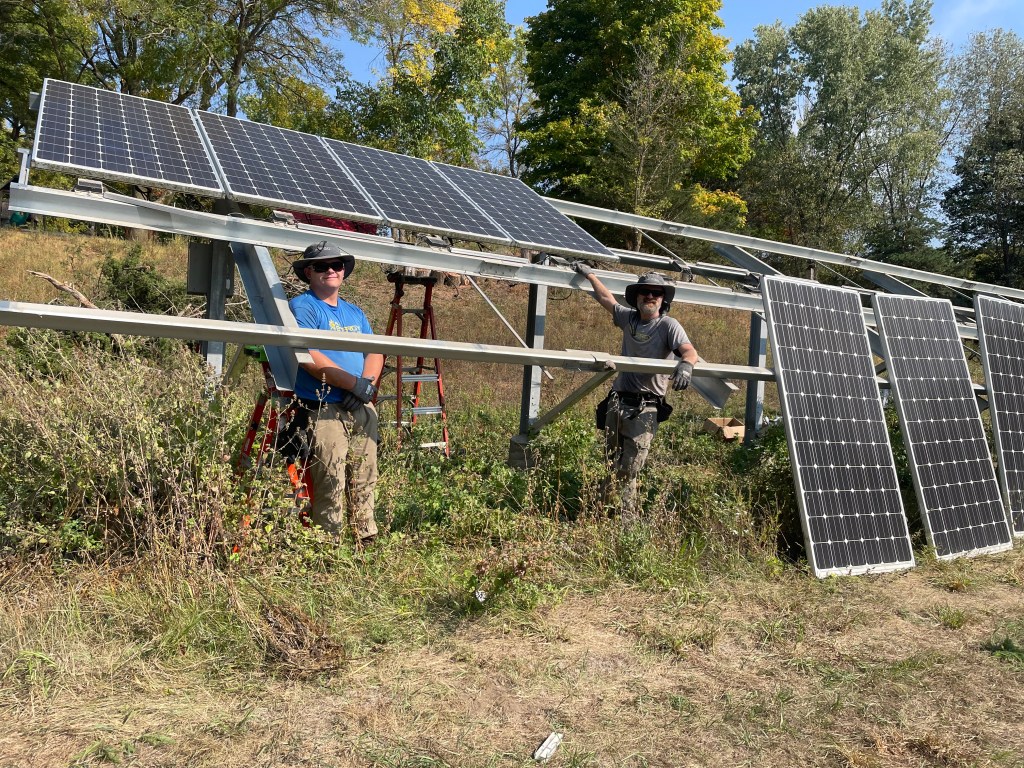
We also welcomed All Energy Solar (that’s Grayson and Tony in the photo below) out to start their work doubling our solar array. This involves moving the panels we put in about eight years ago further up the hill and out of reach of flood waters and adding about 20 additional ones.
Between this and the geothermal heating system we installed a few years ago, we should soon have nearly all of our energy needs covered by renewable sources. This has been a goal of our farm for many years now and we’re excited to get that much closer to realizing it.
Recipes
Butternut Squash and Sage Macaroni and Cheese // Uses Sub Acorn Squash for Butternut, Sage (if you have some leftover from last week) // Vegetarian
Edamame Black Bean Salad // Uses Edamame (substitute fresh for shelled), Red Pepper (can also use yellow or orange) // Vegetarian
Homemade Salted Edamame // Uses Edamame // Vegetarian
Potato and Acorn Squash Gratin // Uses Acorn Squash, Sub Red Maria Potatoes for Russets // Vegetarian
Potato Leek Soup // Uses Leeks, Sub Red Maria Potatoes for Yukon Gold // Vegetarian
Vegan Poke Bowl // Uses Edamame // Vegan
 Middle Fork Farm