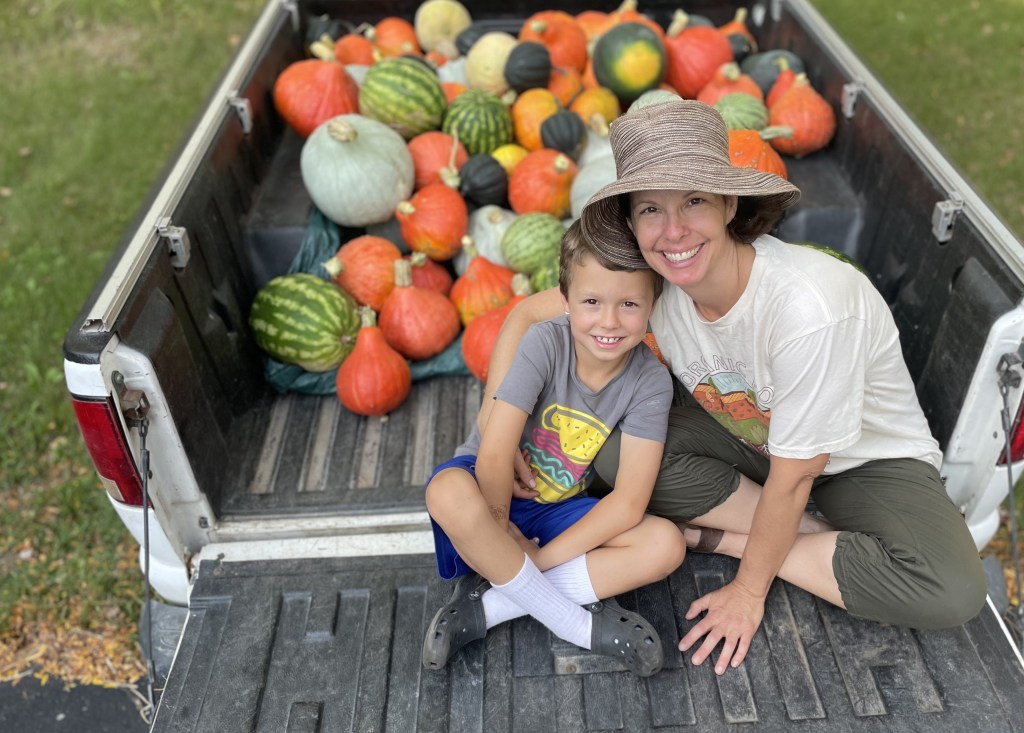
If most of us trace our lineage back far enough, we’ll probably discover that somewhere along the line, at least one of our ancestors farmed, but for most of us nowadays the connection between field and plate is far more distant than just walking outside to harvest your dinner. Until moving to Minnesota, that was largely true for me, too, as I am at least two generations removed from agriculture. The farmland that remains in my family is back in Michigan and the last time I visited it I was about three years old, so while my green thumb might have some genetic basis to it, farming is not something I grew up with. In other words, my learning curve is pretty steep, and every year I am struck by just how much more I need to know. Mother Nature also likes to remind me of just how little I can control certain things. This is good for someone like me who prefers to have everything line up neatly and in its place, on time and according to plan. Perhaps one of its most important gifts, farming seems to provide (force?) a path to humility.
One of its other most important gifts, for me, is the community of CSA members that we’ve been building these past two years. It has been my privilege to get to know you and your families and to have your support and encouragement, especially this past year which drought made one of the toughest so far. Knowing that you would hang in there with us even if you weren’t going to get everything we planned for this year helped us to stay motivated to still do the best we could. Whether it was learning that your kids gorged themselves on strawberries the moment they saw them or that they ran around pretending to be a farmer when their veggies arrived or that you discovered ground cherries and fell in love them, hearing the stories of how you enjoyed our veggies was the best part of my job. Thank you for joining with us for Season 2 of the Middle Fork Farm CSA! You are all wonderful and we’re so glad that we get to be on this journey with you!
What’s in My Box this Week?
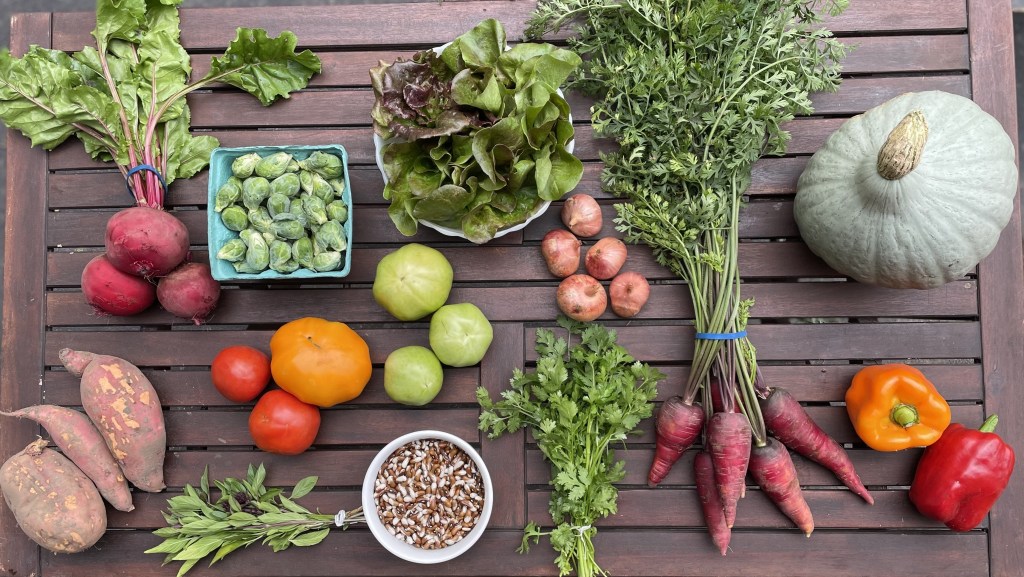
Baby Blue Hubbard Squash – Store them in a cool, dry place and try to use within a few months. Do not store in the fridge. This will cause it to spoil much more quickly.
Brussels Sprouts – Store in a bowl or open container in the fridge. Do not trim or discard outer leaves before storage. Brussels sprouts should last up to a month this way. The outer leaves might get a little shriveled, but you typically remove them anyway.
Carrots (Standard Shares who Haven’t Yet Received Them) – Remove the green tops as soon as you can, leaving about an inch of stems, and place the roots in a plastic bag in the crisper drawer of your refrigerator. They will last for several weeks. You can also store them in a bin of water to keep them crisp, changing out the water every few days. Save the tops in a plastic bag and use them in salads and other dishes.
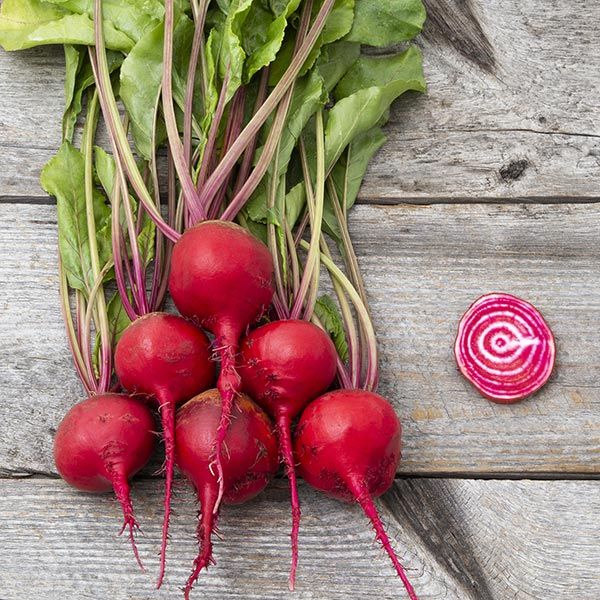
Chioggia Beets – You can use both the roots and the leaves of beets. If your beets still have greens attached, cut them off, leaving an inch of stem. Store the beet roots unwashed in a plastic bag in the crisper bin of your refrigerator. They will keep for two to three months. For the greens, keep them dry and unwashed until ready to use in a sealed plastic bag in the fridge for up to a week. (Photo: High Mowing Seeds)
Cilantro – Stand upright in a container with an inch of water. Then cover the herbs loosely with a plastic bag and refrigerate for up to two weeks.
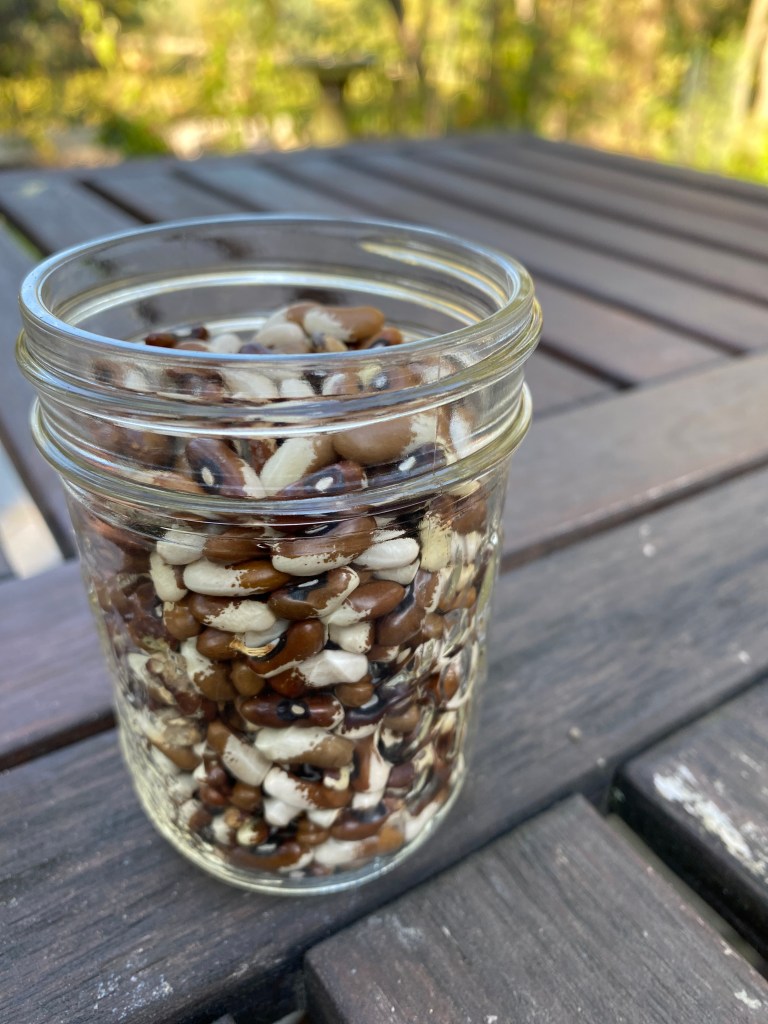
Dried Painted Pony Beans – Remember those fresh green beans you received earlier in the season? I let some of them continue growing and they have dried and can now be used as delicious soup beans. I figured with the colder weather coming, some of you might want to make some hearty soups. Just substitute these for pretty much any other kind of bean in your favorite recipe.
Green Tomatoes – One of our CSA members suggested that we include green tomatoes in your share this year. She grew up in Iowa and has fond memories of eating fried green tomatoes and mentioned that she can never have these anymore because one simply can’t find green them in the grocery store. One of our goals with the CSA is to provide you with veggies you can’t always easily find elsewhere, so we thought this was a great idea. I’ve included some recipes below for those who aren’t familiar with how to cook with unripe tomatoes.
Simply store these on your kitchen counter as you would any other tomato. If you’d prefer ripe tomatoes to unripe ones, they will probably ripen if you let them sit out long enough.
Lettuce (Large and Standard Shares who Didn’t Receive It on Week 15) – The lettuce is getting SO close to being the right size to give to you. We will see what two more days of warm weather and sunshine will accomplish. If you do get some, store it loosely in a plastic bag in the crisper drawer of your fridge. Keep unused leaves on the head. Ideally use within a week, but it will probably last for up to two weeks if needed.
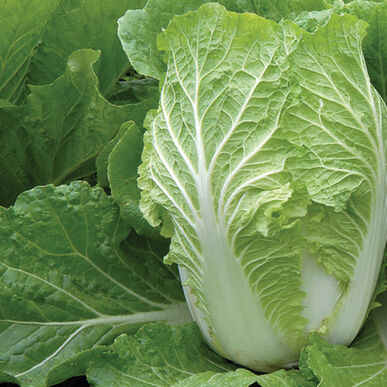
Napa Cabbage (For Standard Shares Who are Owed a Green Cabbage) – I was hoping to have enough for everyone, but the flea beetles took their toll earlier in the summer and it’s taking a long time for the plants to recover and size up enough for these to be of harvestable size. That being said, there are a handful of members who are owed a second green cabbage and we have enough Napa cabbage for them, so some of you will get one this week.
For maximum storage, remove any wilted or browning outside leaves, place in a plastic bag and store in the fridge. Napa cabbages taste a little sweeter and milder than regular cabbage while the texture is a bit softer, and while it is easier to cook down than regular cabbage, it’s also delicious raw.
Peppers – Refrigerate peppers unwashed in a sealed plastic bag in the crisper drawer for one to two weeks.
Shallots – Keep in a dark, dry, well-ventilated place at a cool room temperature.
Slicer and Heirloom Ripe Tomatoes – Store at room temperature for up to a week. Do not refrigerate.
Sweet Potatoes – Store these just as you would regular potatoes. Place unwashed sweet potatoes in a cool, dark place like inside of a cupboard or closed paper bag. Do not place them in the fridge. Use within a few weeks. Please note that these were harvested when it was still pretty muddy outside and washing them would have caused the skins to break, so they are a little dirtier than usual.
Thai Basil – Thai basil is native to Southeast Asia and is savory, spicy, and anise-like, adding a distinct pungency to dishes that helps to round them out. It is common in Thai curries, salads, and stir-fries. In Vietnam it is used as just one of the many garnishes with pho. Store with the stems in a glass of water on your counter out of direct sunlight. Do not store in the fridge as it will blacken immediately and wilt after that.
Weekly Haiku by Simon
Lots of fall colors
Days shorter and sun cooler
Time for plants to rest

Featured Veggie: Carrots
Up until now, I’ve mostly featured veggies that are a little unusual and that folks might not be as familiar with, so I am deviating some by highlighting carrots this week. I decided to do so when I realized that I don’t really know all that much about where carrots came from or how they came to be available in all the wonderful colors you can find them in nowadays; in addition to the ubiquitous orange carrots, there are also pink, black, purple, yellow, white, and red ones. I also haven’t focused on any veggies from the Apiaceae family which include, besides carrots, parsley, parsnips, dill, celery, fennel, and cilantro, among 3,500 others.
Carrots originated around 1,100 years ago in a part of the world that we haven’t much covered yet – Central Asia and specifically Afghanistan, Iran, and Uzbekistan, although there is some evidence that they may have been eaten even several hundred years earlier in the Roman Empire.
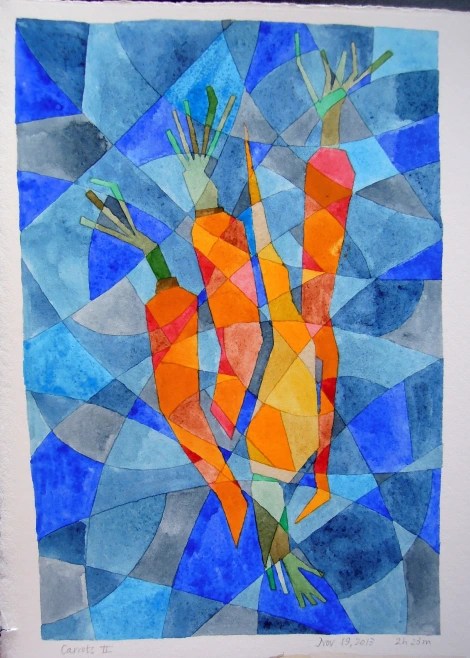
Those early carrots were more of a purplish color at first and then, through cultivation, yellow showed up on the scene. It wasn’t until the 17th century that Dutch farmers started manipulating genetic mutations to breed the orange carrots that are so common today. The pink, black, red, and white carrots you can sometimes now find also came about in similar ways. (Art by Lisa Hsia)
Two other things I discovered about carrots in doing the research for this: 1) Baby carrots are just regular-sized carrots cut down into smaller pieces; 2) Bunnies don’t really like carrot roots. They prefer carrot greens which, in addition to their seeds, is what people used to grow them for, too.
Notes from the Field
This week I think I will spend more time writing about what chores are coming up on the farm rather than about what I did last week as the nearly 4″ of rain (woo hoo!) we received meant that our soils were generally too wet to be worked and so, besides harvesting for the CSA, not much happened out in the fields. I did, however, get a chance to show my mentor around the farm on Monday afternoon
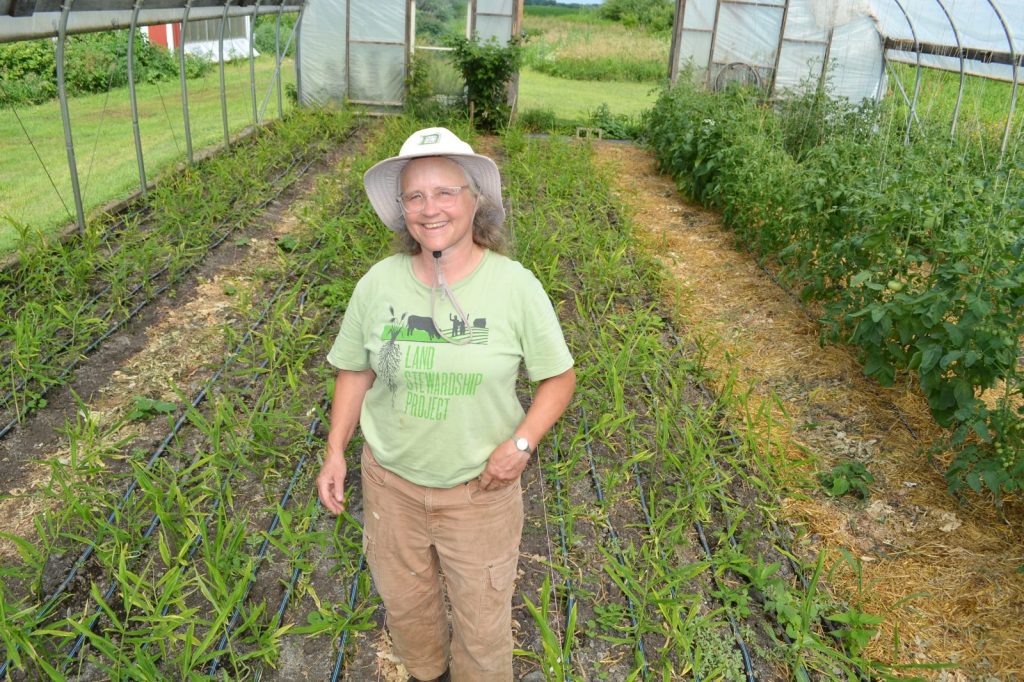
Last winter I was accepted into the Sustainable Farming Association of Minnesota‘s mentorship program and I was lucky enough to be paired with Melissa Driscoll of Seven Songs Organic Farm. (Photo from Land Stewardship Project)
Through visits to each other’s farms and monthly phone calls, it has been game-changing to have a more experienced farmer’s brain to pick about everything from how to market extra asparagus to what size greenhouse to build to how to get clear about what my long-term financial and quality-of-life goals are for the farm. Melissa grows around 10,000 bulbs of garlic each year in addition to a bunch of other cool things like ginger and turmeric. I will spend a day on her farm at the end of October learning how she goes about planting her garlic as I hope to scale up to something like that amount in the future.
My other fall tasks will be:
- plant my own garlic, around 2,400 bulbs this year
- lay down landscape fabric to suppress weeds so I won’t have to do it in the spring
- cut down the sapling trees and shrubs that have been growing through the fences all summer
- weed and cover the strawberries with mulch
- do one last fertilizing of the apples, pears, peaches, and cherries and hopefully get the deer fence built around the orchard
- burn the prairie and seed some new flowers into the exposed soil
Also, we will harvest whatever is left in the field and either donate it or preserve it for us to eat over the winter. I’m not sure if the Swiss chard left in the field is still edible though? Luka is pretending its leaves are his wings, so I’m going to guess… maybe not! 🙂

And last, but certainly not least, the biggest project will be putting up the greenhouse which feels both daunting and exciting. We have been assured that it is something we can handle if we just follow the instructions, but still…
This means that next spring I can start nearly all of my veggies inside which will make planting a lot more efficient, and I can start to work on developing the native plant-growing side of the farm business. Plus, it will be lovely to go out into a 70 degree greenhouse in the middle of February, surrounded by green plants and sweet-smelling soil, just when I can’t take winter any longer!
Recipes
Fried Green Tomatoes // Uses Green Tomatoes // Vegetarian
Green Tomato Salsa Verde // Uses Cilantro, Green Tomatoes, Jalapenos, Onion // Vegetarian
Lamb Chops with Green Tomatoes // Uses Green Tomatoes
Napa Cabbage Stir Fry with Salt and Pepper Tofu // Uses Bell Peppers, Napa Cabbage // Vegetarian
Sweet Potato Brussels Sprouts Buddha Bowl // Uses Brussels Sprouts, Sweet Potatoes // Vegetarian
Sweet Potato Fries // Uses Sweet Potatoes // Vegetarian
 Middle Fork Farm