
Welcome to Season 3, Week 1 of Middle Fork Farm’s Community Supported Agriculture! We have had a wonderful spring here on the farm with well-timed rains, plentiful sunshine – until the last week, that is! – and time to wander around and enjoy the awakening of Mother Nature. Everything is so lush this year, both in the production field and all around it, and we wonder how much greener things can actually get. I am reminded of the common saying that we gardeners love to pull out when we’re talking about the growth of our perennial plants (some of you have heard me say this before): the first year they sleep, the second year they creep, and the third year they leap. After a steep learning curve these past two years and beginning on year three now, I have a feeling that our CSA will be like that, too. Thank you for joining us and enjoy!
What’s in My Box this Week?
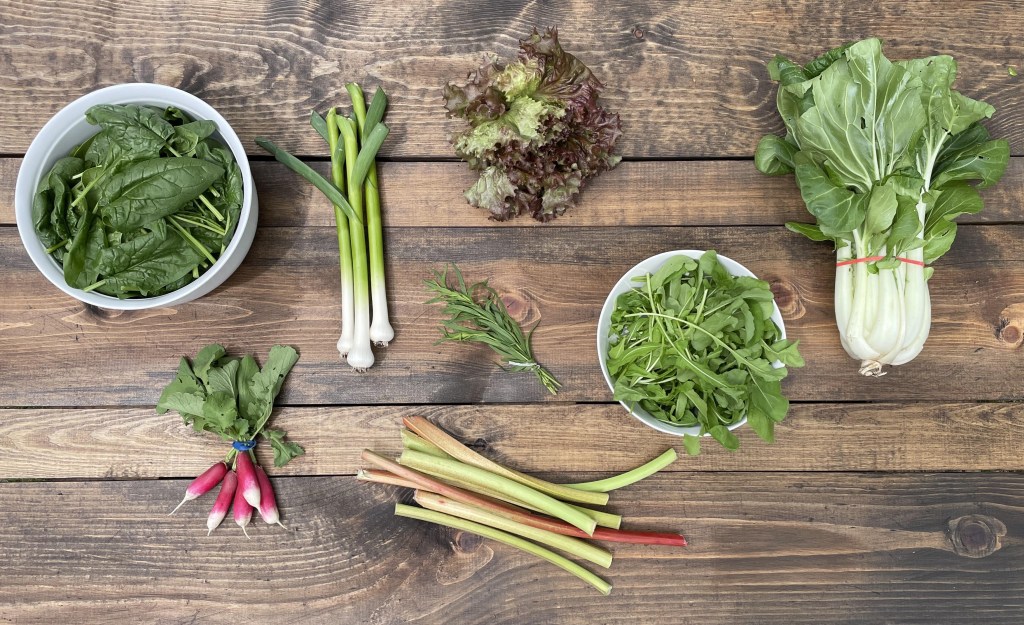
Arugula – Arugula has a peppery, spicy, and slightly bitter taste, so a little bit can go a long way. Arugula doesn’t last much longer than a couple of days, so try and use it right away. Store it in the fridge in a plastic bag. Arugula is most often paired with other greens, like in a salad, but I also like to throw some leaves on a tomato-sauce based pizza or make pesto with it.
Asparagus (Large Shares Only) – The best way to store asparagus is standing up in a glass or jar with all of the ends submerged in an inch or two of water. Loosely cover the asparagus with a plastic bag and keep in the fridge for up to a week.
Bok Choy – Store unwashed in the crisper drawer of your fridge. Use within a couple days for best texture. Greens will wilt relatively quickly. Stems will retain firmness a while longer.
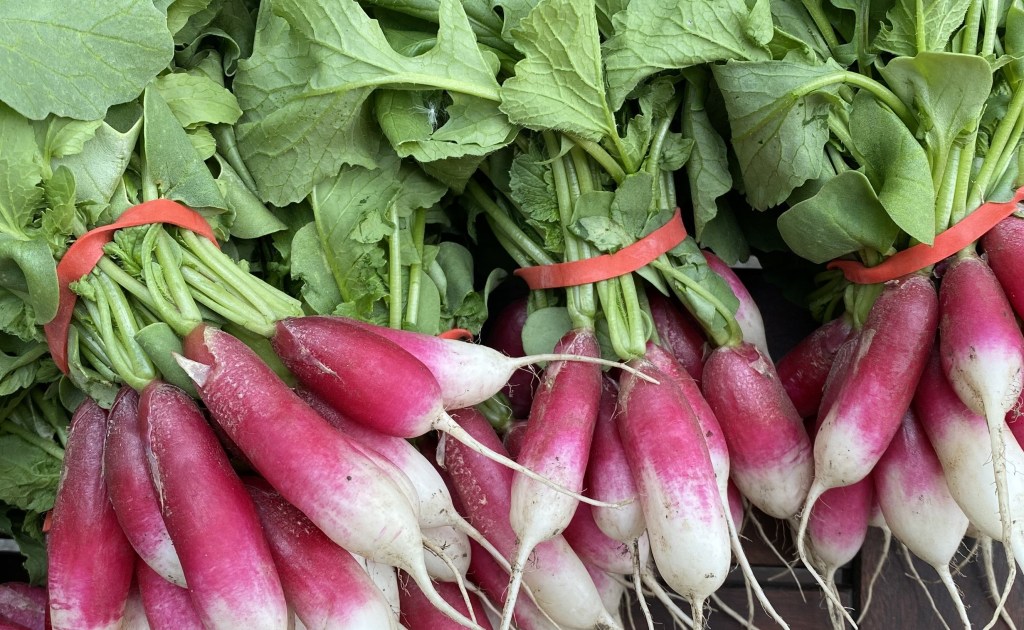
French Breakfast Radishes – The variety you’re getting this week is known for its mild, subtly sweet, and peppery flavor. These are often scored with an “X” and dipped in butter as a snack in France and frequently sprinkled with salt and put on top of buttered toast.
They are equally good raw in a salad. Store for up to two weeks in a plastic bag in the fridge. Store greens separately, ideally gently wrapped in a damp paper towel. Use the greens as quickly as possible.
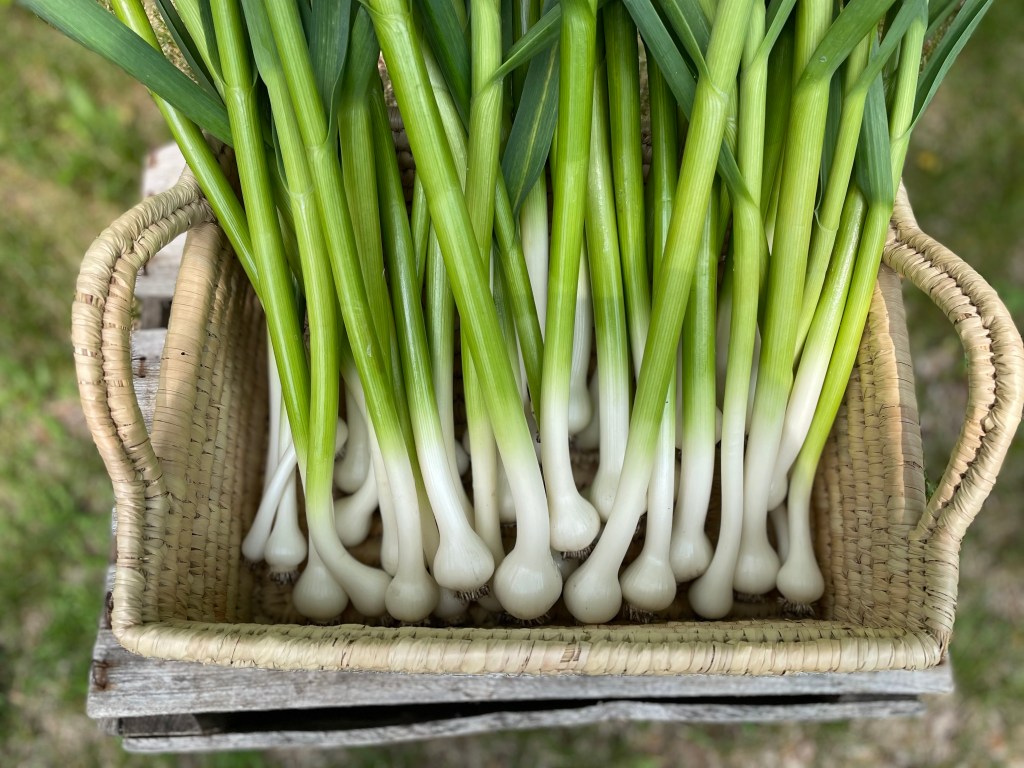
Green Garlic – Green garlic is simply an immature garlic bulb with a milder taste than that of fully mature garlic. Store it in the crisper of your fridge and use within five to seven days. For best storage, wrap bulbs (the white part) in a damp paper towel. Just trim the ends and the dark green portion (as you would do with a leek) and use like regular garlic.
Red Fire Lettuce – As the first heads of lettuce of the season, these won’t be terribly huge, but they will be very yummy. (They looked a whole lot bigger in the field when we harvested them!) I’m not sure you’ll be able to make an entire salad with the lettuce this week, but you’ll be able to put some on a sandwich or two. Store loosely in a plastic bag in the crisper drawer of your fridge. Keep unused leaves on the head. Ideally use within a week, but it will probably store for up to two weeks if needed.
Rhubarb – Rhubarb is one of the earliest spring crops and can be red or green. Most recipes that use it call for sugar because it can be so tart. To store rhubarb, wrap it loosely in damp paper towel and place it in a plastic bag in the fridge. When you’re ready to use it, remove about an inch from the bottom of the stalk. It is best used within a week. You can also chop and flash freeze rhubarb in freezer bags for future use. Some of your rhubarb will be coming from Sogn Valley Farm this week because our plants our only two years old and not quite large enough to fully harvest them yet.
Spinach – Store dry, unwashed spinach in a sealed plastic bag for up to two weeks in the fridge. Right before using, wash the leaves in a basin of lukewarm water and spin dry. Try to use within a week. If it does get limp, you can still use it in cooked dishes.
Tarragon – This herb is a favorite of French gardeners everywhere who use it in some of their most famous sauces (béarnaise). It has a bit of anise taste and is good for meats like chicken and lamb, as well as seafood and egg dishes. Tarragon is frequently combined with vinegar or lemon to make salad dressings and marinades. The best way to store tarragon is to place it in a jar with a small amount of water and loosely cover in plastic before putting in the fridge, like storing asparagus. Tarragon can also be frozen and added to soups and other dishes later.
Notes from the Field
It’s always difficult to know where to start the season’s first Notes from the Field as we’ve been prepping, seeding, and transplanting in the field for a couple of months now and working in the greenhouse for two months before then. The greenhouse was probably the biggest change for us this year. It arrived on large pallets at the end of September and Erik – with the help of some friends along the way – spent pretty much every weekend thereafter until mid-March figuring out how to put it together, how to wire it for electricity, and how to get all the systems working together. We were able to reuse all of the pallet wood that the greenhouse sections had come on to make our greenhouse benches and a potting table and Erik patiently taught me how to use some power tools along the way. He also got me outdoor speakers for Christmas – best present ever! – that he hung up in the greenhouse so that I could listen to my favorite podcasts and music as I seeded the trays in the winter.
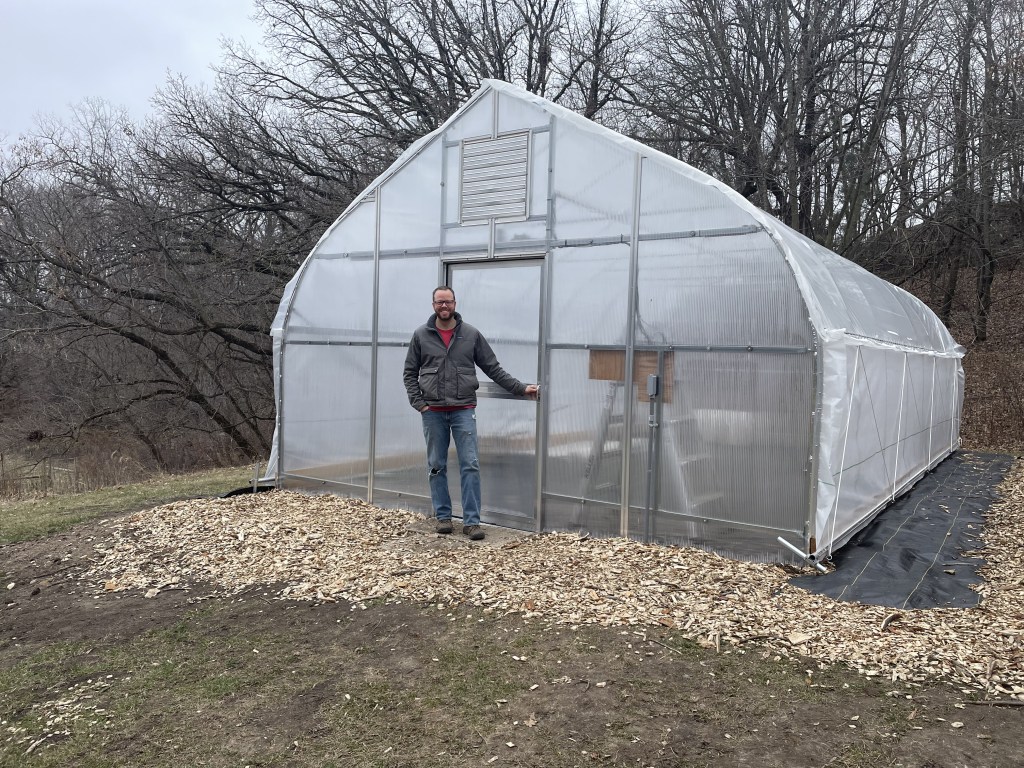
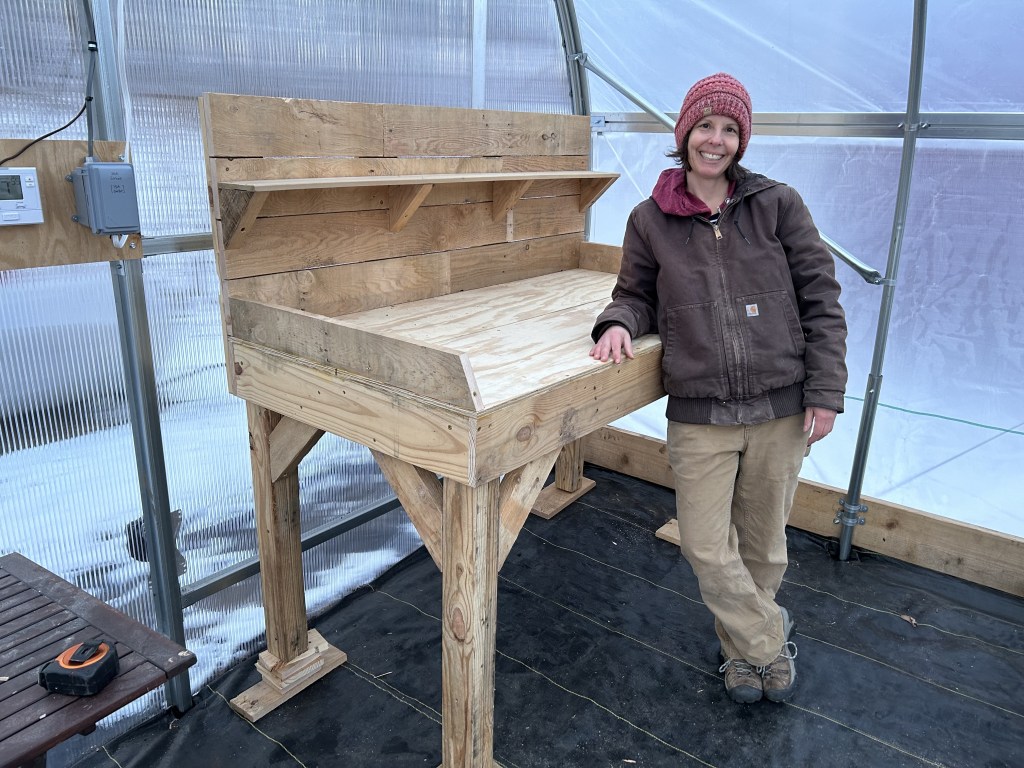
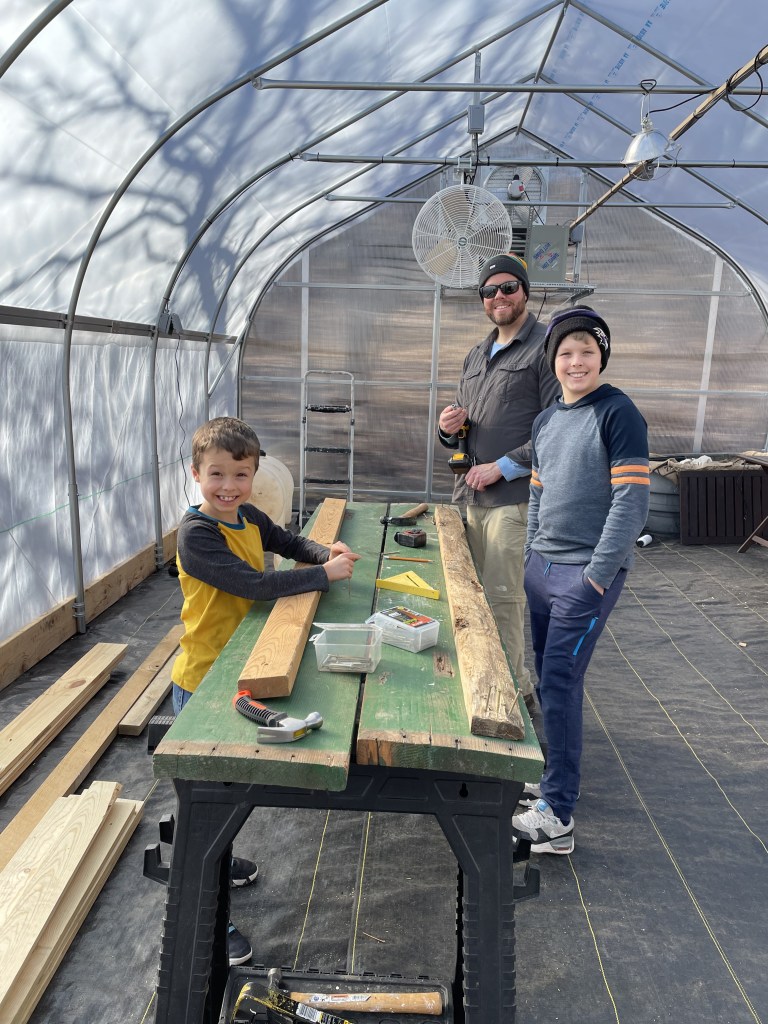
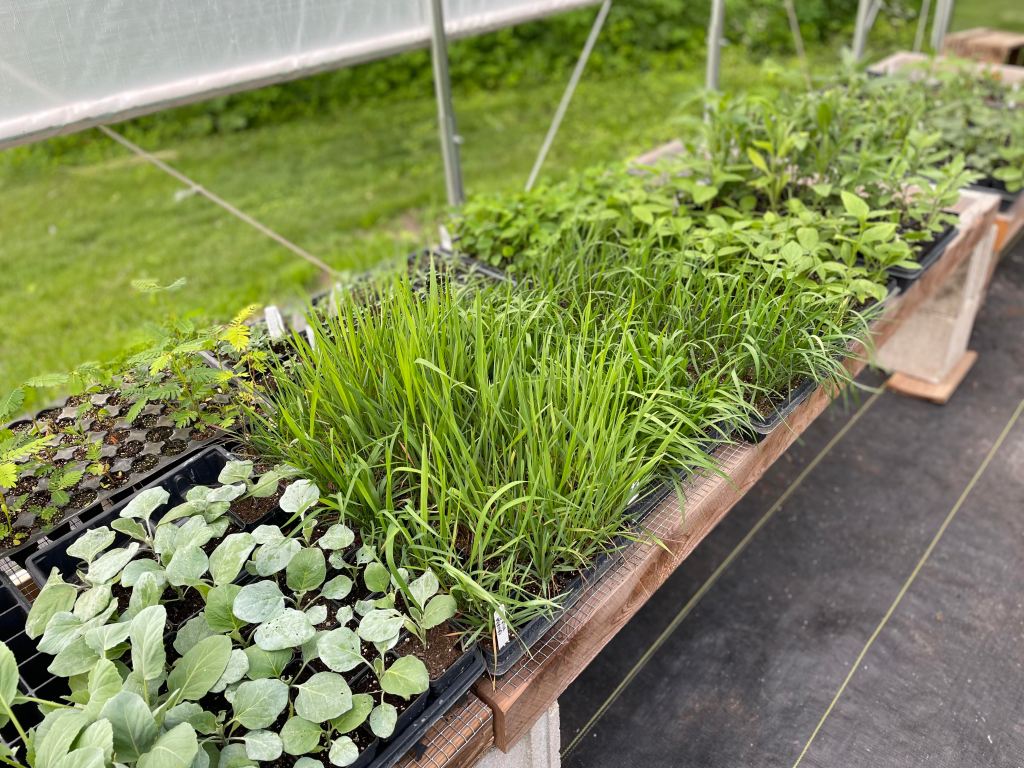
Honestly, I was worried that I wouldn’t actually be able to grow anything very well in there since I’d never actually worked in a greenhouse for real, but it turns out that having an ideal growing environment – diffuse sunlight, warmth, and humidity – is about all that’s needed to produce really beautiful, really healthy plants. Well, that and some decent potting soil (thanks to Featherstone Farm for giving me a near-full giant bag of some that they no longer needed) and making sure not to under or over water. Next year, I think we will hold a plant sale, so make a mental note if you’d like to try your hand at growing your own herbs, veggies, or native plants.
Other than the greenhouse, we spent several weekends getting our infrastructure in the field up and running. We spread 2,600 feet of wood chip paths – nearly 1/2 mile! (Thanks to Cory from Arborwise who graciously brought out two huge truckfuls of free wood chips to the farm a couple of times for us.)
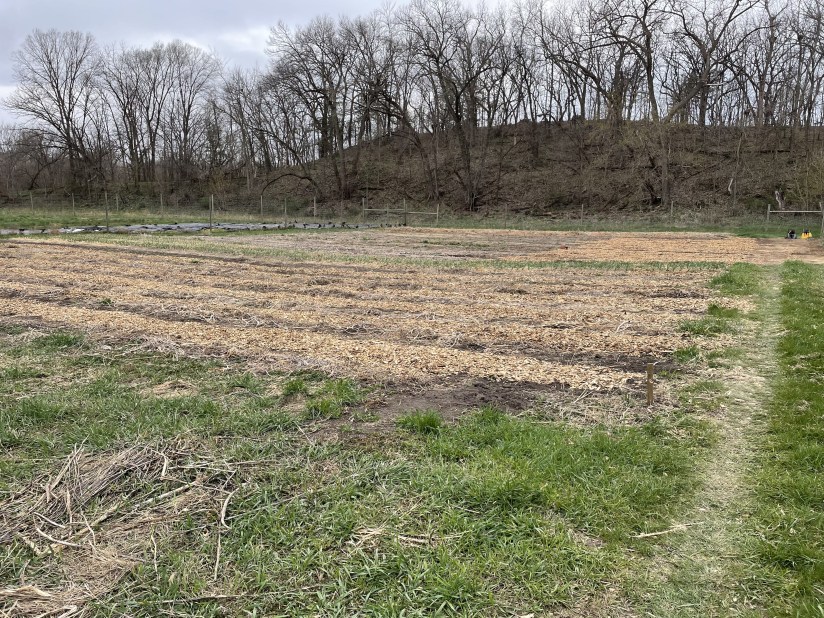
We moved our tarps to new areas of the field which need some perennial weeds like quackgrass and Canada thistle to be smothered, and we broadforked areas where the soil was still compacted to try and loosen it up and allow more air and water to get down deep. Talk about a good exercise to strengthen your core!
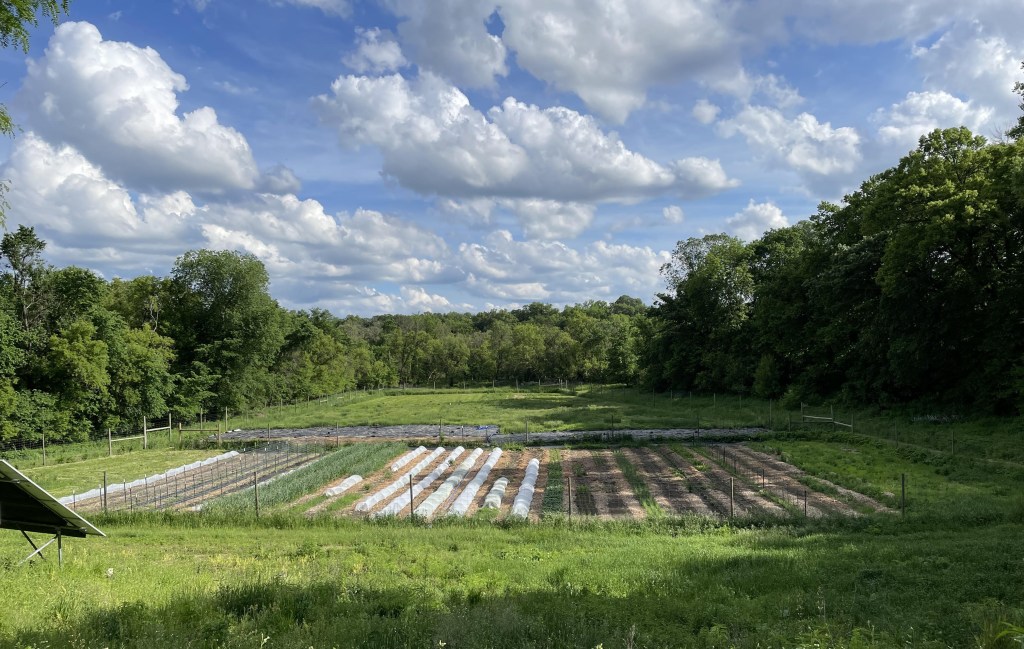
After getting the paths laid and the soil prepared, it was mostly seed and transplant every time there was a break in the weather. I am happy to report that around 50 crops are already in the ground and growing nicely. This includes a bunch of veggies in the Brassica family (e.g., cabbages, kohlrabi, radishes, broccoli, etc.) which we covered with insect netting immediately upon planting in order to keep out those pesky flea beetles that did so much damage last year. You can see that the Bok choy really needs to be harvested as it’s grown too tall for the covering; you might get a few squished leaves on it this year, but I figure slightly squashed is better than entirely eaten by flea beetles!
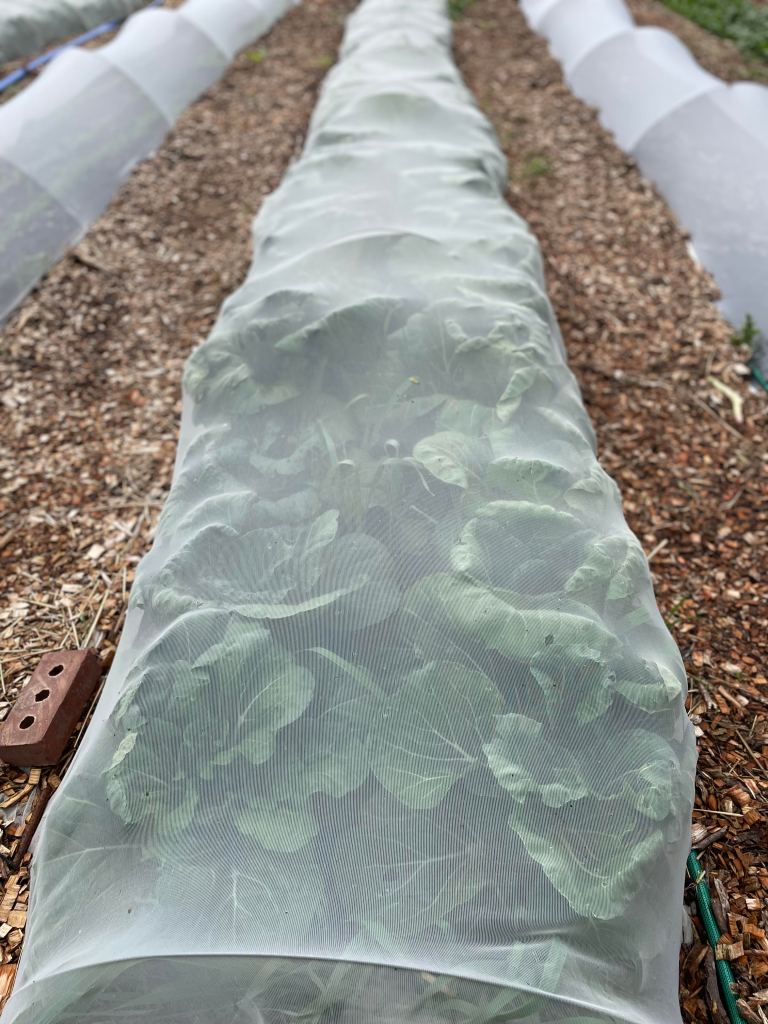
Here are some photos of the farm so that you can see what things are looking like these days:
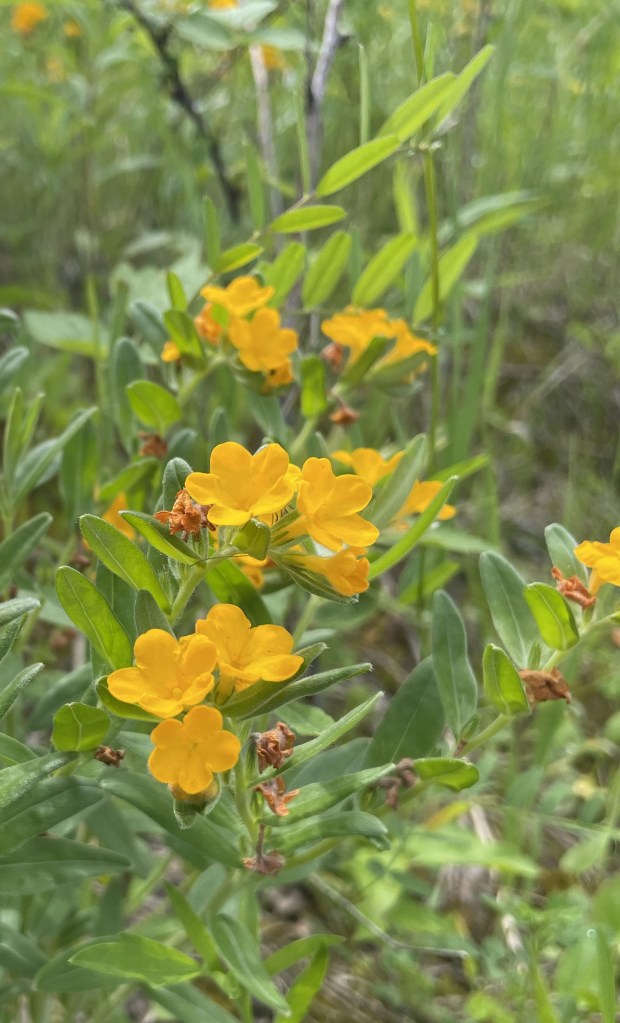
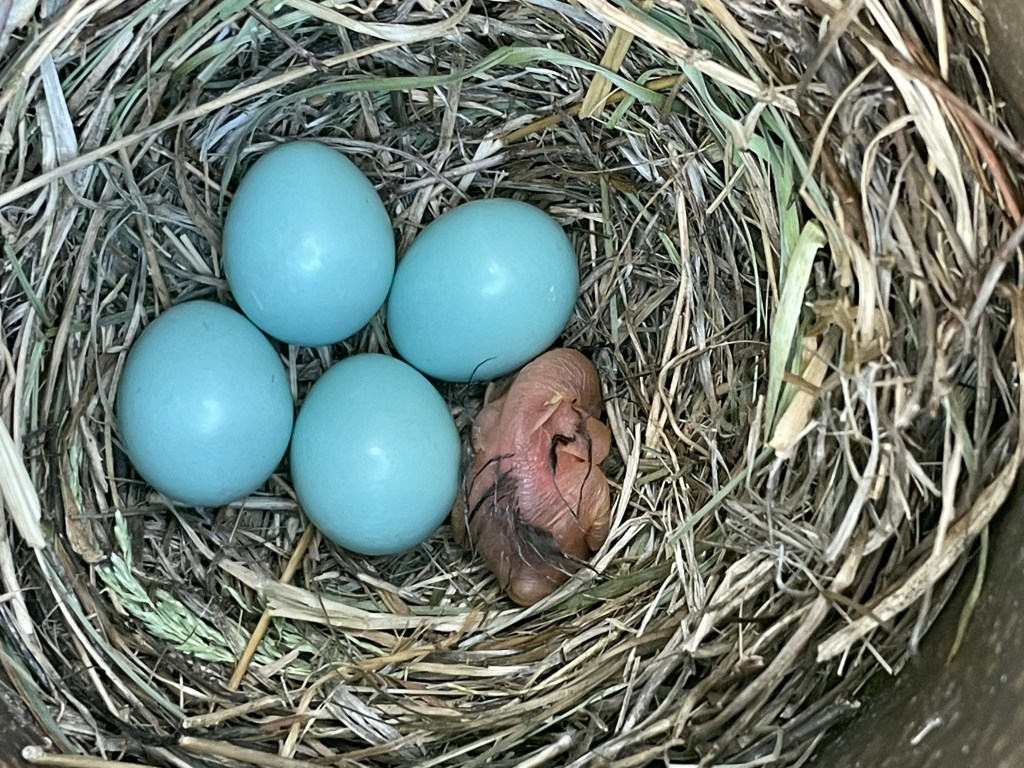
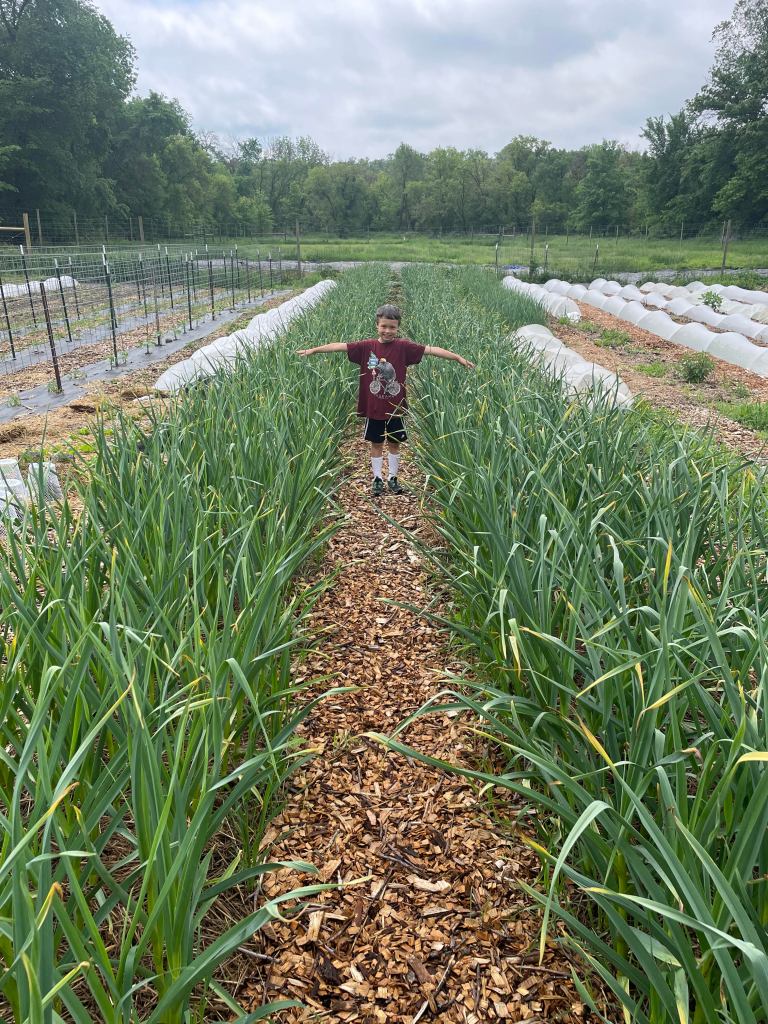
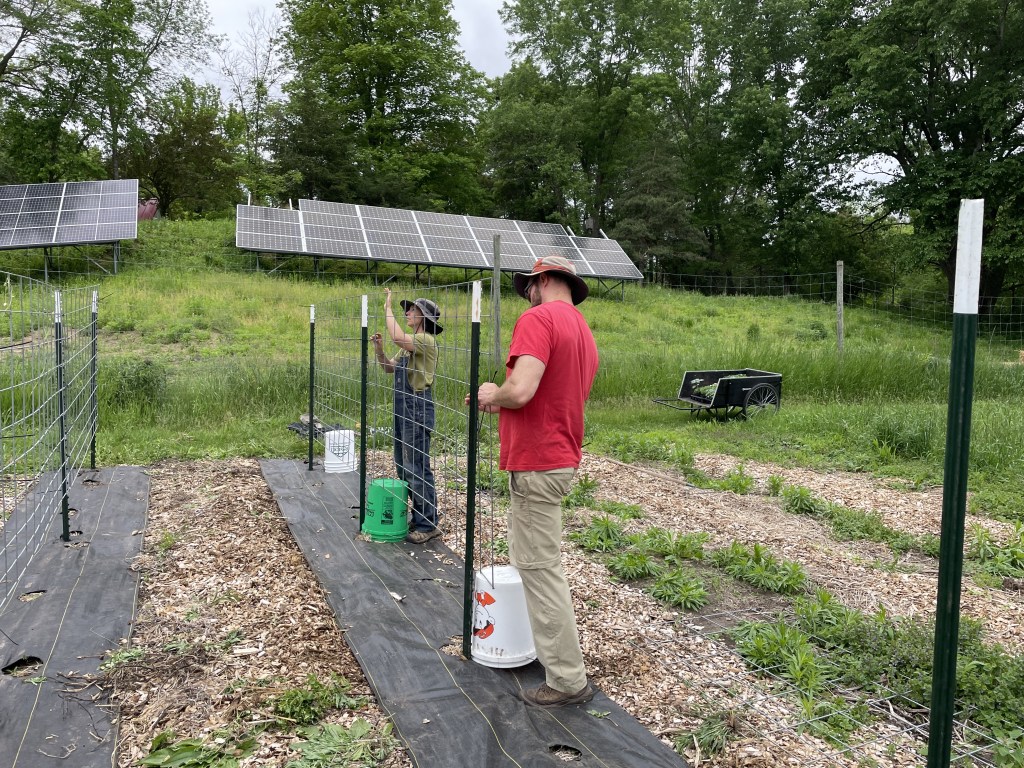
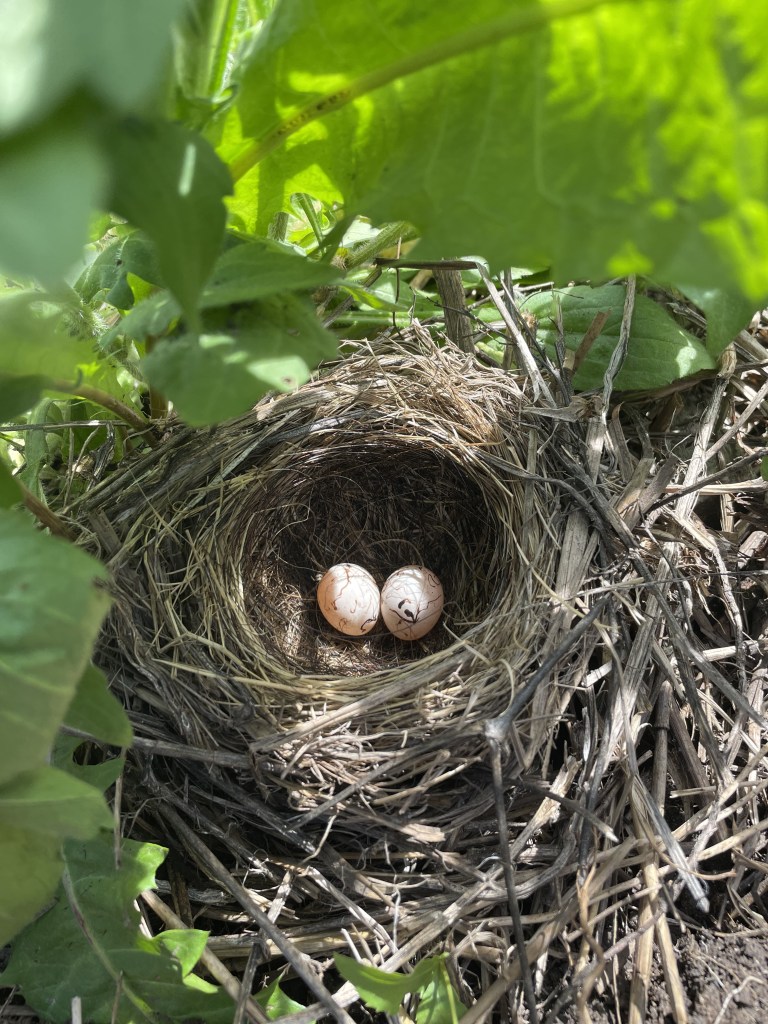
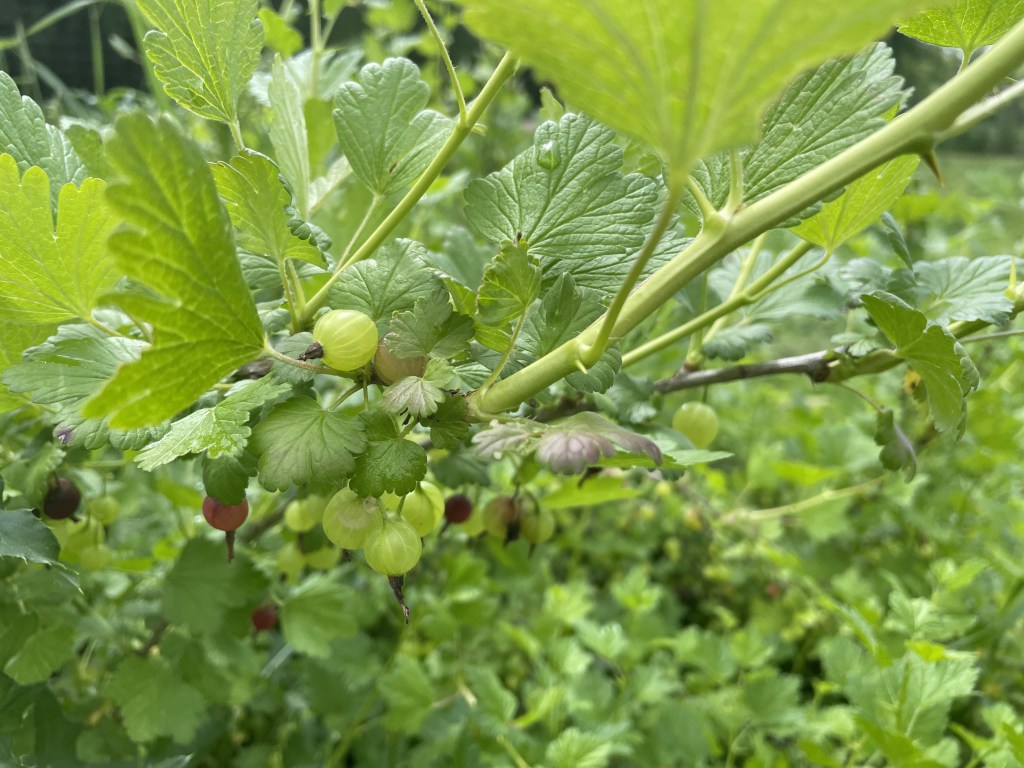
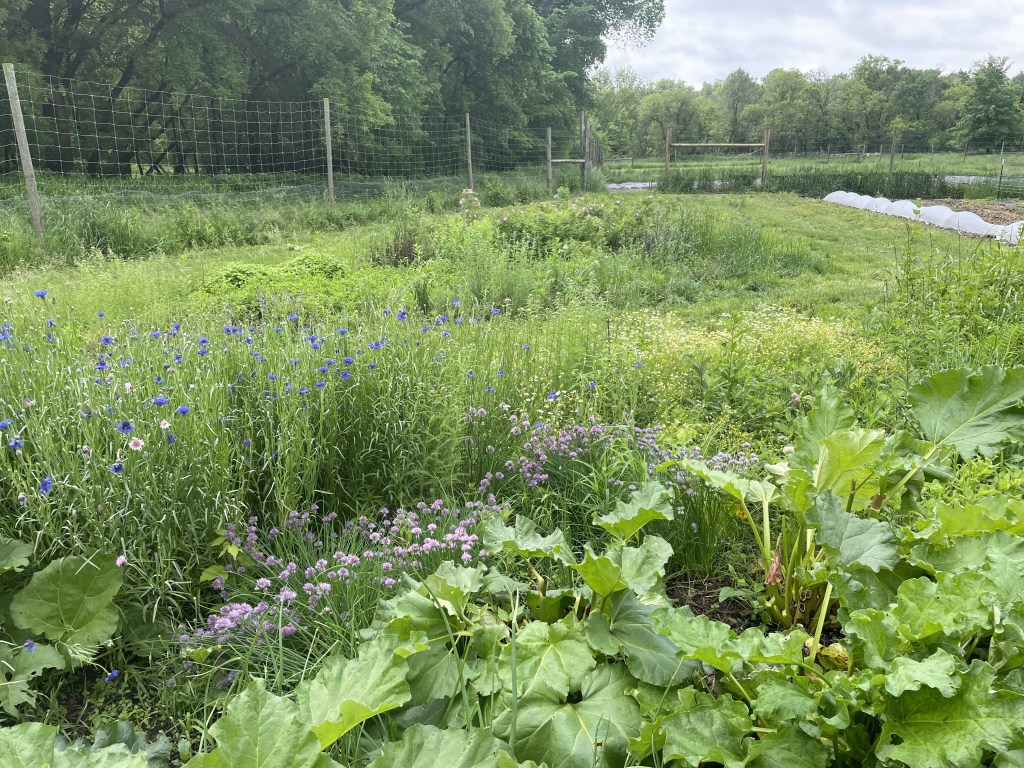
(Top line: hoary puccoon, one of my favorite wildflowers, growing in the prairie remnant; brand new baby bluebird; the garlic is nearly as tall as Luka this year
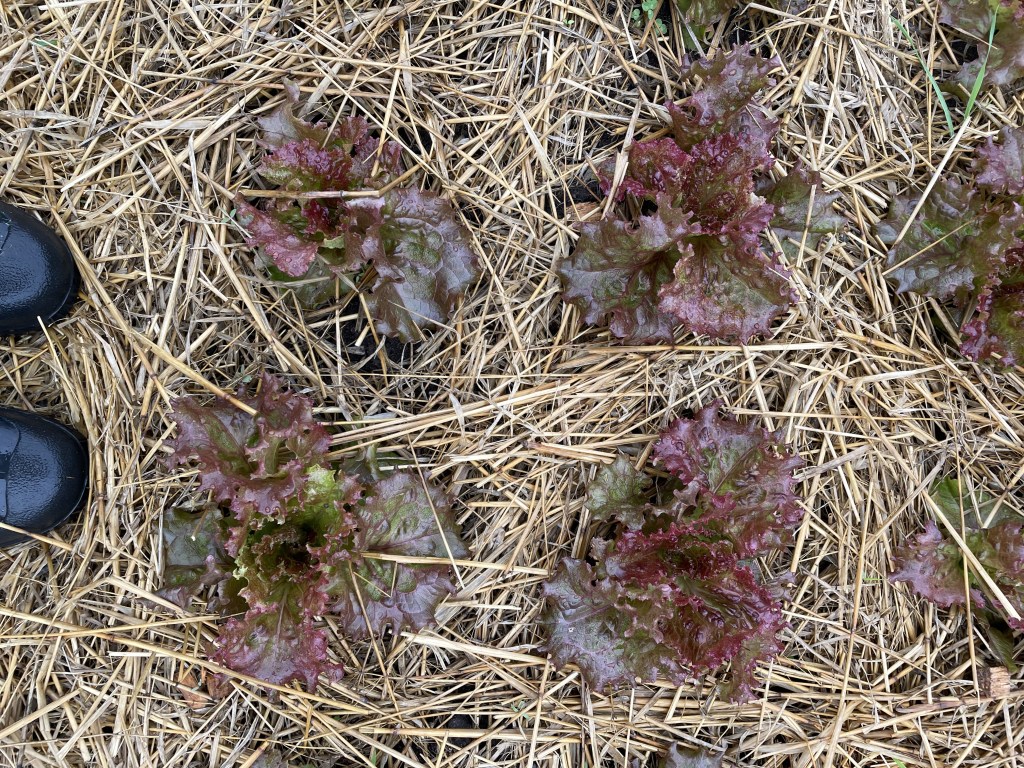
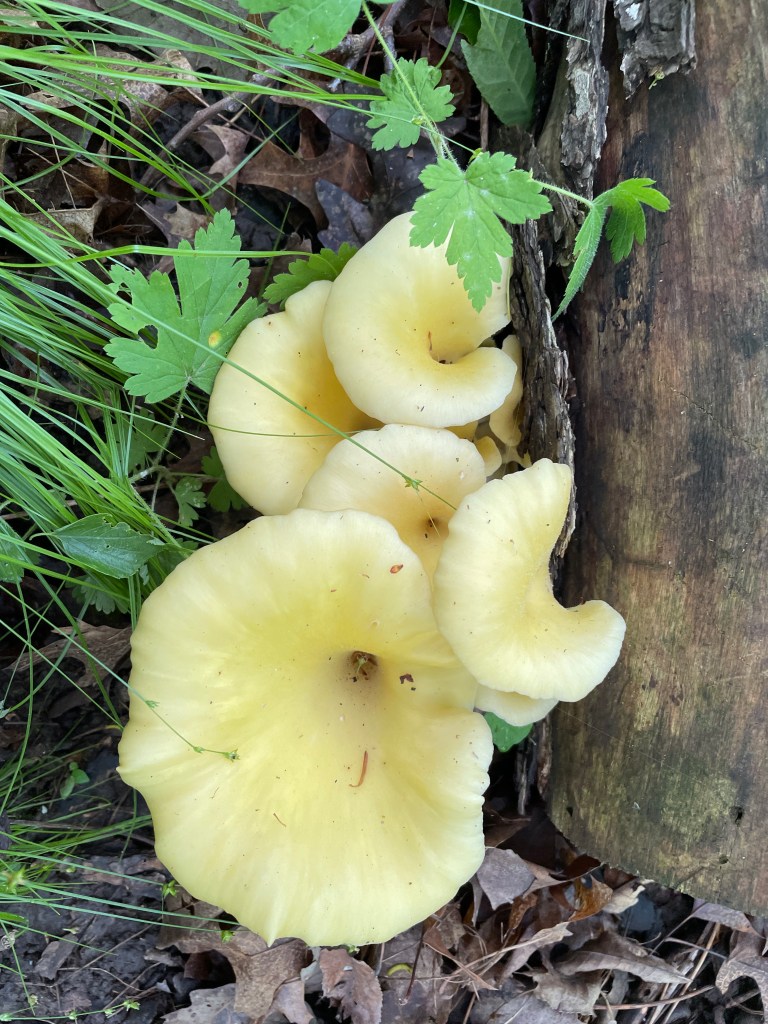
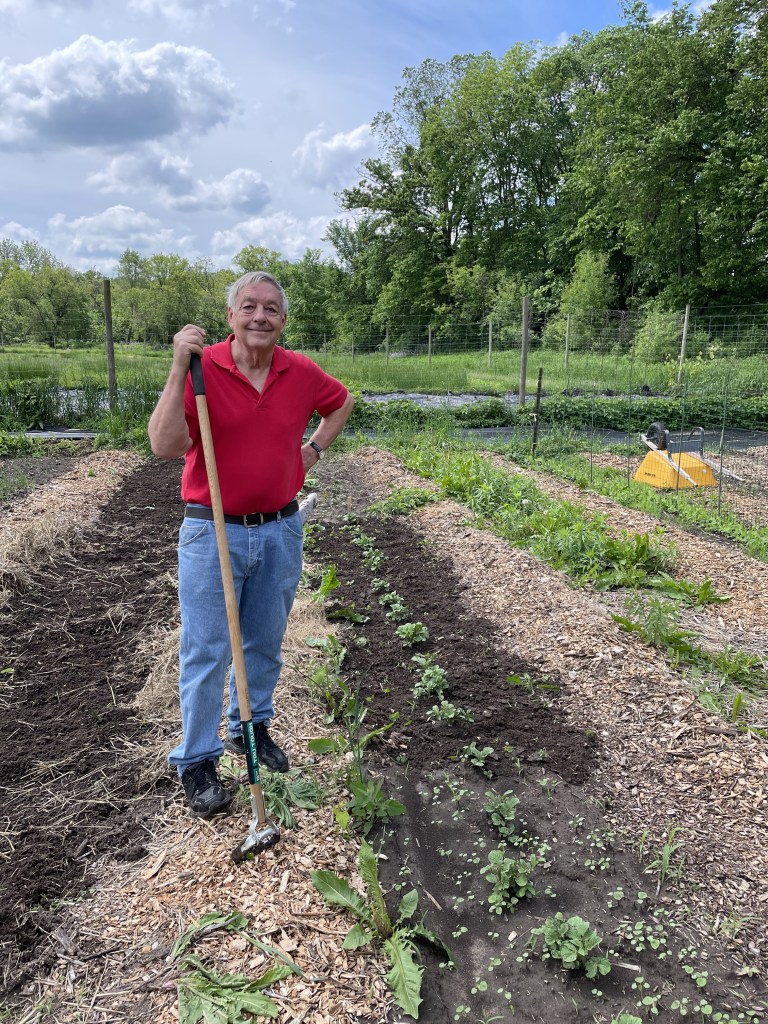
Second line: red lettuce seedlings; yellow oyster mushrooms in the woods; my dad, Marv, helped hoe the potatoes during his visit from Michigan
Third line: Erik and I hanging up the tomato trellis; a red winged blackbird made a nest in the garden (we found it while digging out weeds, so we stopped weeding there for now); ripening gooseberries
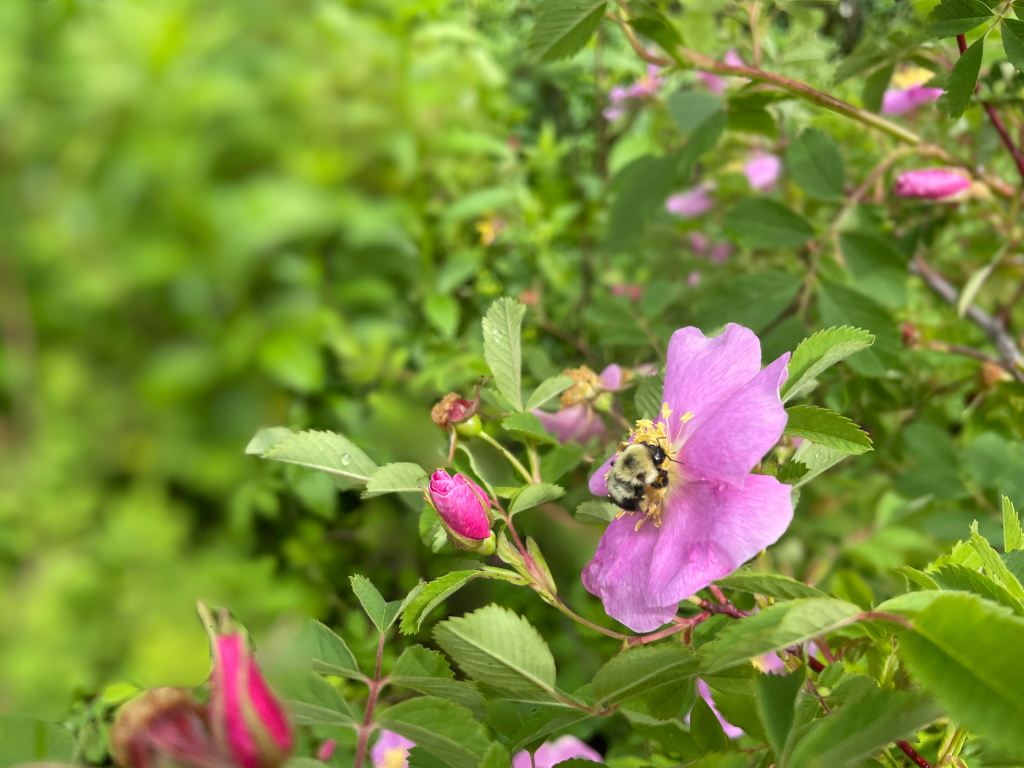
Fourth line: herb garden in bloom; a bumblebee visiting some native roses in the herb garden)
Featured Recipe
This week, we want to share a new way to use rhubarb. Thanks to one of our CSA members, Cecily, who last year discovered that rhubarb can be used in savory dishes just as well as in sweet ones. (You’d think as growers of it, we would have known that ourselves, but it just goes to show that there is always something new to learn about your veggies!)
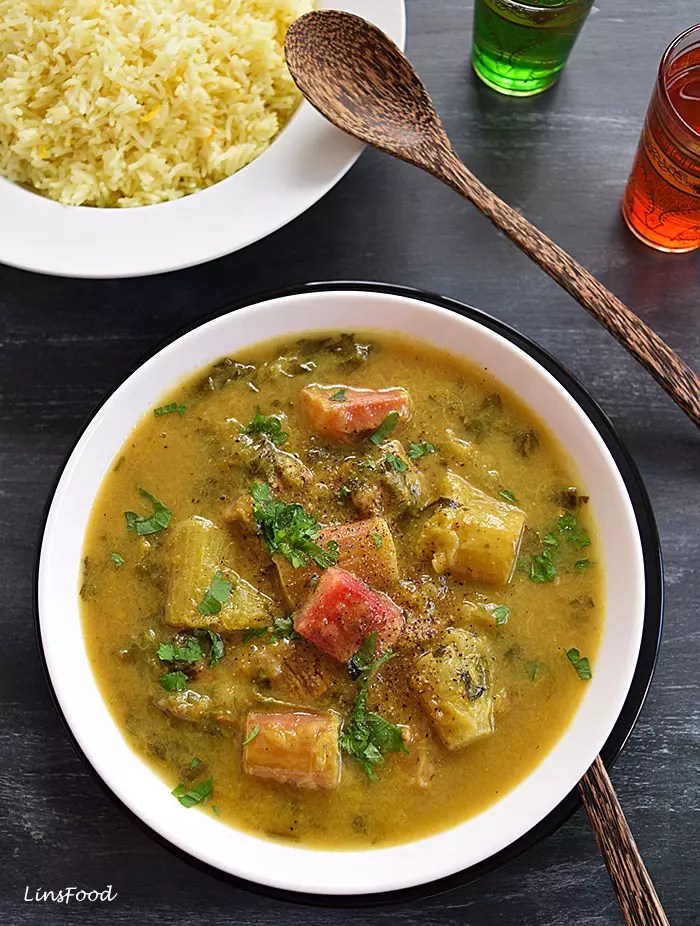
Cecily found a recipe for “Khoresh Rivas (خورش ریواس)” or Persian Rhubarb Stew and her family really enjoyed it. I found this recipe that can be made either with meat or without; the stew is typically served over fluffy, slightly buttery rice. It’s a common and well-loved dish in Iran and other places in the Middle East. (Photo: LinsFood Recipes & Food Culture)
Of course, there are always the stand-by rhubarb crisps, rhubarb muffins, and rhubarb pies if you’re craving something sweet instead this week. Check out some of the other rhubarb recipes we’ve pulled together over the years here.
 Middle Fork Farm