
Things have been moving right along on the farm, pretty much right on schedule, which is a bit out of the norm. I think we’ve gotten better at prioritizing what needs to be done (i.e., the vacuuming can wait, but transplanting the peppers cannot!) and we are also getting more efficient at tasks as we come up with new ways of doing things. “Why didn’t we think of this before?!” we are asking ourselves often enough these days. Perhaps most importantly is that Mother Nature has been helping a lot this year by keeping the temperature at just the right spot for it to pleasant to work outside all day and by sending us regular rain. I am actually hesitant to even say anything about the rain as I don’t want to jinx us; last year Simon and I spent 80 hours watering and we’re not anxious to repeat that again!
What’s in My Box this Week?
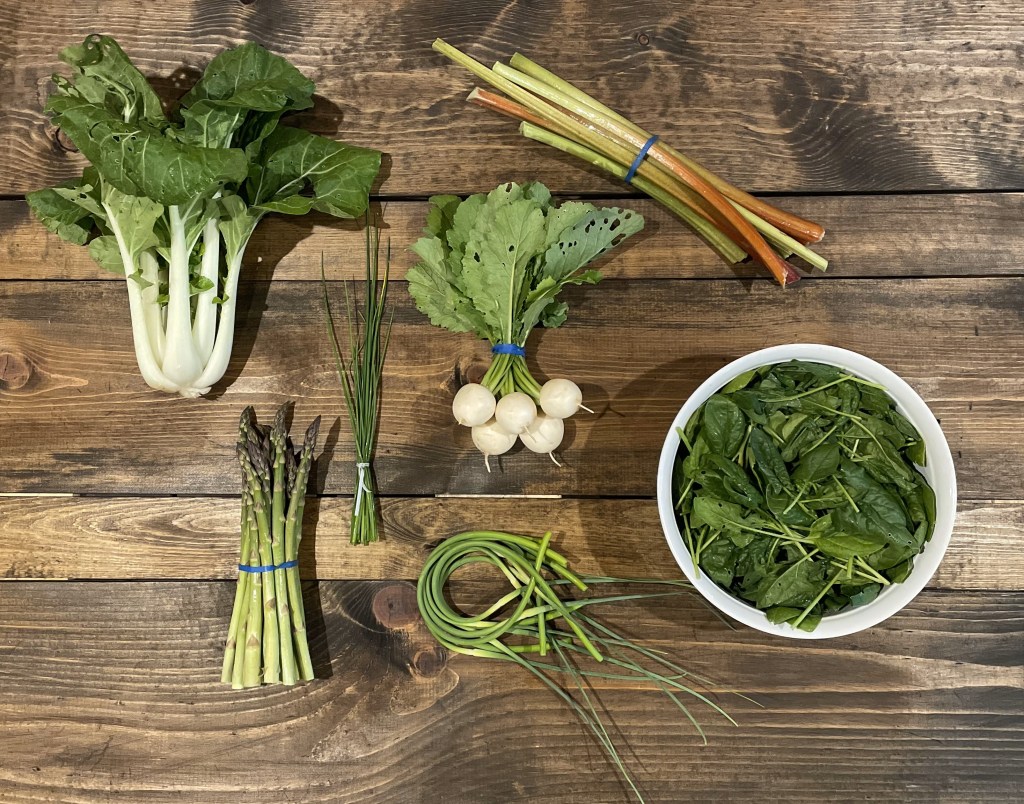
Asparagus – The best way to store asparagus is standing up in a glass or jar with all of the ends submerged in an inch or two of water. Loosely cover the asparagus with a plastic bag and keep in the fridge for up to a week.
Bok Choy – Store unwashed in the crisper drawer of your fridge. Use within a couple days for best texture. Greens will wilt relatively quickly. Stems will retain firmness a while longer.
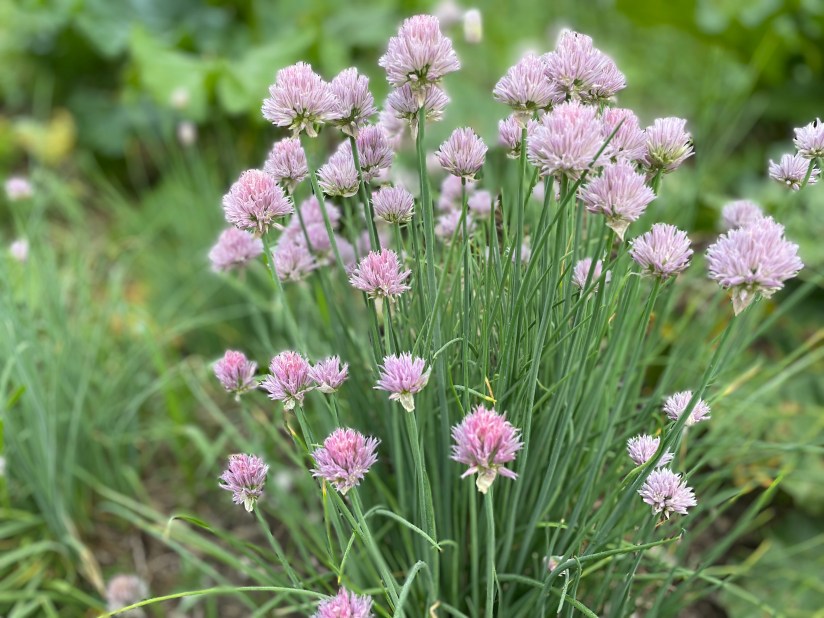
Chives – Chives are in the allium (onion) family and they produce blooms that are edible and taste just like the green leaves that you are probably more accustomed to eating. As such, they can be added to salads, dressings, or potato dishes just as you would the leaves.
Chives should be stored in a small jar with about an inch of water. Make sure to put the stem side in the water, not the tender leaf tops. You can also keep them in the fridge in a plastic bag.
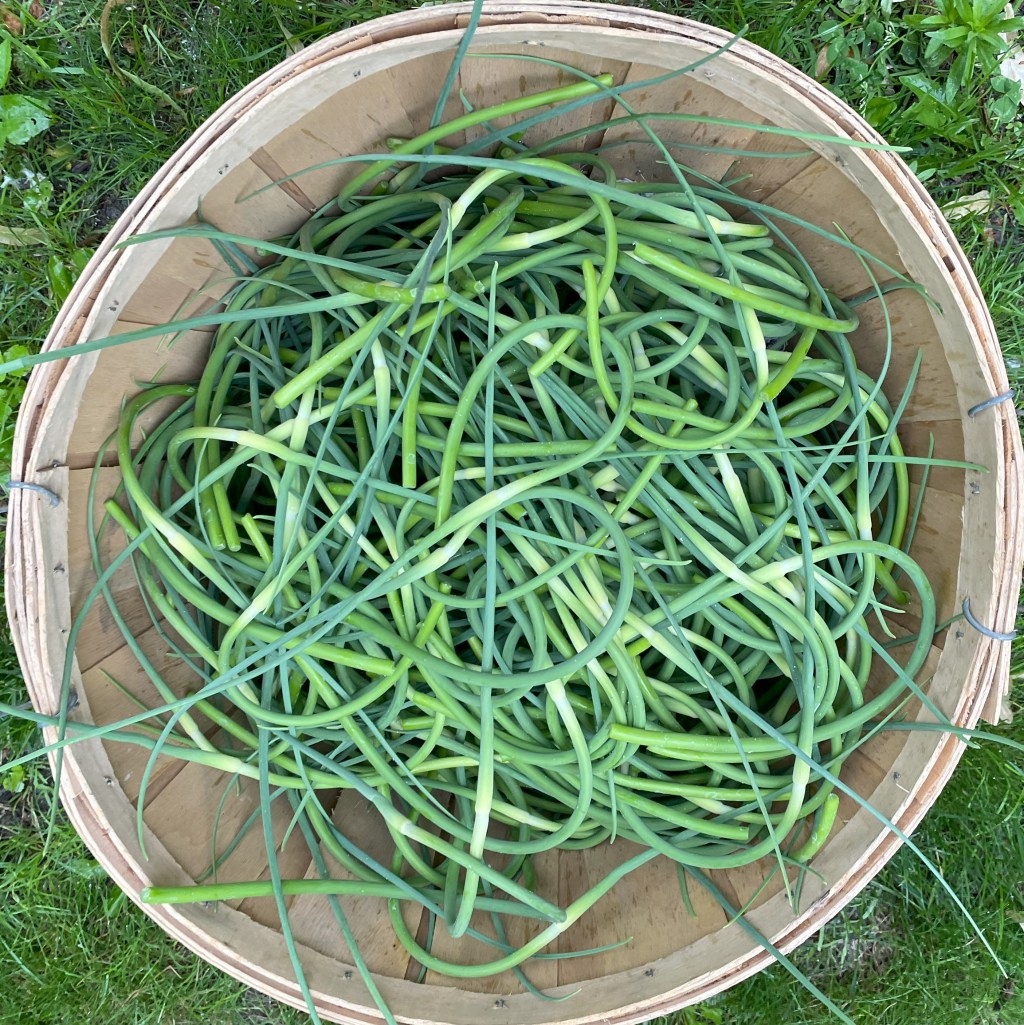
Garlic Scapes – Garlic scapes are the flower stalks of hard-neck varieties of garlic plants. We have to cut these off before they flower so that the garlic puts energy into growing a big, fat bulb instead.
These shoots are edible and delicious. They are mild and sweet with just a hint of garlic. You can chop them and use them in place of garlic cloves, make a salad dressing, or throw them on the grill like you would scallions.
Garlic scapes will last up to three weeks loosely wrapped in plastic in your fridge. If you can’t get to them, they can also be chopped and frozen for later use. I like to take a handful out of the freezer bag and add them to pasta dishes in the winter for a subtle, fresh garlic taste.
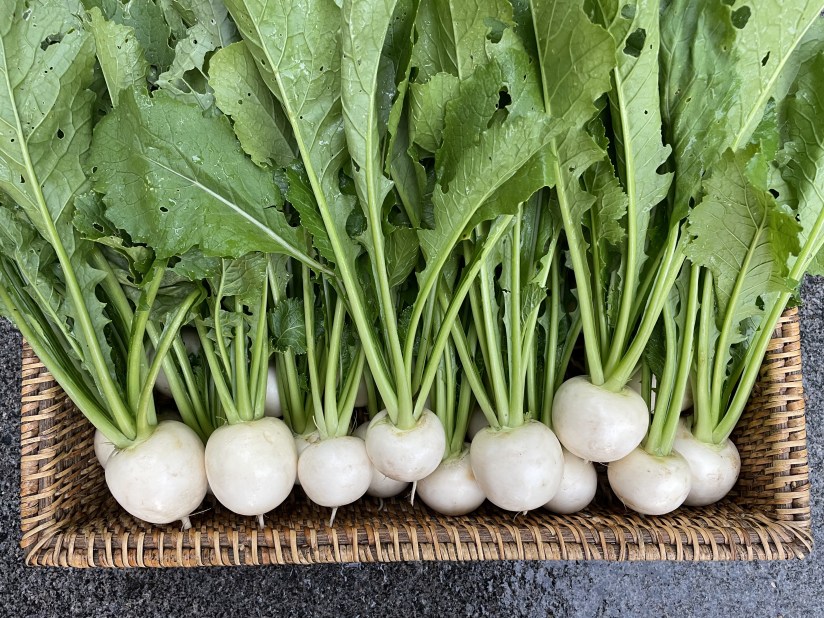
Hakurei Salad Turnips – Salad turnips are delicate, tender and almost buttery in texture. These turnips are meant to be eaten raw and do not need to be roasted. Store in a plastic bag in the crisper drawer of your fridge. They will easily keep for six to eight weeks this way.
Rhubarb -To store rhubarb, wrap it loosely in damp paper towel and place it in a plastic bag in the fridge. When you’re ready to use it, remove about an inch from the bottom of the stalk. It is best used within a week. You can also chop and flash freeze rhubarb in freezer bags for future use.
Spinach – Store dry, unwashed spinach in a sealed plastic bag for up to two weeks in the fridge. Right before using, wash the leaves in a basin of lukewarm water and spin dry. Try to use within a week. If it does get limp, you can still use it in cooked dishes.
Notes from the Field
This past week we did a lot of bed prep which included pulling weeds and broadforking areas where the soil was more compacted than we would like. This compaction is a legacy from earlier farming practices when previous landowners tilled the soil too often and kept too many livestock in too small a place for too long. Compacted soil means that air and water and plant roots can’t go down as deeply as is ideal and one of our ways of dealing with this is to use a broadfork to loosen things up. Broadforks don’t churn the soil as tillers do, so they don’t mix subsoil with topsoil, and they maintain the soil structure and help grow healthier plants.
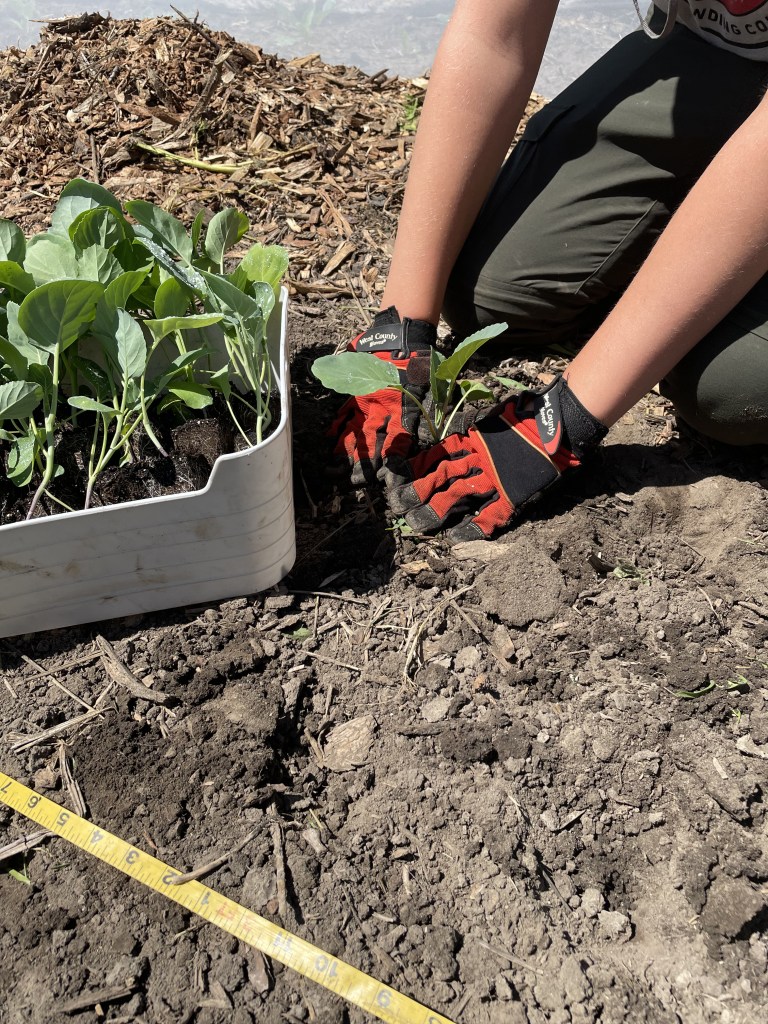
Once we had the beds prepped, we transplanted the gailaan (Chinese broccoli), sweet potatoes, and green cabbage. We seeded parsnips, basil, cilantro, and all of the winter squash -butternut, buttercup, delicata, pie pumpkins, potimarrons, and Jack o’Lanterns.
We thinned the radishes, beets, mizuna, and komatsuna, and we found and squished the first potato beetles, squash bugs, and cucumber beetles of the year. We had to crush their little eggs, too! Some of them look like little shiny jewels and it’s tempting to leave them, but we want zucchini and cucumbers more, so it must be done.
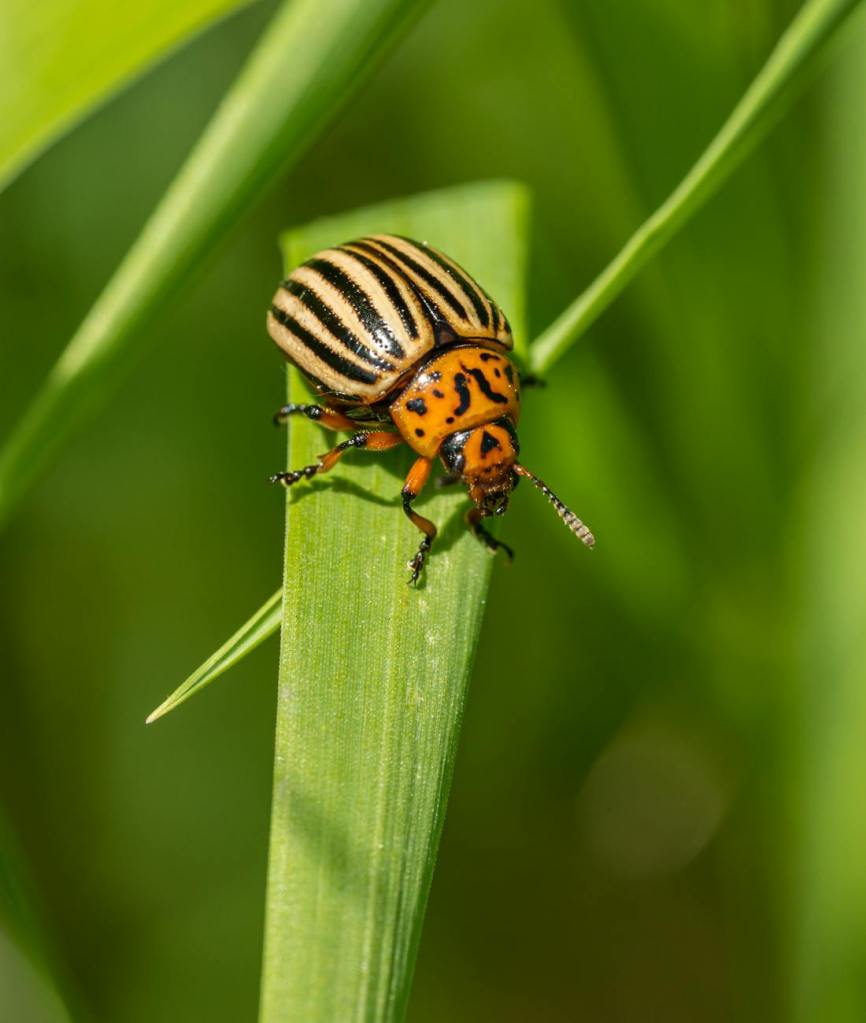
Photo by Petr Ganaj on Pexels.com
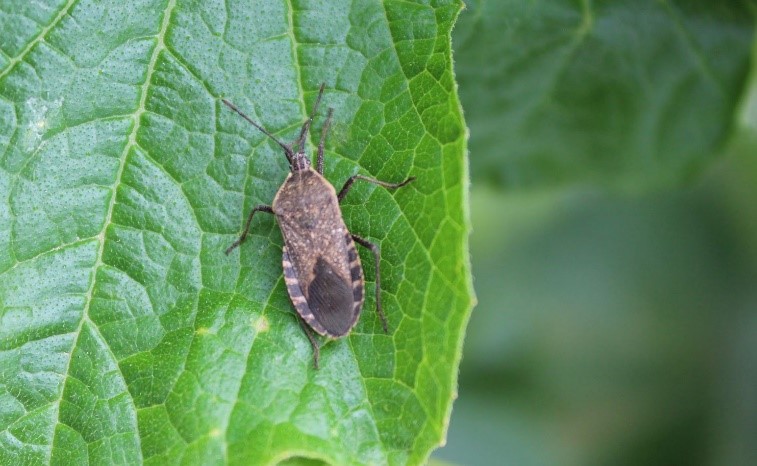
Photo by Lexi Gauger
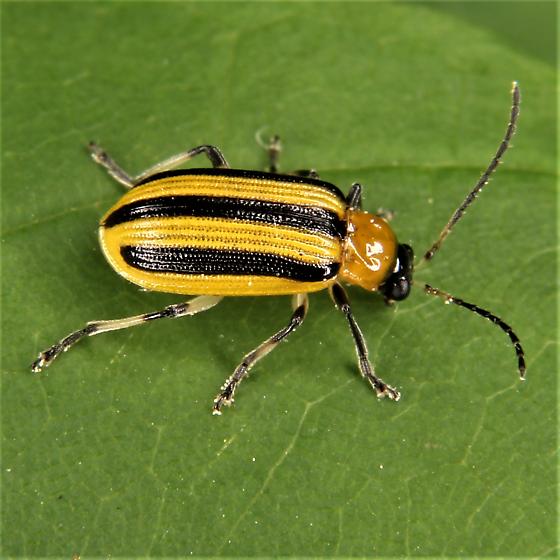
Photo by Ric Bessen
We also tried to figure out what was chewing holes in the bok choy, spinach, and salad turnip leaves. Some of our other brassica seedlings were completely eaten as well and we couldn’t figure out who the culprit was because of all of that protective covering we had placed on it. It turns out that grasshoppers lay their eggs in soil in the early spring, before the row cover is on, and then they hatch and get trapped underneath it with nothing to eat but the plants that are growing there. There are actually a whole slew of insects that have hatched under the row cover, but most of these aren’t interested in what we’re growing, so we just pull off the cover for a little while and free them. The tiny grasshoppers, on the other hand, have no incentive to leave because of… well, the leaves. (Dad joke!) We have decided that these holes are better than having flea beetle damage as grasshopper damage just means the leaves are a little ugly while flea beetle damage means there are no leaves at all.
This is farming without pesticides. Sometimes you get ugly produce. There’s actually an “Ugly Food Movement” out there. I wrote about it a couple of years ago if you’re interested in learning more. Just click here.
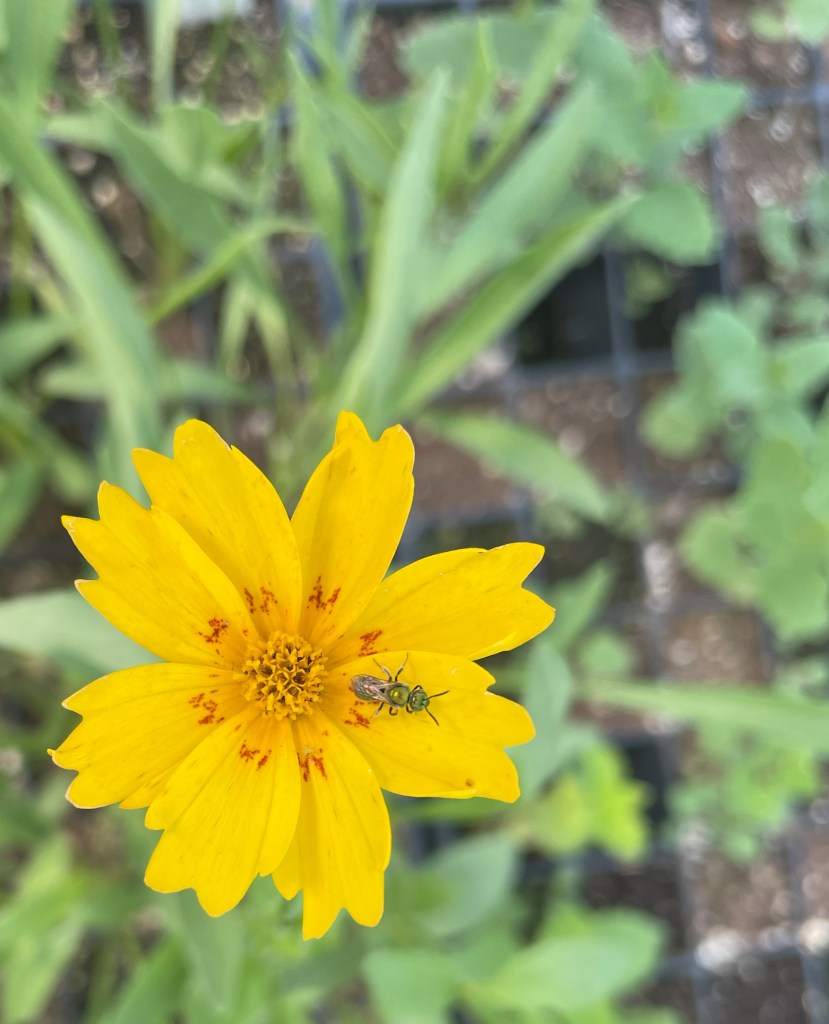
Of course, farming without chemicals gives us much more beauty than it does ugly things. Take this little pure green sweat bee that has been visiting the coreopsis I have growing in the greenhouse every day.
Or these bumblebees that like to fly entirely into the penstemon flowers, over and over again for minutes on end, completely disappearing and then quickly backing out before heading on to the next bloom. I could watch them all day!
Featured Recipe
This past weekend, our friends Kit and Megan came for a visit. I had met Kit when I did an internship at a non-profit CSA farm in Baltimore County way back in 2010. Kit came out to the farm once a week and volunteered his time in exchange for getting a box of produce, and we got to know each other while weeding and doing other farm chores. Later, Kit and Megan moved to Madison, Wisconsin, and we moved here and now we live close enough to each other to get together every so often.

Kit maintains a big plot in a community garden now and we all love to eat and linger over a good meal made with locally grown veggies, so I thought I would try out a new recipe for their visit and made an asparagus quiche. We all really liked it, so I thought I would share it with you as the recipe of the week. (Photo from The Mediterranean Dish)
You can use a store bought crust to save some time if don’t want to make one from scratch and I would substitute a good handful of chopped up garlic scapes in lieu of garlic cloves. If you still have some tarragon from last week, make sure you add that in, too.
 Middle Fork Farm