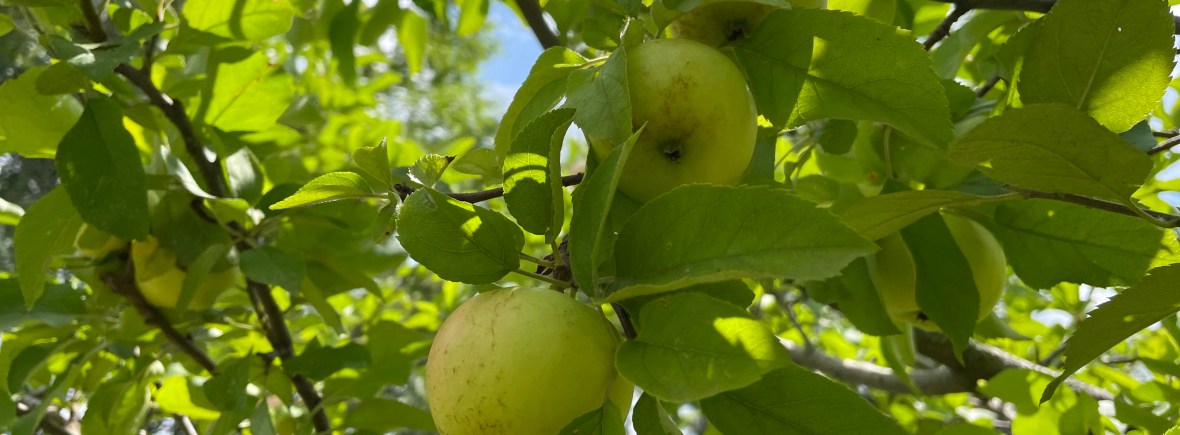
We care deeply about growing food and plants that nurture the health of our customers, our family, and our land, air, and water. We aim to be good and thankful stewards of our small piece of the earth as we are only borrowing it from those who will come after us. We also believe this land has an inherent worth and beauty all its own. We therefore practice regenerative and organic methods of agriculture, plant cover crops, and rotate our crops, so that parts of our land have a chance to rest every year.
We till the soil as little as possible. Tilling destroys soil structure, releases carbon into the air, makes it easier for soil to wash away, and upsets the beneficial fungi and microbes that do the heaviest lifting on a farm of getting the plants the nutrients they need to grow and flourish.
We operate at human-scale, doing most of our work the old-fashioned way, with our hands and hand tools.
When we have insect pests causing too much damage to a crop, we generally deal with them by simply picking them off of the plants. We also sometimes trap them or cover our crops with row cover so they can’t get to the plants in the first place. Rarely, we use organic-approved insecticides when all other efforts have failed.
Our nursery plants are grown without the use of persistent pesticides like pyrethroids, neonicotinoids, or other harmful chemicals. Some of our seeds are harvested from plants we grow in our production field or in other planted areas of our farm. We leave seeds from plants growing in the wild so that they can help repopulate areas of restoration and to promote genetic diversity. When we do order seeds from another source, we buy them from a nursery located nearby.
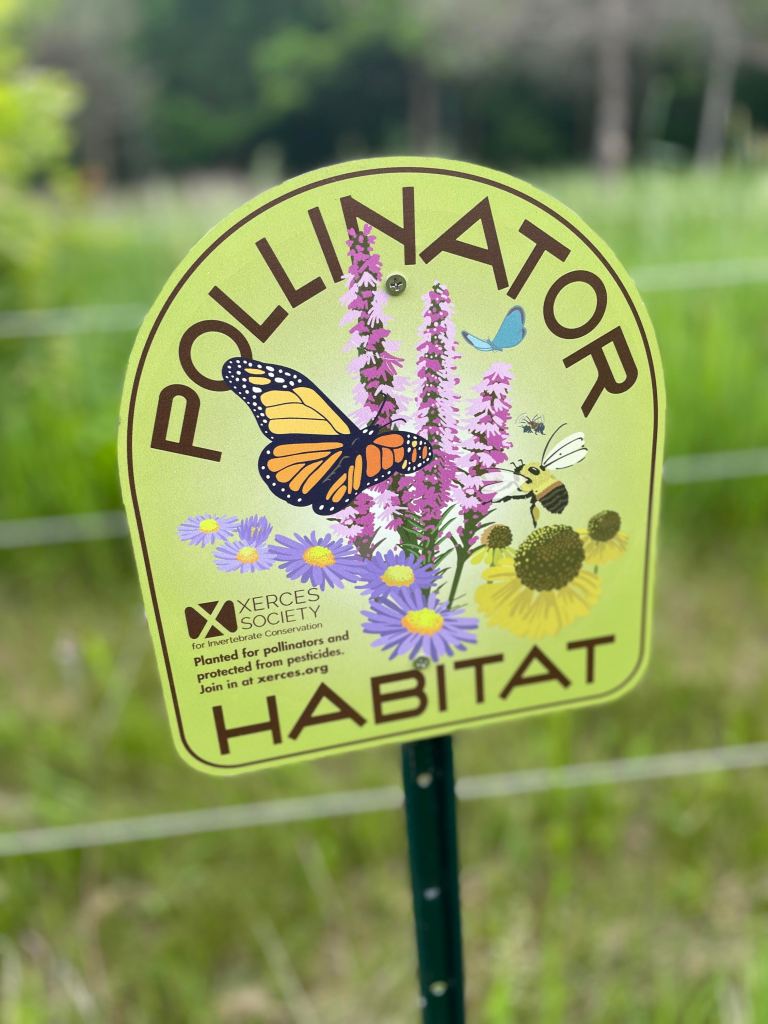
We view our farm as an ecosystem unto itself, and so we seek to enhance its health and biodiversity by planting pollinator habitat both within and surrounding our production field. On any given year, you might find herbs that we allow to flower and attract bees, milkweed growing in the middle of our crop beds for the monarchs to enjoy, or sunflowers that we have let go to seed to provide food for the birds into the autumn. You can read about some of the habitat restoration work we’ve done here.
We actively work to reduce food waste by donating produce to our local food shelf whenever we have more than we can sell or eat ourselves. Around 30% to 40% of the U.S. food supply is wasted each year. When you consider all of the time, fuel, electricity, and water that went into growing, cooling, packaging, and transporting that food, and how an increasing number of people are going hungry, it doesn’t seem right for so much of it to end up in the compost pile. Over the past three years, we have been able to donate around 10% of what we grew, helping our neighbors in need and conserving important resources along the way.
We take food safety very seriously and have participated in several courses aimed at teaching us best practices for growing, harvesting, cleaning, and storing what we grow. We have a certificate of training completion from the Produce Safety Alliance whose program is in keeping with the FMSA (Food Safety Modernization Act).
In 2018, our farm was certified under the Minnesota Agricultural Water Quality Certification Program (MAWQCP). This is a voluntary opportunity for farmers to take the lead in implementing conservation measures that protect our water.
In 2022, we were awarded the Climate Smart, Soil Health, and Wildlife Endorsements through this program in recognition of our commitment to and implementation of a variety of conservation practices.
 Middle Fork Farm